
Automotive Mechanic Associate Degree: 2-Year Path at Delaware County Community College
Earn an Automotive Mechanics Technology Associate degree at Delaware County Community College in 2 years, with hands-on training and strong career prospects.

By Hannah Long
If you love diagnosing mechanical problems and want a career that is hands-on, in demand, and well paid, an Associate degree in Automobile/Automotive Mechanics Technology/Technician is a powerful starting point. Delaware County Community College (DCCC) offers this program in person, and it typically takes two years to complete. But what does this degree actually involve, and is it worth your time and tuition? This guide breaks down the curriculum, career outcomes, costs, and practical advantages of earning your automotive technology associate degree at DCCC in Pennsylvania.
What Is an Automotive Mechanics Technology Associate Degree?
An Associate of Applied Science (AAS) in Automobile/Automotive Mechanics Technology/Technician is a two-year, in-person program designed to prepare students for entry-level positions as automotive service technicians, diagnostic specialists, and shop managers. Unlike a certificate that covers only basic maintenance, this degree goes deeper. It includes advanced engine performance, electrical systems, computerized diagnostics, drivetrain repair, and even hybrid or electric vehicle service.
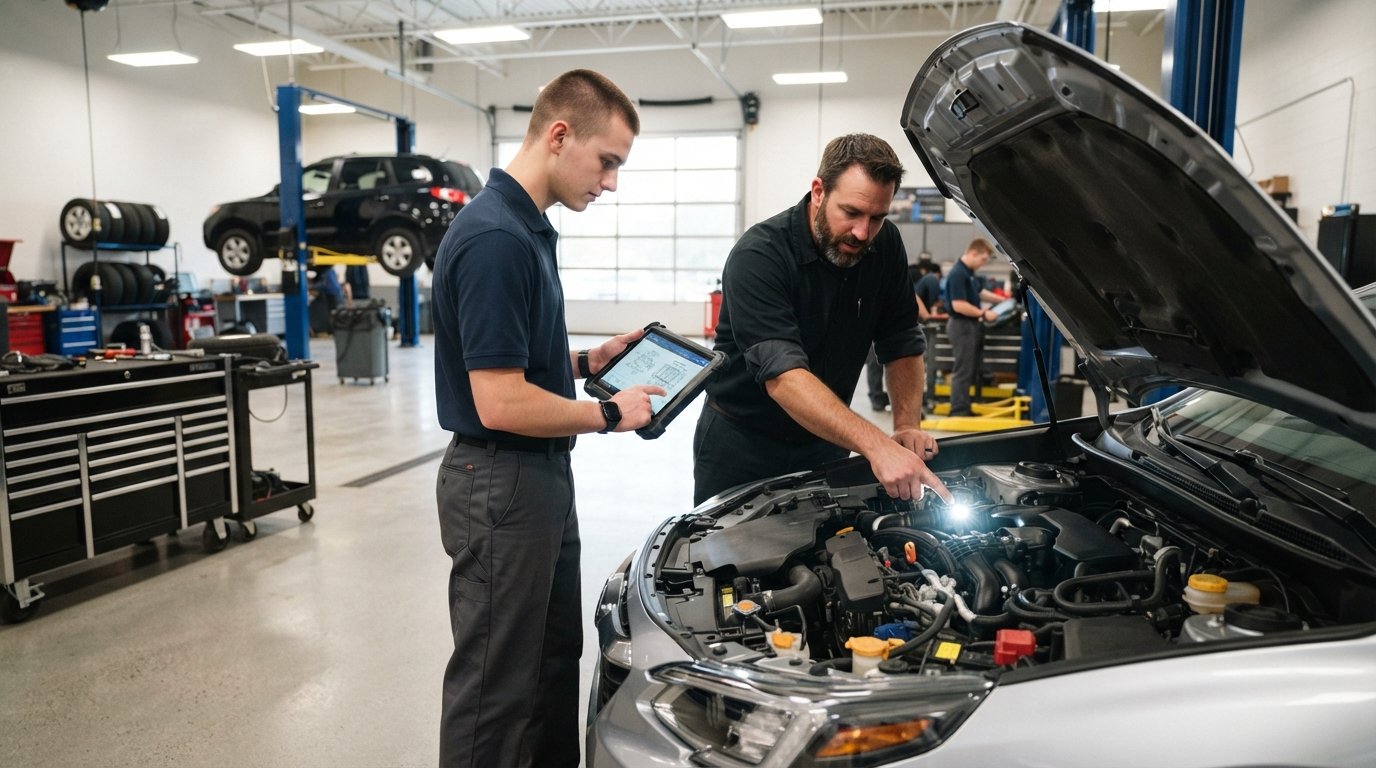
At Delaware County Community College, the program blends classroom theory with hands-on lab work. You will spend significant time in the auto shop, working on real vehicles with industry-standard tools. The curriculum is aligned with ASE (Automotive Service Excellence) standards, which means you will be ready to take ASE certification exams right after graduation. This is a major advantage for employment, since many dealerships and independent shops prioritize ASE-certified technicians.
Because the program is in person, you benefit from direct mentorship from instructors who have years of field experience. You also gain access to the school's diagnostic equipment, scan tools, and lifts, which are often too expensive for an individual to purchase. This practical exposure is what separates an associate degree graduate from a hobbyist mechanic.
Why Choose Delaware County Community College for This Degree?
DCCC is located in Marple Township, just outside Philadelphia, and it serves a wide region of southeastern Pennsylvania. The college has strong ties to local dealerships, fleet operators, and auto repair chains. Many of these employers actively recruit DCCC graduates. The automotive technology program at DCCC is known for its small class sizes, which means you get more one-on-one time with instructors. This is critical when you are learning complex systems like CAN bus networks or advanced driver-assistance systems (ADAS).
Another reason to choose DCCC is the cost. Community college tuition is typically much lower than that of a four-year university. For in-district students, the per-credit rate is affordable, and financial aid is available for those who qualify. You can often complete the Associate degree for a fraction of the cost of a private technical school. Moreover, DCCC offers evening and weekend classes in some semesters, which helps if you are working part-time while studying.
The program also includes an internship or cooperative education component, giving you a chance to earn credits while working in a real auto shop. This is a valuable resume builder. Many students receive job offers from their internship sites before they even graduate. If you are looking to transition into the automotive field quickly, this in-person program at DCCC is a direct and economical route.
Curriculum and Skills You Will Learn
The two-year curriculum is structured to build your knowledge step by step. In the first year, you take foundational courses in engine repair, brake systems, suspension and steering, and basic electrical theory. You also learn shop safety and professional practices. The second year moves into advanced topics: engine performance, electronic engine control, automatic and manual transmissions, heating and air conditioning, and diesel or hybrid vehicle service, depending on electives.
Beyond the technical skills, the degree includes general education courses like English, math, and communication. These are important because automotive service technicians often need to write repair orders, explain complex issues to customers, and calculate costs. Employers appreciate technicians who can communicate clearly and handle paperwork accurately.
A typical semester might look like this:
- Introduction to Automotive Technology (4 credits)
- Electrical Systems I (4 credits)
- Engine Performance and Diagnostics (4 credits)
- Brakes and Chassis Systems (4 credits)
- Technical Mathematics (3 credits)
- English Composition (3 credits)
By the end of the program, you will have completed at least 60 to 64 credit hours. You will also be prepared to take multiple ASE certification tests. Earning ASE certifications can lead to higher starting salaries and faster promotions. The U.S. Bureau of Labor Statistics reports that the median annual wage for automotive service technicians and mechanics was over $47,000 in 2024, and the top earners in the field make more than $75,000 annually. With an Associate degree, you are in a better position to reach those upper pay scales.
Career Outcomes and Earning Potential
Graduates of the Automobile/Automotive Mechanics Technology/Technician Associate degree program at DCCC find jobs in several settings. Many start as technicians at franchised dealerships, where they work on specific brands and receive ongoing factory training. Others join independent repair shops, chain stores like Firestone or Pep Boys, or fleet maintenance facilities for trucking companies, rental agencies, or government agencies. Some graduates go on to work in motorsports, classic car restoration, or performance tuning.
According to the Bureau of Labor Statistics, employment of automotive service technicians and mechanics is projected to grow about 1 percent from 2024 to 2034, which is slower than average. However, this is a large occupation with over 750,000 jobs, so there will be many openings due to retirements and the need to replace workers who leave the field. The rise of electric and hybrid vehicles is also creating demand for technicians with advanced electrical skills. With an Associate degree, you are better prepared for these newer technologies than someone with only a short certificate.
Starting salaries for DCCC graduates typically range from $35,000 to $45,000 per year, depending on the employer and location. After a few years of experience and ASE certifications, many technicians earn between $50,000 and $65,000. Shop managers or master technicians can make even more. Additionally, many dealerships offer flat-rate pay, which means you are paid based on the hours billed for each job. This can lead to higher earnings if you work efficiently.
How to Pay for the Program and Financial Aid Options
Financing your education is a common concern, but there are several ways to make an automotive degree affordable. First, complete the Free Application for Federal Student Aid (FAFSA) to see if you qualify for grants, loans, or work-study. DCCC also offers scholarships specifically for students in technical programs. Some local automotive associations provide scholarships to students who plan to stay in the area after graduation.
You may also consider part-time work at an auto shop while you study. Many shops offer flexible hours for students, and some even provide tuition reimbursement after you demonstrate reliability. The internship component of the DCCC program often leads to paid positions, which can offset some of your living expenses. In addition, DCCC's tuition payment plans allow you to spread out payments over the semester, avoiding a large lump-sum bill.
When comparing costs, keep in mind that the Associate degree is an investment that pays off. With an associate degree, your earning potential is higher than with only a high school diploma. According to the Georgetown University Center on Education and the Workforce, associate degree holders earn about 18 percent more over a lifetime than those with just a high school diploma. In the automotive field, this difference is even more pronounced because of the technical skills you gain.
Is an In-Person Program Right for You?
Automotive technology is a hands-on field. While some theory can be learned online, you cannot become a skilled technician without actual time in the shop. For this reason, an in-person program at DCCC is the standard and recommended route. You will be using professional scan tools, lifting vehicles, and performing repairs under supervision. This experience is crucial when you start your first job, and it builds your confidence.
If you live near the Marple Township campus, the commute is straightforward. Even if you live further, many students drive in from surrounding counties because the program's reputation is strong. The in-person format also allows you to network with classmates and instructors. Your instructors often have contacts in the industry, and they can write letters of recommendation or connect you with shop owners. In a field where personal referrals matter, this network is invaluable.
Alternative Paths and Continuing Education
While the Associate degree is a great choice, you might also consider a one-year certificate if you need to enter the workforce quickly. However, the Associate degree provides a more comprehensive education and opens doors to management positions later. Some DCCC graduates transfer to four-year institutions to earn a Bachelor's degree in automotive technology management or business. This path can lead to roles as service directors, dealership managers, or fleet operations managers. If you are interested in comparing other two-year technical degrees, you can look at our guide on fine arts associate degrees, but for most mechanical careers, the automotive program is more directly relevant.
After earning your Associate degree, you might also pursue additional certifications in specialized areas like diesel engines, collision repair, or high-performance engines. Many manufacturers offer their own certification programs, which can lead to higher pay and job security. The automotive industry is evolving rapidly, so you should plan to engage in lifelong learning. Fortunately, DCCC offers continuing education courses to help you stay current.
Steps to Enroll at Delaware County Community College
Getting started is easier than you might think. Here is a step-by-step breakdown:
- Apply online to DCCC. The application is free and takes about 15 minutes.
- Submit your high school transcript or GED scores. If you have previous college credits, request an official transcript evaluation.
- Complete the placement test or provide SAT/ACT scores, if required. This helps determine which math and English courses you should start with.
- Meet with an academic advisor to declare your major in Automotive Technology and plan your course schedule.
- Apply for financial aid by completing the FAFSA using DCCC's school code (003257).
- Register for classes. Try to register early, as popular technical courses fill up quickly.
- Attend new student orientation and purchase your textbooks and tools. Many programs provide a list of required tools, though the college often has loaner tools available.
Once you complete these steps, you will be on your way to a rewarding career. Remember that you can always visit the campus and speak with the program coordinator to get your questions answered.
Final Thoughts: Is This Degree Worth It?
Choosing the Automobile/Automotive Mechanics Technology/Technician Associate degree at Delaware County Community College is a strategic move for anyone who enjoys working with vehicles and wants a stable, well-paying job without a four-year commitment. The program is practical, affordable, and respected by employers. You will graduate with marketable skills, ASE certification readiness, and real-world experience from your internship.
The automotive industry is changing, with more electronics and software in every vehicle. Technicians who understand these systems are in high demand. By earning your Associate degree in person at DCCC, you position yourself at the forefront of this evolution. Whether you dream of opening your own shop, working for a luxury dealership, or becoming a master technician, this two-year degree is a solid foundation. For additional resources on degree planning and career outcomes, you can explore DegreesOnline.Education, which offers comprehensive guides for adult learners and career changers. Take the first step today, and you could be turning wrenches professionally in just two years.