
Career Outcomes for Environmental Science Degree Graduates
Explore career outcomes for environmental science degree graduates, from field technician roles to consulting and policy jobs. Call (877)-218-7081 for guidance.

By Stacy Cignetti
Environmental science graduates enter a job market that is expanding as climate policy, water scarcity, and corporate sustainability reshape how governments and businesses operate. The career outcomes for environmental science degree graduates are more varied than many students expect: alumni of these programs work as field technicians, regulatory analysts, GIS specialists, sustainability coordinators, and environmental consultants, and some continue to law or graduate school. This article breaks down the actual jobs, salary ranges, hiring industries, and advancement paths so you can judge whether the degree fits your goals.
What Environmental Science Graduates Actually Do
Environmental science is an interdisciplinary field, and that shapes the career outcomes for environmental science degree graduates in a practical way. Because the curriculum blends biology, chemistry, geology, statistics, and policy, graduates are not locked into a single job title the way accounting or nursing majors are. Instead, they qualify for roles that require scientific literacy plus the ability to translate data into decisions. Employers range from the Environmental Protection Agency and state natural resource departments to engineering consultancies and the sustainability offices of large corporations.
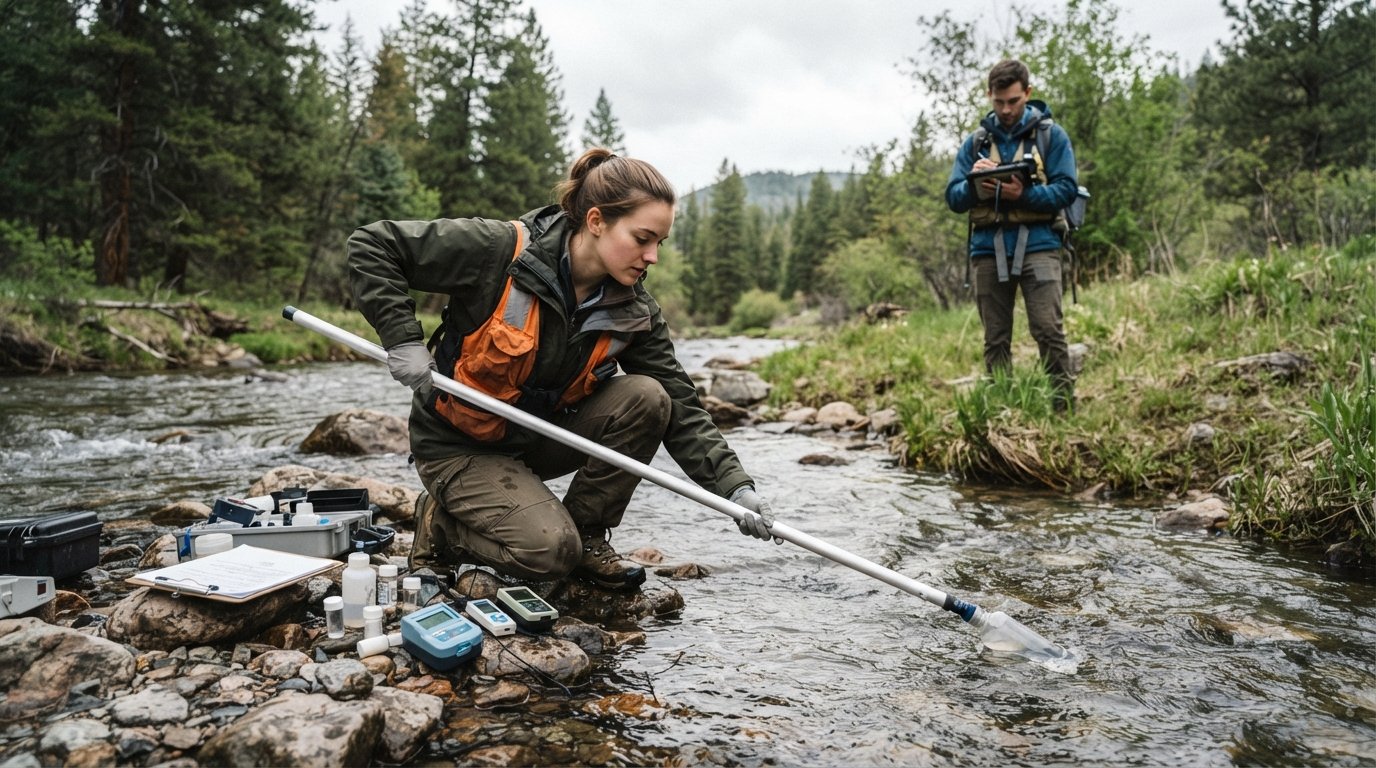
Most entry-level positions fall into four broad categories: field and lab work, regulatory compliance, data and mapping, and outreach or education. Field technicians collect water, soil, and air samples; compliance analysts review permits and inspect sites; GIS specialists build spatial models and dashboards; and outreach coordinators run recycling, conservation, or community science programs. Each path has a different salary curve and ceiling, which is why the first job matters more than the major itself.
A useful way to think about the field is to separate roles by who pays for them. Public-sector jobs tend to offer stability, modest starting pay, and strong benefits. Consulting firms pay more but demand billable hours and client management. Nonprofits offer mission alignment and hands-on fieldwork but often have the tightest budgets. Corporations are the fastest-growing segment, driven by ESG reporting requirements and net-zero commitments.
Common Job Titles for Bachelor's Graduates
New graduates typically enter the workforce through titles that emphasize technical support rather than independent judgment. The most common entry points include:
- Environmental technician or field technician
- Environmental compliance analyst or specialist
- GIS technician or spatial data analyst
- Environmental health and safety (EHS) coordinator
- Sustainability assistant or program coordinator
These roles usually require a bachelor's degree plus some combination of fieldwork, lab experience, and software fluency. After two to four years, technicians often move into project management, regulatory affairs, or specialized consulting. The jump from technician to project manager is where salaries begin to climb meaningfully, and it usually requires demonstrated ability to manage budgets, permits, and client relationships.
Graduates with stronger quantitative skills can target environmental data analyst roles, which sit closer to the technology sector in pay and culture. Those who pair environmental science with policy coursework frequently move into permitting, land use planning, or environmental justice work at the municipal or county level.
Industries Hiring Environmental Science Majors
The hiring landscape for environmental science majors spans government, consulting, nonprofits, and the private sector. According to Bureau of Labor Statistics projections, environmental scientist and specialist employment is expected to grow faster than the average for all occupations through the next decade, driven by tightening environmental regulations and private-sector sustainability reporting.
Government agencies at the federal, state, and local level remain the largest single employer. The EPA, U.S. Geological Survey, National Park Service, and state environmental quality departments hire graduates for monitoring, enforcement, and restoration work. Consulting firms such as engineering and environmental services companies hire heavily for remediation, impact assessment, and compliance projects. Nonprofits focused on conservation, water policy, and climate advocacy offer program and research roles. Corporations, especially in energy, manufacturing, and consumer goods, increasingly hire in-house sustainability and EHS staff to manage reporting and risk.
Geographic location matters more in this field than in many others. Graduates near coastal restoration projects, agricultural regions, or major infrastructure corridors find more entry-level openings than those in areas with limited environmental regulation or industry. Internships are the single strongest predictor of a first job offer, and students who complete two or more internships report faster placement and higher starting salaries.
Salary Ranges and Growth Outlook by Role
Salary data for environmental science graduates varies widely by sector and region, but the broad pattern is consistent. Entry-level technicians and coordinators typically earn in the low to mid $40,000s to low $50,000s annually. Compliance analysts and GIS specialists often start in the $50,000s to $60,000s. Project managers and senior consultants with five to ten years of experience commonly earn between $75,000 and $110,000, and specialized regulatory or remediation experts can exceed that range in high-cost markets.
Public-sector salaries are lower on average but come with pension systems, predictable raises, and strong benefits that can offset the gap. Consulting pays more but has less stability during economic downturns, since environmental projects are often discretionary spending for clients. Corporate sustainability roles are among the fastest-growing and best-compensated, particularly for graduates who can pair environmental knowledge with data analysis and reporting frameworks.
For graduates considering long-term research or academic careers, earnings potential rises substantially at the doctoral level. If you are weighing that path, our guide to the highest paying PhD degrees with strong career potential explains how advanced degrees change salary trajectories across scientific fields.
How Internships and Certifications Improve Outcomes
The most reliable way to improve career outcomes for environmental science degree graduates is to accumulate applied experience before graduation. Employers consistently report that candidates with internship experience adapt faster and require less training. Students should target internships with regulatory agencies, environmental consultancies, or corporate EHS departments, and should aim for at least one role that involves fieldwork and one that involves data or compliance work.
Certifications add credibility in specific niches. The most valuable for early-career graduates include:
- GIS certification or demonstrated proficiency in ArcGIS and QGIS
- HAZWOPER 40-hour training for remediation and hazardous materials work
- Certified Environmental Scientist or similar state-level credentials
- EHS or OSHA safety certifications for corporate roles
- Data analysis certificates covering R, Python, or SQL
Software skills deserve special emphasis. GIS, statistical programming, and database management separate technicians who stay in the field from analysts who move into management. Graduates who can build a dashboard, clean a dataset, and explain what it means are consistently more competitive than those with fieldwork alone. Financial aid can make additional training more affordable; resources such as Scholarship.Education help students find scholarships and financial aid for certificates and graduate study.
Career Trajectories Beyond the First Job
Five to ten years out, environmental science graduates tend to specialize. Common trajectories include regulatory affairs, where professionals manage permits and agency relationships; environmental consulting, where project managers build client portfolios; corporate sustainability, where staff design reporting and emissions reduction programs; and policy or advocacy, where graduates work for nonprofits, think tanks, or legislative offices.
Graduate study is common but not required. A master's degree in environmental science, public policy, or business administration can accelerate advancement into management, particularly for graduates who want to lead teams or move into consulting leadership. Students who are still choosing a program should review degree options carefully and confirm accreditation before enrolling, since program quality and field placement resources vary significantly.
One caution: the field rewards flexibility. Graduates who are willing to relocate, travel for fieldwork, or work in remote locations early in their careers advance faster than those who restrict themselves to a single city. The career outcomes for environmental science degree graduates are strongest for people who treat the first three to five years as a training period and deliberately build a portfolio of technical, regulatory, and communication skills.
Environmental science remains a solid investment for students who want meaningful work with reasonable earnings and strong long-term demand. The degree does not guarantee a specific job, and outcomes depend heavily on internships, certifications, location, and willingness to specialize. Prospective students should compare programs on field placement rates, faculty connections, and software training, and should confirm that any program they consider is properly accredited. For students who plan carefully, the path from technician to project manager to specialist is well established and increasingly well paid.