
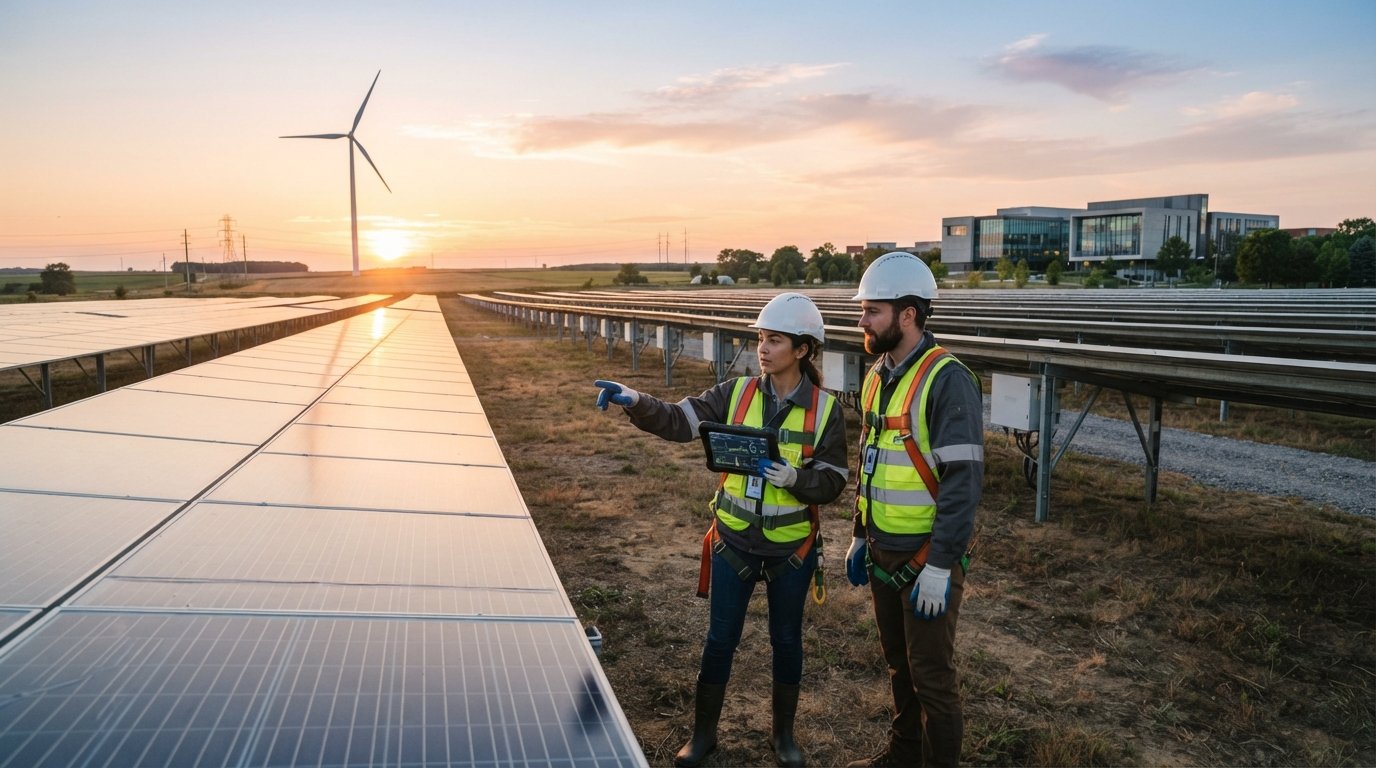
Degrees for Renewable Energy Careers: Your 2026 Path
Explore degrees for renewable energy careers, from associate to doctoral, and find the right program to launch a high-growth, purpose-driven career.

By Stacy Cignetti
Renewable energy is no longer a niche sector. It is a global economic force, and the demand for skilled professionals is rising faster than universities can produce graduates. If you are considering a career that combines engineering, environmental stewardship, and strong earning potential, a degree in renewable energy could be your entry point. But which degree, and at what level, will actually get you hired? This guide breaks down the academic pathways, from associate certificates to doctoral research, and explains how to match your education to the job you want.
Why Renewable Energy Degrees Matter in 2026
The renewable energy sector is expanding at a pace that outpaces many traditional industries. According to the U.S. Bureau of Labor Statistics, roles such as wind turbine service technicians and solar photovoltaic installers are projected to grow by more than 20 percent over the next decade, far above the national average. That growth is not limited to installation jobs. Engineers, project managers, policy analysts, and data scientists are all needed to design, finance, and optimize clean energy systems.
Employers increasingly prefer candidates with formal credentials. While some entry-level positions accept a high school diploma plus technical training, advancement into supervisory, design, or consulting roles almost always requires a degree. A bachelor's degree in renewable energy or a related field signals that you understand thermodynamics, electrical systems, and environmental regulations. A master's degree can qualify you for leadership or specialized research. The right degree also opens doors to internships and co-op programs that often lead directly to full-time offers.
Another reason to pursue a degree is flexibility. The skills you gain in a renewable energy program (systems thinking, project analysis, and technical communication) transfer across solar, wind, hydro, and bioenergy. If one subsector slows, you can pivot. That resilience is valuable in any career.
Associate Degrees and Certificates: Fast Tracks to Technical Roles
Not everyone needs a four-year degree to start working in renewable energy. Associate of Applied Science (AAS) degrees and certificate programs can prepare you for hands-on jobs in two years or less. These programs are typically offered at community colleges and technical schools and focus on practical skills: solar panel installation, wind turbine maintenance, energy auditing, and basic electrical theory.
An associate degree in renewable energy technology often includes courses in DC/AC circuits, hydraulics, and safety protocols. Graduates qualify for positions such as solar installer, wind technician, or energy efficiency technician. These roles often pay above the median wage for entry-level work and can serve as a stepping stone to further education. Many employers offer tuition reimbursement if you later decide to pursue a bachelor's degree.
Certificate programs are even shorter, sometimes just a few months. They are ideal if you already have a technical background or want to add a renewable energy specialization to an existing trade. For example, an electrician could earn a solar certificate to expand their service offerings. However, certificates alone may limit long-term advancement. If you aspire to management or engineering, plan to continue your education.
Bachelor's Degrees: The Broadest Range of Opportunities
A bachelor's degree is the most common entry point for professional roles in renewable energy. You have several options, each with a different emphasis. The best choice depends on whether you want to design systems, analyze policies, or manage projects.
Here are the most relevant bachelor's degrees for renewable energy careers:
- Renewable Energy Engineering: This major combines mechanical, electrical, and environmental engineering with a focus on solar, wind, and geothermal systems. You will learn to design and optimize energy conversion technologies.
- Electrical Engineering: With a focus on power systems and smart grids, this degree is ideal for careers in grid integration, energy storage, and electric vehicle infrastructure.
- Environmental Science or Studies: These programs emphasize policy, ecology, and sustainability. They lead to roles in environmental consulting, compliance, and project permitting.
- Mechanical Engineering: Provides a strong foundation for designing wind turbines, solar thermal systems, and bioenergy equipment.
- Energy Management: A business-oriented degree that covers energy markets, auditing, and efficiency. Good for careers in facilities management or energy consulting.
Beyond the major, look for programs that offer hands-on labs, internships, and partnerships with industry. A bachelor's degree in renewable energy typically takes four years, but some accelerated programs allow completion in three. If you are comparing degree paths, our guide on best careers with a graphic design degree illustrates how to align a major with specific job outcomes, a principle that applies equally to renewable energy.
Coursework in a bachelor's program often includes thermodynamics, fluid mechanics, power electronics, and energy policy. You will also develop soft skills like teamwork and project management. Many programs require a capstone design project, which you can use as a portfolio piece when applying for jobs.
Master's Degrees: Specialization and Leadership
If you already hold a bachelor's degree in engineering, science, or business, a master's degree can accelerate your career. Master's programs in renewable energy are typically one to two years long and offer deeper specialization. They are also a common route for career changers who need to build technical credentials.
Common master's options include:
- M.S. in Renewable Energy Engineering: Focuses on advanced system design, modeling, and research. Prepares you for senior engineering or R&D roles.
- M.S. in Energy Systems: Interdisciplinary program covering grid modernization, policy, and economics. Leads to roles in consulting, utilities, or government.
- MBA with Energy Focus: Combines business fundamentals with energy industry courses. Ideal for project finance, operations management, or entrepreneurship.
- Master of Public Policy (MPP) with Energy Concentration: For careers in regulation, advocacy, or international development.
Admission to these programs usually requires a bachelor's degree with a strong GPA and sometimes prerequisite courses in calculus and physics. Some programs offer evening or online formats for working professionals. A master's degree can increase your earning potential significantly; according to salary data, engineers with a master's earn about 20 percent more than those with only a bachelor's. It also qualifies you for leadership roles that require advanced technical judgment.
Doctoral Degrees: Research and Academic Careers
A Ph.D. in renewable energy or a related field is for those who want to push the boundaries of knowledge. Doctoral programs take four to six years and involve original research. Graduates typically pursue careers in academia, national laboratories, or advanced R&D at private companies.
If you are interested in developing new photovoltaic materials, optimizing wind farm layouts, or modeling climate policy, a doctorate is essential. It also allows you to teach at the university level. However, the opportunity cost is high: you forgo several years of salary. For most industry jobs, a master's degree is sufficient. A Ph.D. is best for those who are passionate about research and discovery.
Funding for doctoral study is often available through teaching or research assistantships, which cover tuition and provide a stipend. Competition for these positions is strong, so you should have a clear research interest and strong academic record.
Choosing the Right Program: Accreditation, Format, and Cost
Not all renewable energy programs are created equal. Accreditation matters because employers and licensure boards may require it. Regional accreditation is the gold standard for academic institutions, while programmatic accreditation (such as ABET for engineering) ensures your degree meets industry standards.
Format is another consideration. Online programs offer flexibility for working adults, but hands-on labs may require in-person sessions. Hybrid programs blend both. When evaluating cost, look beyond tuition to fees, equipment, and travel. Financial aid, scholarships, and employer tuition assistance can reduce your out-of-pocket expenses.
To find programs that match your goals, you can use resources like DegreesOnline.Education, which provides guides on accredited online degrees and financial aid. Always verify that a program is accredited and that its curriculum aligns with the jobs you want.
Career Outcomes and Earning Potential
What can you expect to earn with a renewable energy degree? Salaries vary by role, location, and experience. Here is a snapshot of median annual wages for common positions in 2026:
- Solar Photovoltaic Installer: $48,000
- Wind Turbine Technician: $58,000
- Energy Engineer: $85,000
- Environmental Scientist: $76,000
- Energy Manager: $95,000
- Renewable Energy Project Manager: $110,000
These figures are medians, meaning half of workers earn more and half earn less. Advanced degrees and professional certifications can push you toward the higher end. Location also matters: states with strong renewable portfolio standards, such as California, Texas, and New York, tend to offer higher salaries and more job openings.
Beyond salary, consider job satisfaction. Many renewable energy professionals report a strong sense of purpose because their work addresses climate change. That intrinsic reward can be as valuable as the paycheck.
Steps to Launch Your Renewable Energy Career
If you are ready to pursue a degree for a renewable energy career, follow a structured approach. It will help you avoid wasted time and money.
- Identify your target role. Do you want to be on the front lines installing solar panels, or do you prefer designing systems in an office? Your answer determines the degree level and major.
- Research accredited programs. Use online databases and school websites to compare curricula, costs, and outcomes. Look for internships and job placement rates.
- Apply for financial aid. Complete the FAFSA and search for scholarships specific to renewable energy or STEM fields.
- Gain experience while studying. Internships, part-time jobs, and research projects build your resume and network.
- Earn certifications. After graduation, consider credentials like the North American Board of Certified Energy Practitioners (NABCEP) for solar or the Global Wind Organisation (GWO) for wind.
Each step builds on the previous one. By the time you graduate, you will have a clear competitive advantage.
Frequently Asked Questions
Do I need a degree to work in renewable energy?
Not always. Entry-level installation and maintenance jobs may only require a high school diploma and on-the-job training. However, a degree opens doors to higher-paying roles and advancement.
Which degree is best for a career in solar energy?
For design and engineering roles, a bachelor's in renewable energy engineering or electrical engineering is ideal. For installation, an associate degree or certificate in solar technology is sufficient.
Can I study renewable energy online?
Yes, many universities offer online bachelor's and master's programs in renewable energy or related fields. Just ensure the program is accredited and includes any required hands-on components.
How long does it take to get a renewable energy degree?
Associate degrees take about two years, bachelor's degrees four years, master's degrees one to two years, and doctorates four to six years.
Is a renewable energy degree worth it?
If you are passionate about sustainability and want a stable, growing career, yes. The field is expanding, and salaries are competitive. However, you should choose a program that aligns with your specific career goals.
Renewable energy is more than a trend: it is the future of power generation. By choosing the right degree, you can position yourself at the center of this transformation. Whether you start with a certificate or go all the way to a Ph.D., your education will be the foundation of a meaningful and rewarding career.