
Dental Assisting Certificate: 12-Week Hybrid Program
Earn a Dental Assisting/Assistant Certificate in 12 weeks to under a year with hybrid training at Evolution Training Academy.

By Natalie Simmons
Finding a fast, affordable route into healthcare can feel like searching for a needle in a haystack. Dental assisting stands out as one of the few careers where you can move from curious beginner to employable professional in under a year, sometimes in as little as 12 weeks. At Evolution Training Academy, the Dental Assisting/Assistant Certificate program blends in-person labs with online coursework, giving you the hands-on skills and flexible study time that modern learners need. If you are weighing a quick credential against a longer degree, this program deserves a close look.
Why Dental Assisting Is a Smart Career Move Right Now
Dental assistants are the backbone of every dental practice. They prepare treatment rooms, sterilize instruments, take patient histories, assist chairside during procedures, and often handle administrative tasks like scheduling and billing. The Bureau of Labor Statistics projects steady demand for dental assistants through the decade, driven by an aging population, expanded dental coverage, and a growing emphasis on preventive oral care. For career changers and recent high school graduates alike, that translates into dependable hiring and room to grow.
What makes the field especially attractive is its low barrier to entry. Most states do not require a formal degree to start working as a dental assistant, but employers increasingly prefer candidates who have completed an accredited certificate program. A structured program like the one at Evolution Training Academy signals to hiring managers that you have been trained in infection control, chairside protocols, and patient communication. Many graduates also use dental assisting as a stepping stone toward dental hygiene, office management, or even dental school. If you are exploring fast credential options, our guide on top high paying certificate careers shows how short programs can lead to stable, well-paying work.
Another advantage is geographic flexibility. Dental offices exist in every community, from small towns to major metros, so you are not locked into a specific job market. The skills you learn are portable, and the demand is local. That combination makes dental assisting a practical choice for people who want to stay rooted in their community while building a career with real upward mobility.
Inside the Evolution Training Academy Program: Format and Timeline
The Dental Assisting/Assistant Certificate at Evolution Training Academy is designed to fit around real life. The program runs between 12 weeks and less than one year, depending on the schedule you choose. That range is intentional: some students want to move through quickly and enter the workforce, while others need a pace that accommodates work or family obligations. The mix of in-person and online instruction is central to that flexibility.
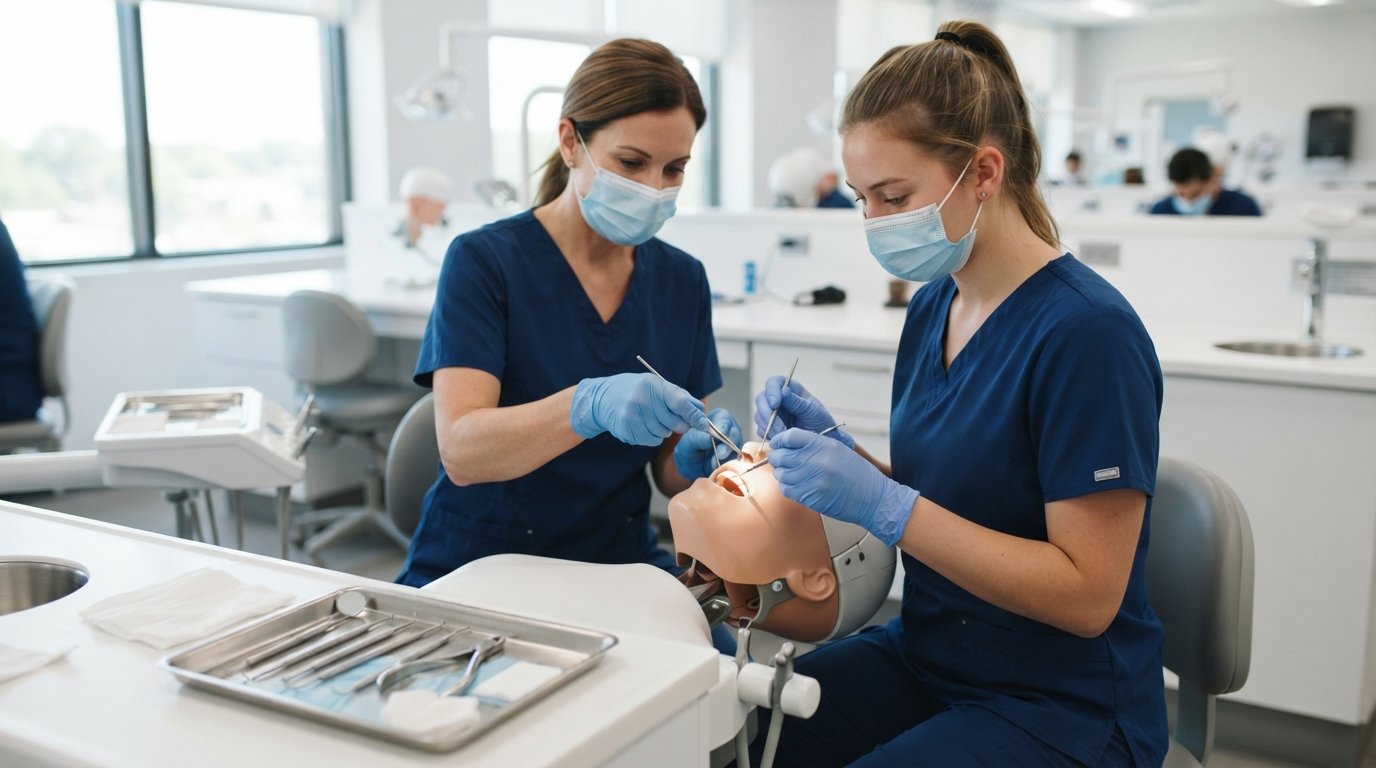
Online coursework covers the foundational knowledge you need before you ever touch a patient. You will study dental anatomy, medical terminology, infection control principles, and the legal and ethical responsibilities of a dental assistant. These modules are typically self-paced within weekly deadlines, so you can log in after work or during quiet hours. The in-person component happens in a lab or clinical setting, where you practice what you have learned under the supervision of experienced instructors.
Here is how the hybrid format typically breaks down:
- Online theory modules: Self-paced lessons on anatomy, terminology, and safety protocols, completed on your own schedule.
- In-person lab sessions: Hands-on practice with instruments, sterilization, suction, and chairside assisting techniques.
- Clinical externship or practicum: Supervised experience in a real dental office, giving you resume-ready hours and professional references.
- Career readiness workshops: Resume building, interview practice, and job search strategies tailored to dental offices.
That blend matters because dental assisting is a tactile profession. You cannot learn to pass instruments or manage a treatment room from a video alone. The in-person hours ensure you build muscle memory and confidence, while the online portion keeps the overall time commitment manageable. Graduates leave with both the knowledge to pass certification exams and the practical skills to impress on the job.
One question many prospective students ask is whether a hybrid program is respected by employers. In practice, what matters most is whether the program is accredited and whether you can demonstrate competency during a working interview. Evolution Training Academy structures its curriculum around the skills employers actually test, from infection control to patient rapport. That focus on practical readiness is what turns a short certificate into a hiring advantage.
What You Will Learn and the Skills That Matter Most
A good dental assisting program does more than teach you where to stand during a filling. It trains you to anticipate, communicate, and manage the flow of a busy practice. At Evolution Training Academy, the curriculum is built around the competencies that dental offices look for when they hire. You will learn how to prepare and maintain treatment rooms, sterilize instruments according to OSHA and CDC guidelines, take and develop dental radiographs (where state regulations allow), and assist with common procedures like fillings, extractions, and crown placements.
Just as important are the soft skills. Dental assistants are often the first and last person a patient sees, so communication, empathy, and professionalism are not optional. The program includes patient interaction scenarios and role-playing exercises that help you get comfortable explaining procedures, calming anxious patients, and handling confidential information. These are the skills that separate a good assistant from a great one, and they are the reason many graduates are promoted into office management or patient coordinator roles within a few years.
Here is a closer look at the core skill areas you will develop:
- Clinical support: Chairside assisting, instrument transfer, suction, and moisture control during procedures.
- Infection control: Sterilization techniques, personal protective equipment, and compliance with safety regulations.
- Radiography: Safe operation of dental X-ray equipment and image processing, within state scope of practice.
- Patient care: Taking medical histories, vital signs, and providing post-treatment instructions.
- Administrative tasks: Scheduling, record keeping, and basic billing and insurance processing.
Each of these areas is assessed through practical exams and written tests, so you know exactly where you stand before you enter the job market. The program also prepares you for the Dental Assisting National Board (DANB) Certified Dental Assistant (CDA) exam, which is voluntary in many states but can boost your earning potential and demonstrate your commitment to the field.
Admission Requirements, Costs, and How to Pay for It
One of the advantages of a certificate program is that the admission process is straightforward. Evolution Training Academy generally looks for a high school diploma or equivalent, a clean background check, and proof of immunizations (since you will be working with patients). Some programs require a brief interview or placement assessment to make sure you are ready for the pace of the coursework. There is no need for prior healthcare experience, which makes this an accessible entry point for career changers.
Cost is always a concern, and it is worth planning carefully. Certificate programs are far less expensive than associate or bachelor's degrees, but they are not free. Tuition for a dental assisting certificate typically covers instruction, lab materials, and sometimes the cost of certification exams. Evolution Training Academy may offer payment plans or financial aid options, so ask directly about what is available. It is also worth checking whether your state or local workforce development agency offers grants for short-term healthcare training, since dental assisting often qualifies.
If you are comparing costs across programs, remember to factor in the time to completion. A 12-week program lets you start earning sooner, which can offset a slightly higher upfront tuition compared to a longer, cheaper program. For a broader look at how families navigate college costs and financial aid, CollegeAndTuition offers practical resources on tuition planning and funding options. The key is to calculate the total cost of attendance, including transportation to lab sessions and any exam fees, so there are no surprises.
It is also smart to ask about job placement assistance before you enroll. A program that connects you with local dental offices for externships and hiring events gives you a significant head start. Evolution Training Academy builds employer relationships into its program, which is one of the reasons its graduates tend to move into jobs quickly after completing their certificate.
Career Outcomes: What You Can Expect After Graduation
Graduates of dental assisting programs typically find work in general dentistry offices, orthodontic practices, pediatric dental clinics, and oral surgery centers. Entry-level pay varies by region, but dental assistants generally earn a solid hourly wage with opportunities for overtime and bonuses. Over time, assistants who add certifications (such as expanded functions or radiology) can command higher pay and take on more responsibility.
The career ladder is real. Many dental assistants move into roles as lead assistants, treatment coordinators, or office managers. Others use the experience as a foundation for dental hygiene school, which can lead to a significant salary increase. Still others pursue dental school or careers in healthcare administration. The point is that this certificate is not a dead end; it is a launchpad.
Here is a snapshot of common career paths for certificate holders:
- Clinical dental assistant: Chairside support in general or specialty practices.
- Orthodontic assistant: Assisting with braces, aligners, and patient education.
- Treatment coordinator: Managing patient scheduling, financial arrangements, and case presentations.
- Dental office manager: Overseeing staff, billing, and day-to-day operations.
- Dental hygiene student: Using assisting experience as a stepping stone to a hygiene degree.
Because the program can be completed in as little as 12 weeks, you can test the waters of the dental field without committing years of your life or tens of thousands of dollars. That low-risk entry point is particularly valuable for adult learners who need to keep working while they train.
Is the Hybrid Format Right for You?
Hybrid learning is not for everyone, but it works well for students who are self-motivated and comfortable with technology. If you thrive in a structured classroom and need constant accountability, a fully in-person program might be a better fit. But if you are balancing a job, family, or other responsibilities, the mix of online theory and in-person labs offers a practical compromise. You get the flexibility of online study without sacrificing the hands-on training that dental assisting demands.
It is also worth considering your learning style. Online modules require discipline and time management. The in-person sessions are intensive and participatory, so you need to be ready to ask questions and practice until you feel confident. Evolution Training Academy supports students with instructor access and peer study groups, which helps bridge the gap between the two formats. If you are unsure, ask to speak with a current student or a recent graduate. Their experience will tell you more than any brochure.
Finally, think about your long-term goals. If you want to become a dental hygienist or dentist, this program is a smart first step that lets you earn while you learn. If you want a stable job with room for advancement and no desire to go back to school, dental assisting offers that too. The certificate is flexible enough to serve both paths.
Taking the first step is often the hardest part. But with a 12-week to less-than-one-year timeline, a mix of in-person and online instruction, and a clear path to employment, the Dental Assisting/Assistant Certificate at Evolution Training Academy makes that step a lot less intimidating. Whether you are starting your career, changing directions, or looking for a healthcare role that lets you make a difference every day, this program is worth a serious look.