
Duke Biology Beyond the Bachelor's: In-Person Paths
Explore Duke's in-person biology graduate programs beyond the bachelor's, including MS and PhD paths, research opportunities, and funding.

By Levi Butler
Duke University's Biology Department is a powerhouse for students who want to move beyond the bachelor's degree and dive deep into biological sciences through in-person study. Whether you are a current Duke undergraduate thinking about a fifth-year master's, a graduate from another university seeking a research-intensive master's or PhD, or a working professional considering a return to campus for advanced training, Duke offers a range of residential programs that combine rigorous coursework with hands-on laboratory experience. The Durham campus provides access to world-class faculty, cutting-edge facilities, and a collaborative scientific community that is hard to replicate online.
This article explores what advanced in-person study in general biology and biological sciences looks like at Duke. We will cover the available degree paths, admission expectations, curriculum structure, research opportunities, funding considerations, and career outcomes. Along the way, we will highlight how Duke's location in the Research Triangle Park area amplifies opportunities for internships, industry partnerships, and networking. If you are weighing whether an advanced degree is worth the investment, the sections below will help you map out a realistic plan.
What Advanced In-Person Biology Study at Duke Looks Like
Duke's Biology Department offers graduate programs that lead to either a Master of Science (MS) or a Doctor of Philosophy (PhD) in Biology. The department also participates in interdisciplinary programs such as the University Program in Genetics and Genomics and the Duke Center for Genomic and Computational Biology, but for students seeking a general biology focus, the core Biology graduate program is the most direct route. All of these programs are delivered in person on the Durham campus, meaning students attend classes, conduct laboratory rotations, and participate in seminars face to face.
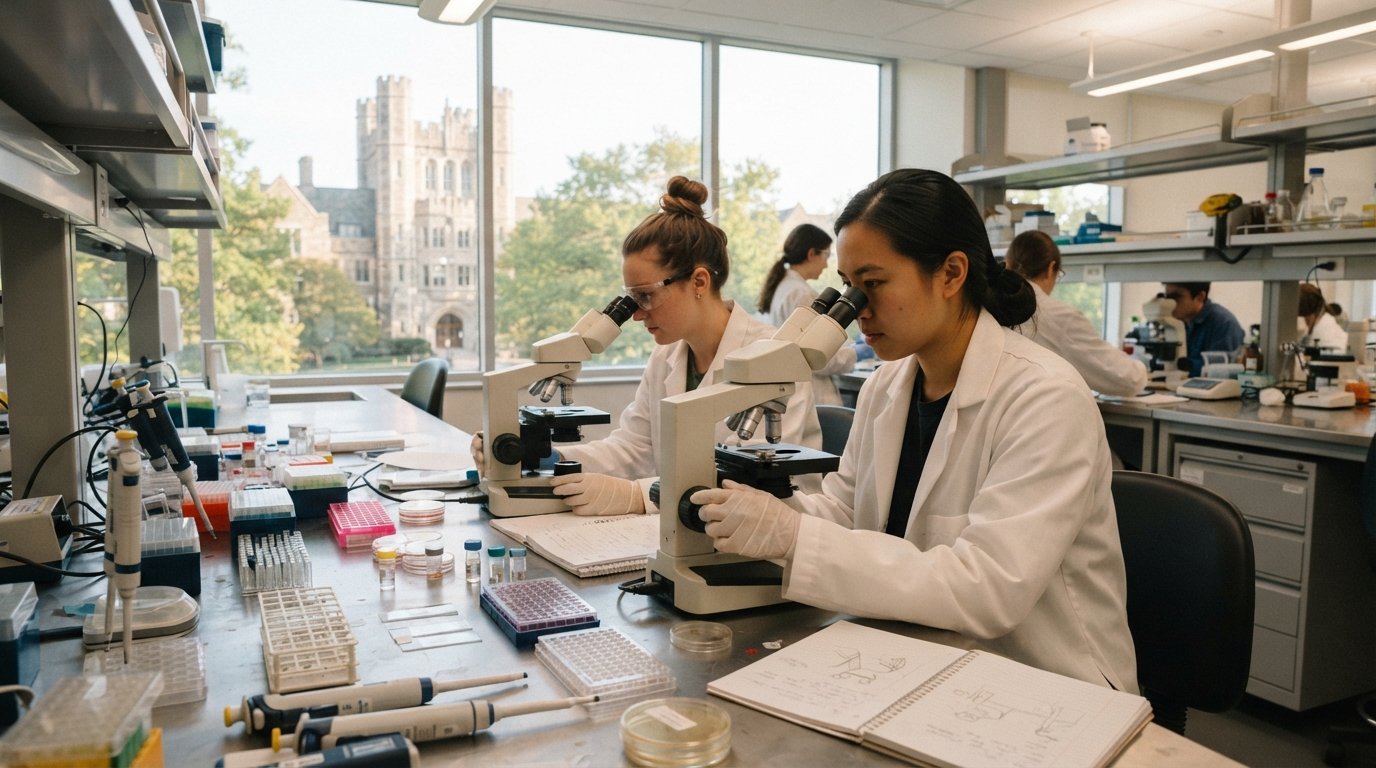
The in-person format is a deliberate design choice. Biology is an empirical science, and advanced training requires access to equipment, reagents, and mentorship that only a physical laboratory can provide. Duke's biology facilities include modern imaging centers, genomics cores, and greenhouse spaces. Students in the MS program typically complete coursework plus either a thesis based on original research or a capstone project. PhD students go further, spending the majority of their time on independent dissertation research under the guidance of a faculty advisor.
Beyond the lab, the residential experience includes department seminars, journal clubs, and teaching opportunities. These are not incidental extras; they are part of how Duke trains scientists to communicate, critique, and collaborate. For students who thrive in a structured academic environment with regular face-to-face interaction, this model can be more effective than asynchronous online study.
Degree Pathways: MS, PhD, and Beyond
When prospective students ask about biology study beyond the bachelor's degree at Duke, they usually want to understand the difference between the MS and PhD tracks. The MS is a shorter program, often completed in two years, and is suitable for students who want advanced training for industry roles, teaching positions, or as a stepping stone to a PhD or professional school. The PhD is a longer commitment, typically five to six years, and is designed for students who intend to lead research programs in academia, government, or industry.
Duke also offers a combined MD/PhD program through the School of Medicine, but that is a distinct pathway with its own admissions process. For general biology students, the most common options are:
- MS in Biology: Two years, coursework plus thesis or capstone, often funded through teaching assistantships or research assistantships.
- PhD in Biology: Five to six years, full tuition waiver and stipend for admitted students, intensive research training.
- Interdisciplinary graduate certificates: Optional add-ons in areas such as genomics or computational biology for students enrolled in a degree program.
Each pathway has different admission expectations. The MS program may accept students with strong undergraduate records but limited research experience, while the PhD program expects prior research exposure and a clear sense of research interests. Applicants should check the department website for current requirements, as these can change.
It is also worth noting that Duke's Biology Department does not offer a terminal master's degree for students who are not admitted to the PhD program; the MS is a separate admissions track. Students who are unsure which path fits should reach out to the graduate program coordinator before applying.
Admissions and Prerequisites for In-Person Graduate Study
Admission to Duke's biology graduate programs is competitive. The department receives hundreds of applications each year for a limited number of spots. While specific metrics vary, successful applicants typically have a strong undergraduate GPA in biology or a related field, prior research experience, and supportive letters of recommendation. The GRE is not required for many programs, but applicants should verify current policy.
For the PhD track, research experience is the single most important factor. Applicants should be able to articulate what they worked on, what they learned, and why they want to pursue independent research. For the MS track, while research experience is valuable, the admissions committee also weighs coursework performance, statement of purpose, and fit with faculty interests.
International students must demonstrate English proficiency through TOEFL or IELTS scores unless they have earned a degree from an English-speaking institution. All applicants should prepare a statement of purpose, a resume or CV, and transcripts. Some programs may require a writing sample or additional essays.
Because the program is in-person, applicants should also consider logistics: moving to Durham, securing housing, and planning for full-time study. Duke offers graduate student housing options and resources for incoming students, but these are not guaranteed.
Curriculum and Research Opportunities
The curriculum for Duke's MS and PhD programs in biology is flexible but rigorous. MS students typically take a core set of graduate courses in areas such as molecular biology, ecology, evolution, or cell biology, depending on their focus. They also complete a research thesis or capstone project. PhD students take advanced seminars, rotate through laboratories in their first year, and then form a dissertation committee.
Research opportunities are a major draw. Duke Biology faculty study a wide range of topics, from plant genomics and evolutionary developmental biology to neurobiology and behavioral ecology. Students can join labs in the Department of Biology, the Duke Institute for Brain Sciences, the Nicholas School of the Environment, or the School of Medicine. The in-person format allows students to participate in field work, bench work, and computational analysis with direct mentorship.
Funding for research comes from federal grants, private foundations, and internal awards. PhD students are typically supported by a combination of teaching assistantships, research assistantships, and fellowships. MS students may also find funding through these channels, though it is less guaranteed.
For students interested in broadening their skills, Duke offers workshops and courses in scientific writing, data visualization, and grant writing. These are valuable for both academic and industry careers.
Funding, Costs, and Financial Aid
Cost is a major consideration for any advanced degree. Duke's PhD program in Biology provides full tuition remission and a stipend for all admitted students, typically through a combination of teaching and research assistantships. This funding is renewed annually based on satisfactory progress. The MS program, by contrast, may or may not offer funding; some MS students pay tuition and fees, while others secure partial support through research grants or teaching positions.
Prospective students should carefully review the financial aid information on the department website. In addition to institutional support, external fellowships such as those from the National Science Foundation or the National Institutes of Health can provide funding. These are competitive but can significantly offset costs.
For students seeking additional financial resources, Scholarship.Education is a comprehensive online resource that helps students discover, evaluate, and apply for educational scholarships and financial aid opportunities worldwide. It covers high school, undergraduate, graduate, and non-traditional students, and can be a useful starting point for finding external funding to support in-person graduate study.
It is also wise to factor in living costs in Durham, which are generally lower than in major metropolitan areas but still require budgeting. Graduate students may be eligible for on-campus housing or subsidized apartments, but demand is high.
Career Outcomes and ROI for Advanced Biology Degrees
Graduates of Duke's biology graduate programs go on to a variety of careers. PhD graduates often pursue postdoctoral positions, faculty roles at universities, or research scientist positions in industry. MS graduates may work in biotechnology, pharmaceutical companies, environmental consulting, or education. Some students use their advanced degree as a stepping stone to medical school, veterinary school, or law school.
The return on investment depends on the path. PhD students who receive full funding and stipends effectively earn while they learn, making the financial risk lower. MS students who pay full tuition should consider the salary potential in their intended field. According to Duke's career outcomes data, biology graduates with advanced degrees earn competitive salaries, but outcomes vary by sector and role.
Students interested in high-salary career paths might also explore computer science, which has strong earning potential. For example, best computer science degrees for high salary potential provides a comparison point, but biology graduates should focus on the specific opportunities in their field.
Duke's location in the Research Triangle Park area is a significant advantage. The region is home to numerous biotechnology and pharmaceutical companies, as well as government research agencies. Students can attend career fairs, networking events, and industry seminars without leaving campus. Internships and co-op opportunities are common, and many students transition directly into local companies after graduation.
Why In-Person Study Matters for Biology
Online education has expanded access to many fields, but biology is one where in-person training is particularly important. Laboratory work requires physical presence, and the collaborative nature of science benefits from face-to-face interaction. At Duke, students in the biology graduate programs work closely with faculty mentors, attend seminars, and participate in departmental activities that build professional networks.
In-person study also allows for spontaneous learning moments: a conversation in the hallway, a troubleshooting session at the bench, a guest lecture that leads to a collaboration. These are difficult to replicate online. For students who are able to relocate to Durham, the residential experience offers a rich environment for intellectual growth.
That said, some professional development opportunities are available online, and students can supplement their in-person training with online courses or workshops. Duke's library system and research computing resources are accessible both on and off campus.
How to Prepare for Application and Enrollment
If you are considering applying to Duke's biology graduate programs, start early. The application deadlines are typically in December for fall admission, but you should begin preparing at least a year in advance. Here are key steps:
- Clarify your goals: Decide whether the MS or PhD is the right fit for your career plans. Talk to mentors and professionals in the field.
- Gain research experience: If you are still an undergraduate, seek out lab positions, summer research programs, or independent projects. For PhD applicants, research experience is essential.
- Build relationships with recommenders: Choose faculty who know you well and can speak to your research potential.
- Prepare for standardized tests: Check whether the GRE is required for your program of interest and plan accordingly.
- Draft a compelling statement of purpose: Explain why Duke, why the program, and what you hope to accomplish. Be specific about faculty you would like to work with.
After applying, you may be invited for an interview or recruitment weekend. This is an opportunity to visit campus, meet faculty and current students, and get a feel for the environment. Take advantage of it to ask questions about funding, lab culture, and expectations.
Once admitted, you will need to confirm your enrollment, submit official transcripts, and arrange for housing. Duke's graduate school provides checklists and orientation programs to help you transition.
For students who are not yet ready to commit to a full graduate program, Duke offers non-degree study and certificate options that allow you to take graduate courses without enrolling in a degree program. These can be a good way to test the waters and strengthen your application for a future degree.
Finally, keep in mind that program details, admission criteria, and outcomes vary by institution. Always consult the official Duke Biology Department website and the Duke Graduate School for the most current information. CollegeDegrees.School is an educational resource and does not guarantee admission or employment; decisions should be based on your own research and goals.