
ECG Technician Certificate: 12-Week Path at AACC
The Electrocardiograph Technology/Technician Certificate, 12 weeks to less than 1 year In-person at Anne Arundel Community College, can launch a clinical career fast.

By Henry Powell
Finding a fast, affordable route into healthcare can feel like searching for a hidden door. The Electrocardiograph Technology/Technician Certificate, 12 weeks to less than 1 year In-person at Anne Arundel Community College, is one of those doors. It is a short, hands-on program that trains you to run electrocardiogram (ECG or EKG) tests, the simple, painless recordings that help doctors spot heart rhythm problems, blocked arteries, and other cardiac issues. If you want a clinical role without spending years in a classroom, this certificate deserves a closer look.
Anne Arundel Community College (AACC), located in Arnold, Maryland, offers this in-person credential through its continuing education and workforce development arm. The program is built for adults who need flexibility, not a four-year detour. You will practice electrode placement, learn to read basic rhythms, and understand how ECGs fit into patient care. By the end, you should be ready for entry-level work in hospitals, clinics, and cardiology offices. This guide breaks down the structure, costs, career outlook, and practical steps so you can decide whether this path fits your goals.
What an ECG Technician Actually Does
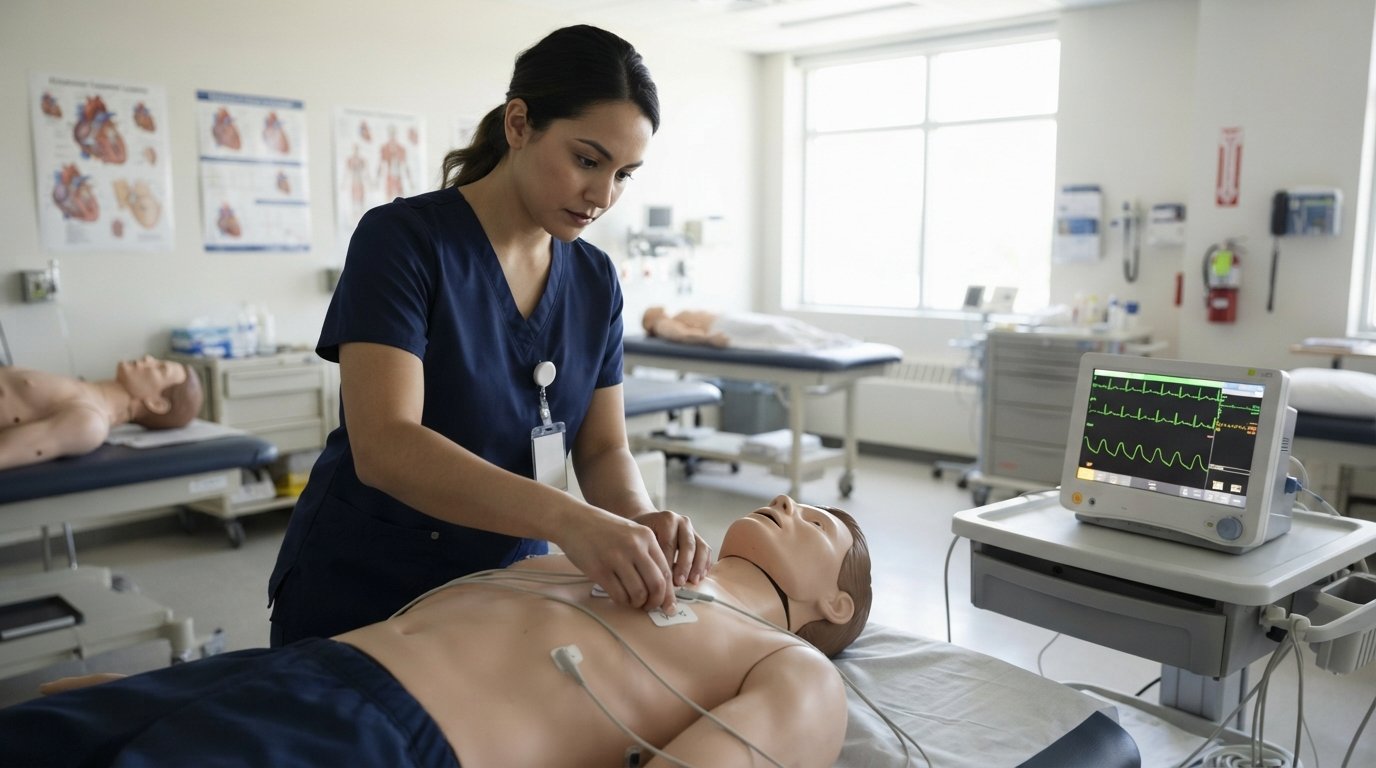
An electrocardiograph technician operates the machine that records the heart's electrical activity. The job is more than pressing buttons. You prepare the patient, attach electrodes in precise positions on the chest and limbs, run the test, and flag any results that need immediate attention. You also explain the procedure so patients feel calm, since fear and movement can distort a reading. In many settings, you will manage several tests a day and coordinate with nurses and cardiologists.
The work environment varies. Hospitals offer fast-paced shifts with high patient volume. Outpatient clinics tend to be calmer and more predictable. Some technicians also perform Holter monitoring, where a patient wears a portable recorder for 24 to 48 hours, or stress tests done while the patient walks on a treadmill. These add variety and make the role a strong stepping stone if you later want to pursue nursing, sonography, or another allied health field.
Physical demands are modest but real. You will stand, walk, and move equipment, and you need steady hands to place leads accurately. Attention to detail matters more than strength. A misplaced electrode can create an artifact that looks like a heart problem, so precision is the core skill you will practice repeatedly in an in-person program.
Inside the AACC Certificate: Format, Length, and Coursework
The headline feature of this program is its compressed timeline. The Electrocardiograph Technology/Technician Certificate, 12 weeks to less than 1 year In-person at Anne Arundel Community College, is designed to move you from beginner to job-ready in months, not semesters. Exact length depends on the course section you choose, and some cohorts may run closer to the 12-week end while others extend further. Always confirm the current schedule with the college before you register.
Because the program is in person, you get something online courses struggle to replicate: hands-on repetition. You will practice on real equipment and, in many labs, on fellow students acting as patients. That muscle memory matters when you are in a clinic with a nervous patient and a doctor waiting on a clean tracing. Expect a mix of classroom instruction, lab practice, and preparation for certification exams.
Typical topics covered in an ECG technician certificate include:
- Cardiac anatomy and the electrical conduction system of the heart
- Proper electrode placement and lead configurations for a 12-lead ECG
- Recognizing normal sinus rhythm and common arrhythmias
- Identifying artifacts and troubleshooting poor tracings
- Patient preparation, safety, and infection control basics
- Medical terminology and documentation practices
Beyond the technical skills, strong programs build in professionalism: how to greet patients, protect privacy under HIPAA, and communicate findings to the care team without overstepping. These soft skills often decide who gets hired after the first interview. AACC's workforce-focused structure tends to emphasize them alongside the equipment training.
Admission Requirements and Prerequisites
Community college certificate programs are generally open-access, but health programs often add steps. You should expect to complete an application, provide proof of high school completion or equivalent, and possibly take a placement test or attend an orientation session. Some cohorts require a background check or basic health documentation before the clinical or lab portion. Requirements can change, so verify the current checklist with AACC's continuing education office.
There is usually no competitive GPA cutoff for a short certificate like this, which makes it accessible to career changers and adult learners returning to school after years away. That accessibility is a big part of the appeal. You do not need a science degree to start; the program teaches the anatomy and terminology you need from the ground up.
Cost, Financial Aid, and Return on Investment
Short certificates are usually priced per course or as a bundled program fee, and community college rates in Maryland are among the more affordable in the region. Compared with a two-year allied health degree, an ECG certificate costs a fraction as much and gets you into the workforce years sooner. That speed is the real financial advantage: you start earning and gaining clinical experience while peers in longer programs are still paying tuition.
Financial aid for non-credit workforce programs can differ from traditional degree aid. Some students qualify for workforce grants, employer tuition assistance, or scholarship funds aimed at healthcare training. It is worth asking AACC directly about payment plans and any grants tied to in-demand healthcare roles. For a broader look at how families plan and pay for postsecondary training, resources like CollegeAndTuition's college cost guides can help you compare options and avoid surprises.
To estimate your return, compare the total program cost against local entry-level ECG technician wages. Even modest hourly pay adds up quickly when you enter the field months earlier than you would through a longer degree. The certificate is not a guarantee of a specific salary, and pay varies by employer and region, but the low upfront cost keeps the risk small.
Certification and Career Outlook
Many employers prefer or require national certification, and the two best-known credentials are Certified Cardiographic Technician (CCT) and Certified EKG Technician (CET). Certification usually involves passing an exam that covers rhythm interpretation, electrode placement, and patient care. A good certificate program aligns its curriculum with those exam blueprints so you can sit for certification soon after finishing. Confirm with AACC whether exam preparation is built into the coursework or offered separately.
Demand for ECG technicians tracks the broader healthcare job market, which continues to grow as the population ages and cardiac monitoring expands into more settings. Hospitals, cardiology practices, urgent care centers, and telehealth monitoring services all need people who can capture accurate tracings. Entry-level roles often serve as a launch point: many technicians move into telemetry monitoring, cardiac catheterization labs, or further study in nursing and diagnostic imaging.
If you are comparing this credential with other short healthcare pathways, it helps to see how similar programs are structured. For example, our guide to the Albany Technical College pharmacy technician certificate shows how another compressed clinical program balances lab hours with exam prep, which is a useful benchmark for weighing your options.
How to Enroll: A Step-by-Step Plan
Applying to a workforce certificate is simpler than applying to a degree program, but a little planning prevents wasted time. The steps below outline a practical sequence, from first inquiry to first day of class.
- Visit AACC's continuing education site or call the workforce office to confirm the current ECG technician schedule, cost, and admission checklist.
- Complete the college application or non-credit registration form and submit proof of high school completion.
- Attend any required orientation and complete background check or health documentation if the cohort requires it.
- Arrange payment or apply for workforce grants, payment plans, or employer tuition assistance.
- Reserve your seat early, since short health cohorts fill quickly and section sizes are limited by lab space.
After enrolling, treat the program like a job. Attendance matters in hands-on courses because missed labs are hard to make up. Build a study routine around rhythm strips, and practice electrode placement until it feels automatic. Students who pass certification exams on the first try tend to be the ones who reviewed tracings daily rather than cramming before the test.
Is This Certificate Right for You?
This program fits people who want a clinical role quickly, prefer learning by doing, and are comfortable interacting with patients. It is a strong choice for career changers, recent high school graduates testing the healthcare waters, and current healthcare workers (like medical assistants or nursing assistants) who want to add a credential. It is less suited to anyone seeking a broad academic degree or a role with heavy independent diagnostic responsibility, since ECG technicians work under supervision and within a defined scope.
Think about your end goal. If you want to become a nurse or cardiology professional eventually, this certificate is a low-cost way to earn clinical hours and confirm your interest before committing to a longer program. If you want a stable entry-level job with room to grow, it stands on its own. Either way, the combination of a short timeline, in-person training, and a recognized credential makes the Electrocardiograph Technology/Technician Certificate, 12 weeks to less than 1 year In-person at Anne Arundel Community College, a practical first step. Confirm current details with the college, then take the leap: your first clean ECG tracing may be closer than you think.