
Empire Beauty School-Hanover Cosmetology Certificate Guide
The Empire Beauty School-Hanover cosmetology certificate offers hands-on training and a path to licensure in under two years. See costs and outcomes.

By Aubrey Hayes
What if you could turn a passion for hairstyling, skincare, and makeup into a licensed profession in under two years, without committing to a four-year degree? That is the core promise of the Cosmetology/Cosmetologist, General Certificate, 1 year to less than 2 years In-person at Empire Beauty School-Hanover. This program is designed for people who want hands-on training, real client experience, and a clear path to state licensure in a relatively short timeframe. Whether you are a recent high school graduate, a career changer, or a parent helping a young adult choose a direction, understanding what this certificate involves, what it costs, and where it can lead is essential before you enroll.
Empire Beauty School-Hanover is part of a larger network of cosmetology schools, and its Hanover location offers an in-person format that emphasizes practical floor work and salon-style learning. The program falls into the category of a general cosmetology certificate, which typically covers hair, skin, and nails, and prepares students for the state board exam. In this guide, we will break down the curriculum, admission steps, costs, career outcomes, and how to decide if this specific program is the right fit for your goals. We will also connect this certificate to broader questions about degree pathways and return on investment, because even short programs deserve a careful financial and career review.
What the Cosmetology General Certificate at Empire Beauty School-Hanover Covers
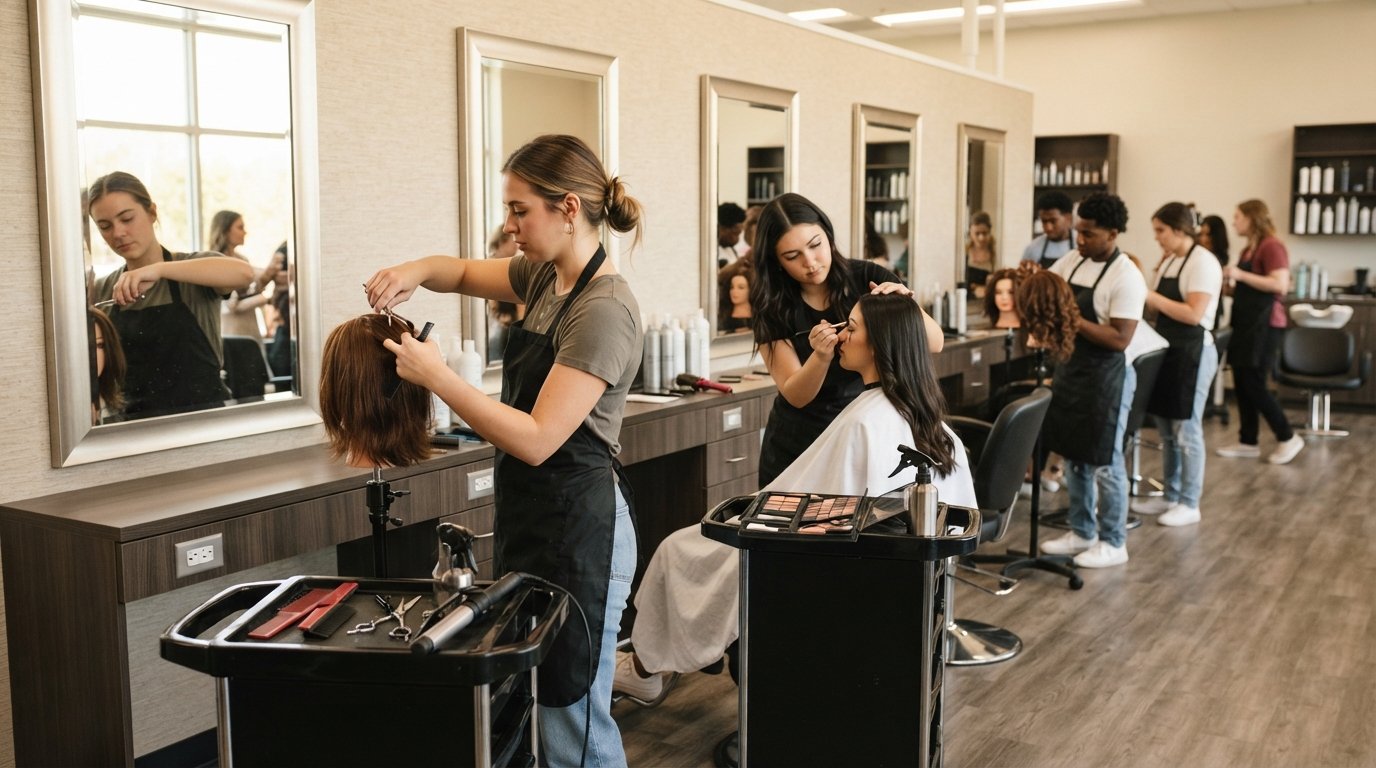
The cosmetology certificate at Empire Beauty School-Hanover is a clock-hour program that combines classroom instruction with supervised practice on real clients in a student salon. Because it is an in-person program, students benefit from direct feedback from instructors, access to professional tools and products, and the rhythm of a salon environment. The general certificate label means the curriculum is broad rather than specialized: you will learn haircutting, coloring, chemical texture services, styling, shampooing, skincare, makeup application, and nail care. This breadth is intentional, because most states require cosmetology license candidates to demonstrate competency across multiple service areas.
Program length is listed as one year to less than two years. In practice, completion time depends on whether you attend full-time or part-time, how many clock hours the state requires, and the school's scheduling options. Most cosmetology programs require between 1,000 and 1,600 hours, and Empire's Hanover location structures its schedule to help students accumulate those hours efficiently. The in-person format means you will spend significant time on your feet, working with clients, sanitizing tools, and learning the business side of salon work, including client consultation and retail recommendations.
One of the most valuable aspects of this program is the transition from classroom models to real clients. Early in the program, students practice on mannequins and each other. Later, they work on the student salon floor, where they learn to manage time, communicate with diverse clients, and adapt techniques to different hair types and skin conditions. This progression is a key differentiator for in-person cosmetology training, and it is why many employers prefer to hire graduates who have already logged hours behind the chair.
Core Curriculum and Hands-On Training
The curriculum is typically organized around both theoretical knowledge and practical application. You can expect coursework in anatomy and physiology, sanitation and infection control, chemical safety, and state cosmetology laws. These topics are not just academic requirements; they are tested on the licensing exam and are critical for protecting client health. On the practical side, students rotate through hair, skin, and nail services, building a portfolio of techniques and a personal speed and confidence level.
Because the program is a general certificate rather than a specialized diploma, it does not narrow you into a single niche too early. That flexibility is useful if you are unsure whether you want to focus on hair color, esthetics, or bridal styling. It also means the program is broad enough to satisfy licensing requirements in most states, though you should always confirm the specific hour and curriculum requirements for the state where you plan to work.
Admission Requirements and Enrollment Steps
Enrolling in the cosmetology certificate at Empire Beauty School-Hanover is a straightforward process, but it does require planning. Most applicants are at least 16 or 17 years old, depending on state rules, and must provide proof of high school diploma or equivalent. Some locations require a campus visit or interview, and all applicants should be prepared to discuss their schedule, transportation, and financial plan. Because the program is in-person and clock-hour based, attendance policies are strict, and missing hours can delay graduation.
The enrollment process generally follows a sequence that helps both the student and the school confirm fit. Here is a typical step-by-step path:
- Request information from the Hanover campus and schedule a tour or admissions interview.
- Complete the application and provide proof of education and identification.
- Discuss scheduling options, start dates, and the total cost of attendance with an admissions representative.
- Apply for financial aid if eligible, and review loan or payment plan options before signing an enrollment agreement.
- Confirm your start date, attend orientation, and purchase required kit and supplies.
After these steps, you will receive a schedule and a student kit list. The kit usually includes shears, combs, brushes, a mannequin, and other tools, and it is often bundled into the program cost. Be sure to ask whether the kit is included or billed separately, because that difference can affect your total out-of-pocket expense. Also ask about transfer credit policies if you have completed cosmetology hours at another school, though transfer acceptance is often limited.
Cost, Financial Aid, and Return on Investment
Cost is one of the most important factors in choosing a cosmetology program. Empire Beauty School-Hanover, like other proprietary schools, publishes a net price and program cost that includes tuition, fees, and sometimes kit and supplies. Because costs vary by location and start date, you should request a current cost sheet directly from the campus. Do not rely on national averages alone, since local pricing and state fees can differ significantly.
Financial aid is available for eligible students, typically through federal student aid programs, grants, and loans. Empire participates in federal aid programs, and admissions representatives can help you complete the Free Application for Federal Student Aid (FAFSA). However, cosmetology certificates are short programs, and loan amounts should be evaluated carefully against expected earnings. A useful rule of thumb is to keep total borrowing below what you expect to earn in your first year after licensure. You can also explore outside scholarships and grants to reduce reliance on loans; resources like Scholarship.Education provide databases and guidance for finding financial aid opportunities, including for career and trade programs.
Return on investment for a cosmetology certificate depends on several variables: your state's licensing requirements, the local demand for stylists, your ability to build a clientele, and whether you plan to work in a commission salon, booth rental, or ownership role. Compared with a four-year degree, the upfront cost is lower and the time to earning is shorter, but income can vary widely. Many new cosmetologists start in salons where they earn a base wage plus commission or tips, and earnings grow as they build repeat clients. If you are comparing this path with other credentials, our guide to a music general bachelor degree at Blackburn College illustrates how longer degree pathways differ in cost and structure, which can help you weigh short-term training against a four-year commitment.
Career Outcomes and Licensure After Graduation
Graduating from the cosmetology certificate program is not the final step; licensure is. In most states, you must pass a written and practical exam to become a licensed cosmetologist. Empire's program is designed to prepare you for that exam, but the responsibility for scheduling and passing rests with you. Some states also require a minimum number of clock hours and a specific curriculum, so confirm that the Hanover program meets the requirements of the state where you intend to practice.
Once licensed, career options include employment in full-service salons, barbershops, spas, resorts, and cruise ships, as well as freelance and bridal work. Some cosmetologists specialize in color, extensions, or editorial styling, while others move into education, sales, or salon management. The general certificate gives you a broad foundation, which is helpful if you want to explore multiple service areas before specializing. Earnings vary by region and business model, but the Bureau of Labor Statistics projects steady demand for personal appearance workers, with turnover creating ongoing entry-level opportunities.
For students who want to continue building credentials, the certificate can serve as a stepping stone. Additional training in esthetics, barbering, or business management can expand your service menu and income potential. If you are interested in how short programs fit into broader education and career planning, CollegeDegrees.School offers tools to explore degree and certificate options by field and location, and you can use those resources to compare cosmetology with other trade and career pathways.
Is the In-Person Cosmetology Certificate at Empire Beauty School-Hanover Right for You?
This program is a strong fit for students who learn best by doing, want to enter the workforce relatively quickly, and are comfortable working with the public. The in-person format at Hanover provides structure, supervision, and real client interaction, which are difficult to replicate in a fully online program. It is also a good choice for people who are drawn to the creative and relational sides of beauty work and who are willing to complete the clock hours and licensing steps required by the state.
On the other hand, the program may not be ideal if you need maximum schedule flexibility, are unsure about a long-term commitment to the beauty industry, or are sensitive to the physical demands of standing for long periods. Because it is a proprietary school, costs may be higher than at a public community college cosmetology program, so comparing options is wise. Visit the campus, talk to current students, review the completion and licensure rates, and ask detailed questions about job placement support. A thoughtful comparison now can save you time and money later.
Ultimately, the Cosmetology/Cosmetologist, General Certificate, 1 year to less than 2 years In-person at Empire Beauty School-Hanover is a practical, hands-on route into a licensed profession. It rewards students who are ready to engage with clients, master sanitation and technique, and take ownership of their licensing journey. If you are considering this path, start by requesting current program information, confirming state licensure requirements, and building a financial plan that keeps borrowing manageable. With clear expectations and a realistic budget, this certificate can be the first step toward a creative and client-focused career.