
Environmental Science Bachelor's at Colorado Mesa
Earn your Environmental Science Bachelor's degree, usually 4 years In-person at Colorado Mesa University, and gain hands-on field experience for a career in conservation or environmental consulting.

By Connor Howard
Choosing a major that blends scientific rigor with real-world problem solving is a smart move for students who want to make a tangible difference. The Environmental Science Bachelor's degree, usually 4 years In-person at Colorado Mesa University, stands out as a hands-on program set against the dramatic landscapes of western Colorado, where mountains, deserts, and rivers become living laboratories. If you are weighing your options for college and want a degree that prepares you for careers in conservation, environmental consulting, or graduate study, this program deserves a close look.
This article breaks down what the program covers, how to get admitted, what it costs, and where graduates land. We will also compare in-person versus online formats, highlight financial aid strategies, and show how you can use resources like Scholarship.Education to reduce your out-of-pocket costs. By the end, you should have a clear picture of whether this four-year, face-to-face degree at Colorado Mesa University aligns with your academic and career goals.
Why Choose an In-Person Environmental Science Degree at Colorado Mesa University
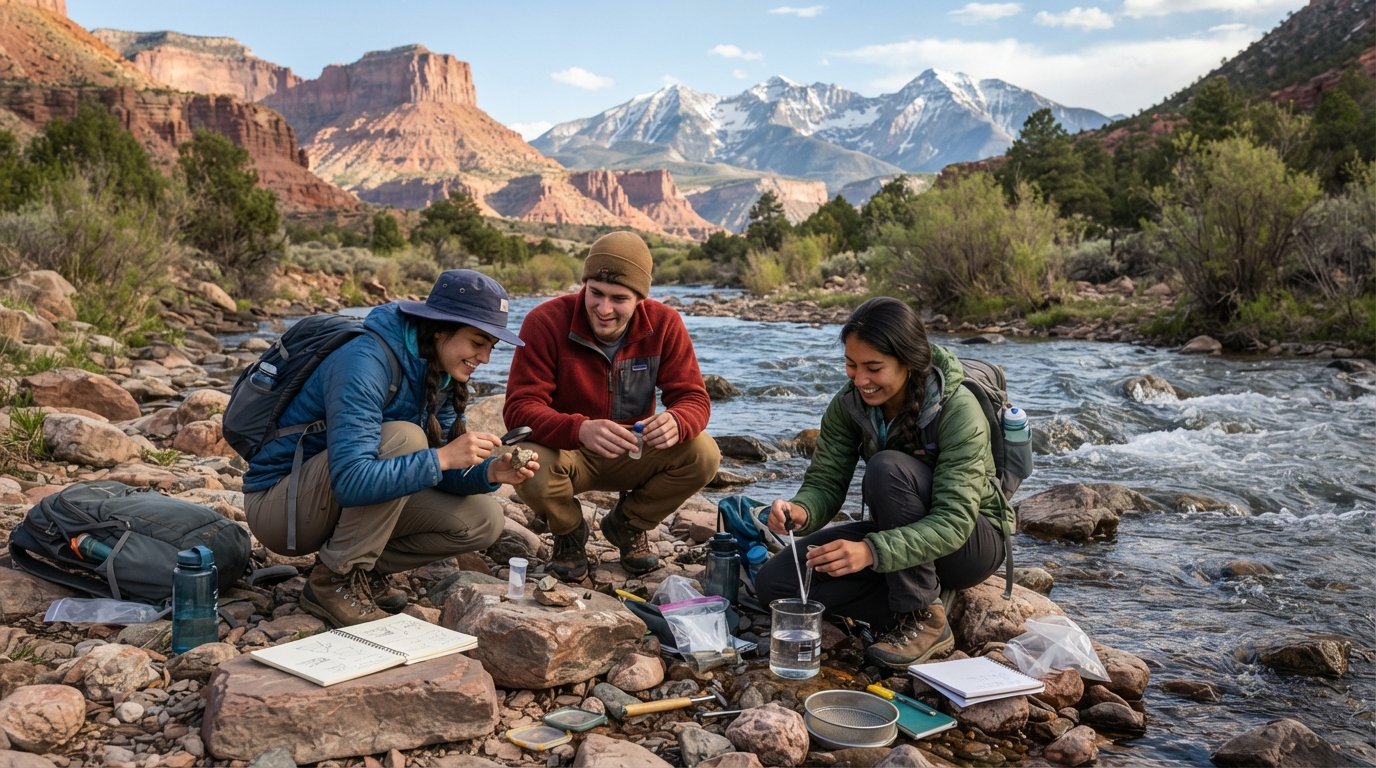
Environmental science is inherently interdisciplinary, pulling from biology, chemistry, geology, and policy. While online programs offer flexibility, the in-person format at Colorado Mesa University provides access to field equipment, faculty mentorship, and local ecosystems that simply cannot be replicated through a screen. Students regularly venture into the Colorado National Monument, the Grand Mesa, and the Gunnison River basin for coursework and research projects.
The program is housed within the Department of Physical and Environmental Sciences, which emphasizes experiential learning. Small class sizes mean you are not just a number in a lecture hall; professors know your name and often involve undergraduates in ongoing research. This level of engagement is a major advantage when you later apply for jobs or graduate school.
Another key benefit is the location itself. Grand Junction, where the university is based, sits at the intersection of the Colorado Plateau and the Rocky Mountains. This proximity gives students easy access to diverse ecosystems, from alpine forests to arid canyons, making fieldwork more convenient and impactful. For students who thrive outdoors and learn by doing, this environment is hard to beat.
Program Overview: What You Will Study
The Environmental Science Bachelor's degree, usually 4 years In-person at Colorado Mesa University, requires a blend of core science courses, specialized electives, and a capstone experience. You will start with foundational classes in biology, chemistry, and mathematics before moving into upper-division topics like hydrology, soil science, and environmental policy.
Students can often tailor their degree through electives or a concentration. Common focus areas include water resources, wildlife management, and environmental compliance. The curriculum is designed to meet the standards of professional science organizations, ensuring that graduates are competitive in the job market.
Core Courses and Specialized Tracks
While the exact course list varies by catalog year, typical requirements include:
- General Biology I and II with labs
- General Chemistry I and II with labs
- Physical Geology or Earth Systems Science
- Environmental Science and Policy
- Statistics for Scientists
- Hydrology and Water Resources
- Geographic Information Systems (GIS)
- Senior Capstone or Internship
Beyond these, students choose from electives such as Conservation Biology, Environmental Chemistry, Remote Sensing, and Environmental Law. Many students also pursue a minor in GIS, which significantly boosts employability in environmental consulting and government agencies.
Admission Requirements and Application Process
Admission to Colorado Mesa University is relatively accessible compared to more selective institutions, but the environmental science program does have specific expectations. Prospective students should have a strong high school background in math and science. Typically, the university looks for completion of algebra, geometry, biology, and chemistry.
The application process involves submitting an online application, official high school transcripts, and ACT or SAT scores (though test-optional policies may apply). Transfer students should provide college transcripts for evaluation. Because the program is in-person, out-of-state students should also plan for residency logistics and housing applications.
It is wise to apply early, especially if you want to be considered for merit scholarships. Colorado Mesa University offers rolling admissions, but financial aid deadlines can be earlier. Keep an eye on the priority dates for the Free Application for Federal Student Aid (FAFSA).
Costs, Financial Aid, and Scholarship Strategies
Understanding the financial commitment is essential. Tuition at Colorado Mesa University varies for in-state and out-of-state students. As a public university, in-state rates are significantly lower, but Western Undergraduate Exchange (WUE) programs may offer discounted tuition for students from neighboring states.
Beyond tuition, students must budget for fees, housing, meals, books, and field trip expenses. Some courses may require additional lab fees or travel costs for extended field studies. It is important to plan for these variable expenses.
To minimize debt, students should aggressively pursue scholarships and grants. Resources like Scholarship.Education provide searchable databases of awards for STEM majors, first-generation students, and local residents. The university itself offers merit-based scholarships, need-based grants, and departmental awards. Students can also seek external scholarships from environmental organizations, professional societies, and private foundations.
Here are a few practical steps to fund your degree:
- File the FAFSA as early as possible each year to qualify for federal grants and work-study.
- Apply for Colorado Mesa University specific scholarships through the financial aid portal.
- Search external databases for environmental science and STEM awards.
- Consider part-time work or internships that offer stipends, especially during the summer.
For students concerned about earning potential after graduation, it helps to research which majors offer the best return on investment. Our guide on the highest paying bachelor's degrees provides useful context, though environmental science salaries vary by sector and region.
Internships, Research, and Fieldwork Opportunities
One of the hallmarks of the in-person experience at Colorado Mesa University is the emphasis on applied learning. Students are encouraged to complete internships with agencies like the Bureau of Land Management, the National Park Service, or private environmental consulting firms. These placements often lead to job offers after graduation.
Faculty-led research projects are another highlight. Undergraduates can assist with studies on water quality, wildfire impacts, or wildlife corridors. Such experiences are invaluable for building a resume and securing strong letters of recommendation for graduate school.
The university also offers study abroad and field course opportunities, sometimes in collaboration with other institutions. These immersive experiences allow students to study environmental issues in different ecosystems, from tropical rainforests to coastal zones.
Career Outcomes and Earning Potential
Graduates with an Environmental Science Bachelor's degree from Colorado Mesa University pursue careers in government, non-profits, and the private sector. Common job titles include environmental scientist, conservation officer, GIS analyst, and sustainability coordinator. According to the Bureau of Labor Statistics, employment of environmental scientists and specialists is projected to grow faster than the average for all occupations, driven by increasing awareness of environmental issues and stricter regulations.
Salaries vary widely based on location, experience, and sector. Entry-level positions in government or non-profits may start in the $40,000 to $50,000 range, while consulting firms and energy companies often pay more. With experience and professional certifications, earning potential can exceed $80,000.
Many students also choose to pursue graduate degrees in environmental science, policy, or law. The strong foundation gained at Colorado Mesa University prepares them well for advanced study. For those interested in maximizing their earning potential, exploring high-paying majors can provide additional perspective on the value of a STEM degree.
Comparing In-Person vs. Online Environmental Science Programs
While online degrees offer flexibility for working adults or those with family commitments, the in-person format at Colorado Mesa University provides distinct advantages. Environmental science is a hands-on field, and employers value practical experience with lab techniques, field sampling, and teamwork. The face-to-face interactions with faculty and peers also foster networking and mentorship opportunities that are harder to replicate online.
However, online programs can be a good fit for students who need to remain in their current location or who are already working in the field and seek credential advancement. Prospective students should weigh their personal circumstances and learning style before deciding.
For those considering a four-year residential experience, Colorado Mesa University offers a traditional campus environment with clubs, sports, and outdoor recreation. The region's natural beauty is a major draw for students who love hiking, skiing, and climbing.
Is This Program Right for You?
If you are passionate about the environment, enjoy working outdoors, and want a degree that combines science with real-world application, the Environmental Science Bachelor's degree, usually 4 years In-person at Colorado Mesa University, could be an excellent fit. The program's emphasis on fieldwork, small class sizes, and regional partnerships gives graduates a competitive edge.
Prospective students should consider their willingness to engage in rigorous science coursework and their comfort with outdoor field conditions. Those who thrive in collaborative, hands-on settings will likely find the program rewarding. It is also important to visit the campus, meet with faculty, and talk to current students to ensure the culture and resources align with your expectations.
Financial planning is a crucial part of the decision. Use the resources mentioned earlier, including Scholarship.Education and the university's financial aid office, to build a funding strategy. With careful planning, you can minimize debt and focus on your studies.
In summary, this four-year, in-person degree offers a robust foundation in environmental science, practical experience in the field, and a pathway to meaningful careers. By understanding the curriculum, costs, and outcomes, you can make an informed choice about whether Colorado Mesa University is the right place to launch your environmental science journey.