
History Bachelor's Degree at Bryn Mawr College
Explore the History, General Bachelor's degree, usually 4 years In-person at Bryn Mawr College. Call 8772187081 for guidance on your academic path.

By Levi Butler
A history degree from a women's liberal arts college carries a particular kind of weight. Bryn Mawr College, located just outside Philadelphia, has been educating undergraduates since 1885, and its History department reflects that long institutional memory. If you are weighing whether a History, General Bachelor's degree, usually 4 years In-person at Bryn Mawr College fits your goals, the answer depends on what you want from your education and where you see yourself afterward. This guide walks through the program structure, the campus experience, admission expectations, cost realities, and the career paths that history graduates actually pursue.
What the History General Major Involves
Bryn Mawr's History department offers a general major that gives students broad exposure to historical methods, research, and interpretation rather than locking them into a single geographic or thematic concentration. The general track is designed for students who want flexibility: you sample courses across regions and periods, then build deeper expertise through upper-level seminars and a capstone experience. The degree is typically completed in four years of full-time, in-person study, though students occasionally extend or compress that timeline depending on transfer credits, study abroad, or dual-degree plans.
Coursework in the general major usually covers foundational surveys in European, American, and global history, plus methodological courses that teach you how historians read sources, construct arguments, and evaluate evidence. Upper-level seminars push you toward primary-source research, and most students complete a thesis or substantial research paper before graduating. The writing load is significant, which is precisely the point: history majors graduate with strong analytical writing skills that translate across industries.
One distinguishing feature of the Bryn Mawr experience is the college's participation in the Bi-College and Tri-College consortia. Students can take courses at Haverford College and Swarthmore College, and the University of Pennsylvania is accessible through a separate arrangement. For history majors, this expands the menu of seminars considerably. If you want to study medieval Islamic history or modern East Asia and your home department does not offer a given course that semester, the consortium often fills the gap.
Why the In-Person Format Matters for History
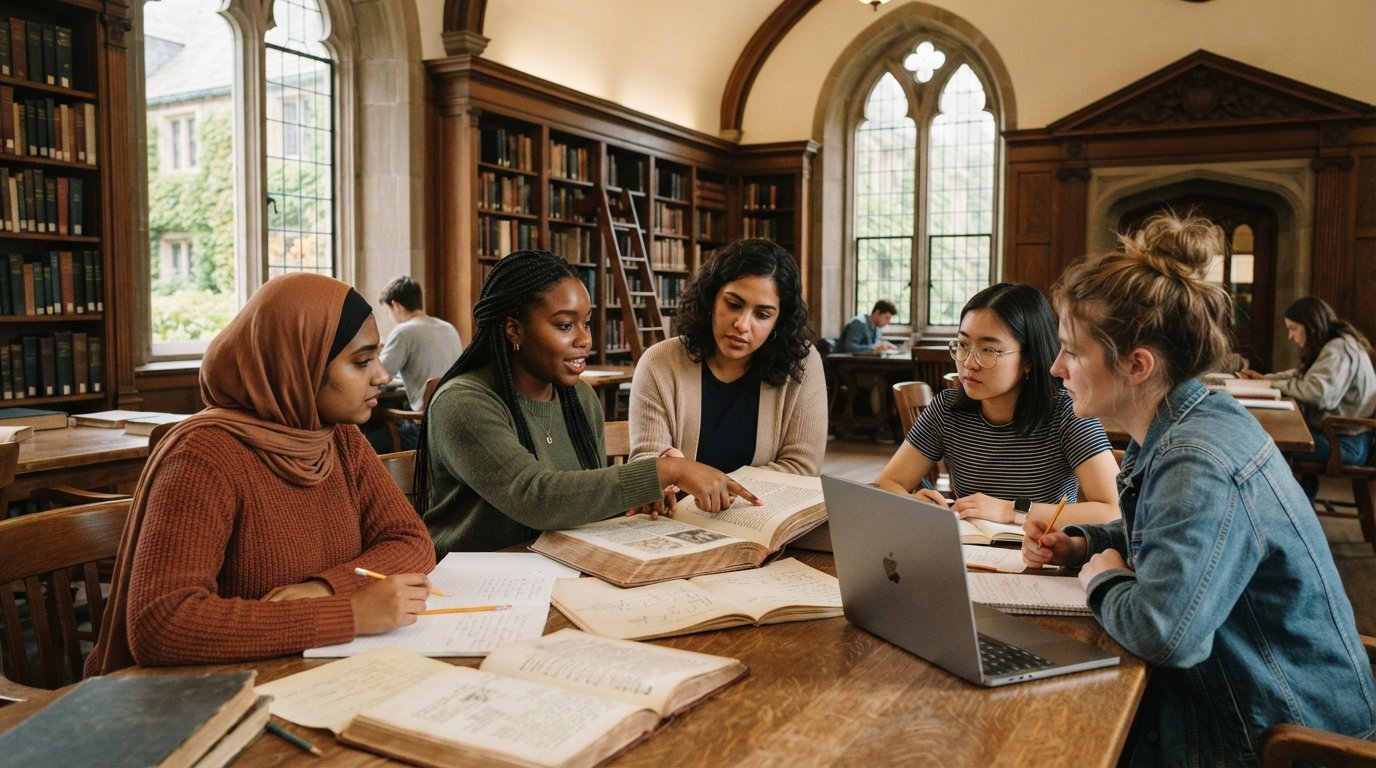
History is a discipline built on discussion, archival work, and close reading. While online history courses exist and can be excellent, the in-person format at a residential liberal arts college offers something different: sustained seminar conversation, immediate feedback from professors, and access to physical archives and special collections. Bryn Mawr's library holdings and its proximity to Philadelphia research institutions (including the American Philosophical Society and the Historical Society of Pennsylvania) give history students unusual access to primary materials.
For students who thrive in discussion-based classes, the in-person model is a strong fit. Seminars at Bryn Mawr tend to be small, often capped at fifteen or twenty students, which means you cannot hide in the back row. You are expected to speak, to defend your interpretations, and to engage with classmates who may disagree. That environment builds intellectual confidence quickly.
There is also a practical dimension. History majors who plan to pursue archival work, museum studies, or public history benefit from hands-on experiences that are difficult to replicate online. Internships at museums, historical societies, and cultural institutions in the Philadelphia area are common, and the college's career services office helps students identify and apply for those opportunities.
Admission Expectations and Academic Preparation
Bryn Mawr is a selective liberal arts college, and admission to the History program follows the college's general undergraduate admissions process. There is no separate application for the major; students indicate intended areas of study but are admitted to the college as a whole. Competitive applicants typically present a strong high school record with rigorous coursework, including honors or Advanced Placement classes where available.
History applicants benefit from demonstrated interest in the humanities. That might mean strong grades in English, social studies, and languages, or extracurricular involvement in debate, Model UN, journalism, or historical research projects. Standardized test scores are optional under Bryn Mawr's test-optional policy, though submitting strong scores can still help certain applicants. Letters of recommendation matter, particularly from teachers who can speak to your writing and analytical abilities.
Here is a quick overview of what the admissions committee typically looks for in prospective history majors:
- Strong writing samples and grades in humanities coursework
- Evidence of curiosity about the past, whether through research, reading, or independent projects
- Recommendations that highlight analytical thinking and classroom participation
- Optional interviews that demonstrate fit with a discussion-based, residential liberal arts environment
- Extracurricular or volunteer experience related to history, museums, archives, or civic engagement
Keep in mind that admission criteria vary by institution and by year. Bryn Mawr publishes its own requirements and deadlines, and prospective students should consult the college directly for the most current information. The same applies to any school you are considering: program details, admission standards, and outcomes differ from one institution to the next.
Cost, Financial Aid, and Return on Investment
A private liberal arts education carries a substantial sticker price, and Bryn Mawr is no exception. However, the college meets full demonstrated financial need for admitted students, which means families with lower incomes may pay far less than the published tuition. Grants, work-study, and loans are combined in aid packages, and the college has a longstanding commitment to need-based aid rather than merit scholarships.
For students weighing the return on investment of a history degree, the picture is more nuanced than salary data alone suggests. History majors do not typically start at the highest salaries among college graduates, but they develop skills that compound over time: research, writing, argumentation, and the ability to synthesize complex information. Graduates go into law, education, publishing, museums, government, nonprofit work, business, and technology. Mid-career earnings for history majors often compare favorably with other humanities fields, and the analytical training translates well into roles that require clear communication and evidence-based reasoning.
If cost is a concern, it is worth exploring scholarship options and comparing aid packages across schools. Our guide on the highest paying bachelor's degrees offers a useful comparison point for understanding how different majors translate into early-career earnings, which can help you frame the financial trade-offs of any program.
Career Outcomes for History Graduates
One of the persistent myths about history degrees is that they lead nowhere. The reality is that history graduates pursue a wide range of careers, and many of those careers are both intellectually satisfying and financially stable. The skills you build as a history major, close reading, persuasive writing, research design, and cultural literacy, are valued in fields that require judgment and communication.
Common career paths for history majors include:
- Law and legal services: History is a traditional pre-law major, and many graduates attend law school and practice in areas like civil rights, environmental law, or public interest advocacy.
- Education: Teaching at the secondary or college level, curriculum development, and educational administration are common outcomes, often requiring additional certification or graduate study.
- Museums, archives, and public history: Curatorial work, archival management, historic preservation, and interpretive programming at cultural institutions.
- Government and public policy: Roles in research, policy analysis, foreign service, and legislative affairs.
- Business and technology: Marketing, communications, product management, and user research, where historical thinking supports strategic decision-making.
Graduate study is common among history majors, whether in history itself, law, library science, education, or public policy. A bachelor's degree in history is often a stepping stone rather than a terminal credential, and students who plan for graduate school early tend to make smoother transitions. For adult learners and career changers exploring flexible options, resources like DegreesOnline.Education can help you compare accredited programs and understand how online or hybrid formats fit into a longer educational plan.
The Bryn Mawr Experience Beyond the Classroom
Bryn Mawr is a women's college at the undergraduate level, with a graduate program that is coeducational. That distinction shapes the classroom environment in ways that many students find empowering. Class participation tends to be high, and students report that the absence of certain gendered dynamics allows for more open intellectual risk-taking. The college also has a strong honor code that governs academic integrity and social conduct, which contributes to a culture of trust and mutual respect.
Residential life is a core part of the experience. Most students live on campus for all four years, and the college's traditions, including its lantern ceremonies and class colors, create a strong sense of community. For history majors, the proximity to Philadelphia means access to world-class museums, archives, and historical sites, from Independence Hall to the Barnes Foundation. Field trips, research excursions, and internships are woven into the academic experience.
It is also worth noting that Bryn Mawr is part of a larger academic ecosystem. The Tri-College consortium with Haverford and Swarthmore, plus the relationship with the University of Pennsylvania, means that students are not confined to a single campus. For history majors who want to study a language intensively, pursue a minor in a field not offered at Bryn Mawr, or take advantage of a particular professor's expertise, the consortium opens doors.
Is a History Degree at Bryn Mawr Right for You?
The answer depends on what you want from college. If you are looking for a pre-professional program that funnels directly into a specific job, a general history degree may not be the most direct route. But if you want to develop strong analytical and writing skills, engage deeply with ideas, and keep your options open across law, education, public service, business, and the arts, a history major at a place like Bryn Mawr can be an excellent choice.
Prospective students should visit campus if possible, sit in on a history seminar, and talk to current majors about their experience. Ask about thesis topics, internship placements, and where recent graduates have gone. Those conversations will tell you more than any brochure. And if you are comparing programs, look at the faculty's areas of expertise, the size of the department, and the resources available for research and travel.
For students who are still exploring, it helps to think of the history degree not as a narrow vocational track but as a foundation. The ability to read carefully, write clearly, and argue persuasively is durable across economic shifts and technological change. That is the case for the liberal arts in general, and it is the case for history in particular. A History, General Bachelor's degree, usually 4 years In-person at Bryn Mawr College offers one version of that foundation, grounded in a specific place, community, and intellectual tradition.