
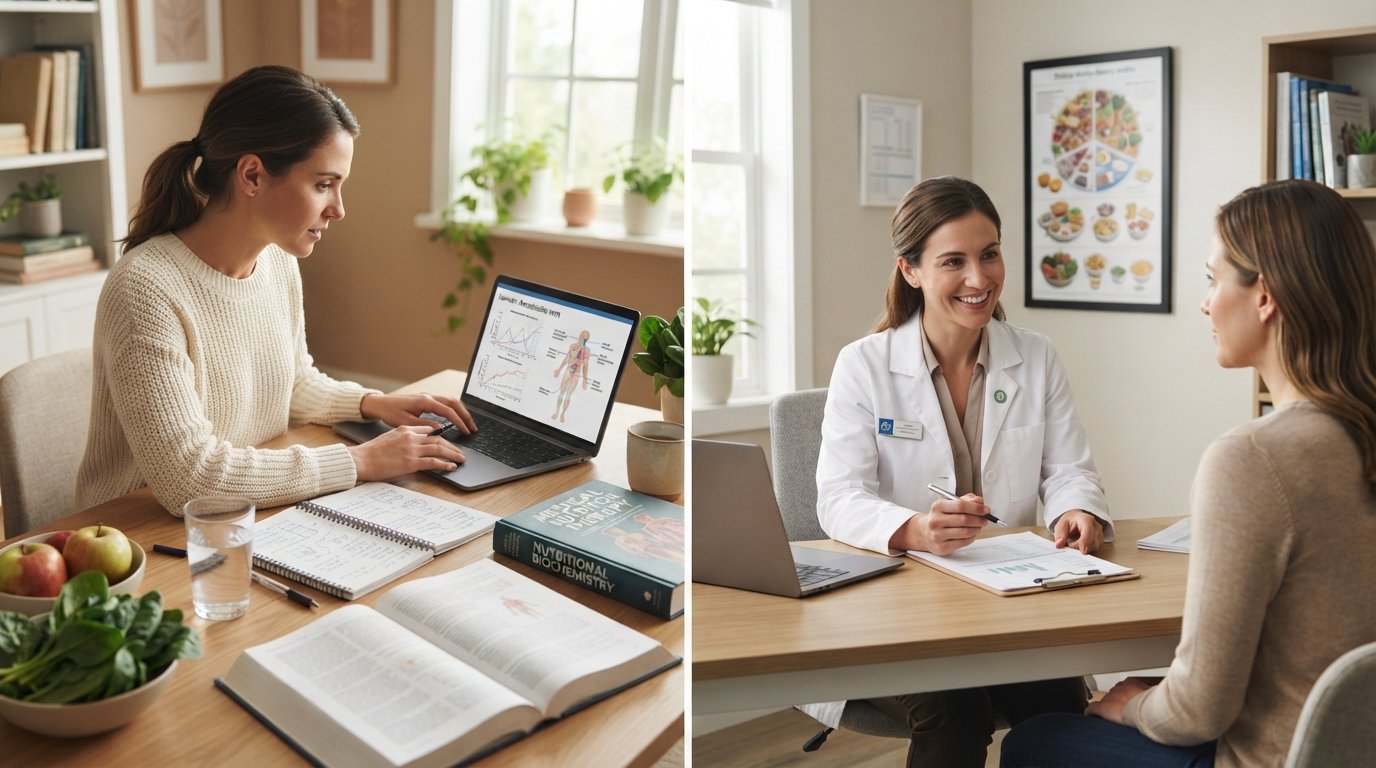
How to Become a Registered Dietitian With an Online Degree
Earn an online degree and become a registered dietitian through accredited programs, supervised practice, and exam prep. Start your flexible path today.
By Stacy Cignetti
The path to becoming a registered dietitian (RD) is rigorous, rewarding, and more flexible than ever before. Thanks to accredited online didactic programs in dietetics, you can complete a significant portion of your education from anywhere, without sacrificing quality or recognition. Whether you are a career changer, a busy parent, or a student in a rural area, earning an online degree can be the key that unlocks a career in nutrition. But the journey involves more than just coursework: you will also need supervised practice, a national exam, and state licensure. This guide walks you through each step of how to become a registered dietitian with an online degree, so you can plan confidently and avoid costly detours.
Start With an Accredited Online Didactic Program in Dietetics
The first and most critical step is enrolling in a program accredited by the Accreditation Council for Education in Nutrition and Dietetics (ACEND). Without ACEND accreditation, you will not be eligible for the supervised practice required for the RD credential. Many universities now offer fully online Didactic Programs in Dietetics (DPD) that meet the same rigorous standards as on-campus programs. These programs cover foundational topics such as medical nutrition therapy, food science, community nutrition, and nutritional biochemistry.
When evaluating online DPDs, verify that the program is listed on the ACEND website and that it leads to a verification statement upon completion. This statement is your ticket to the next phase: the dietetic internship or supervised practice. Some online programs also offer a combined bachelor's-to-master's track, which can streamline your path. Keep in mind that as of 2024, the Commission on Dietetic Registration (CDR) requires a minimum of a master's degree to sit for the RD exam. Therefore, your online degree plan should ultimately include a graduate degree if you do not already hold one.
Online learning offers flexibility, but it also demands self-discipline. Look for programs with strong student support, synchronous options for difficult courses, and partnerships with local healthcare facilities for your supervised practice. Many online DPDs help students secure internship placements, which can be a major advantage. Before committing, check the program's graduation and internship placement rates, and ask about their alumni network. A well-chosen online DPD sets you up for success in the competitive internship match process.
Complete Supervised Practice: The Internship Requirement
No matter how you complete your coursework, you cannot become an RD without supervised practice. This phase, often called a dietetic internship, involves at least 1,000 hours of hands-on training in clinical, community, and foodservice settings. The internship is where you apply classroom knowledge to real patients and clients, building the competencies required for practice. While the didactic portion can be completed online, the supervised practice must be done in person at approved sites.
Securing an internship is often the most challenging part of the journey. The traditional match process through DICAS (Dietetic Internship Centralized Application Services) is competitive, and online students may face additional hurdles if their program does not have local partnerships. To improve your chances, consider the following steps:
- Apply to internships with a track record of accepting distance students and those that offer remote or hybrid rotations where possible.
- Leverage your online program's network and ask faculty for introductions to preceptors in your area.
- Complete observation hours or volunteer work at hospitals, clinics, or community organizations before applying to strengthen your application.
- Prepare a standout personal statement that highlights your unique background and why you chose an online path.
Some online DPDs offer coordinated programs that guarantee an internship slot upon successful completion and a minimum GPA. These programs can reduce stress and uncertainty, though they may be more expensive. Alternatively, you can pursue a supervised practice pathway (SPP) or a pre-professional practice program, but these are less common. The key is to plan early: start researching internship options as soon as you enroll in your online DPD, and maintain strong grades and relationships with faculty who can write recommendation letters.
Pass the CDR Exam and Obtain State Licensure
After completing your supervised practice, you will receive a verification statement from your internship director. This allows you to apply for the registration examination for dietitians, administered by the Commission on Dietetic Registration (CDR). The exam is computer-based and covers all areas of dietetics practice. To prepare, many candidates use review courses, study guides, and practice exams. Your online DPD may offer exam prep resources or alumni study groups, so take advantage of those.
Once you pass the exam, you earn the RD credential. However, to practice in most states, you also need a state license. Licensure requirements vary: some states require only the RD credential, while others have additional paperwork, fees, or continuing education mandates. Always check with your state's board of dietetics or health professions to understand the specific steps. In some states, you may need to provide official transcripts, verification of supervised practice, and exam scores. The entire process, from exam application to licensure, can take several months, so plan accordingly.
Maintaining your credential requires ongoing continuing education. As an RD, you will need to complete 75 hours of continuing professional education every five years, including ethics and other specified topics. Many online platforms offer approved continuing education units (CEUs), making it easy to stay current while working. Your online degree program may also provide resources for tracking CEUs and finding approved courses. Staying organized and proactive about renewals ensures you never face a lapse in licensure.
Career Outlook and Salary for Registered Dietitians
The demand for registered dietitians is strong and growing. According to the Bureau of Labor Statistics, employment of dietitians and nutritionists is projected to grow 7 percent from 2022 to 2032, faster than the average for all occupations. An aging population, rising healthcare costs, and increased focus on preventive care are driving demand in hospitals, long-term care facilities, outpatient clinics, and community health organizations. Many RDs also work in food service management, sports nutrition, corporate wellness, and private practice.
Salaries vary by setting, experience, and location. The median annual wage for dietitians and nutritionists was $69,680 in May 2023, with the top 10 percent earning more than $98,000. RDs in outpatient care centers and specialty clinics tend to earn higher salaries, while those in nursing and residential care facilities may earn slightly less. With experience and advanced certifications, such as Certified Diabetes Care and Education Specialist (CDCES) or Board Certified Specialist in Sports Dietetics (CSSD), you can increase your earning potential. Online degrees do not limit your salary prospects; employers care about your credential and skills, not whether you studied online or on campus.
If you are curious about the return on investment for various online degrees, our guide on top paying online degrees with high ROI provides useful comparisons. For dietetics specifically, the investment in a master's degree and internship pays off through stable employment and opportunities for advancement. Many RDs also pursue entrepreneurial paths, such as consulting or private practice, which can offer flexible schedules and higher income potential.
Weighing the Costs and Financial Aid Options
Earning an online degree can be more affordable than a traditional on-campus program, but costs still add up. Tuition for online DPDs varies widely, from $10,000 to $40,000 for the didactic portion, and internships may carry additional fees. You should also budget for exam fees, licensure fees, and continuing education. Fortunately, financial aid is often available for accredited online programs. Federal student loans, grants, and scholarships can help offset costs. Some universities offer in-state tuition rates for online students regardless of residency, which can be a significant savings.
To make informed financial decisions, research all funding sources and consider the total cost of your program, including internship and living expenses. For a broader perspective on college costs and financial planning, visit CollegeAndTuition, a resource that helps students and families navigate higher education expenses. Additionally, look for scholarships from professional organizations like the Academy of Nutrition and Dietetics, which offers awards for students and diversity scholarships. Many online programs also provide payment plans or employer tuition reimbursement options if you are already working in a related field.
Maximizing Your Online Learning Experience
Online education requires a different mindset than traditional classroom learning. To succeed in an online DPD, you need strong time management, self-motivation, and proactive communication. Set up a dedicated study space, create a schedule that mimics a traditional class timetable, and engage actively with professors and classmates through discussion boards and virtual office hours. Form study groups with peers using video conferencing tools, and take advantage of online tutoring or writing centers if available.
Another key to success is gaining practical experience while you study. Volunteer at a local hospital, community center, or food bank to build your resume and network. These experiences can also help you secure internship placements later. Additionally, join professional associations as a student member; the Academy of Nutrition and Dietetics offers student memberships with access to journals, webinars, and mentorship programs. Networking with RDs in your area can provide valuable insights and potentially lead to preceptor opportunities.
Finally, stay informed about changes in the field. The dietetics profession is evolving, with telehealth and digital nutrition tools becoming more common. Online learning can actually give you an edge in using technology to deliver care. By embracing the online format and seeking out hands-on experiences, you will graduate well-prepared for the challenges of the RD role.
Frequently Asked Questions
Can I become a registered dietitian entirely online?
Not entirely. You can complete the didactic coursework online, but the supervised practice (internship) must be completed in person at approved sites. Some internships offer hybrid options with some remote activities, but hands-on patient care is required.
Are online dietetics programs respected by employers?
Yes, as long as the program is ACEND-accredited. Employers focus on your RD credential, supervised practice experience, and skills, not whether you studied online. Many respected universities offer online DPDs.
How long does it take to become an RD with an online degree?
It depends on your starting point. If you already have a bachelor's degree, a master's-level online DPD plus internship can take 2 to 3 years. If you are starting from scratch, a bachelor's plus master's plus internship can take 5 to 6 years.
What is the difference between a dietitian and a nutritionist?
The terms vary by state, but generally, a registered dietitian (RD) has completed specific education, supervised practice, and an exam, and is licensed. A nutritionist may have less formal training and may not be eligible for insurance reimbursement or clinical roles. Always check your state's regulations.
Becoming a registered dietitian with an online degree is absolutely feasible if you choose an accredited program, plan your supervised practice early, and stay committed to the process. The flexibility of online learning allows you to pursue this rewarding career without uprooting your life. With careful planning and determination, you can join the ranks of RDs making a difference in people's health.