
Medical Assistant Certificate: 12-Week In-Person Training
Train for a clinical assistant role in under a year with hands-on, in-person classes at American Beauty and Trade School and start earning sooner.

By Natalie Simmons
Healthcare employers are hiring clinical support staff faster than many traditional degree programs can graduate them. If you want a direct path into patient care without spending four years in a classroom, the Medical/Clinical Assistant Certificate, 12 weeks to less than 1 year In-person at American Beauty and Trade School offers a compressed, hands-on route into one of the most consistently in-demand roles in American healthcare. Instead of juggling general education requirements for years, you train on the exact skills clinics and physician offices need on day one: taking vitals, assisting with exams, managing records, and supporting patients through every step of their visit.
This guide breaks down what the program covers, who it fits, how to evaluate the return on your time and tuition, and how this certificate stacks up against longer academic pathways. Whether you are a career changer, a recent high school graduate, or someone re-entering the workforce after time away, the goal here is simple: give you the information you need to decide whether an accelerated clinical assistant credential is the smartest next move for your situation.
What a Medical/Clinical Assistant Actually Does
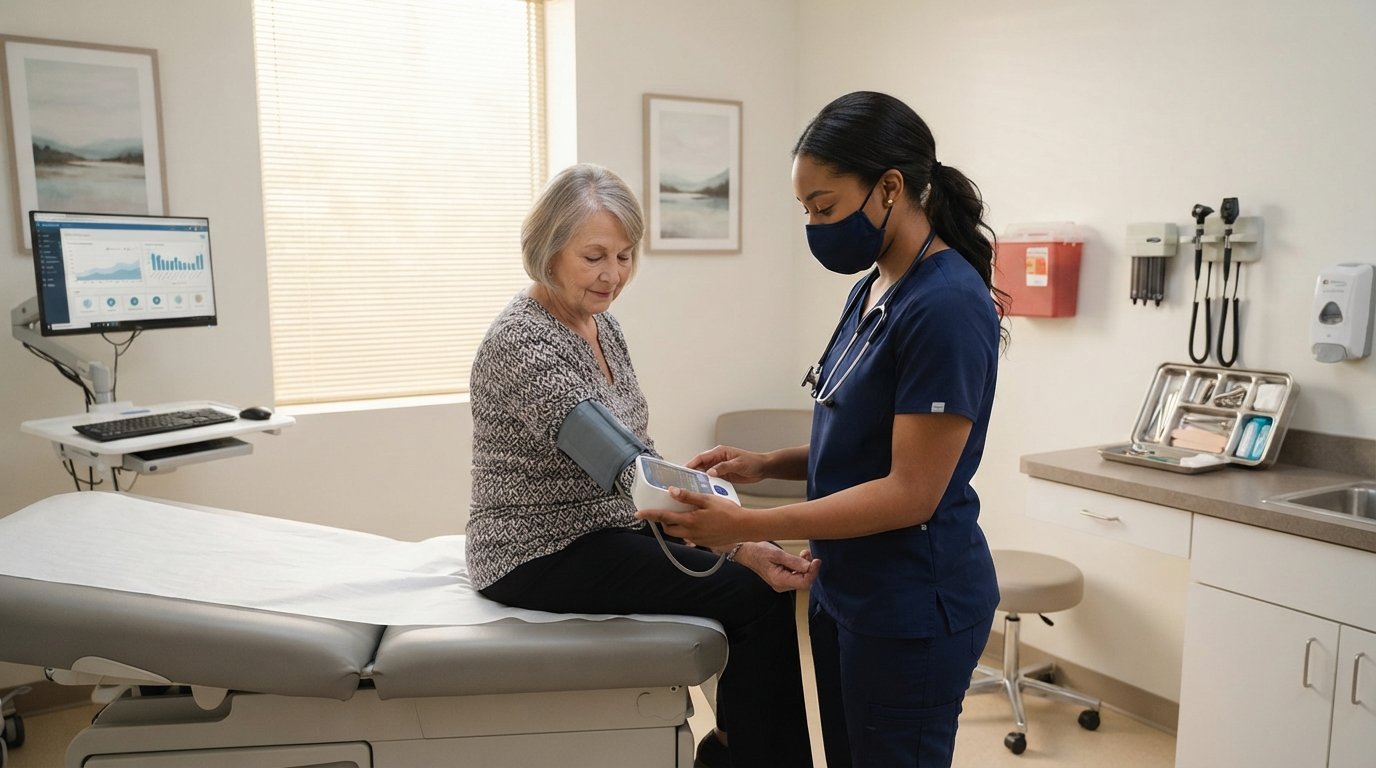
Medical assistants sit at the intersection of patient care and administration. In a typical day, they might room patients, record vital signs, prepare exam instruments, draw blood, administer injections under supervision, update electronic health records, schedule follow-ups, and verify insurance information. The role is clinical and clerical at the same time, which is exactly why employers value it: one hire can support both the front desk and the exam room.
That blend also makes the job a strong entry point for people who are not yet sure whether they want to specialize. You get exposure to family medicine, pediatrics, cardiology, dermatology, urgent care, and specialty clinics without committing to a single track. Many medical assistants later return to school for nursing, radiology technology, or healthcare administration, using their clinical hours as a foundation and a resume credential.
According to the U.S. Bureau of Labor Statistics, medical assistant employment is projected to grow much faster than the average across all occupations through the early 2030s, driven by an aging population and the expansion of outpatient care. That demand matters when you are choosing a training program: you want a credential that maps to a role employers are actively filling, not one that requires you to create your own job market.
Why the 12-Week to Under-1-Year Format Changes the Math
Traditional associate degree programs in medical assisting typically run about two years and include a broad general education component. That structure works well for some students, but it also means two years of tuition, two years of reduced earning capacity, and two years before you ever touch a real patient. The Medical/Clinical Assistant Certificate, 12 weeks to less than 1 year In-person at American Beauty and Trade School compresses the core clinical and administrative training into a much shorter window.
Shorter does not automatically mean easier. It means the curriculum is stripped down to what the job actually requires, and the pace is faster. You will likely be in class or lab several days a week, and you may have evening or weekend options depending on the cohort. Before enrolling, confirm the exact schedule, the total clock hours, and whether the program includes an externship or clinical practicum, because hands-on hours are what employers screen for during interviews.
The financial case is straightforward. A shorter program usually means lower total tuition than a two-year degree, and you enter the workforce sooner. That combination can improve your return on investment significantly, especially if you finance the program with a modest loan or pay as you go. If cost and time-to-employment are your top priorities, an accelerated certificate deserves serious consideration.
It also helps to compare formats across schools before you commit. Resources like DegreesOnline.Education publish guides on accredited programs, financial aid, and degree comparisons that can help you benchmark this certificate against other healthcare training options. The key is to evaluate total cost, completion time, and job placement support side by side rather than looking at tuition alone.
What the In-Person Format at American Beauty and Trade School Delivers
In-person training is not a minor detail in clinical education. Skills like venipuncture, injection technique, sterile field setup, and accurate blood pressure measurement require repetition under supervision. You need an instructor to watch your hand position, correct your angle, and let you practice until the motion becomes automatic. Online modules can teach terminology and billing codes, but they cannot replicate the physical feedback loop of a lab.
Studying on campus at American Beauty and Trade School also gives you structured access to equipment you will encounter in real clinics: exam tables, autoclaves, EKG machines, and electronic health record software. That familiarity shortens your adjustment period when you start working. Employers notice when a new hire already knows how to operate the equipment and does not freeze during a routine procedure.
Another advantage is cohort accountability. When you attend class in person, you show up because other people are expecting you. For students who struggled with self-paced online courses in the past, that structure can be the difference between finishing and dropping out. The tradeoff is scheduling flexibility: you will need to arrange transportation, childcare, and work hours around fixed class times. Weigh that honestly before you enroll.
Here is what to verify during your campus visit or admissions conversation:
- Total program length in weeks and total clock hours, including lab and externship time
- Externship placement process, site types, and whether placement is guaranteed or assisted
- Certification exam preparation, such as CMA, RMA, or CCMA pathways, and pass rates if published
- Total cost including tuition, books, supplies, uniforms, and any exam fees
- Job placement support, resume help, and employer partner relationships in your area
Ask for these numbers in writing. A program that is transparent about outcomes is usually a program that stands behind its training. If a school cannot tell you its completion rate or where recent graduates found work, treat that as a warning sign and keep comparing options.
Core Skills You Will Build During the Program
Accelerated clinical assistant programs tend to cover a consistent core. On the clinical side, expect training in vital signs, patient intake and history, infection control, sterile technique, specimen collection, venipuncture, EKG basics, medication administration under supervision, and assisting with physical exams. On the administrative side, expect medical terminology, scheduling, insurance verification, coding basics, billing workflows, and electronic health record documentation.
Soft skills matter just as much in this role. Medical assistants are often the first and last person a patient sees during a visit, so communication, empathy, and calm under pressure are part of the job description in practice. A good program builds in role-play and patient interaction scenarios, not just textbook chapters. If you are someone who enjoys talking with people and staying organized in a busy environment, you will likely thrive in this work.
Certification is the next step after graduation. National credentials such as the Certified Medical Assistant (CMA), Registered Medical Assistant (RMA), or Certified Clinical Medical Assistant (CCMA) signal to employers that you met an external standard. Requirements vary by certifying body, so confirm which exams your program prepares you for and whether the exam fee is included in tuition. Earning a credential shortly after graduation can improve your starting pay and your negotiating position.
Who Thrives in an Accelerated Certificate Program
This pathway fits people who know they want to work in healthcare and want to start quickly. Career changers from retail, hospitality, or office administration often find the transition natural because the customer service skills transfer directly. Recent high school graduates who are not ready to commit to a four-year degree can use the certificate to enter the field, earn income, and decide later whether to pursue additional credentials.
It is less suited to people who need maximum scheduling flexibility or who want a degree that opens doors to management and clinical specialization immediately. If your goal is to become a registered nurse, a physician assistant, or a practice manager, plan for additional education beyond this certificate. That is not a drawback; it just means you should treat the certificate as step one of a longer plan, not the finish line.
Before enrolling, ask yourself three questions: Can I commit to the class schedule for the full program length? Can I cover tuition and living expenses while I train? Am I comfortable with direct patient contact, including blood draws and close physical proximity to patients? Honest answers to those questions will tell you more about fit than any brochure.
If you want to explore how other short, career-focused credentials compare, our guide on a cybersecurity certificate in 12 weeks shows how accelerated programs in different fields structure their timelines, costs, and job outcomes. The comparison can help you judge whether a compressed format is the right fit for your learning style and career goals.
Cost, Financial Aid, and Return on Investment
Certificate programs are typically less expensive than associate or bachelor's degrees, but the range is still wide. Total costs depend on the school, the length of the program, whether supplies and exam fees are bundled, and whether an externship is paid or unpaid. Build a realistic budget that includes tuition, books, uniforms, scrubs, stethoscope, background check, immunizations, and certification exam fees. Those add-ons can surprise students who only planned for tuition.
Financial aid options vary. Some trade and career schools participate in federal student aid programs, some offer institutional payment plans, and some accept workforce development or veteran benefits. Ask the admissions office which funding sources the school is approved for and whether they can connect you with local workforce grants. If you are financing with a loan, calculate the monthly payment against the expected starting salary for medical assistants in your metro area, which you can find through the BLS Occupational Employment and Wage Statistics data.
To estimate your personal return on investment, run a simple comparison: total program cost plus forgone income during training, divided by the difference between your current annual earnings and expected entry-level medical assistant earnings. If the payback period is short, the certificate is likely a strong financial move. If it stretches out beyond a few years, look at whether a higher credential would produce better long-term outcomes for the same effort.
Steps to Enroll and Start Your Clinical Career
The enrollment process for most certificate programs is faster than a traditional college application cycle, but it still has moving parts. Getting organized early prevents delays that could push you into a later cohort. Most schools also require a high school diploma or equivalent, a background check, and up-to-date immunizations before you can begin the clinical portion.
Follow this sequence to keep the process on track:
- Request information from American Beauty and Trade School and confirm the next start date, schedule, and total cost.
- Complete the admissions application, placement assessment if required, and any interview step.
- Submit transcripts, identification, background check, and immunization records.
- Apply for financial aid, payment plans, or workforce grants before the tuition deadline.
- Purchase required supplies, attend orientation, and confirm your externship placement timeline.
Once you are in the program, treat every lab session like a job interview. Instructors and externship supervisors are often asked for references, and strong performance during training frequently leads to a job offer at the same site. Arrive early, ask questions, take notes on procedures, and volunteer for every practice opportunity you can get.
Building a Long-Term Healthcare Career From Here
A clinical assistant certificate is a starting point, not a ceiling. After a year or two of hands-on experience, you can pursue additional certifications in phlebotomy, EKG technology, medical billing and coding, or clinical research coordination. Some medical assistants move into front office management, patient navigation, or community health work. Others use the clinical hours as a prerequisite for nursing or allied health degree programs.
The key is to keep your options open and your credentials current. Healthcare employers value continuous learning, and many offer tuition reimbursement for employees who want to pursue further education. If you eventually want a bachelor's degree in healthcare administration or a nursing degree, the experience you gain as a medical assistant will make you a stronger applicant and a more effective clinician.
For adult learners weighing certificate programs against full degree pathways, the decision usually comes down to timeline, cost, and career target. An accelerated certificate gets you working quickly in a high-demand role. A degree opens broader advancement but takes longer and costs more. Neither is universally better; the right choice depends on where you want to be in five years and how much time you can invest right now.
If you are ready to train for a role where you can see the impact of your work every single day, the Medical/Clinical Assistant Certificate, 12 weeks to less than 1 year In-person at American Beauty and Trade School is worth a serious look. Visit the campus, ask the hard questions about cost and placement, and compare the numbers against your own goals. A short, focused program can be the fastest route from where you are now to a stable, meaningful career in patient care.