
Radio & TV Certificate at Diablo Valley College: Fast Track
Get hands-on radio and television training in under a year at Diablo Valley College. This certificate program prepares you for entry-level media jobs.

By Connor Howard
If you have ever felt the pull of a career in broadcasting, podcasting, or digital media, you already know that the industry rewards hands-on skill and real-world experience. What you might not know is that you can gain those abilities in a matter of months, not years, through a focused vocational program. The Radio and Television Certificate, 12 weeks to less than 1 year In-person at Diablo Valley College offers exactly that kind of accelerated, practical training. It is designed for students who want to enter the workforce quickly, upgrade their current media skills, or pivot into a new creative career without committing to a multi-year degree. This article will walk you through the program's structure, the skills you will learn, the career paths it opens, and why the short timeline makes it a smart investment for your future.
Why Choose a Short Certificate Over a Full Degree?
In the media and broadcasting industry, your demo reel and your ability to operate equipment often matter more than the letters after your name. Employers want to know that you can run a camera, edit audio, write for the ear, and deliver content on deadline. A certificate program focuses exclusively on those competencies. Instead of spending four years on general education requirements, you spend your time in studios and labs, building the exact portfolio that hiring managers are looking for.
This is not to say that a degree is worthless. Many professionals eventually pursue a bachelor's degree to move into management or higher-level production roles. But the certificate gives you a fast entry point. You can start working in radio or television production, gain on-the-job experience, and then decide later if you want to continue your formal education. The low time commitment also means you can start earning sooner, which is a significant advantage in a field where entry-level salaries are often modest.
Moreover, the program's duration of 12 weeks to less than 1 year fits into a single academic year. You can complete it in one semester or two, depending on the course load you choose. This flexibility is ideal for working adults, recent high school graduates, or career changers who need to balance other responsibilities.
What You Will Learn: Curriculum and Skills
The curriculum for the Radio and Television Certificate is built around the core functions of a modern media operation. You will not just learn theory; you will practice every day. The program covers the following key areas:
- Audio production: You will learn to use microphones, mixers, and digital audio workstations to record and edit podcasts, radio segments, and soundtracks.
- Video production: From camera operation to lighting and framing, you will master the fundamentals of shooting professional-quality video.
- Editing and post-production: You will become proficient in industry-standard software such as Adobe Premiere Pro and Audacity, learning to cut, arrange, and polish raw footage and audio.
- Writing for broadcast: You will practice writing news scripts, commercial copy, and promotional material that is clear, concise, and designed for the ear.
- On-air performance: If you are interested in hosting or announcing, you will get studio time to practice your delivery, breathing, and ad-libbing skills.
Beyond these technical skills, the program also emphasizes teamwork and deadline management. You will work on group projects that simulate a real broadcast environment, where you must coordinate with others to produce a finished segment on time. That experience is invaluable, because in the industry, missing a deadline is simply not an option.
In addition, you will gain a working understanding of the legal and ethical issues in broadcasting, including copyright, libel, and FCC regulations. This knowledge not only keeps you safe in your career but also makes you a more responsible media professional.
The In-Person Experience at Diablo Valley College
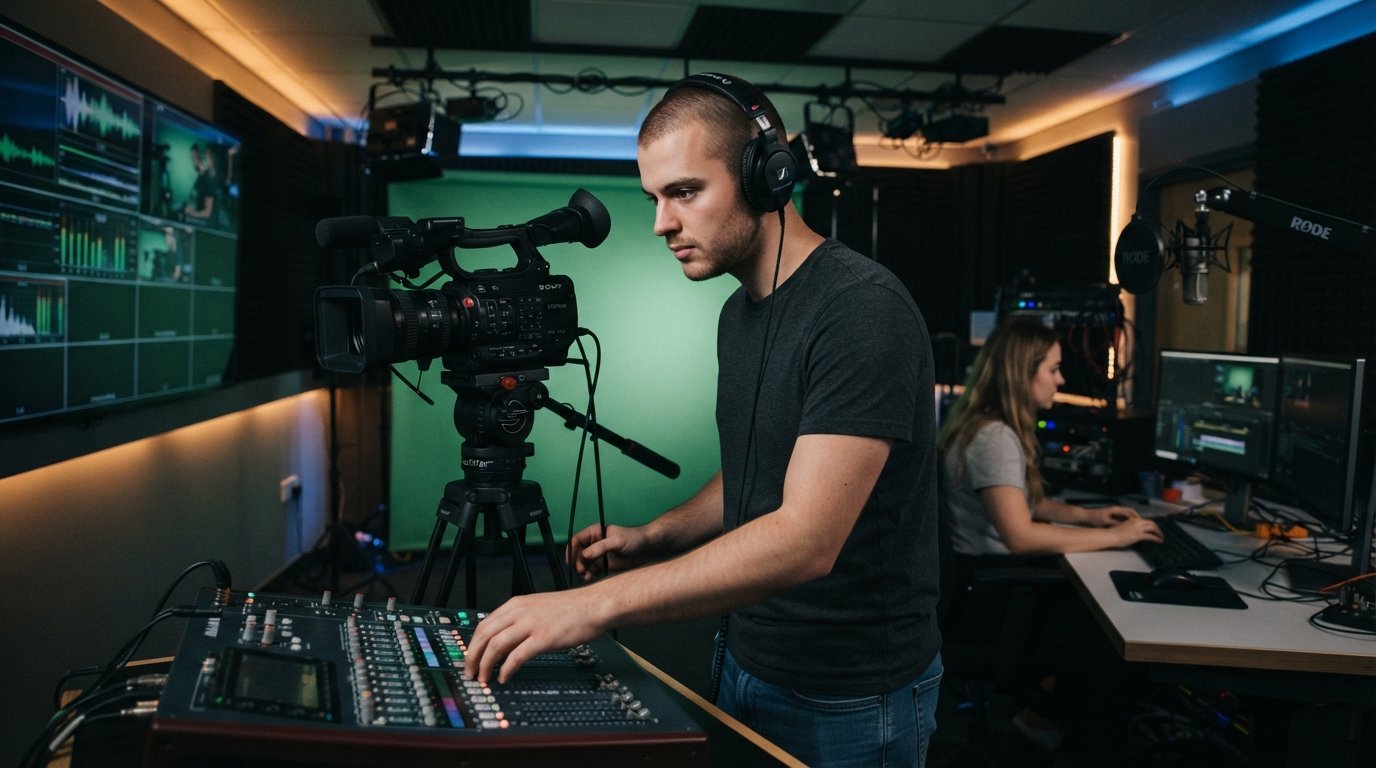
Choosing an in-person program over an online one is a deliberate decision for many students, and it makes perfect sense for a hands-on field like broadcasting. At Diablo Valley College, you will have access to dedicated studios, broadcast equipment, and editing labs that you cannot replicate at home. The in-person format also means you will work directly with instructors who have professional experience in the industry. They can offer immediate feedback on your technique, help you troubleshoot equipment issues, and share insights that only come from years of working in the field.
Moreover, you will build a network of peers who share your interests. Many media jobs are secured through referrals and word-of-mouth, and the relationships you form in this program can open doors later. You might find a collaborator for a future project, a mentor, or even a future employer. The campus environment also provides access to student media organizations, such as a campus radio station or TV studio, where you can get even more practice and add to your demo reel.
Diablo Valley College is located in Pleasant Hill, California, in the San Francisco Bay Area. The region has a vibrant media scene, with numerous radio stations, TV stations, and production companies. This proximity can be a huge advantage for internships and job placements. Many programs have advisory boards made up of local industry professionals, which helps keep the curriculum current and can lead to direct recruitment of graduates.
Career Paths and Job Outlook
Completing the Radio and Television Certificate prepares you for a variety of entry-level positions in the media industry. Here are some of the roles you can pursue:
- Production assistant: You will support the production team by setting up equipment, logging footage, and helping with the flow of a broadcast or shoot.
- Audio engineer: You will operate sound equipment for live events, radio broadcasts, or studio recordings.
- Video editor: You will work in post-production, assembling raw footage into a finished product that meets the director's vision.
- Broadcast technician: You will maintain and troubleshoot the technical equipment used in radio and TV transmission.
- Podcast producer: You will handle recording, editing, and distribution for podcast shows, a growing sector in digital media.
According to the U.S. Bureau of Labor Statistics, employment in the broader media and communication field is expected to grow at a rate of about 3 percent through 2031, which is about as fast as the average for all occupations. However, the demand for digital content creators, especially in podcasting and online video, is growing much faster. This certificate gives you a foothold in that expanding market.
Starting salaries for these positions vary, but they typically range from $30,000 to $45,000 per year for entry-level roles. As you gain experience and build a strong portfolio, you can advance to producer, director, or technical manager positions, which often pay significantly more. The skills you learn are also transferable to corporate video production, marketing departments, and freelance work, giving you a wide range of options.
Financial Aid and Affordability
One of the biggest concerns for any student is the cost of education. A certificate program at a community college is generally much more affordable than a degree at a four-year institution. Diablo Valley College charges per unit, and the total cost for the certificate is a fraction of what you would pay at a private media school. Additionally, you may be eligible for financial aid, including federal grants, loans, and work-study programs. The college's financial aid office can help you determine what you qualify for and guide you through the application process.
Another financial advantage is the short duration. Since the program lasts less than a year, you will only need to support yourself for a few months before you can start working. This reduces the total cost of living while you study, and it means you can start earning an income sooner. For many students, the return on investment is immediate.
If you are considering this path, it is wise to compare the cost with other options, such as online certificates or four-year degrees. While online programs offer convenience, they often lack the hands-on studio time that is crucial for this field. A four-year degree provides a broader education but requires a much larger investment of time and money. The certificate is a middle path that gives you the essential skills at a lower cost and in a shorter time.
How to Apply and What to Expect
Applying to the Radio and Television Certificate program is straightforward. You will need to submit an application to Diablo Valley College, which can be done online. The college has an open enrollment policy, meaning that as long as you have a high school diploma or GED, you can be admitted. There is no portfolio requirement or audition process for the certificate program, which makes it accessible to beginners.
Once you are admitted, you will work with an academic counselor to plan your course schedule. The certificate requires a specific set of courses, and you can choose to take them in a sequence that fits your availability. Many students attend full-time and complete the program in one semester or two quarters. Others attend part-time and take a bit longer, but the program is designed to be completed in less than a year if you stay on track.
As you progress, you will be expected to complete practical assignments, such as producing a short news segment, recording a podcast, or editing a video project. These assignments are your opportunity to develop a portfolio that you can show to employers. Make sure to keep copies of your best work, as this will be your calling card in the job market.
Leveraging Your Certificate for Career Success
Earning the certificate is just the first step. To truly succeed in the media industry, you need to actively market yourself. Use your time in the program to build a professional network. Connect with your instructors, classmates, and any guest speakers who visit the class. Attend industry events and job fairs. Create a LinkedIn profile and start connecting with professionals in your desired field.
Your demo reel is crucial. It should showcase your best work, whether that is a video package you produced, a radio segment you hosted, or a podcast you edited. Keep it short, under two minutes, and highlight your technical skills and creativity. You can host it on a personal website or a platform like YouTube or Vimeo, and link to it from your resume and online profiles.
When you start applying for jobs, tailor your application to each position. Highlight the specific skills from the certificate that match the job description. For example, if you are applying for a video editor role, emphasize your proficiency with editing software and your ability to tell a story. If you are applying for a radio producer job, focus on your audio editing skills and your understanding of broadcast standards.
Do not overlook internships, even if they are unpaid or low-paying. They provide valuable experience and can often lead to paid positions. Many employers prefer to hire people they already know, and an internship is a great way to get your foot in the door. The career services office at Diablo Valley College can help you find opportunities and prepare for interviews.
For those who want to continue their education later, the certificate can be a stepping stone. You can apply the credits toward an associate degree in broadcasting or a related field, and eventually transfer to a four-year college to earn a bachelor's degree. This path allows you to work while you study, and it gives you more control over your career trajectory.
Your Next Step in Media
The Radio and Television Certificate, 12 weeks to less than 1 year In-person at Diablo Valley College is more than just a piece of paper. It is a concentrated dose of the skills, experience, and confidence you need to enter one of the most exciting and dynamic industries in the world. Whether you dream of being behind the microphone, in the director's chair, or in the editing bay, this program can get you there quickly and affordably.
If you are ready to take action, start by visiting the Diablo Valley College website to learn more about the program and the application process. You can also reach out to the media arts department to ask questions or schedule a campus tour. Seeing the studios and meeting the instructors in person can give you a feel for whether this is the right fit for you.
For additional resources on career planning and educational options, you can explore DegreesOnline.Education, which offers comprehensive guides on various degree and certificate programs. This can help you compare your options and make an informed decision.
The media industry is hungry for talented, trained individuals. With this certificate, you will be ready to answer the call. Do not wait another year to start the career you want. Enroll today and begin your journey toward a fulfilling role in radio and television.