
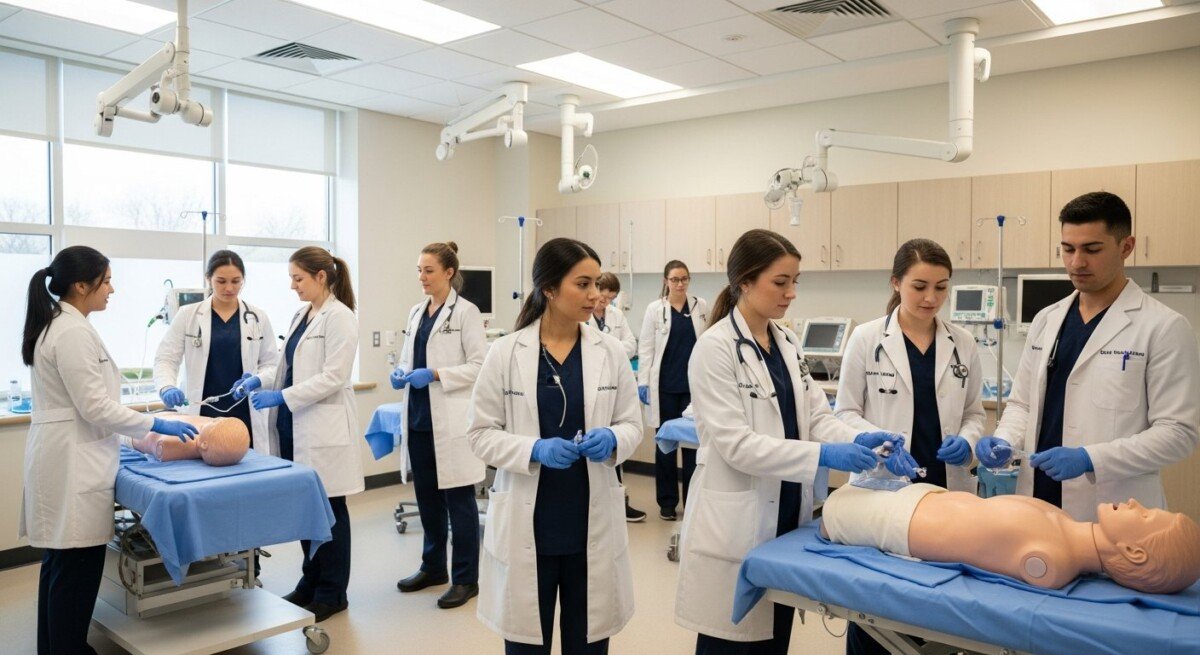
Top Health Services Programs in Oklahoma for Aspiring Professionals
Explore accredited pathways to high-demand healthcare careers through Oklahoma’s leading universities and colleges. This guide details the top health services programs in Oklahoma for aspiring professionals.

By Jeffrey Hartford
Oklahoma’s healthcare landscape is rapidly evolving, creating a surge in demand for skilled professionals across a wide spectrum of clinical, administrative, and technical fields. For students and career-changers seeking a meaningful and stable career path, the state’s educational institutions offer a robust array of top health services programs in Oklahoma. These programs are designed not only to meet rigorous academic standards but also to align with the specific health needs of Oklahoma’s diverse communities, from bustling urban centers in Oklahoma City and Tulsa to rural areas where specialized care is critically needed. Choosing the right program is a pivotal step, one that requires careful consideration of accreditation, clinical training opportunities, career outcomes, and the unique strengths each school provides.
Defining Excellence in Oklahoma’s Health Education
When evaluating the top health services programs in Oklahoma, several key factors separate exceptional programs from adequate ones. First and foremost is accreditation. Regional accreditation of the institution is a baseline, but program-specific accreditation from bodies like the Commission on Accreditation of Allied Health Education Programs (CAAHEP), the Accreditation Commission for Education in Nursing (ACEN), or the Council on Social Work Education (CSWE) is non-negotiable for many clinical fields. This ensures the curriculum meets national standards and is essential for licensure and certification exams.
Beyond accreditation, the quality and depth of clinical or practicum experiences are paramount. The best programs have established, long-term partnerships with major hospital systems, community health centers, public health departments, and private clinics across the state. These relationships provide students with hands-on, supervised experience in real-world settings, which is invaluable for skill development and professional networking. Finally, outcomes speak volumes. Prospective students should examine program metrics such as graduation rates, licensure/certification exam pass rates, and job placement statistics. A program that consistently graduates students who pass their boards and secure employment in their field is demonstrating proven success.
Leading Health Services Programs Across Oklahoma
Oklahoma is home to several universities and colleges that host nationally recognized health services programs. These institutions cater to different educational levels, from associate degrees and certificates to doctoral and professional degrees, allowing for multiple entry points into the healthcare workforce.
University of Oklahoma Health Sciences Center (OUHSC)
The University of Oklahoma Health Sciences Center in Oklahoma City stands as the state’s premier hub for health professions education. It functions as a comprehensive academic health center, integrating education, research, and patient care. OUHSC is not a single program but an entire campus dedicated to health, offering an unparalleled range of top-tier options. Its College of Allied Health is particularly notable, providing programs in fields such as Communication Sciences and Disorders, Nutritional Sciences, Occupational Therapy, Physical Therapy, and Physician Assistant studies. The College of Nursing offers BSN, MSN, and DNP pathways, many of which are highly ranked. The OU College of Medicine, alongside schools of Dentistry, Pharmacy, and Public Health, rounds out a ecosystem where interdisciplinary collaboration is the norm. For any student aiming for an advanced clinical or public health role in Oklahoma, OUHSC is often the first destination to consider.
Oklahoma State University Center for Health Sciences (OSU-CHS)
Oklahoma State University Center for Health Sciences, located in Tulsa, has carved out a distinct and vital niche, particularly known for its focus on osteopathic medicine and rural healthcare. The OSU College of Osteopathic Medicine is a cornerstone of the campus, producing a significant portion of physicians who go on to practice in Oklahoma’s rural and underserved communities. Beyond medicine, OSU-CHS offers robust programs in Biomedical Sciences, Forensic Sciences, and Healthcare Administration. Their approach often emphasizes a holistic model of care and community-based training, making their graduates especially well-suited to address the state’s unique healthcare challenges. The campus’s research initiatives in areas like biomedical innovation and Native American health further enrich the educational experience.
Comprehensive Universities and Regional Colleges
The landscape of top health services programs in Oklahoma extends beyond the major health science centers. Universities like the University of Central Oklahoma (UCO) in Edmond and Northeastern State University (NSU) in Tahlequah offer excellent undergraduate and graduate programs in Nursing, Kinesiology, Speech-Language Pathology, and Health Administration. These programs are frequently more accessible to traditional undergraduate students and provide a strong foundation for either immediate entry into the workforce or for pursuing advanced degrees. Community colleges, such as Tulsa Community College (TCC) and Oklahoma City Community College (OCCC), play a critical role in building the healthcare pipeline. They offer associate degrees and certificates in high-demand, fast-track fields that are essential to the functioning of any healthcare system.
Key programs at this level include:
- Nursing (ADN): Prepares students to become Registered Nurses (RNs) and often includes seamless “bridge” agreements with four-year universities for BSN completion.
- Radiologic Technology: Trains students to operate medical imaging equipment, a field with consistent demand.
- Respiratory Therapy: Focuses on cardiopulmonary care, a specialty that has gained immense visibility.
- Surgical Technology: Prepares individuals to be integral members of operating room teams.
- Emergency Medical Services (EMS): Offers paramedic and EMT certification, a cornerstone of pre-hospital care.
These programs are typically more affordable, have shorter completion times, and maintain strong local hiring connections with area hospitals and clinics. For those exploring health degree options in neighboring states, our guide on top health degree programs in Kansas provides a useful comparative perspective on regional educational opportunities.
Choosing the Right Program for Your Career Goals
Selecting among the top health services programs in Oklahoma requires introspection and strategic planning. The first step is to clearly define your career objective. Are you aiming to be a direct patient care provider (e.g., nurse, therapist, physician), a diagnostic professional (e.g., radiologic technologist, lab scientist), a support services specialist (e.g., health information manager), or an administrator? The answer dictates the necessary level of education, from a one-year certificate to a decade of postgraduate training. Once the goal is clear, research becomes focused. Utilize program websites, but go further: attend virtual or in-person open houses, schedule meetings with admissions advisors, and, if possible, connect with current students or alumni on professional networks like LinkedIn to hear about their experiences.
Financial planning is an inseparable part of the process. Investigate the total cost of attendance, including tuition, fees, books, and living expenses. Then, exhaustively research financial aid options. Oklahoma offers several state-specific scholarships and loan repayment programs, especially for students who commit to working in underserved areas after graduation. Programs like the Oklahoma Physician Loan Repayment Program or incentives for nurses in rural facilities can significantly offset educational debt. Finally, consider the format and lifestyle. Does the program require full-time, on-campus attendance, or are there hybrid or online options? Many graduate and some undergraduate programs now offer flexible formats to accommodate working adults. For those specifically interested in digital learning pathways, seeking out academic program insights from reputable sources can help identify accredited online degrees that fit a busy schedule.
Frequently Asked Questions
What is the fastest way to start a career in Oklahoma healthcare?
For many, the fastest entry points are certificate or associate degree programs at community colleges. Programs like Certified Nursing Assistant (CNA), Licensed Practical Nurse (LPN), Emergency Medical Technician (EMT), or Medical Assistant can often be completed in one year or less and lead directly to state certification and employment.
Are online health services degrees from Oklahoma schools respected?
Yes, provided they are from regionally accredited institutions and hold any necessary programmatic accreditation. Many reputable Oklahoma universities offer online RN-to-BSN programs, Master of Public Health (MPH), Master of Health Administration (MHA), and certain health informatics degrees. The key is to verify accreditation status publicly listed on the program’s website.
Which health fields in Oklahoma have the highest job growth?
Consistently high-demand fields include Registered Nursing, Physician Assistants, Physical Therapist Assistants, Occupational Therapy Assistants, Medical and Health Services Managers, and Respiratory Therapists. The Oklahoma Healthcare Workforce Center publishes detailed reports on supply, demand, and shortages, which is an excellent resource for making a data-informed decision.
Do Oklahoma health programs help with job placement?
Most top health services programs in Oklahoma have dedicated career services offices for their students. They facilitate job fairs, host recruiting visits from major employers, provide resume workshops, and offer interview coaching. Programs with strong clinical partnerships often see employers hiring directly from their student cohorts.
Can I start at a community college and transfer to a university health program?
Absolutely. This is a very common and cost-effective pathway. Many Oklahoma community colleges have articulation agreements with four-year universities to ensure specific courses transfer seamlessly into bachelor’s degree programs in nursing, allied health, or health sciences. It is crucial to work with an academic advisor from day one to follow the prescribed transfer pathway.
Embarking on a career in health services through one of Oklahoma’s esteemed educational programs is an investment in a future of service, stability, and personal fulfillment. The state’s array of high-quality options, from quick-start certificates to advanced professional degrees, ensures there is a pathway aligned with every ambition and circumstance. By prioritizing accredited programs with strong clinical ties and positive outcomes, students can confidently step into a field where their skills will be valued and their impact will be felt directly in the well-being of communities across the state. The journey begins with research and a commitment to finding the program that best fits your vision for a career in healthcare.