
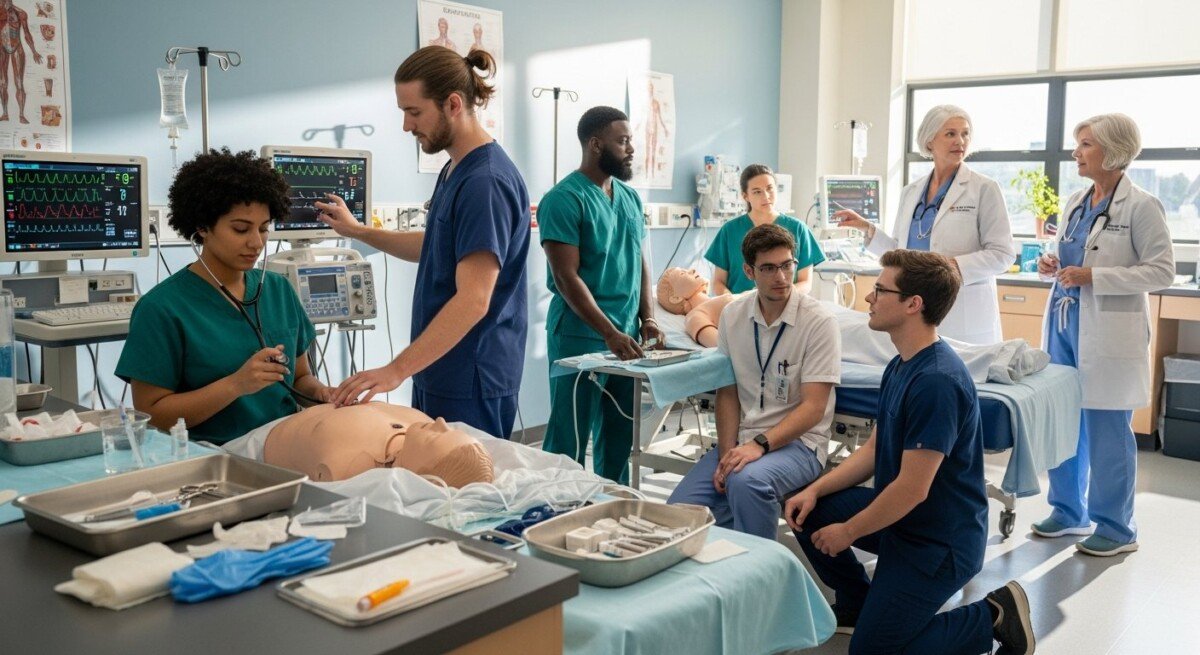
Top Healthcare Degrees in Michigan for a Rewarding Career
Explore the top-ranked healthcare degree programs in Michigan that lead to high-demand, stable careers in nursing, medicine, and health administration.

By Emily Foster
Michigan stands as a national leader in healthcare innovation and education, anchored by world-class medical centers, pioneering research institutions, and a robust network of universities offering some of the best healthcare academic degrees in the country. For students and career-changers in the Great Lakes State, the path to a stable, high-impact, and well-compensated career often begins with choosing the right academic program. The healthcare sector in Michigan is not just growing, it is evolving, demanding a skilled workforce equipped with both foundational knowledge and specialized expertise. Whether your passion lies in direct patient care, medical research, health administration, or public health policy, Michigan’s educational landscape provides a diverse array of accredited, respected programs designed to meet this critical demand and launch you into a future-proof profession.
Understanding Michigan’s Healthcare Education Landscape
Michigan’s strength in healthcare education is deeply intertwined with its economic and social fabric. The state is home to several R1 research universities, nationally ranked medical schools, and a vast array of community colleges and specialized institutions that create a comprehensive educational ecosystem. This system is bolstered by partnerships with major health systems like Henry Ford Health, Corewell Health, the University of Michigan Health System, and Spectrum Health, providing students with unparalleled clinical training and research opportunities. When evaluating the best healthcare academic degrees in Michigan, prospective students must consider several key factors: program accreditation, clinical placement success rates, faculty expertise, research output, and, crucially, graduate outcomes. A degree’s value is ultimately measured by its ability to prepare graduates for licensure exams, secure employment, and advance in their chosen fields. Michigan’s programs are consistently recognized for their rigor and their graduates’ readiness to enter a complex, technology-driven healthcare environment.
Leading Undergraduate Healthcare Degrees in Michigan
For those beginning their academic journey, a bachelor’s degree serves as the critical foundation for a healthcare career. Several undergraduate programs in Michigan are particularly noteworthy for their curriculum depth, experiential learning components, and strong pathways to both immediate employment and graduate study.
A Bachelor of Science in Nursing (BSN) remains one of the most sought-after and impactful degrees. Michigan universities with strong BSN programs, such as the University of Michigan, Michigan State University, and Grand Valley State University, offer curricula that blend rigorous science coursework with extensive clinical rotations. These programs are designed to prepare students not only for the NCLEX-RN licensure exam but also for the complexities of modern nursing practice, including evidence-based care, health informatics, and leadership. Graduates are highly recruited by Michigan’s hospital systems and often command competitive starting salaries.
Another premier undergraduate option is the Bachelor of Science in Public Health. Institutions like the University of Michigan School of Public Health (offering undergraduate degrees) and Michigan State University provide students with a macro-level view of health, focusing on disease prevention, health policy, epidemiology, and community wellness. This degree is ideal for students interested in the systemic aspects of health, working for government agencies, non-profits, or global health organizations. It also serves as an excellent pre-professional track for those aiming for medical, dental, or pharmacy school.
For students inclined toward the diagnostic and therapeutic technical fields, degrees in Medical Laboratory Science, Radiologic Technology, and Respiratory Therapy are excellent choices. These programs, often offered through a combination of university coursework and hospital-based clinical training, lead to specific professional certifications and are in constant demand. Schools like Ferris State University and Wayne State University have long been recognized for their strength in these allied health disciplines.
Key Considerations for Undergraduate Success
Choosing the right undergraduate program involves more than just reviewing rankings. Prospective students should investigate each program’s specific articulation agreements with community colleges (for transfer students), the availability of hands-on learning from the first year, and the support services for pre-health students. Furthermore, the growth of hybrid and online options has expanded access, allowing for greater flexibility, a topic explored in resources discussing the financial and career advantages of accredited online degrees. Engaging with admissions counselors and current students can provide invaluable insights into the program culture and post-graduation support networks.
Advanced and Graduate-Level Healthcare Programs
For many healthcare professions, an advanced degree is the gateway to specialization, leadership, and higher earning potential. Michigan’s graduate programs are among the nation’s best, offering pathways for clinical advancement, research, and executive roles.
At the forefront are medical and doctoral programs. The University of Michigan Medical School and the Michigan State University College of Human Medicine are powerhouses of medical education and biomedical research. Similarly, doctoral programs in Pharmacy (at the University of Michigan and Wayne State University), Physical Therapy, and Occupational Therapy are highly competitive and produce clinicians ready to tackle Michigan’s diverse healthcare needs. These programs typically require significant undergraduate preparation and emphasize interdisciplinary collaboration, research, and community-engaged practice.
For registered nurses seeking to advance, Master of Science in Nursing (MSN) programs offer specializations that are critical to the healthcare system. Nurse Practitioner (NP) tracks (Family, Psychiatric-Mental Health, Pediatric, etc.), Nurse Anesthesia, and Clinical Nurse Specialist programs enable RNs to provide advanced levels of care, often with a high degree of autonomy. Schools like the University of Michigan and Oakland University offer robust MSN and post-master’s certificate options that align with state licensure requirements and national certification standards.
Beyond clinical roles, a Master of Health Administration (MHA) or a Master of Public Health (MPH) is invaluable for those looking to shape healthcare delivery and policy. These degrees, offered by institutions like the University of Michigan School of Public Health, prepare graduates for leadership in hospitals, consulting firms, insurance companies, and public health departments. The curriculum focuses on finance, organizational behavior, health law, data analytics, and strategic planning, equipping leaders to manage the business of health while improving patient outcomes. For professionals balancing work and study, many of these advanced concepts are also accessible through digital platforms that offer academic program insights into flexible, accredited online pathways.
Selecting the Right Program for Your Goals
With so many excellent options, making a final decision requires a strategic self-assessment and thorough research. Your choice should align with your long-term career vision, learning style, and personal circumstances.
Begin by clearly defining your professional objective. Are you aiming for a hands-on clinical role, a research career, or a leadership position? This will determine the necessary degree level and type. Next, scrutinize accreditation. This is non-negotiable for licensure and professional credibility. For clinical programs, look for specialized accreditation from bodies like the Commission on Collegiate Nursing Education (CCNE), the Accreditation Council for Pharmacy Education (ACPE), or the Commission on Accreditation of Allied Health Education Programs (CAAHEP).
Investigate each program’s outcomes data. Reputable programs will transparently share metrics such as:
- Graduation and retention rates
- Licensure or certification exam pass rates
- Job placement rates for graduates within six to twelve months
- Average starting salaries for graduates (when available)
- Strength of alumni networks and career support services
Finally, consider the logistical and financial aspects. Evaluate the total cost of attendance, availability of scholarships or graduate assistantships, and the program’s format (on-campus, hybrid, or fully online). Visit campuses if possible, or attend virtual information sessions to get a feel for the faculty and student community. A program that offers strong mentorship, research opportunities, and connections to Michigan’s vast healthcare network will provide a significant advantage as you launch your career.
Frequently Asked Questions
What is the most in-demand healthcare degree in Michigan right now?
Nursing degrees, particularly the Bachelor of Science in Nursing (BSN) and advanced practice nursing degrees (like Nurse Practitioner), are perennially in very high demand across Michigan due to ongoing workforce needs. Degrees in medical technology, health informatics, and physical therapy are also experiencing strong growth.
Can I complete a reputable healthcare degree online in Michigan?
Yes, many Michigan universities offer accredited online or hybrid programs, especially at the graduate level. This includes RN-to-BSN completion programs, Master of Public Health (MPH), Master of Health Administration (MHA), and certain Master of Science in Nursing specializations. It is critical to verify the program’s accreditation and ensure any required clinical components can be arranged in your local area.
How important is program accreditation for healthcare degrees?
Accreditation is absolutely essential. It ensures the program meets national quality standards, which is a prerequisite for students to sit for professional licensure or certification exams. Employers heavily favor graduates from accredited programs, and credits from an accredited institution are more likely to transfer if you pursue further education.
What financial aid options are available for Michigan healthcare students?
Beyond federal loans and grants, Michigan students should explore state-specific programs like the Michigan Achievement Scholarship, the Michigan Tuition Grant, and health profession-specific loan repayment programs offered by the Michigan Department of Health and Human Services for those who commit to working in underserved areas. Many hospitals also offer tuition reimbursement or scholarship programs for employees.
Which Michigan schools have the best connections to local hospitals for clinicals?
Most major universities have established partnerships. The University of Michigan, Wayne State University, Michigan State University, Grand Valley State University, and Western Michigan University all have extensive networks with large health systems across the state, facilitating strong clinical placement opportunities for their students.
Pursuing one of the best healthcare academic degrees in Michigan is an investment in a career defined by purpose, stability, and the opportunity to make a tangible difference in people’s lives. The state’s rich educational infrastructure provides a solid platform for any healthcare ambition. By carefully aligning your personal strengths and professional goals with a program’s strengths, accreditation, and outcomes, you can confidently take the next step toward a rewarding future at the heart of Michigan’s vital healthcare sector.