
What Defines Superior Nursing Training Courses for Career Success
Superior nursing training courses build clinical confidence through advanced simulation and diverse hospital rotations, leading to higher NCLEX pass rates and career readiness.

By Stacy Cignetti
Choosing the right educational path in nursing is one of the most consequential decisions a healthcare professional can make. The quality of your training directly impacts your clinical competence, career trajectory, and, most importantly, the lives of future patients. While many programs exist, not all provide the rigorous, comprehensive education required to excel in today’s complex healthcare environment. Superior nursing training courses distinguish themselves through a deliberate focus on advanced curriculum, exceptional clinical immersion, and dedicated support systems that transform students into confident, capable practitioners. This article explores the defining characteristics of these top-tier programs and provides a framework for identifying the education that will truly prepare you for a successful and impactful nursing career.
The Hallmarks of Exceptional Nursing Education
Superior nursing training courses are built on a foundation that extends far beyond simply meeting accreditation minimums. They are characterized by an educational philosophy that integrates theoretical knowledge with practical application from day one. A key indicator is a curriculum that is not only current but anticipatory, incorporating the latest evidence-based practices, healthcare technologies, and emerging public health challenges. This proactive approach ensures graduates are not just prepared for today’s hospital floor but are equipped to adapt to the healthcare landscape of tomorrow.
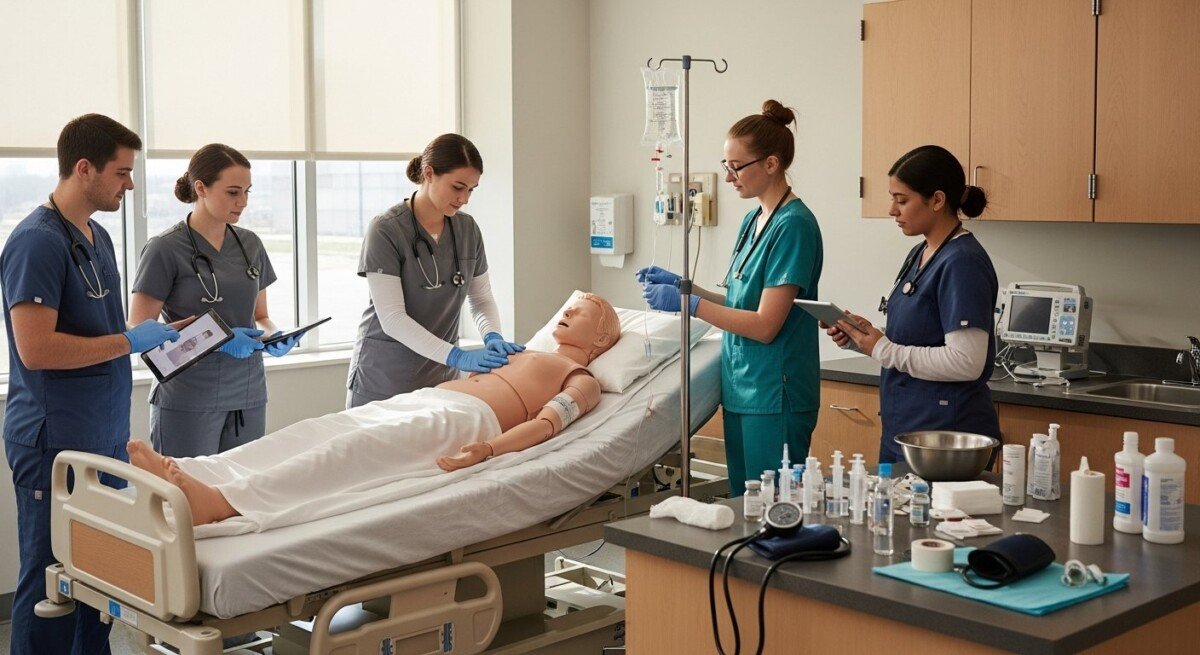
Another critical component is the caliber of faculty. In elite programs, instructors are not merely academics, they are experienced clinicians, active researchers, and leaders in their specialties. This blend of scholarly and practical expertise allows them to teach from a place of real-world relevance, sharing insights from the bedside that textbooks cannot capture. Furthermore, these programs foster a culture of mentorship, where faculty are accessible and invested in student development, providing guidance that shapes both clinical skills and professional identity. The learning environment itself is intentionally designed to simulate high-pressure clinical settings, utilizing advanced simulation labs with high-fidelity manikins and standardized patient actors to build decision-making skills in a controlled, risk-free setting before ever touching a real patient.
Clinical Placements: The Cornerstone of Practical Mastery
There is no substitute for hands-on experience, and the quality of clinical rotations is where superior nursing programs truly separate themselves. These courses secure placements in a diverse array of reputable healthcare facilities, including major teaching hospitals, specialized clinics, community health centers, and outpatient surgical units. This variety is not incidental, it is a strategic part of the curriculum designed to expose students to different patient populations, care models, and medical specialties. A student might spend a rotation in a high-acuity intensive care unit, followed by a placement in a community-based pediatric clinic, thereby developing a well-rounded perspective on patient care across the lifespan and acuity spectrum.
More importantly, these placements are structured, supervised, and integrated with classroom learning. Students are not merely observers, they are gradually entrusted with increasing levels of responsibility under the direct supervision of seasoned nurse preceptors who are trained to educate. The relationship with clinical partners is deep and collaborative, often involving joint appointments and curriculum input from practicing nurses to ensure training aligns with actual workplace demands. This seamless integration between theory and practice ensures that students can immediately apply concepts learned in lecture, reinforcing knowledge and building clinical judgment, a skill that is critical for patient safety and effective nursing intervention.
Curriculum Depth and Specialization Pathways
A robust curriculum is the engine of any superior nursing training course. It moves systematically from foundational sciences (anatomy, physiology, microbiology) through core nursing principles (health assessment, pharmacology, pathophysiology) and into advanced nursing practice. What sets the best programs apart is the depth of coverage in critical areas and the early introduction of concepts like nursing informatics, healthcare policy, ethics in complex care, and leadership principles. This creates nurses who are not just task-oriented caregivers but thoughtful contributors to the healthcare system.
Furthermore, leading programs often offer early exposure to specialization tracks or certificate options within the core degree. This allows students to tailor their education toward areas of high demand and personal passion. While maintaining a strong generalist foundation, students might take concentrated coursework in fields such as:
- Gerontology and Palliative Care: Addressing the complex needs of an aging population.
- Pediatric Acute Care: Focusing on the specialized care of critically ill children.
- Psychiatric-Mental Health Nursing: Building skills in behavioral health assessment and therapeutic communication.
- Nursing Education and Leadership: Preparing for roles in staff development, clinical instruction, or unit management.
This approach not only enhances employability but also helps students discover and cultivate their professional niche, leading to greater career satisfaction and expertise.
Support Systems for Student Success and Licensure
The journey through nursing school is academically and emotionally demanding. Superior programs recognize this and build comprehensive support infrastructures to promote student retention and success. This begins with robust academic support services, including dedicated tutoring centers, writing labs for research papers and care plans, and workshops on test-taking strategies, particularly for the complex, scenario-based questions found in nursing exams. Many top courses also integrate NCLEX-RN preparation directly into the curriculum, using predictive testing and targeted review sessions throughout the program, not just as a cram session at the end.
Beyond academics, exceptional programs address the holistic well-being of students. This can include access to mental health counselors familiar with the stresses of healthcare training, peer mentorship programs that connect incoming students with those further along in the program, and financial aid advising that helps navigate the costs of education. Career services are also a critical component, offering resume reviews tailored to healthcare, interview coaching with nurse managers, and networking events with local hospital systems. These supports create a nurturing environment that allows students to focus on learning, reducing attrition and building resilient professionals who are prepared to handle the rigors of the nursing profession.
Evaluating and Selecting the Right Program for You
Identifying which nursing training course is superior for your individual goals requires diligent research and self-reflection. Start by verifying non-negotiable credentials: ensure the program is accredited by either the Commission on Collegiate Nursing Education (CCNE) or the Accreditation Commission for Education in Nursing (ACEN). Next, dig into the publicly available outcomes data that reputable programs proudly share. Key metrics to scrutinize include first-time NCLEX-RN pass rates (aim for programs consistently at or above the national average), graduation rates, and job placement rates within six months of graduation.
Schedule visits to campuses, whether in-person or virtual. Attend information sessions and, most importantly, ask pointed questions. Inquire about the average student-to-faculty ratio in clinical settings, the process for securing clinical placements, and the types of simulation equipment available. Speak with current students and alumni about their experiences with faculty accessibility, the workload, and the preparedness they felt entering their first job. Finally, align the program’s strengths with your own career aspirations. If you are drawn to rural health, a program with strong community health partnerships in those areas may be superior for you, even if it is not a large university. The best program is the one that most effectively bridges your starting point with your desired professional destination.
Frequently Asked Questions
What is the most important factor in choosing a superior nursing training course?
While many factors matter, consistent first-time NCLEX-RN pass rates and the quality of clinical partnerships are among the most critical. High pass rates indicate effective curriculum and preparation, while strong clinical partnerships ensure you get diverse, hands-on experience with proper supervision.
Are accelerated BSN programs considered superior training?
Accelerated programs can be excellent and are designed for individuals who already hold a bachelor’s degree in another field. Their intensity requires a high level of focus and discipline. The hallmarks of a superior accelerated program are the same: strong clinical placements, expert faculty, and comprehensive support systems to manage the fast-paced workload.
How important is the technological component of modern nursing education?
It is essential. Superior nursing training courses invest in advanced simulation labs, electronic health record (EHR) training platforms, and telehealth training modules. Proficiency with healthcare technology is a core clinical competency, not an add-on.
Does the prestige of the school name matter more than the program details?
Not necessarily. A well-regarded name can open doors, but employers are increasingly focused on competency and clinical experience. A graduate from a lesser-known program with exceptional clinical rotations and high pass rates is often more competitive than a graduate from a prestigious school with weaker practical training.
Can online nursing programs provide superior training?
Yes, many accredited online RN-to-BSN or graduate nursing programs offer rigorous education. The key is to ensure the program includes well-coordinated, local clinical practicums with qualified preceptors and provides robust online student support, including live interaction with faculty and virtual simulation experiences.
Ultimately, investing in a superior nursing education is an investment in your future capability and confidence as a healthcare provider. It lays the groundwork for a career marked by continuous learning, clinical excellence, and the profound ability to make a difference. By prioritizing programs that demonstrate a commitment to depth, practical immersion, and student support, you position yourself not just to pass a licensing exam, but to thrive at the bedside and beyond, becoming the kind of nurse that patients remember and colleagues respect.