Choosing a two-year degree no longer means settling for a modest paycheck. In today’s economy, specific associate degrees open doors to roles that pay as well as many bachelor’s-level positions. Skilled trades, healthcare technology, and technical fields now offer starting salaries that rival or exceed the national average for four-year graduates. For students who want a fast track to financial stability without accumulating decades of student debt, understanding the most lucrative associate degrees for high salaries is the first step toward a smart investment in education.
The key is knowing which fields value hands-on expertise over general education credits. Employers in industries like radiation therapy, dental hygiene, and software development care more about certification and practical skill than the length of your degree program. This article breaks down the top associate degree careers that pay well, explains why these fields command high wages, and offers practical steps to get started. Whether you are a recent high school graduate or a working adult considering a career change, these programs deliver real earning potential in two years or less.
What Makes an Associate Degree Lucrative?
Not all two-year degrees are created equal. A high-paying associate degree typically combines three factors: strong industry demand, specialized technical training, and a clear certification or licensure path. Fields with labor shortages, such as nursing and diagnostic imaging, offer higher wages because employers compete for a limited pool of qualified workers. Programs that require hands-on clinical hours or advanced equipment operation also tend to pay more because the training is costly and specific.
Another critical factor is the return on investment. Community college tuition averages around $3,800 per year, compared to more than $10,000 at public four-year institutions. By graduating in two years instead of four, students save two years of tuition and start earning earlier. Many high-paying associate degrees also lead to immediate employment, with job placement rates above 90 percent in fields like respiratory therapy and web development. For a broader look at how different degree levels compare in earning potential, see our guide on Top College Degrees for High-Demand Careers and Earnings.
Top 6 Most Lucrative Associate Degrees for High Salaries
The following degrees represent the strongest combination of starting salary, job growth, and accessibility. Each entry includes typical job titles, median annual earnings based on Bureau of Labor Statistics data, and the education requirements beyond the associate degree itself.
1. Radiation Therapy
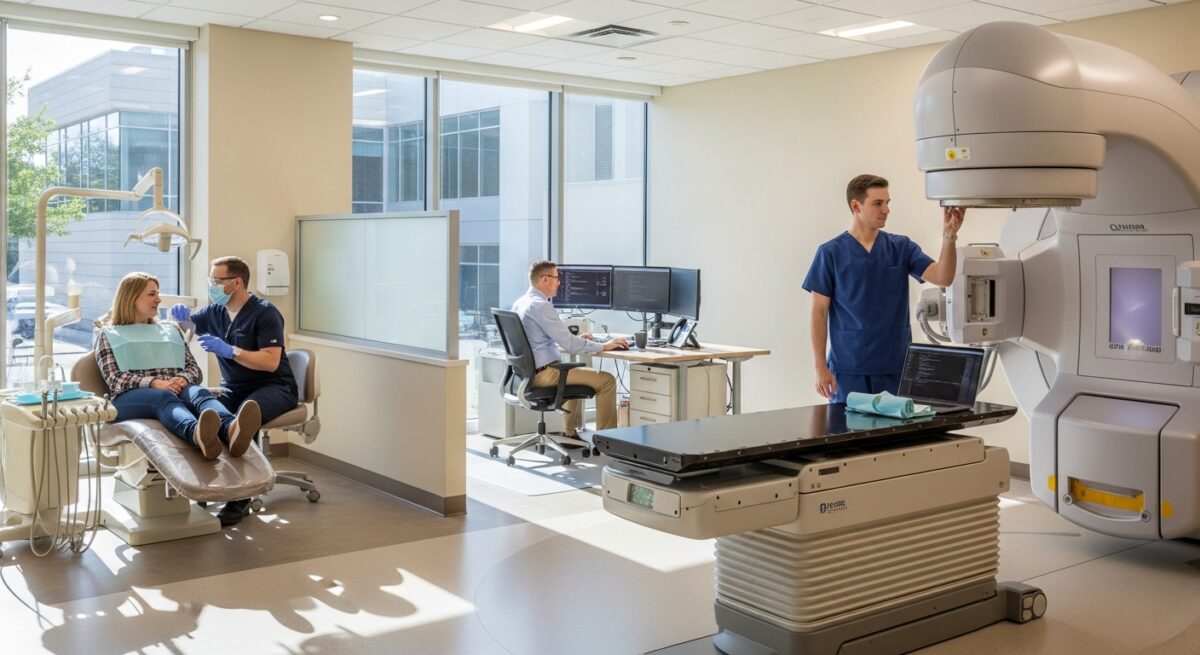
Radiation therapists operate linear accelerators and other imaging equipment to deliver targeted radiation treatments to cancer patients. This role requires precision, empathy, and a thorough understanding of human anatomy and radiation safety protocols. The median annual salary exceeds $85,000, making it one of the highest-paying associate degree careers available. Most states require licensure or certification through the American Registry of Radiologic Technologists.
The job outlook is strong, with projected growth of 6 percent over the next decade. Hospitals and outpatient cancer centers are the primary employers. The program typically includes coursework in radiation physics, patient care, and clinical rotations. Because the work is emotionally demanding and technically complex, salaries reflect the high level of responsibility.
2. Dental Hygiene
Dental hygienists clean teeth, examine patients for oral diseases, and provide preventive care. They work alongside dentists in private practices, community clinics, and specialty offices. The median annual wage is approximately $77,000, with top earners in metropolitan areas surpassing $100,000. An associate degree in dental hygiene is the most common entry point, followed by passing a national board exam and obtaining state licensure.
Flexible scheduling is a major benefit. Many hygienists work part-time or four-day weeks, which makes this career attractive for parents or those pursuing further education. The field is projected to grow 9 percent, faster than average. Programs include intensive clinical training and coursework in anatomy, periodontology, and radiography. Students should expect a rigorous program with high standards for patient interaction.
3. Diagnostic Medical Sonography
Diagnostic medical sonographers, often called ultrasound technicians, use imaging equipment to create images of internal organs and tissues. They specialize in areas such as obstetrics, abdominal sonography, or vascular technology. Median annual earnings are around $75,000. Most employers prefer graduates of Commission on Accreditation of Allied Health Education Programs (CAAHEP) accredited programs and may require certification from the American Registry for Diagnostic Medical Sonography.
The profession is growing at 10 percent, driven by an aging population and increased reliance on non-invasive imaging. Sonographers often work in hospitals, physician offices, and diagnostic laboratories. The work requires strong hand-eye coordination, attention to detail, and the ability to communicate with patients who may be anxious. Programs typically last 18 to 24 months and include both classroom instruction and supervised clinical experience.
4. Registered Nursing (ADN)
An Associate Degree in Nursing (ADN) is one of the fastest routes to becoming a registered nurse. RNs provide direct patient care, administer medications, and coordinate treatment plans. The median annual salary is approximately $77,000, with higher pay available in specialties like critical care, emergency nursing, and operating room nursing. After earning an ADN, graduates must pass the NCLEX-RN exam to obtain licensure.
Employment of registered nurses is projected to grow 6 percent. Hospitals remain the largest employer, but opportunities also exist in home health, outpatient clinics, and long-term care facilities. Many ADN graduates later pursue a Bachelor of Science in Nursing through an RN-to-BSN bridge program, which can unlock leadership roles and higher pay. The ADN path is ideal for students who want to enter the workforce quickly while keeping the option to advance later.

5. Aerospace Engineering Technology
This degree prepares graduates to work alongside aerospace engineers, building and testing aircraft, spacecraft, and missiles. Tasks include assembling prototypes, conducting performance tests, and maintaining production equipment. Median salaries range from $70,000 to $80,000, depending on experience and location. Manufacturers such as Boeing, Lockheed Martin, and Northrop Grumman hire graduates with this background.
The field offers strong demand, especially in states with a high concentration of aerospace companies like Washington, Texas, and Florida. Coursework covers aerodynamics, materials science, computer-aided design, and quality control. Many programs include a capstone project that allows students to build a working model. The combination of technical skill and hands-on application makes this one of the most lucrative associate degrees for high salaries in the engineering support sector.
6. Web Development and Digital Design
Web developers build and maintain websites, handling everything from front-end layout to back-end server logic. An associate degree in web development or a related field can lead to roles such as front-end developer, UI/UX designer, or junior full-stack developer. Median earnings are around $70,000, with top performers earning well over $100,000. The field is projected to grow 16 percent, much faster than average.
This degree is attractive because it does not always require state licensure. Instead, employers focus on a candidate’s portfolio and technical skills. Programs teach HTML, CSS, JavaScript, React, and database management. Many graduates work remotely or freelance, offering flexibility that traditional healthcare roles cannot match. The low cost of an associate degree combined with high earning potential makes this a smart choice for tech-minded students.
How to Choose the Right Program
Selecting the best program among these associate degree careers that pay well requires careful research. Start by checking accreditation. For healthcare programs, accreditation from CAAHEP or the Accreditation Commission for Education in Nursing (ACEN) is essential for licensure eligibility. For technical fields, look for industry-recognized certifications embedded in the curriculum, such as CompTIA or Adobe Certified Associate.
Consider the following factors when evaluating schools:
- Program length and schedule: Some programs offer accelerated tracks that finish in 18 months, while others follow a traditional two-year calendar. Evening and weekend options exist for working adults.
- Clinical or internship placement: Healthcare programs should have partnerships with local hospitals or clinics to ensure you get hands-on experience. Ask about placement rates and whether the school helps arrange rotations.
- Pass rates on licensure exams: For nursing, dental hygiene, and sonography, high pass rates indicate a strong curriculum. Most programs publish this data on their website.
- Cost and financial aid: Compare tuition, fees, and equipment costs. Many community colleges offer scholarships specifically for high-demand fields like nursing and engineering technology.
- Job placement assistance: Schools with strong employer relationships often host career fairs and provide resume support. Ask for recent graduate employment statistics.
Once you have a shortlist of programs, visit the campus or attend a virtual information session. Talk to current students and faculty about the workload and career support. Many programs have prerequisite courses in math, biology, or communication, so verify that you meet those requirements before applying.
Frequently Asked Questions
Can I earn a six-figure salary with an associate degree?
Yes, especially in fields like radiation therapy, dental hygiene, and registered nursing. With overtime, specialization, or work in high-cost-of-living areas, experienced professionals in these roles often exceed $100,000 per year. Web developers with strong portfolios can also reach six figures within a few years of graduation.
Are online associate degrees respected by employers?
Online degrees from accredited institutions are widely accepted, especially in fields like web development and general studies. However, healthcare programs require in-person clinical hours that cannot be completed online. Many schools offer hybrid models that combine remote coursework with local clinical placements.
How long does it take to complete an associate degree?
Most full-time students finish in two years. Some programs offer accelerated pathways that take 18 months, especially for students who already have college credits or relevant work experience. Part-time students may take three to four years.
Do I need to transfer to a four-year university later?
Not necessarily. Many associate degree careers offer strong salaries without further education. However, some fields like nursing and engineering technology have clear advancement paths that reward a bachelor’s degree. If you think you might want to advance, choose a program with transfer agreements to local universities.
Start Your Path to a High-Paying Career
The most lucrative associate degrees for high salaries prove that a two-year education can be a powerful launchpad. By focusing on fields with real demand, specialized training, and clear certification paths, you can graduate with skills that employers need and are willing to pay for. Whether you choose radiation therapy, web development, or aerospace technology, the investment is modest compared to the lifetime earning potential. Use the CollegeDegrees.School search tool to find accredited programs near you and start building a future that pays off.