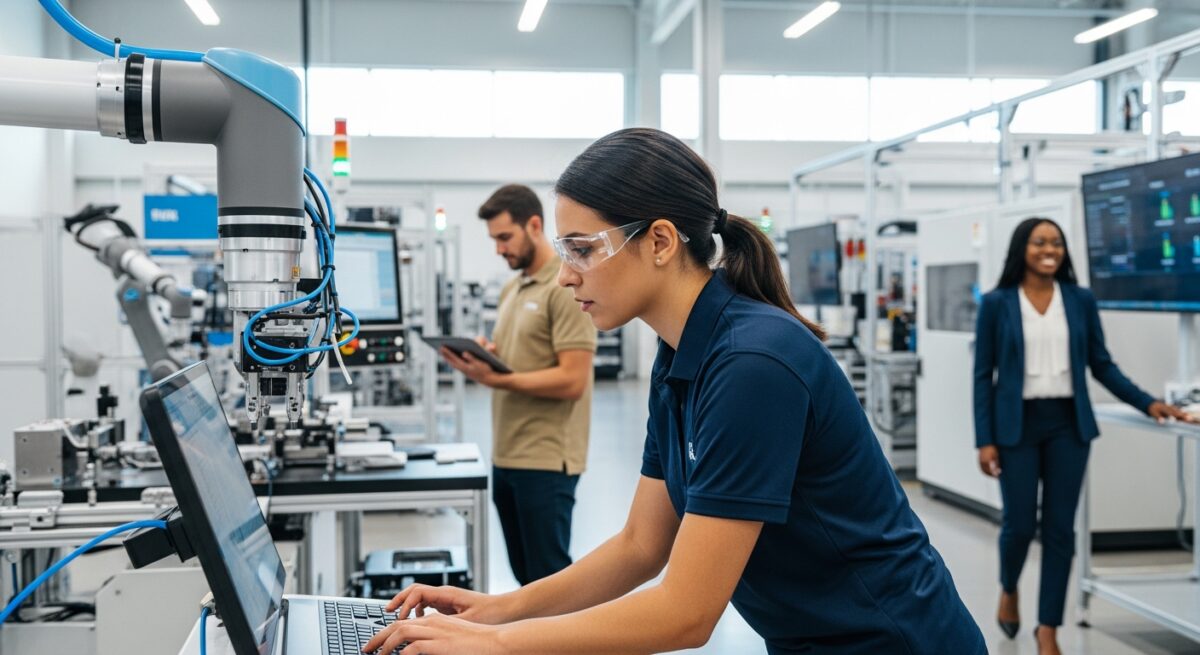
Manufacturing has transformed from the dark, dangerous factories of the past into a dynamic field full of high paying manufacturing careers driven by automation, robotics, and advanced materials. For many students and career changers, the sector remains overlooked, yet it offers salaries that rival those in tech and healthcare, often without requiring a four-year degree. The key is knowing which roles command premium pay and what credentials employers actually value. This guide breaks down the best paying jobs, the degrees that matter, and the steps you can take to enter or advance in this thriving industry.
You might be surprised to learn that the average annual wage for production workers in the United States is over $75,000, and many specialized roles exceed $100,000. The demand for skilled technicians, engineers, and managers continues to grow as companies reshore production and adopt smart factory technologies. Whether you are a recent high school graduate weighing your options or a professional seeking a more stable and lucrative career, manufacturing offers a clear path to financial success.
Why Manufacturing Careers Pay So Well
Several factors drive the high wages in modern manufacturing. First, the skill gap is real: many workers lack the technical training needed to operate complex machinery, program robots, or manage supply chains. When talent is scarce, employers must pay a premium to attract and keep it. Second, manufacturing is capital-intensive, meaning each worker controls expensive equipment and materials. A single error can cost thousands of dollars, so companies invest heavily in skilled operators who can prevent mistakes and maximize output.
The industry’s shift toward advanced technologies has also increased the value of human expertise. Workers who can troubleshoot robotic systems, analyze production data, or design efficient processes are essential. These roles require a mix of hands-on experience and formal education, which is why manufacturing degree careers are becoming more popular. According to the Manufacturing Institute, the sector will need 4.6 million jobs filled by 2034, and nearly half may remain unfilled without new talent.
Top High Paying Manufacturing Jobs for 2026
While entry-level positions can start around $35,000, the following roles offer significant earning potential. Here are some of the most lucrative paths, along with their typical salary ranges and educational requirements.
- Industrial Production Manager: Oversees daily operations, ensures efficiency, and manages staff. Median salary: $108,000. A bachelor’s degree in business or engineering is common, but experience can substitute.
- Robotics Engineer: Designs, builds, and maintains robotic systems used in assembly lines. Median salary: $99,000. Requires a bachelor’s degree in mechanical or electrical engineering.
- Quality Control Manager: Ensures products meet safety and quality standards. Median salary: $97,000. A degree in quality management or a technical field helps.
- Supply Chain Manager: Coordinates logistics, inventory, and procurement. Median salary: $98,000. A bachelor’s in supply chain management or business is typical.
- Manufacturing Engineer: Develops and optimizes manufacturing processes. Median salary: $94,000. Requires a degree in industrial or mechanical engineering.
These roles require a mix of technical knowledge and leadership ability. For example, an industrial production manager must understand both machinery and personnel management. A robotics engineer needs strong programming skills and a grasp of physics. If you are just starting, consider which area aligns with your strengths and interests.
Advanced Manufacturing Technician
This role sits between a traditional machinist and an engineer. Advanced manufacturing technicians operate computer numerical control (CNC) machines, 3D printers, and other automated equipment. They often earn between $55,000 and $75,000 per year, with overtime pushing total compensation higher. Many technicians start with a two-year associate degree or a certificate from a technical college. Some employers offer apprenticeship programs that pay you while you learn.
Technicians who master multiple machines or gain certification in specific software, like CAD/CAM, can command even higher salaries. The key is continuous learning, as technology evolves rapidly. If you enjoy working with your hands and solving problems, this could be an excellent entry point into high paying manufacturing careers.
Manufacturing Degree Careers: Education Options
Not all high paying manufacturing jobs require a four-year degree, but formal education can accelerate your path and open doors to management. Here are the most common educational routes.
Associate Degrees: Many community colleges offer associate programs in manufacturing technology, mechatronics, or industrial maintenance. These two-year degrees provide hands-on training and prepare you for technician roles. Graduates often start at $50,000 or more, and tuition is relatively affordable. Some programs have partnerships with local manufacturers, offering guaranteed interviews upon graduation.
Bachelor’s Degrees: Engineering disciplines like mechanical, industrial, and manufacturing engineering are the most lucrative. A four-year degree can lead to roles in design, process improvement, or management. Starting salaries for engineers are typically above $70,000, and experienced professionals can earn well over $100,000. If you prefer business, a degree in supply chain management or operations management is equally valuable.
Certificates and Bootcamps: For those already working, short-term certificates in robotics, CNC programming, or lean manufacturing can boost your resume. These programs last from a few weeks to six months and focus on specific skills. They are perfect for upskilling without a large time commitment.
When choosing a program, look for accreditation and industry connections. Schools that partner with local factories often provide internship opportunities, which are invaluable for gaining experience and making professional contacts. Also, consider online options if you need flexibility. Many universities offer online degrees in engineering technology or operations management, allowing you to study while working.
How to Start Your Career in Manufacturing
Breaking into the industry requires a strategic approach. Here is a step-by-step plan to help you land your first job or transition to a new role.
- Assess your skills: Identify your strengths in math, science, and technology. Are you more comfortable with hands-on mechanical work or with software and data analysis?
- Research local industries: Look for manufacturing hubs in your region. Aerospace, automotive, food processing, and electronics each have unique requirements. Tailor your education to the dominant sector near you.
- Get training: Enroll in a relevant degree or certificate program. If you are working, consider evening or online classes. For example, you might start with a basic safety certification and then move to a specialized skill course.
- Apply for internships: Many companies offer paid internships for students. These provide real-world experience and often lead to full-time offers. Even unpaid internships can be worth it for the networking value.
- Build a portfolio: Document any projects, designs, or improvements you have made. A portfolio demonstrates your skills to employers better than a resume alone.
Once you are in the field, keep learning. The most successful professionals continuously update their skills. Taking online courses, attending workshops, and earning certifications can lead to promotions and higher pay. For instance, a technician who earns a Six Sigma Green Belt can move into quality management, nearly doubling their salary.
Beyond the Factory Floor: Other High Paying Manufacturing Careers
Manufacturing is not just about production lines. There are many support roles that offer excellent compensation. Product designers use CAD software to create prototypes. Logistics analysts optimize supply chains. Environmental health and safety managers ensure compliance with regulations. All these positions require specialized knowledge but offer substantial rewards.

One growing area is additive manufacturing, or 3D printing. Companies use this technology for rapid prototyping and custom parts. Experts who can design for additive manufacturing and operate printers are in high demand. Salaries for such specialists can exceed $90,000. Similarly, roles in industrial data analytics, where professionals analyze sensor data to improve efficiency, are becoming crucial. These positions blend manufacturing knowledge with data science skills.
If you are interested in the intersection of technology and production, consider a role as a control systems engineer. These professionals design and maintain the software that controls machinery. They often earn between $85,000 and $115,000. A degree in electrical engineering or computer science is typical, but some technicians advance into these roles with experience and additional training.
Manufacturing vs. Other Career Paths
When comparing manufacturing to other sectors, the financial benefits are clear. For instance, the median annual wage for all workers in the United States is around $46,000, while the median for manufacturing roles is over $58,000. Many manufacturing jobs also offer overtime pay, shift differentials, and bonus structures that can increase base earnings by 10% to 20%.
Unlike some white-collar jobs that require long periods of unpaid internships or graduate degrees, manufacturing often provides paid training and apprenticeships. You can start earning a decent income while learning. Moreover, the physical nature of the work, once a downside, is now less common as automation handles the heavy lifting. Modern factories are clean, safe, and climate-controlled.
For those who worry about job security, manufacturing offers stability. Essential goods are always needed, and the trend toward local production is increasing. Government initiatives to bolster domestic manufacturing are creating new opportunities. Additionally, the skills you gain are transferable across industries, making it easier to pivot if needed.
Frequently Asked Questions
What manufacturing job pays the most without a degree?
Many technician roles offer high pay without a four-year degree. For example, a senior CNC machinist can earn over $70,000 per year. Industrial mechanics and electricians in manufacturing plants also make excellent wages, often exceeding $80,000 with overtime. The key is to gain specialized skills and certifications that are in demand.
Are manufacturing jobs declining?
While the number of traditional assembly jobs has decreased due to automation, the industry is not disappearing. Instead, it is evolving. There is a growing need for workers who can manage and maintain advanced machinery. The U.S. Bureau of Labor Statistics projects that employment in manufacturing will remain stable, with many openings due to retirements.
What is the fastest way to get a high paying manufacturing job?
A certificate program in a specific skill, such as welding or CNC operation, can lead to a job in a few months. However, for higher wages, consider an associate degree in mechatronics or industrial maintenance, which typically takes two years. Apprenticeships are another fast track, as they combine paid work with classroom instruction.
Do manufacturing jobs require physical strength?
While some roles involve lifting or standing for long periods, many modern jobs are less physically demanding. Automation and robotics have taken over heavy tasks. Technicians and engineers spend more time at computers or troubleshooting equipment. If you have physical limitations, you can still find suitable roles in quality, logistics, or administration.
How does a manufacturing degree compare to a business degree?
A manufacturing or engineering degree provides specific technical skills that are immediately applicable. A business degree offers broader knowledge that can be useful in management, but you may need additional training to understand manufacturing processes. For leadership roles in manufacturing, a technical background is often preferred, but a combined degree in operations management is ideal.
Your Next Steps Toward a Lucrative Career
The manufacturing sector is ripe with opportunity for those willing to invest in their education and skills. High paying manufacturing careers are not a myth; they are real and accessible to individuals who take the right steps. Start by exploring the specific roles that interest you, research the educational programs that align with those roles, and consider reaching out to local manufacturers for informational interviews. You can also use resources like college and tuition guidance to understand the financial investment required for your chosen path.
Remember, the industry values practical experience, so do not wait until graduation to gain exposure. Look for internships, part-time jobs, or volunteer opportunities in manufacturing settings. Network with professionals through industry associations or online forums. The more you learn, the more attractive you become to employers.
In addition, stay informed about emerging technologies. The future of manufacturing lies in automation, artificial intelligence, and sustainable practices. By positioning yourself at the forefront of these trends, you ensure long-term career growth and job security. For more insights into high paying career options, check our guide on top high paying environmental careers for 2026, which shares similar principles of education and demand.
The path to a rewarding manufacturing career is within your reach. With dedication and the right preparation, you can secure a position that offers not only financial stability but also professional fulfillment. The factories of tomorrow need skilled, innovative, and ambitious workers. That could be you.