The traditional four-year degree, while valuable, is no longer the singular route to a successful career. Today’s students and working professionals demand flexibility, relevance, and efficiency from higher education. This shift has given rise to the strategic design and adoption of collegiate learning tracks, a framework that moves beyond the one-size-fits-all model to create structured, personalized educational pathways. These tracks are coherent sequences of courses, credentials, and experiences tailored to specific career outcomes or academic interests, allowing learners to build skills progressively and with clear purpose. Whether within a traditional bachelor’s program, embedded in a community college curriculum, or offered through online education platforms, learning tracks represent a responsive evolution in how we conceive of and deliver postsecondary education.
Defining the Modern Learning Track
A collegiate learning track is more than just a list of recommended electives. It is an intentional, guided pathway that helps students navigate the vast curriculum of a degree program toward a specialized skill set or knowledge area. Think of it as a major within a major, or a focused theme that connects disparate courses into a cohesive narrative. For instance, within a broad Business Administration degree, a student might follow a learning track in Data Analytics, taking a prescribed set of courses in statistics, database management, and visualization tools alongside their core business classes. This provides depth and marketable specialization that a generic degree may lack.
The power of this model lies in its structure and clarity. It reduces choice paralysis for students by providing a curated roadmap. For institutions, it allows for the efficient packaging of existing course offerings into more attractive and career-relevant bundles. Learning tracks can be credit-bearing, leading to an embedded certificate or a formal notation on a transcript, or they can be informal guides. They often incorporate high-impact practices like internships, capstone projects, or industry partnerships specifically aligned with the track’s focus, creating a direct bridge from classroom learning to professional application.
The Strategic Benefits for Students and Institutions
For learners, the advantages of following a defined collegiate learning track are multifaceted. Primarily, they offer a clear line of sight from education to employment. In a competitive job market, students can articulate not just a degree, but a specific concentration of skills, making them more attractive to employers in targeted fields like tech jobs or specialized business roles. This model also supports non-traditional students, including those returning to education or balancing work and study, by providing shorter-term, stackable milestones. A learner might complete a track in Cybersecurity at a community college, earn a certificate, enter the workforce, and later apply those credits toward a full bachelor’s degree.
For colleges and universities, implementing learning tracks is a strategic response to market demands for skilled graduates. It enhances student retention and engagement by helping learners see the relevance of their coursework early and often. It fosters stronger relationships with local industries, which can help design tracks to ensure they are teaching in-demand skills. Furthermore, as explored in our analysis of how collegiate learning programs empower students, these structured pathways are a key tool in making higher education more adaptable and student-centric. They allow institutions to refresh their offerings without always creating entirely new degree programs, which can be a lengthy and resource-intensive process.
Designing and Navigating Effective Learning Tracks
The most effective collegiate learning tracks share several key design principles. They are not arbitrary collections of courses but are built with intentionality around a central competency or career goal. A well-designed track typically includes foundational theory, applied technical skills, and integrative experiential learning. For example, an online degree in Aviation might offer separate tracks for Flight Operations, Aviation Management, and Aerospace Technology, each with a distinct sequence of simulation-based courses, business classes, or engineering fundamentals.
For students considering a program that offers tracks, proactive navigation is essential. The following steps can help you choose and maximize a learning track:
- Conduct a Self-Assessment: Align your choice with your long-term career interests, strengths, and the specific demands of your target industry.
- Research the Curriculum: Scrutinize the required courses in the track. Do they cover the software, theories, and skills listed in your desired job postings?
- Consult with Advisors and Faculty: Speak to departmental advisors about how the track integrates with your major and about opportunities for related internships or projects.
- Explore Stackability: Determine if the track leads to a standalone credential (like a certificate) that holds value on its own and fits into a larger degree.
- Review Graduate Outcomes: Ask the institution for data on where graduates of that specific track are employed.
Following a track requires discipline, but it transforms a degree from a passive checklist into an active portfolio-building exercise. It encourages students to see connections between subjects and to articulate their educational journey as a focused narrative.
Learning Tracks Across Different Educational Formats
The concept of structured pathways is remarkably adaptable across the higher education landscape. In a community college setting, learning tracks are often tightly linked to local workforce needs and are designed for direct career entry or seamless transfer to a four-year university. A student might enroll in a two-year program with a clear track in Network Administration, earning industry certifications along the way.
In the realm of Online Education, tracks provide essential structure in an environment that can feel isolating or overwhelming. Reputable online degrees use tracks to create community among students with similar goals and to organize asynchronous coursework into a logical progression. The flexibility of online learning is perfectly complemented by the guidance of a track, allowing working adults to efficiently gain specialized skills, such as in earning a Psychology Bachelor’s Degree online with a focus on organizational behavior or child development.
Even within traditional liberal arts disciplines, tracks add a layer of modern applicability. A major in Anthropology, for instance, might offer tracks in Cultural Resource Management (for archaeology careers), Medical Anthropology (for public health), or Digital Ethnography (for user experience research). This helps answer the perennial question, “What can I do with this degree?” by showing concrete applications of the discipline’s core methodologies.
The Future of Specialized Education Pathways
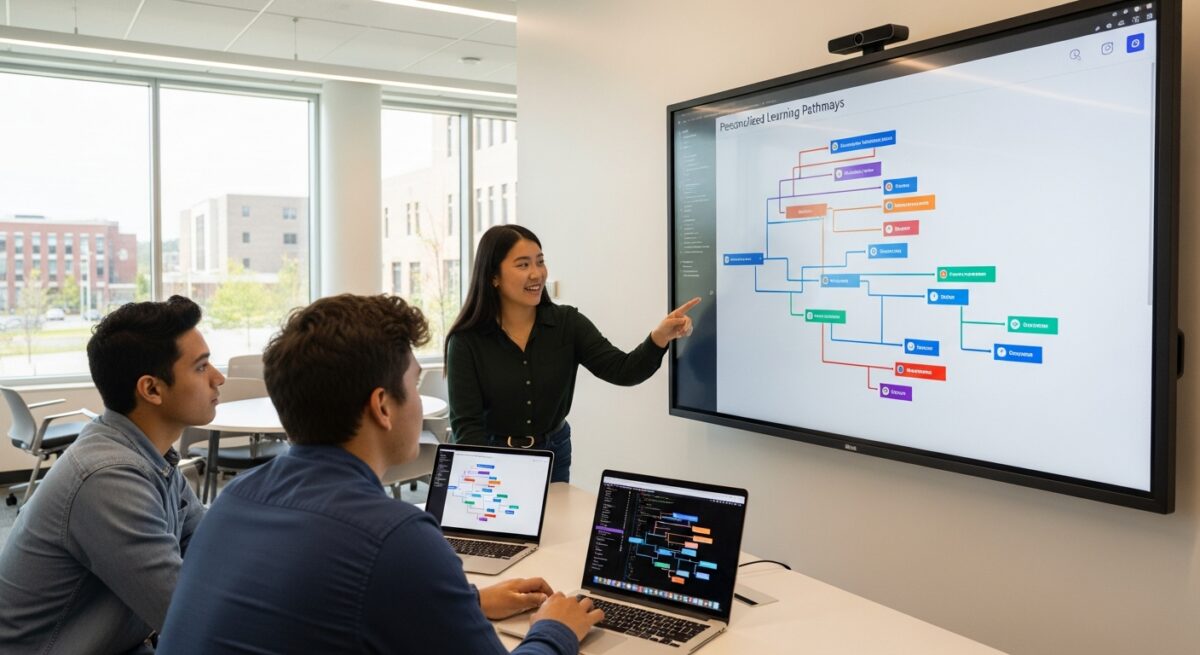
The trend toward more personalized and modular education suggests that collegiate learning tracks will only become more prevalent and sophisticated. We are likely to see an increase in micro-credentials and digital badges that formally represent the completion of a track, providing learners with portable, verifiable evidence of their skills. Technology will further enable this personalization. As highlighted in discussions on how AI is revolutionizing learning, adaptive platforms could one day help dynamically suggest or modify learning tracks based on a student’s performance, interests, and real-time labor market data.
Furthermore, interdisciplinary tracks that blend knowledge from disparate fields will become crucial for solving complex problems. A track combining environmental science, policy, and data visualization, for example, prepares graduates for roles in sustainability reporting and advocacy in ways a single major cannot. The ultimate goal is to break down silos between departments and create agile, responsive curricula that prepare students not just for their first job, but for a lifetime of career adaptation and growth.
Collegiate learning tracks represent a fundamental rethinking of the educational journey. They acknowledge that in a world of information abundance, guidance and structure are more valuable than ever. By offering clear, career-aligned pathways within broader degree programs, they empower students to take ownership of their education, provide institutions with a tool for innovation and relevance, and deliver to the economy graduates with both deep specialized skills and the contextual understanding of a traditional degree. For anyone navigating higher education today, understanding and utilizing these tracks is key to transforming academic investment into tangible professional and personal returns.