In an era of complex healthcare systems and evolving patient needs, the foundation of a safe, effective, and compassionate nursing workforce is the education that shapes it. Quality registered nurse education is not merely about passing a licensing exam; it is a rigorous, holistic process that transforms students into competent professionals capable of critical thinking, clinical judgment, and ethical practice. This education serves as the critical bridge between theoretical knowledge and the demanding realities of patient care, directly impacting patient outcomes, nurse retention, and the overall health of our communities. Understanding what constitutes excellence in RN preparation is essential for aspiring nurses, healthcare employers, and anyone invested in the future of healthcare.
The Hallmarks of an Exceptional Nursing Program
Distinguishing a superior nursing program from a merely adequate one requires looking beyond brochures and rankings. The quality of registered nurse education is defined by a constellation of interdependent factors that create a robust learning environment. At its core, a quality program is built upon a curriculum that is both comprehensive and adaptive, integrating the latest evidence-based practices and technological advancements in healthcare. This curriculum must be delivered by faculty who are not only experts in their clinical specialties but also skilled educators dedicated to student success. Furthermore, the learning environment itself—whether on-campus, in simulation labs, or at clinical sites—must foster collaboration, respect, and a culture of safety and continuous improvement. These elements combine to create graduates who are practice-ready from day one.
One of the most significant indicators of a program’s caliber is the success of its graduates. This is measured not just by first-time NCLEX-RN pass rates, though that is a crucial benchmark, but also by graduate employment rates, employer satisfaction surveys, and the long-term career advancement of alumni. A program invested in quality will transparently share these outcomes and use them to inform ongoing curriculum development and resource allocation. The goal is to produce nurses who are not just technically proficient but are also leaders, advocates, and lifelong learners.
Curriculum and Clinical Experience: The Essential Duo
The backbone of any nursing program is its curriculum, which must meticulously balance foundational sciences, nursing theory, and hands-on practice. A quality curriculum is coherent and sequential, ensuring that each course builds logically upon the last. It moves students from understanding normal human physiology to assessing and managing complex pathophysiological states. Crucially, it integrates essential non-clinical competencies such as communication, health informatics, population health, leadership, and healthcare policy. This broader perspective prepares nurses to function effectively within interdisciplinary teams and to navigate the complexities of the modern healthcare system.
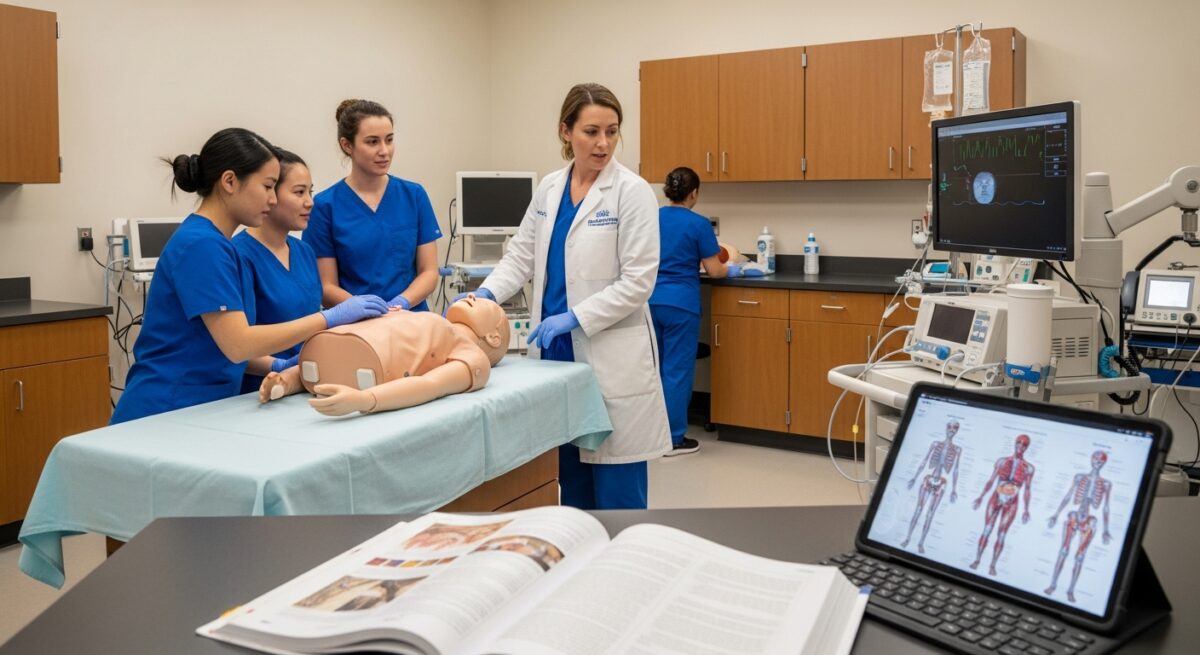
However, theoretical knowledge alone is insufficient. The clinical component is where theory is tested, skills are honed, and professional identity is formed. Quality registered nurse education provides diverse, immersive, and well-supervised clinical rotations across a variety of settings—from hospitals and community clinics to public health agencies and long-term care facilities. The depth and quality of these experiences are paramount. Students need adequate time at each site to move beyond observation to active participation in patient care. Effective programs often utilize high-fidelity simulation labs to complement clinical hours, allowing students to safely practice high-risk, low-frequency scenarios and develop clinical judgment in a controlled environment. This dual approach ensures graduates are confident and competent.
The synergy between classroom and clinic is facilitated by instructional design that emphasizes application. For more on the principles behind effective learning frameworks, explore our resource on instructional design in education. Programs that master this integration produce nurses who can immediately translate knowledge into safe, effective action.
Key Elements of a Robust Clinical Education
To ensure clinical experiences are transformative rather than merely observational, several key elements must be present. First, there must be clear, measurable learning objectives for each rotation that align with the program’s overall outcomes. Second, the student-to-instructor ratio must be low enough to allow for meaningful supervision and feedback. Third, clinical instructors should be actively involved in both the clinical setting and the academic program, helping to bridge any gap between what is taught and what is practiced. Finally, there must be structured opportunities for pre- and post-clinical conferences where students can reflect on their experiences, discuss challenges, and consolidate their learning with peers and faculty.
The Role of Accreditation and Faculty Expertise
Accreditation is the external seal of approval that signifies a nursing program meets nationally recognized standards of quality. Attending a program accredited by bodies such as the Commission on Collegiate Nursing Education (CCNE) or the Accreditation Commission for Education in Nursing (ACEN) is non-negotiable for students seeking a quality education. Accreditation ensures the program undergoes regular, rigorous review of its mission, governance, resources, curriculum, and student outcomes. It is also often a prerequisite for federal financial aid, state board approval, and graduate school admission. While challenging, the accreditation process drives continuous program improvement and accountability.
Equally vital are the faculty who deliver the education. Quality programs are staffed by a mix of doctorally-prepared nurse scientists and clinically expert master’s-prepared nurses. Faculty should maintain an active presence in nursing practice or research to keep their teaching relevant and current. Beyond credentials, effective nursing educators possess a passion for teaching and mentoring. They create engaging learning environments, provide constructive and timely feedback, and model the professional behaviors they expect from their students. Their support is often the difference between a student who struggles and one who thrives, ultimately contributing to lower attrition rates and higher student satisfaction.
Choosing the Right Path: ADN vs. BSN and Beyond
Aspiring nurses face an important decision at the outset: which educational pathway to pursue. The Associate Degree in Nursing (ADN) and the Bachelor of Science in Nursing (BSN) are both routes to RN licensure, but they differ in scope, depth, and long-term career trajectory. ADN programs, typically offered at community colleges, are more focused on technical clinical skills and can be completed in about two to three years. They provide an efficient entry into the workforce. BSN programs, usually four-year degrees, encompass all the clinical training of an ADN but add a stronger emphasis on research, public health, leadership, management, and the humanities. This broader education aligns with the recommendations of leading health organizations, which call for a more highly educated nursing workforce to meet complex patient needs.
The choice between an ADN and BSN is personal and depends on career goals, timeline, and resources. However, the industry trend strongly favors the BSN. Many healthcare employers, especially magnet-designated hospitals, now require or strongly prefer BSN-prepared nurses for entry-level positions and certainly for advancement into leadership roles. Furthermore, a BSN is the essential stepping stone to graduate-level education for roles like Nurse Practitioner, Clinical Nurse Specialist, or Nurse Educator. For those who begin with an ADN, numerous accessible RN-to-BSN completion programs make advancing one’s education feasible while working. The commitment to lifelong learning begins with selecting an initial program that supports future growth.
When evaluating specific programs, prospective students should consider a clear set of factors:
- Accreditation Status: Confirm current accreditation from CCNE or ACEN.
- NCLEX-RN Pass Rates: Review the program’s first-time pass rates over the past 3-5 years compared to state and national averages.
- Graduation and Job Placement Rates: Ask for data on how many students who start the program finish it, and how many are employed within six months of graduation.
- Clinical Partnerships: Inquire about the variety and quality of clinical sites where students train.
- Faculty Credentials and Support: Research the faculty’s expertise and ask about student access to advisors and tutors.
- Technology and Resources: Assess the quality of simulation labs, library resources, and student support services.
Visiting the campus, speaking with current students and alumni, and attending information sessions can provide invaluable insights beyond what is available on a website. This due diligence is an investment in a future career.
The Future of Nursing Education: Innovation and Adaptation
The landscape of healthcare is perpetually changing, driven by technological innovation, demographic shifts, and new public health challenges. Consequently, quality registered nurse education must be dynamic and forward-looking. Programs are increasingly integrating telehealth competencies, data analytics, and genomics into their curricula. Simulation technology continues to advance, offering virtual and augmented reality experiences that enhance clinical preparation. Furthermore, pedagogical methods are evolving to include more active, flipped-classroom, and team-based learning strategies that better prepare nurses for collaborative practice.
Perhaps the most significant shift is the strategic embrace of online and hybrid learning models for theory-based courses, making BSN and advanced degrees more accessible to working nurses and non-traditional students. These programs, when well-designed, maintain rigorous standards and often include local arrangements for clinical practicums. The future of nursing education lies in leveraging technology not to replace the human element of nursing, but to enhance learning, increase accessibility, and prepare nurses to use technology wisely in their practice to improve patient care.
The journey to becoming a registered nurse is demanding, but it is one of the most impactful professions one can choose. The quality of the education received during this formative period lays the groundwork for a lifetime of competent, compassionate service. By seeking out programs that exemplify the hallmarks of excellence—rigorous accreditation, expert faculty, a balanced and innovative curriculum, and rich clinical experiences—aspiring nurses equip themselves not just to pass a test, but to thrive in a rewarding career and make a lasting difference in the lives of others. The investment in a quality education is, ultimately, an investment in the health of our society.