In an era where healthcare extends far beyond hospital walls, the demand for skilled community health nurses has never been greater. These professionals serve as the vital link between clinical care and the complex social, economic, and environmental factors that shape a population’s well-being. Pursuing an outstanding community health nursing degree is not merely an academic decision; it is a commitment to becoming a frontline advocate for health equity, disease prevention, and holistic wellness within neighborhoods, schools, and entire regions. These specialized programs equip nurses with a unique skill set that blends clinical expertise with public health science, policy understanding, and cultural competence, preparing graduates to lead initiatives that transform community health outcomes from the ground up.
Defining Excellence in Community Health Nursing Education
What distinguishes an outstanding community health nursing degree from a standard program? The answer lies in a curriculum and educational philosophy that transcends traditional bedside nursing. Excellence is characterized by a deep integration of public health principles with advanced nursing practice. Top-tier programs move students beyond individual patient care to assess and intervene at the family, group, and population levels. They emphasize epidemiological reasoning, community assessment methodologies, health policy analysis, and program planning and evaluation. This foundational shift in perspective is what enables graduates to identify root causes of health disparities and design sustainable interventions.
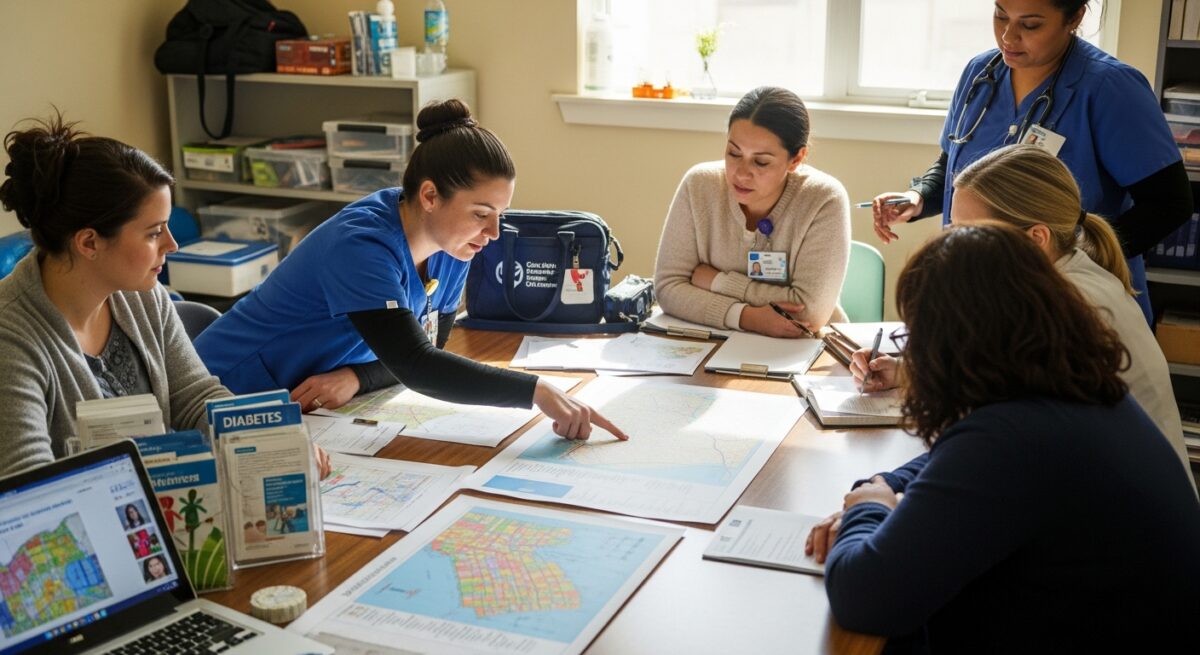
Furthermore, outstanding programs are distinguished by their experiential learning components. They forge robust partnerships with local public health departments, non-profit organizations, community clinics, and school systems. These partnerships provide students with authentic, hands-on practicum experiences where they can apply classroom theory to real-world challenges under the guidance of expert preceptors. The best programs also foster a spirit of inquiry and evidence-based practice, often culminating in a capstone project where students tackle a genuine community health issue, from designing a diabetes management program for a rural population to evaluating a smoking cessation initiative in an urban housing development.
Core Components of a Premier Community Health Curriculum
The backbone of any outstanding community health nursing degree is a meticulously designed curriculum that balances theory, ethics, and practical application. At the undergraduate level, typically a Bachelor of Science in Nursing (BSN) with a community health concentration or focus, students are introduced to the core concepts. This includes foundational courses in public health science, health promotion across the lifespan, environmental health, and an introduction to global health issues. The curriculum prepares the generalist nurse to function effectively in community-based settings like home health, public health clinics, and school nursing.
For those seeking advanced practice roles, a Master of Science in Nursing (MSN) with a specialization in Public Health Nursing or Community Health Leadership is the standard. These graduate programs delve much deeper. Coursework expands to include advanced population health assessment, biostatistics for health professionals, healthcare policy and advocacy, financial management for community health organizations, and advanced theories of health behavior change. A critical component at this level is the development of leadership and management skills, preparing nurses to direct programs, manage teams, and influence policy. Many MSN programs offer tracks that align with specific roles, such as Clinical Nurse Leader (CNL) in community settings or preparation for the Advanced Public Health Nursing (APHN-BC) board certification.
The most comprehensive path is the Doctor of Nursing Practice (DNP) with a focus on public or population health. This terminal practice doctorate represents the pinnacle of community health nursing education. DNP programs emphasize translational science—the art of turning research into practice—at a systems level. Students learn to design, implement, and evaluate large-scale health initiatives, use data analytics to drive decision-making, and lead quality improvement projects that affect entire communities. The DNP project is a hallmark of the degree, requiring students to identify a gap in community health practice, implement an evidence-based intervention, and rigorously assess its outcomes, thereby contributing directly to the field’s knowledge base.
Identifying the Hallmarks of a Top Program
Prospective students should look beyond brochures and rankings to specific indicators of quality. Accreditation is non-negotiable; the program should be accredited by the Commission on Collegiate Nursing Education (CCNE) or the Accreditation Commission for Education in Nursing (ACEN). Furthermore, examine the faculty. Are they actively engaged in community health practice, research, or policy work? Do they hold advanced certifications like APHN-BC? The connection between faculty expertise and student learning is profound.
Another key hallmark is the strength and diversity of clinical placements. An outstanding program will offer placements across the spectrum of community health, such as:
- Local and State Health Departments: Working on infectious disease surveillance, immunization campaigns, and maternal-child health programs.
- Federally Qualified Health Centers (FQHCs): Providing primary care and chronic disease management to underserved populations.
- School-Based Health Centers: Delivering integrated physical, mental, and preventive care to children and adolescents.
- Non-Governmental Organizations (NGOs): Focusing on specific issues like homelessness, substance use disorder, or refugee health.
- Corporate and Occupational Health: Promoting wellness and safety within workplace settings.
Finally, investigate student outcomes. What is the graduation rate? What percentage of graduates pass the relevant certification exams? Most importantly, where do alumni work, and what impactful roles do they hold? A program with graduates leading community health initiatives, serving as directors of public health nursing, or influencing state-level policy is a strong indicator of its ability to prepare students for real-world leadership.
Career Pathways and Impact for Graduates
Earning a degree from one of these outstanding community health nursing programs opens a diverse array of career paths, each with significant potential for impact. Unlike many nursing specializations tied to clinical settings, community health nurses operate in a vast ecosystem of health. A common entry point is as a Public Health Nurse for a city or county health department. In this role, nurses might lead home visiting programs for new mothers, conduct tuberculosis contact investigations, manage caseloads for sexually transmitted infection treatment, or run childhood obesity prevention clinics. The work is varied, autonomous, and directly tied to the community’s most pressing health needs.
With an advanced degree, roles expand into leadership, specialization, and innovation. Graduates may become Program Directors for non-profits focused on food security or mental health access. They might step into roles as Community Health Clinical Nurse Specialists, consulting with healthcare systems on how to better address the social determinants of health of their patient populations. Others become Policy Analysts for government agencies or advocacy groups, using their frontline experience to shape legislation and funding for public health initiatives. In the education sector, they train the next generation of nurses as faculty members, instilling the principles of population health.
The tangible impact of this work is immense. Community health nurses are instrumental in closing health equity gaps. They develop and run culturally tailored programs that increase cancer screening rates in minority communities. They establish syringe exchange programs that reduce the spread of bloodborne pathogens. They create community gardens in food deserts to improve nutrition. They build bridges of trust in communities wary of the healthcare system. This work moves the needle on population health metrics, reducing infant mortality, controlling epidemic outbreaks, and improving the quality of life for thousands. The return on investment from an outstanding community health nursing degree is measured not in revenue, but in healthier, more resilient communities.
Choosing the Right Program for Your Goals
Selecting the right program requires honest self-assessment and strategic research. Begin by clarifying your professional objectives. Are you aiming for a hands-on clinical role in a specific setting, or do you aspire to shape policy and lead large-scale programs? Your answer will guide the level of degree you pursue BSN, MSN, or DNP. Next, consider modality. Many outstanding community health nursing degrees are now offered in flexible online or hybrid formats, which are ideal for working professionals. However, ensure that any online program has a clear and supported plan for arranging local clinical practicums that meet your learning needs.
Financial considerations are also crucial. Investigate tuition costs, but more importantly, research available financial aid specifically for public health nursing. Many state health departments offer loan repayment programs or scholarships for nurses who commit to working in underserved areas post-graduation. The U.S. Public Health Service and the National Health Service Corps also have programs that can significantly offset educational costs in exchange for service. A program’s financial aid office should be well-versed in these unique opportunities.
Ultimately, the choice should be data-informed. Reach out to admissions counselors and, if possible, current students and alumni. Ask specific questions about curriculum relevance, faculty support, clinical placement processes, and career services. Attend virtual open houses. Compare the required coursework against the competencies outlined by the Quad Council Coalition of Public Health Nursing Organizations, a key industry standard. By taking these steps, you can confidently identify a program that will not only provide an outstanding education but will also align with your personal mission to improve the health of populations.
The journey to become a community health nurse is a commitment to a broader vision of healthcare. It is a path for those who see health as a communal responsibility and nursing as a tool for social change. By investing in an education from a rigorous and respected program, you gain the knowledge, skills, and credibility to enact that change. From conducting community needs assessments to advocating for healthier policies, the work you will be prepared to do addresses the very fabric of public well-being. In a world facing complex health challenges, from pandemic preparedness to the epidemic of chronic disease, the expertise cultivated through these outstanding community health nursing degrees has never been more vital or more valued.