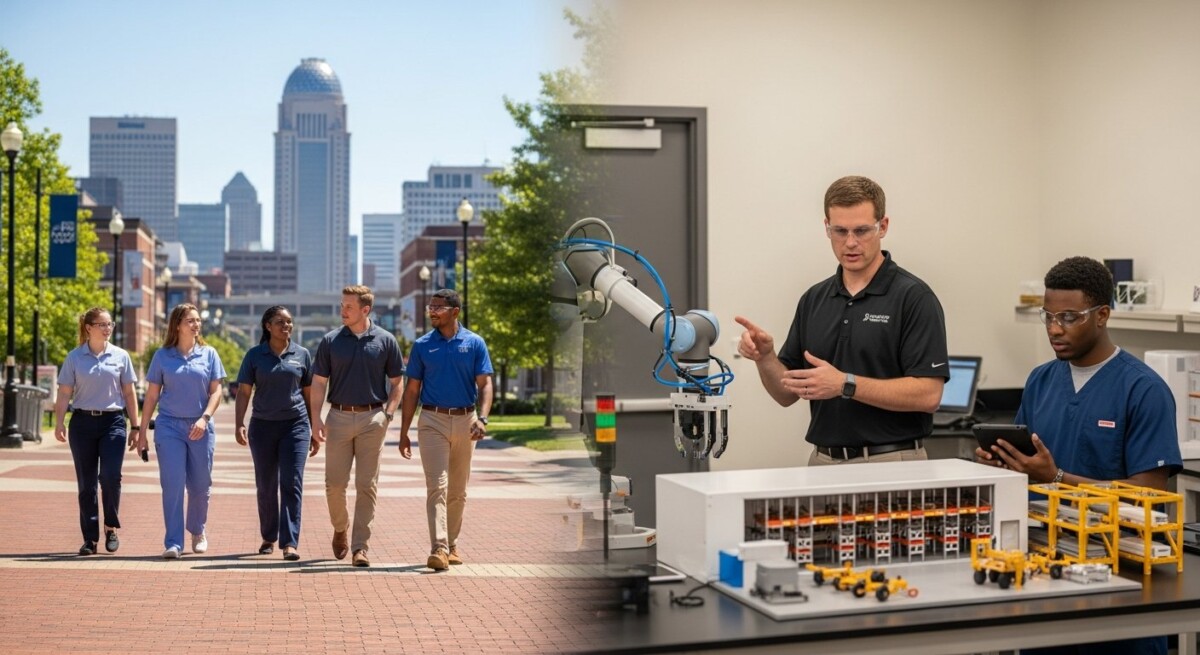
When you choose a college major in Kentucky, the goal is often straightforward: you want a degree that leads directly to a well-paying job after graduation. With the state’s strong presence in healthcare, advanced manufacturing, logistics, and information technology, several academic programs stand out as clear pathways to immediate employment. Understanding which majors offer the highest return on investment and the shortest time to hire can shape your entire educational strategy. This guide examines Kentucky’s premier majors for workforce entry, detailing the programs that consistently produce job-ready graduates for the state’s most in-demand industries.
Kentucky’s economy has shifted significantly in recent years. While traditional sectors like agriculture and coal mining remain part of the landscape, growth areas now include distribution centers, automotive manufacturing, healthcare systems, and tech startups. Employers in these fields actively recruit graduates from Kentucky’s public universities and community colleges. By aligning your major with these regional needs, you reduce the gap between earning your diploma and starting your career. The following sections break down the top programs, their typical career outcomes, and how you can take advantage of these opportunities.
Why Kentucky’s Workforce Needs Certain Majors
Kentucky faces a persistent skills gap in several critical industries. According to state workforce development reports, healthcare occupations, skilled trades, and computer-related roles consistently rank among the hardest to fill. This shortage creates favorable conditions for graduates who hold degrees in these fields. Employers offer competitive starting salaries, sign-on bonuses, and tuition reimbursement programs to attract talent from local colleges.
The Kentucky Council on Postsecondary Education has identified high-demand clusters that include nursing, engineering technology, logistics and supply chain management, and computer science. These fields account for a large percentage of job openings that require at least an associate or bachelor’s degree. Students who graduate with these credentials often receive multiple job offers before commencement. For those looking to enter the workforce quickly, selecting one of these majors can dramatically shorten the job search timeline.
Nursing: The Fastest Route to a Stable Career
Registered nursing remains one of Kentucky’s most reliable workforce-entry degrees. The state’s aging population and expanding healthcare networks create sustained demand for nurses at all levels. An Associate Degree in Nursing (ADN) from a Kentucky community college or a Bachelor of Science in Nursing (BSN) from a four-year university both lead to licensure and immediate employment. Hospitals across Louisville, Lexington, and rural areas actively recruit new graduates.
The ADN pathway is particularly attractive for workforce entry because it takes roughly two years to complete and costs significantly less than a four-year degree. Graduates pass the NCLEX-RN exam and often begin working within weeks of licensure. Many Kentucky hospitals offer tuition assistance for ADN-prepared nurses who later pursue a BSN online while working. This stackable approach allows students to start earning quickly while continuing their education.
For those seeking a more advanced entry point, the BSN opens doors to leadership roles and specialty units. University of Kentucky and University of Louisville nursing programs report placement rates above 90 percent within six months of graduation. The average starting salary for registered nurses in Kentucky ranges from $55,000 to $65,000, depending on location and facility type. Given the low unemployment rate in nursing, this major consistently ranks among Kentucky’s premier majors for workforce entry.
Advanced Manufacturing and Engineering Technology
Kentucky ranks among the top states for automotive manufacturing, with major plants operated by Toyota, Ford, and General Motors. These employers need technicians, supervisors, and engineers who understand modern production systems. Programs in advanced manufacturing, mechatronics, and industrial engineering technology prepare graduates for these roles. Associate degrees and certificates from Kentucky’s technical colleges often lead directly to positions paying $45,000 to $60,000 per year.
The Kentucky Community and Technical College System (KCTCS) offers several credentials aligned with industry certifications. For example, the Advanced Manufacturing Technician program combines classroom instruction with paid co-op experiences at local factories. Students alternate between learning theory and applying skills on the factory floor. This model ensures graduates have both the academic foundation and the practical experience employers demand. Many students receive job offers from their co-op employers before completing the program.
Bachelor’s degrees in engineering technology from schools like Western Kentucky University and Murray State University provide additional advancement opportunities. These programs focus on applied problem-solving rather than theoretical engineering, making graduates immediately productive in manufacturing environments. Employers in the automotive, aerospace, and food processing sectors actively recruit from these programs. The hands-on nature of the curriculum means students build portfolios of real projects that demonstrate their capabilities to hiring managers.
Logistics and Supply Chain Management
Kentucky’s central location makes it a national hub for logistics and distribution. The UPS Worldport in Louisville processes millions of packages daily, and major companies like Amazon, DHL, and FedEx operate large facilities throughout the state. These operations require professionals who can manage inventory, optimize transportation routes, and coordinate global supply chains. Degrees in logistics and supply chain management prepare students for these roles.
Northern Kentucky University and the University of Louisville offer specialized programs that combine business fundamentals with logistics-specific coursework. Students learn about warehouse management, transportation economics, and procurement strategies. Internships with local logistics companies provide practical experience and often lead to full-time positions. Graduates typically start as supply chain analysts, logistics coordinators, or operations supervisors, with salaries ranging from $50,000 to $70,000.
The field offers particularly strong advancement potential. Experienced supply chain managers in Kentucky earn well into six figures, and the industry continues to grow as e-commerce expands. For students who want to enter the workforce quickly, an associate degree in logistics from a KCTCS college can lead to entry-level roles in about two years. Many employers also offer tuition reimbursement for employees who pursue bachelor’s degrees while working.
For more detailed comparisons of degree types and career outcomes, visit our guide on top degrees for workforce success to see how different programs stack up against each other.
Computer Science and Information Technology
Technology companies and IT departments across Kentucky need skilled professionals to manage networks, develop software, and protect data. The state has seen growth in tech hubs in Lexington, Louisville, and Northern Kentucky. Computer science and information technology degrees from Kentucky universities produce graduates who fill these roles. The flexibility of these majors allows students to specialize in areas like cybersecurity, web development, or data analytics.
Several Kentucky schools offer accelerated IT programs that can be completed in three years or less. For example, Sullivan University’s IT programs emphasize hands-on labs and industry certifications. Graduates often earn CompTIA, Cisco, or Microsoft certifications alongside their degrees, making them attractive to employers immediately upon graduation. Starting salaries for IT professionals in Kentucky range from $50,000 to $75,000, with higher earnings for those specializing in cybersecurity or cloud computing.
The online learning environment also plays a significant role in IT education. Many programs allow students to complete coursework remotely while still accessing career services and internship opportunities. For those exploring flexible options, resources like academic program insights can help compare online degree pathways that fit around work and family commitments.
Healthcare Support and Allied Health
Beyond nursing, Kentucky’s healthcare system needs professionals in fields like medical imaging, respiratory therapy, surgical technology, and medical laboratory science. These allied health roles require specialized training and offer strong job placement rates. Programs typically take two to four years, depending on the level of certification or degree pursued.
KCTCS colleges offer associate degrees in radiography, respiratory care, and physical therapist assistant studies. These programs include clinical rotations at local hospitals, giving students direct patient care experience. Graduates pass national certification exams and often receive job offers from their clinical sites. Salaries for allied health professionals in Kentucky range from $45,000 to $70,000, depending on the specialty and setting.
The Bureau of Labor Statistics projects above-average growth for most allied health occupations through the next decade. This demand ensures that graduates from Kentucky’s premier healthcare programs can find employment quickly. Many hospitals offer sign-on bonuses and relocation assistance for hard-to-fill positions, particularly in rural areas.
How to Choose the Right Major for Workforce Entry
Selecting a major that leads to immediate employment requires careful research. Consider these factors when evaluating programs:
- Employment rates for recent graduates in your target field. Most Kentucky universities publish this data on their career services pages.
- Starting salary ranges for entry-level positions in your region. Cost of living varies across Kentucky, so a salary that works in Louisville may not stretch as far in Lexington.
- Availability of internships or co-op programs. Hands-on experience during school significantly improves job placement outcomes.
- Licensure or certification requirements. Some fields require passing an exam before you can work, so factor that timeline into your plans.
- Opportunities for advancement. A major that leads to a good first job is valuable, but one that also offers a clear path to higher earnings is even better.
Each of these factors plays a role in determining whether a program truly qualifies as a workforce-entry major. The best choice depends on your interests, your timeline, and the specific job market in the part of Kentucky where you plan to live. For a broader perspective on degree planning, check out Your Future Career: Top Degrees for Workforce Success for additional insights on aligning education with employment goals.
Frequently Asked Questions
What is the fastest degree for workforce entry in Kentucky?
An Associate Degree in Nursing (ADN) or a certificate in advanced manufacturing can typically be completed in two years or less. Both lead to immediate employment in high-demand fields.
Do Kentucky employers value associate degrees?
Yes, especially in fields like nursing, logistics, and manufacturing technology. Many employers hire associate degree graduates for roles that offer competitive wages and opportunities for advancement through tuition reimbursement programs.
Can I enter the workforce with a certificate instead of a degree?
Absolutely. Kentucky’s technical colleges offer certificates in areas like welding, HVAC, and medical billing that can be completed in under a year. These credentials often lead to immediate employment, though advancement may require additional education later.
Which Kentucky university has the best job placement rate?
Placement rates vary by program rather than by institution overall. The University of Kentucky’s nursing program, KCTCS’s advanced manufacturing tracks, and Northern Kentucky University’s logistics program all report placement rates above 90 percent within six months of graduation.
How do I know if a major is in demand in Kentucky?
Review the Kentucky Center for Statistics (KYSTATS) workforce reports, which list high-demand occupations by region. Also check individual university career services pages for graduate outcome data.
Choosing a major is one of the most consequential decisions in your educational journey. By focusing on fields that align with Kentucky’s workforce needs, you position yourself for a smooth transition from student to professional. The programs highlighted in this article represent the strongest options for those who want to enter the workforce quickly and build a sustainable career. Start by researching the specific schools and degrees that interest you, then reach out to their admissions and career services offices for the most current placement data and internship opportunities.