
Broward College Pharmacy Certificate: 1-2 Year In-Person Path
The Pharmacy Certificate, 1 year to less than 2 years In-person at Broward College offers hands-on training and a fast path to pharmacy technician roles.

By Aubrey Hayes
If you are looking for a fast, hands-on route into the healthcare field, the Pharmacy Certificate, 1 year to less than 2 years In-person at Broward College is worth a closer look. This program is designed for students who want to work in a pharmacy setting without committing to a full doctorate. It combines practical training with real-world experience, and it can be completed in roughly 12 to 18 months. For many people, that timeline is the difference between waiting years to enter the workforce and starting a stable career sooner rather than later.
Broward College, located in Florida, offers this certificate through its health sciences division. The program is delivered in person, which means you will spend time in labs and clinical settings rather than completing coursework entirely online. That face-to-face format matters in pharmacy work, where accuracy, communication, and hands-on technique are essential. Whether you are a recent high school graduate, a career changer, or someone returning to school after a break, this certificate can serve as a practical entry point into a growing field.
What the Pharmacy Certificate Program Covers
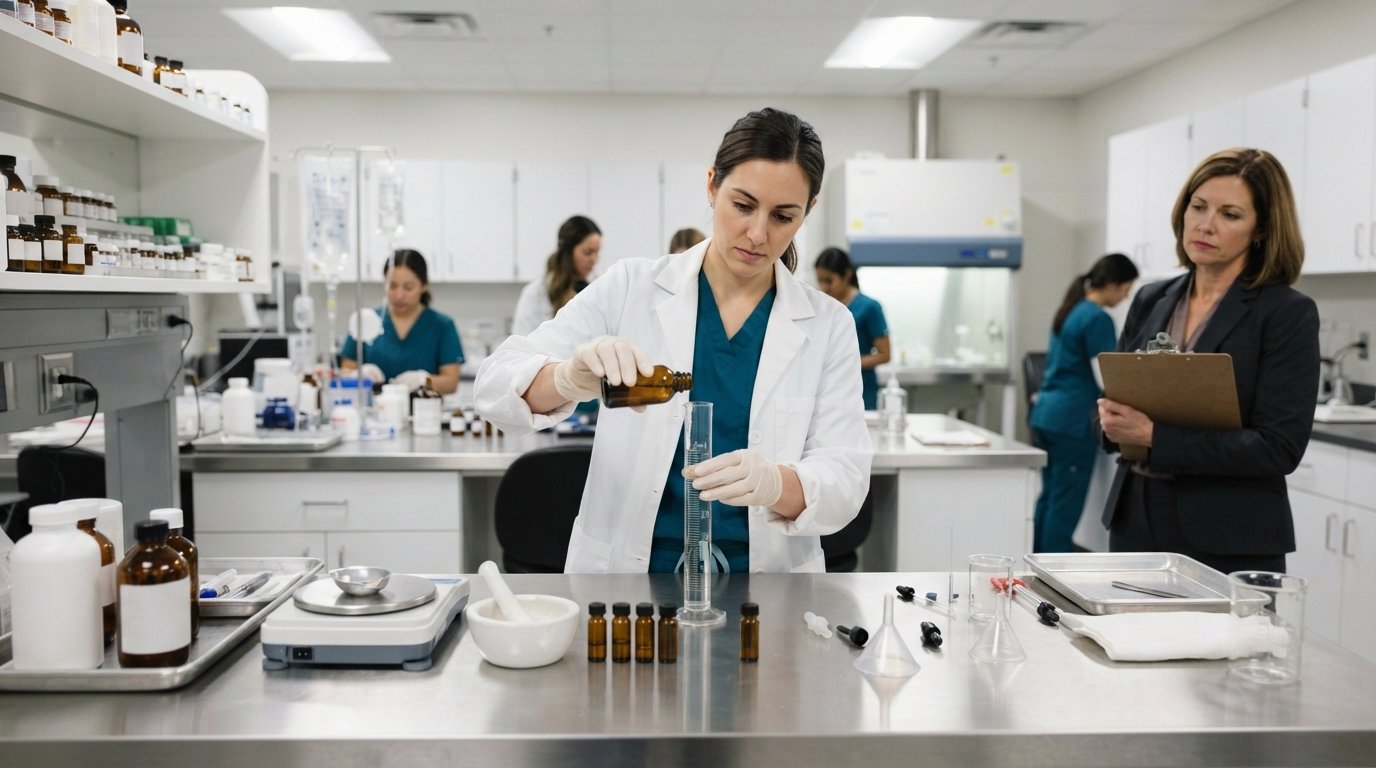
The pharmacy certificate at Broward College is built around the skills that employers actually look for when hiring pharmacy technicians and related support staff. You will study drug classifications, pharmacy law, dosage calculations, sterile compounding, and inventory management. The curriculum also covers patient interaction and the ethical responsibilities that come with handling medications. Because the program is in person, you will practice these skills in a controlled lab environment before moving into clinical rotations.
One of the strengths of this format is the feedback loop. In a lab, an instructor can watch you measure a dose or prepare a compound and correct your technique on the spot. That kind of immediate correction is difficult to replicate in an online-only program. Students who thrive in hands-on learning environments often find that this in-person structure accelerates their confidence and competence.
Here is a quick look at the core areas the certificate typically addresses:
- Pharmacology fundamentals and drug classifications
- Pharmacy calculations and measurement accuracy
- Pharmacy law and regulatory compliance
- Sterile and non-sterile compounding procedures
- Clinical practicum or externship experience
After completing the classroom and lab components, students usually move into an externship or clinical practicum at a partnering pharmacy, hospital, or healthcare facility. This is where the certificate becomes more than a credential: it becomes a portfolio of real experience. Many students are offered jobs at the same sites where they complete their clinical hours, which is one reason the in-person format has strong employment outcomes.
It is worth noting that certificate programs differ from degree programs in scope and depth. A certificate is focused and efficient, but it does not replace a Doctor of Pharmacy (PharmD) if your goal is to become a licensed pharmacist. Instead, it prepares you for roles such as pharmacy technician, pharmacy aide, or related support positions. If you are weighing different short-term credential options, you might also explore fields like automotive technology, where schools such as ASU-Beebe's auto mechanics certificate offer a similar one-year, hands-on path. The principle is the same: targeted training that leads to employment.
Admission Requirements and How to Apply
Admission to the pharmacy certificate program at Broward College is generally open to students who have a high school diploma or equivalent. You will need to complete the college's general admission application, submit transcripts, and possibly take a placement test to determine your readiness for college-level math and English. Because the program is in person and has limited lab capacity, there may be additional program-specific requirements, such as a background check, immunizations, or a separate health sciences application.
The application process typically follows a sequence. First, you apply to Broward College as a general student. Next, you complete any required placement testing or submit SAT/ACT scores if available. Then you apply specifically to the pharmacy certificate program, often through the health sciences division. Finally, you attend an orientation and register for your first-semester courses. Deadlines vary, so it is smart to check the college's current catalog or speak with an advisor early.
One practical tip: start the financial aid process at the same time as your admissions application. Certificate programs are often eligible for federal student aid, scholarships, and workforce grants, but the paperwork takes time. You can also explore external scholarship databases to reduce out-of-pocket costs. For example, Scholarship.Education is a resource that helps students find and apply for financial aid opportunities, including awards for career and technical programs. Combining institutional aid with external scholarships can make the certificate much more affordable.
If you are unsure whether you qualify, do not assume the answer is no. Community colleges are designed to serve a wide range of students, including those who have been out of school for years. Advisors can help you map out any prerequisite courses you might need, and many students take those courses part-time before entering the certificate program full-time.
Time Commitment and Program Format
The program is described as 1 year to less than 2 years, which gives you a realistic window for completion. In practice, full-time students may finish in about 12 to 18 months, depending on course availability and whether they need to take developmental coursework first. Part-time students can stretch the timeline, but the in-person lab requirements mean you will need to plan your schedule around campus visits.
Because the format is in person, you should expect a mix of lectures, lab sessions, and clinical hours. Lab sessions are usually scheduled during the day, and clinical rotations may require early mornings or evening shifts depending on the site. This is not a program you can complete entirely on your own schedule, but the structure is part of what makes it effective. The consistent routine helps students stay on track and build the professional habits that employers expect.
Consider the weekly time commitment carefully. A full-time load might include 12 to 15 credit hours of coursework plus lab and clinical hours, which can add up to 25 or 30 hours per week. Many students work part-time while enrolled, but it requires discipline. If you need to work full-time, speak with an advisor about a part-time pathway or about scheduling courses across multiple semesters.
Career Outcomes and Earning Potential
Graduates of pharmacy certificate programs typically pursue roles as pharmacy technicians, pharmacy aides, or support staff in retail pharmacies, hospitals, long-term care facilities, and mail-order pharmacies. According to the U.S. Bureau of Labor Statistics, pharmacy technicians earned a median annual wage of around $40,000 as of the most recent data, with higher earners in hospital settings and states with higher costs of living. Florida's demand for pharmacy technicians is steady, driven by an aging population and the expansion of retail and specialty pharmacy services.
Career advancement is possible with experience and additional certifications. Some technicians specialize in oncology, compounding, or informatics. Others move into supervisory roles or use the certificate as a stepping stone toward a PharmD or a related healthcare degree. The certificate itself is not a guarantee of employment, but it does signal to employers that you have completed structured training and clinical hours.
Here are a few common job titles for certificate holders:
- Pharmacy technician (retail or hospital)
- Pharmacy aide or assistant
- Compounding technician
- Inventory or medication reconciliation assistant
- Customer service representative in a pharmacy setting
Earnings vary by setting, experience, and location. Retail pharmacies may offer different pay scales than hospitals, and shift differentials can increase take-home pay for evening or weekend work. Over time, technicians who pursue additional certifications or cross-train in specialty areas often see their earning potential rise.
Why Choose an In-Person Program at Broward College
Broward College has a long history of workforce education, and its health sciences programs are connected to local employers. The in-person format gives students access to instructors who have worked in the field, as well as labs equipped with the same tools and technology used in actual pharmacies. That realism matters when you are learning to compound sterile medications or manage inventory under regulatory scrutiny.
Another advantage is the clinical placement network. Broward College partners with pharmacies and healthcare facilities across South Florida, which means students can gain experience in diverse settings. Some students complete rotations in hospitals, others in community pharmacies, and still others in long-term care. That variety helps you decide which work environment suits you best before you commit to a full-time job.
Cost is also a consideration. Broward College is a public institution, and its tuition rates are generally lower than those of private colleges or for-profit schools. Florida residents pay especially competitive rates. When you compare the total cost of the certificate to the starting salaries in the field, the return on investment can be attractive, particularly if you complete the program in 12 to 18 months and enter the workforce quickly.
Comparing the Certificate to Other Pathways
It helps to see where the certificate fits in the broader landscape of healthcare education. An associate degree in pharmacy technology takes about two years and includes more general education coursework. A PharmD takes six or more years and leads to pharmacist licensure. The certificate sits in the middle: shorter than a degree, longer than a single course, and focused on employment rather than transfer.
If your goal is to start working soon and you are not ready to commit to a multi-year degree, the certificate is a sensible choice. If you later decide to pursue an associate or bachelor's degree, many of the credits you earn may transfer, depending on the institution and program. Advisors can help you plan for that possibility so you do not lose momentum.
It is also worth comparing the certificate to other one-year programs in different fields. The structure is similar: focused coursework, hands-on training, and a credential that employers recognize. The right choice depends on your interests, your local job market, and how much time and money you can invest upfront.
Practical Tips for Success in the Program
Students who do well in the pharmacy certificate program tend to share a few habits. They treat lab time as seriously as a job, because it is practice for one. They ask questions when a calculation or procedure is unclear. They form study groups and review material regularly rather than cramming. And they communicate with advisors early if something is not working.
Time management is especially important in an in-person program. You will have fixed lab times and clinical hours, so planning your week in advance helps you avoid conflicts. Many students use a simple calendar system to block out study time, work shifts, and family obligations. It sounds basic, but it makes a measurable difference.
Finally, start building your professional network while you are still enrolled. Introduce yourself to instructors, ask about their experience in the field, and stay in touch with supervisors from your clinical site. Pharmacy is a small world, and referrals often lead to jobs. A certificate gives you the credential, but relationships give you the opportunities.
The Pharmacy Certificate, 1 year to less than 2 years In-person at Broward College is a practical, focused pathway for students who want to enter pharmacy work without a long degree commitment. It combines hands-on training, clinical experience, and a reasonable timeline, and it positions graduates for steady entry-level roles in a field that continues to need skilled support staff. If you are ready to take the next step, connect with Broward College's admissions office and ask about current program requirements, start dates, and financial aid options.