
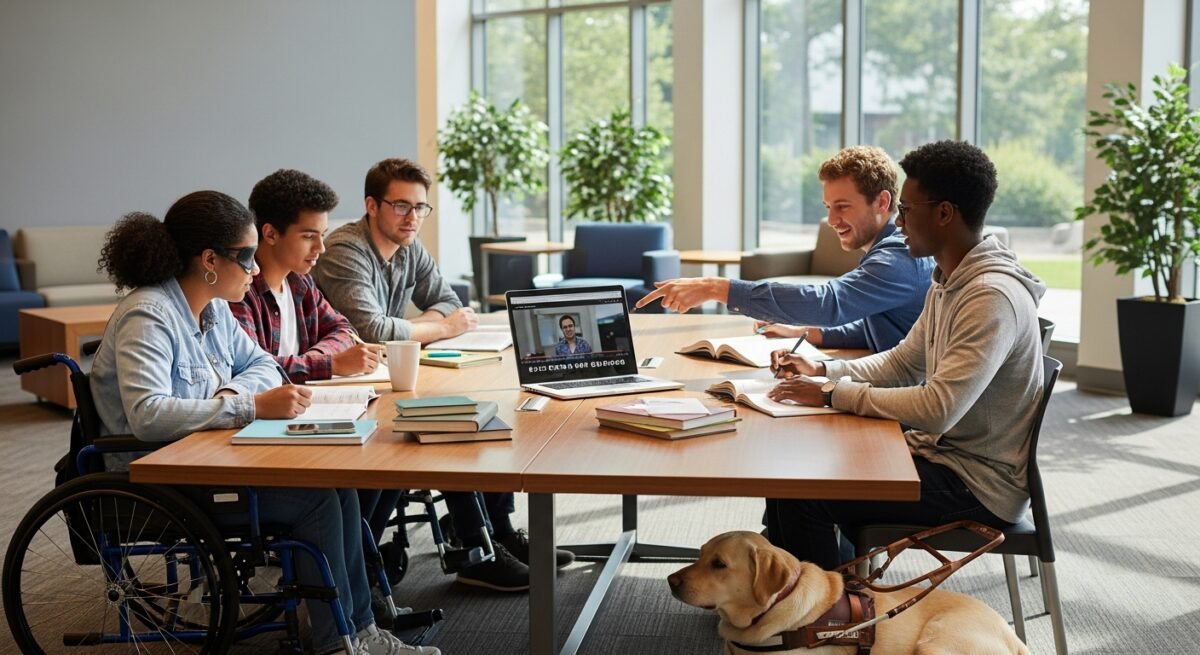
Building an Inclusive Campus: A Guide to Accessibility for Disabilities
This guide explores creating a truly inclusive campus by addressing physical, academic, and digital barriers for students with disabilities. It provides a roadmap for institutions and students to ensure equal access and opportunity in higher education.

By Stacy Cignetti
For students with disabilities, the transition to higher education is more than an academic challenge, it is a test of an institution’s fundamental commitment to equity. True campus accessibility for disabilities is not merely a legal checkbox but the cornerstone of an inclusive academic community where every student has the genuine opportunity to learn, participate, and thrive. It moves beyond ramps and elevators to encompass a holistic ecosystem of physical, digital, pedagogical, and social supports. This comprehensive framework ensures that students with diverse needs, from mobility and sensory impairments to learning disabilities and chronic health conditions, can navigate their educational journey with autonomy and confidence. The pursuit of this ideal transforms the campus experience, fostering a culture where diversity is valued and all pathways to knowledge are open.
The Legal and Ethical Foundations of Accessibility
The mandate for campus accessibility is firmly rooted in civil rights law, primarily the Americans with Disabilities Act (ADA) and Section 504 of the Rehabilitation Act. These laws prohibit discrimination on the basis of disability and require postsecondary institutions to provide reasonable accommodations and ensure equal access to programs and services. However, compliance is the baseline, not the aspiration. The ethical imperative for colleges and universities is to proactively design environments that minimize the need for individual accommodations through universal design principles. This shift from reactive accommodation to proactive inclusion represents a more sustainable and equitable model. It acknowledges that designing for the broadest range of human ability from the outset benefits everyone, creating more flexible learning spaces and resilient institutional practices.
Key Pillars of a Comprehensive Accessibility Program
A robust campus accessibility program is multi-faceted, addressing every touchpoint of the student experience. It requires coordinated effort across administrative, academic, and facilities departments, guided by a central office of disability services that acts as both a resource for students and a catalyst for institutional change.
Physical and Architectural Access
This is the most visible dimension of accessibility. It involves ensuring barrier-free movement throughout campus. Key elements include wheelchair-accessible routes with proper curb cuts and grading, automatic doors at major entrances, elevators in multi-story buildings, and accessible restrooms, parking, and dormitory rooms. Beyond mere compliance, thoughtful design considers signage with tactile and high-contrast elements for visually impaired individuals, adequate seating space in classrooms and auditoriums, and accessible laboratory and studio workspaces. Regular audits are essential to identify and remediate barriers as facilities age and campus landscapes evolve.
Academic and Instructional Accessibility
Access to the curriculum is the heart of the educational mission. This pillar ensures students with disabilities can fully engage with course content, participate in class, and demonstrate their knowledge. It encompasses a wide range of accommodations and supports, often coordinated through a dedicated disability services office. Common academic accommodations include extended time on exams, provision of note-takers or recorded lectures, alternative format textbooks (e.g., audio, braille, digital), and permission to use assistive technology in class. Crucially, it also involves faculty development. Training educators on inclusive teaching strategies, such as providing lecture materials in advance, using clear and organized presentation styles, and offering multiple means of assessment, can reduce barriers for many students without the need for formal accommodation letters.
For students navigating these processes, understanding how accommodations integrate with broader degree pathways for students is vital for long-term planning and success.
Digital and Technological Access
In an era of online learning management systems, digital libraries, and web-based registration, digital accessibility is non-negotiable. All institutional websites, software platforms, and digital course materials must be perceivable, operable, and understandable for users with disabilities. This means ensuring compatibility with screen readers (through proper HTML tagging, alt text for images, and descriptive links), providing captions and transcripts for all video and audio content, and designing online forms and documents that are keyboard-navigable. Procurement policies should mandate accessibility standards for all new educational technology. Furthermore, campuses should provide and support assistive technology (AT) for individual student use, such as screen magnification software, speech-to-text programs, and specialized keyboards or pointing devices.
The Student’s Role and Proactive Steps for Success
While institutions bear the responsibility for providing access, students must often initiate the process. Being proactive is key to a smooth experience. The process typically begins with disclosure and documentation. Students must contact the campus disability services office, provide current documentation of their disability from a qualified professional, and engage in an interactive process to determine reasonable accommodations. It is then the student’s responsibility to provide accommodation letters to their professors each semester and to communicate any specific needs or issues that arise. Developing strong self-advocacy skills, understanding one’s own learning needs, and utilizing available campus resources, from tutoring centers to the disability services office itself, are critical components of student success.
To navigate this effectively, students should follow a clear sequence of steps.
- Connect Early: Contact the disability services office well before the semester starts, ideally during the college application or enrollment process.
- Gather Documentation: Secure the required diagnostic or medical documentation that outlines your disability and its functional impact on learning.
- Participate in the Intake Meeting: Work collaboratively with a disability specialist to discuss your history, challenges, and strengths to develop an appropriate accommodation plan.
- Manage Your Accommodations: Each term, request your accommodation letters and deliver them to instructors privately, preferably during office hours or via email with a brief, professional introduction.
- Maintain Communication: Establish an ongoing dialogue with instructors and the disability office if accommodations need adjustment or if problems occur.
Beyond Compliance: Fostering a Culture of Inclusion
The most accessible campuses are those where the ethos of inclusion permeates the culture. This involves student life and extracurricular activities being fully accessible, from club meetings and theater productions to athletic events and study abroad programs. It requires training for staff in all departments, from campus security to dining services, on disability awareness and etiquette. Peer mentorship programs connecting incoming students with disabilities with upperclassmen can provide invaluable social and practical support. Ultimately, including students with disabilities in campus planning committees and soliciting their feedback regularly ensures that the institution’s efforts are aligned with lived experience. When accessibility is viewed as a shared value that enriches the entire community, rather than a series of mandated fixes, the campus becomes a truly welcoming environment for all.
Frequently Asked Questions
What is the difference between a reasonable accommodation and an undue hardship? A reasonable accommodation is a modification or adjustment that enables a student with a disability to have equal access and opportunity. An undue hardship is an accommodation that would cause significant difficulty or expense for the institution, considering its overall resources. The disability services office determines this on a case-by-case basis.
Are online degree programs required to be accessible? Yes. The ADA and Section 504 apply to all programs and services of a postsecondary institution, including those delivered online. This means course websites, instructional materials, videos, and communication platforms must meet digital accessibility standards.
Do I have to disclose my disability to the college when applying? No. Disclosure is entirely voluntary during the admissions process. You cannot be denied admission based on a disability. However, to receive academic accommodations, you must disclose and register with the disability services office after enrollment.
What if a professor refuses to provide my approved accommodations? This is a violation of federal law. You should first discuss the issue directly with the professor, reminding them of your official accommodation letter. If unresolved, immediately contact your disability services coordinator, who will intervene with the faculty member or department chair.
Are accommodations like extended time the same in college as they were in high school? Not necessarily. College accommodations are based on current documentation and the specific demands of the postsecondary environment. The focus is on access, not success. While extended time is common, other common high school supports, like modified assignments or personal aides, may not be considered reasonable at the college level.
Creating a campus that is genuinely accessible for students with disabilities is an ongoing journey of assessment, investment, and cultural change. It demands a commitment to viewing diversity of ability as an asset to the academic community. By dismantling physical, digital, and attitudinal barriers, institutions do more than fulfill a legal obligation, they unlock the full potential of every student. The result is a richer, more dynamic learning environment where innovation flourishes and all members are empowered to contribute their unique perspectives and talents. This is the true measure of an educational institution’s excellence and its dedication to shaping an equitable future.