
Chemistry Bachelor's at Dickinson State: 4-Year In-Person Guide
The Chemistry, General Bachelor's degree, usually 4 years In-person at Dickinson State University, builds lab skills and broad science knowledge for industry or grad school.

By Aubrey Hayes
Choosing a chemistry degree is about more than memorizing the periodic table. It is about learning how matter behaves, how to design experiments, and how to turn observations into reliable conclusions. At Dickinson State University, the Chemistry, General Bachelor's degree, usually 4 years In-person, offers a structured, hands-on path into that world. The program is designed for students who want a broad foundation in chemistry rather than a narrow specialization, and who value face-to-face instruction, laboratory practice, and a campus community. If you are comparing science majors, weighing in-person versus online formats, or planning a career in industry, education, or graduate study, this guide walks through what the degree involves, who it fits, and how to evaluate whether it is the right investment for you.
What the General Chemistry Bachelor's Degree Covers
The Chemistry, General Bachelor's degree at Dickinson State University is built around the core subfields of chemistry: organic, inorganic, analytical, physical, and biochemistry. Students typically begin with general chemistry and calculus, then move into organic chemistry and quantitative analysis. Later coursework often includes physical chemistry, instrumental analysis, and advanced electives. Because this is a general chemistry degree rather than a specialized track, it gives you flexibility. You are not locked into a single industry or graduate path, and you can tailor upper-level electives toward your interests, whether that means environmental chemistry, materials, or preparation for health professions.
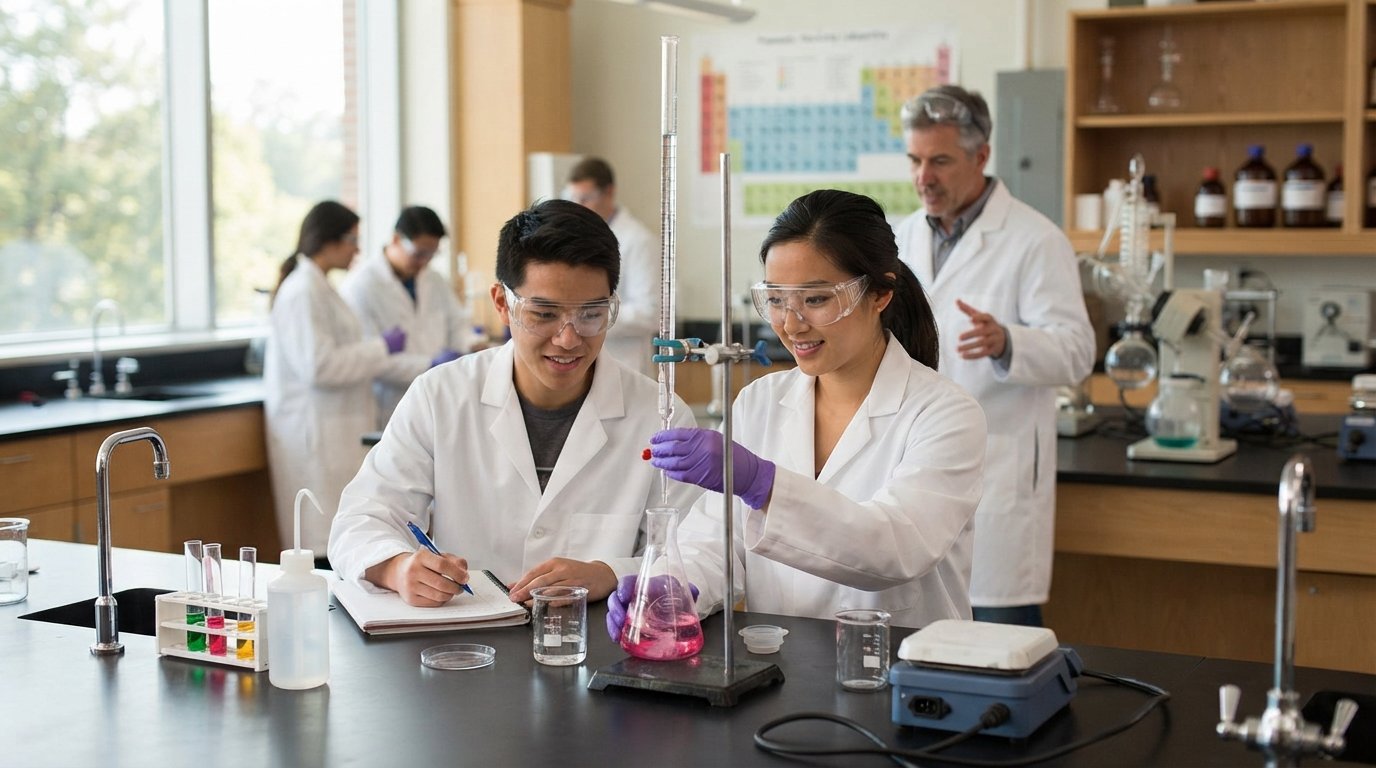
Laboratory work is a defining feature of the degree. In-person instruction means you spend time in a physical lab with instruments, safety protocols, and instructor supervision. You learn to prepare solutions, run titrations, operate spectrometers, interpret spectra, and document results in a lab notebook. These are not abstract skills. Employers and graduate programs expect chemistry graduates to be comfortable in a lab, and the hands-on format at Dickinson State supports that expectation directly.
Beyond the bench, the degree builds quantitative and communication skills. You will take calculus and physics, use statistical methods to analyze data, and present findings in written reports and oral presentations. Those skills transfer well beyond chemistry. Many graduates find that the ability to reason carefully, troubleshoot, and explain technical information is as valuable as the chemistry content itself.
Typical Course Sequence and Credit Load
Most students complete the Chemistry, General Bachelor's degree, usually 4 years In-person at Dickinson State University, by following a sequence that balances chemistry, math, and physics in the first two years and adds upper-level chemistry and electives in the final two. A full-time load is typically 15 to 17 credits per semester, and lab courses often carry separate lab credits. The exact sequence varies by catalog year and placement, so you should confirm requirements with an academic advisor. In general, however, the progression looks like this:
- Year 1: General chemistry with lab, calculus, English composition, and general education courses.
- Year 2: Organic chemistry with lab, quantitative analysis, calculus or statistics, and physics.
- Year 3: Physical chemistry, instrumental analysis, and upper-level chemistry electives.
- Year 4: Advanced electives, research or internship experiences where available, and capstone or seminar work.
That structure is common across bachelor's chemistry programs, but the in-person format adds a layer of accountability. You meet with instructors in person, work alongside classmates in lab, and get immediate feedback on technique and safety. For students who learn best through direct interaction, that can make a difficult sequence more manageable.
Why In-Person Study Matters for Chemistry
Chemistry is one of the fields where online study can be challenging. Simulations and videos can supplement learning, but they cannot fully replace the experience of handling glassware, calibrating instruments, and responding to unexpected results in real time. The Chemistry, General Bachelor's degree, usually 4 years In-person at Dickinson State University, reflects that reality. Lab sections meet on campus, and students work with equipment that requires supervision and safety training. That format helps you build confidence and competence that employers recognize.
In-person study also creates opportunities for mentorship. Faculty members in smaller programs often know students by name, and they can write meaningful recommendation letters for graduate school or job applications. Research projects, independent study, and lab assistant roles are more accessible when you are on campus regularly. Those experiences can distinguish you from applicants who completed only coursework.
There is a practical trade-off. In-person programs require you to be physically present, which may mean relocating or commuting. If you are a working adult or have family obligations, you need to plan carefully. But for students who can attend in person, the lab access and faculty interaction are significant advantages in a lab science.
Admission and Preparation: What to Expect
Admission requirements for the Chemistry, General Bachelor's degree, usually 4 years In-person at Dickinson State University, generally align with university admission standards. You should expect to submit a high school transcript or equivalency, standardized test scores if required, and evidence of preparation in math and science. High school chemistry, algebra, and pre-calculus are helpful, though placement exams can determine your starting point. Students who begin in developmental math may need additional time, so early advising is important.
Transfer students should confirm how chemistry and math credits apply. Lab science courses from other institutions are not always equivalent, and a program may require you to repeat certain labs. Request a credit evaluation before enrolling so you understand your timeline. The same applies to students with Advanced Placement or dual-credit coursework: check whether those credits satisfy specific requirements or count only as general electives.
Financial planning is part of preparation as well. In-state tuition is typically lower than out-of-state tuition, and scholarships, grants, and work-study can reduce costs. If you are comparing programs, look beyond sticker price to four-year completion rates, lab fees, and available aid. The return on investment for a chemistry degree depends heavily on what you do after graduation, so plan for internships, research, or graduate study that strengthen your outcomes. For broader salary context across majors, see this guide to the highest paying bachelor's degrees.
Careers and Outcomes for Chemistry Graduates
A general chemistry bachelor's degree opens several paths. Graduates work in quality control, environmental testing, pharmaceutical manufacturing, food science, materials testing, and chemical sales. Some pursue teaching, though public school teaching usually requires additional education coursework and licensure. Others continue to graduate school in chemistry, biochemistry, pharmacy, or environmental science. The degree is also a strong foundation for professional programs in medicine, dentistry, and veterinary medicine, provided you complete the required prerequisite courses.
Entry-level salaries vary by industry and region. Laboratory technician and quality control roles often start in the $40,000 to $55,000 range, while positions in pharmaceutical or petrochemical companies may pay more. With experience or an advanced degree, earnings increase. It is important to be realistic: a bachelor's degree alone may not lead to a senior research position, but it is a credible entry point into science-based work.
Career outcomes also depend on what you do during the degree. Internships, undergraduate research, and lab work experience matter. Students who graduate with only coursework may find the job search slower than those who built a resume through hands-on experiences. The in-person format at Dickinson State makes it easier to pursue those opportunities because you are on campus and can build relationships with faculty.
Skills Employers Look For
Employers hiring chemistry graduates typically look for a mix of technical and soft skills. Technical skills include laboratory technique, instrument operation, data analysis, and safety compliance. Soft skills include attention to detail, problem solving, teamwork, and clear communication. A general chemistry degree develops all of these, but you should be able to articulate them in interviews and on your resume.
- Laboratory safety and documentation practices.
- Instrumental analysis and troubleshooting.
- Quantitative reasoning and statistical analysis.
- Technical writing and presentation skills.
- Collaboration in team-based lab environments.
Those skills are transferable across industries. Even if you do not stay in a lab long term, the ability to analyze data, follow protocols, and communicate results is valuable in regulatory affairs, sales, operations, and project management.
How This Program Compares to Other Options
Prospective students often compare a general chemistry degree with specialized programs in biochemistry, chemical engineering, or forensic science. Each has a different focus. Chemical engineering emphasizes process design and math; biochemistry emphasizes biological systems; forensic science emphasizes analytical methods and legal context. A general chemistry degree is broader and more flexible, which can be an advantage if you are unsure about a specific career path.
Format is another comparison point. Online chemistry degrees exist, but they often require in-person lab components or summer residencies. The Chemistry, General Bachelor's degree, usually 4 years In-person at Dickinson State University, is transparent about its format: you attend classes and labs on campus. That clarity helps you plan. If you need flexibility, you may need to look at hybrid programs or consider a different field. If you want a traditional campus experience with strong lab access, this program fits that goal.
Cost and location also matter. Dickinson State University is in North Dakota, and in-state students may find it more affordable than out-of-state or private alternatives. However, you should compare total costs, including housing, fees, and travel. Use net price calculators and talk to financial aid offices. For students who want to explore a range of college options, resources like CollegeDegree.Education can help you discover accredited programs and compare formats, though you should always verify details with the institution directly.
Making the Most of the Four Years
The typical four-year timeline is a framework, not a guarantee. Some students finish in four years; others take longer due to course sequencing, transfer credits, or changed majors. To stay on track, meet with your advisor each semester, watch for prerequisite chains, and register early for lab courses that fill up. If you struggle in a gateway course like organic chemistry, seek tutoring and office hours immediately rather than waiting until the end of the term.
Beyond the classroom, get involved in research or internships. Ask faculty about independent study, summer research programs, or local industry partnerships. Join a chemistry or science club. Attend seminars. These activities build your network and give you material for applications and interviews. They also help you decide whether you enjoy research, industry, or teaching, which is valuable information before you commit to a graduate program or a job.
Finally, think about licensure and certification if they apply to your goals. Chemistry graduates who pursue teaching need licensure; those in environmental or clinical labs may need specific certifications. Plan those steps early so you do not lose time after graduation.
Is the Chemistry, General Bachelor's Degree Right for You?
The Chemistry, General Bachelor's degree, usually 4 years In-person at Dickinson State University, is a good fit for students who enjoy laboratory work, want a broad science foundation, and prefer face-to-face learning. It is less suitable for students who need fully online flexibility or who want a highly specialized degree from day one. Before enrolling, visit campus if possible, talk to faculty, and review the course catalog. Ask about lab sizes, instrument availability, and research opportunities. Those details will tell you more about the day-to-day experience than a brochure.
Chemistry is a demanding major, but it is also rewarding. It prepares you for a range of careers and further study, and it develops habits of mind that apply far beyond the lab. If you are ready to commit to four years of in-person study and hands-on science, this program is worth a serious look.