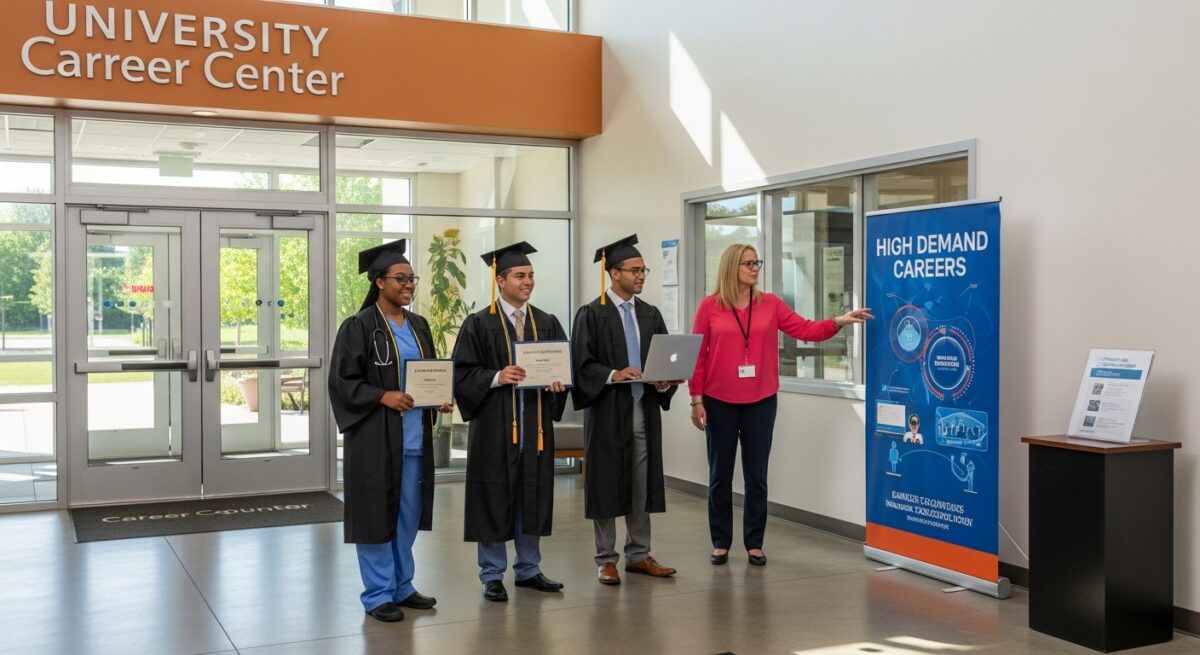
Imagine starting a career that pays well above the national average without needing five years of prior work history. For many graduates, this sounds like a fantasy. Yet the right college degree can open doors to high paying jobs with little experience required. Employers in fields like technology, healthcare, and skilled trades value specific credentials and certifications over years on a resume. This article explores the most effective degrees for high paying careers with little experience, helping you choose a path that leads to financial stability and professional growth from day one.
Why Some Degrees Lead to High Pay With Less Experience
The connection between a degree and starting salary depends on industry demand, skill scarcity, and the practical nature of the program. Degrees that combine technical training with real-world application often produce graduates who can contribute immediately. For example, nursing programs include clinical rotations that count as hands-on experience. Computer science degrees involve portfolio-building projects. These built-in experiences satisfy employers who want proof of competence rather than a long work history. Entry level high paying careers exist in sectors where labor shortages are severe, and companies are willing to train the right candidate if they hold the foundational degree.
Top Degrees for High Paying Careers With Little Experience
The following degrees consistently produce graduates who land roles with strong starting salaries, often with minimal or no prior professional experience. Each field offers clear entry points and advancement potential.
Bachelor of Science in Nursing (BSN)
Registered nurses with a BSN can earn a median annual salary above $75,000, and many hospitals offer sign-on bonuses and tuition reimbursement. The clinical hours completed during the degree count as experience, so new graduates are immediately eligible for positions in hospitals, clinics, and specialty units. The demand for nurses continues to grow due to an aging population and healthcare expansion. This degree is one of the most reliable paths to beginner salary jobs that still offer long-term career growth.
Bachelor of Science in Computer Science
Software developers and IT professionals with a computer science degree can start at salaries exceeding $70,000 to $100,000 depending on location. Internships and capstone projects built into many programs provide portfolio evidence that substitutes for work experience. Fields like cybersecurity, cloud computing, and data analytics are especially hungry for new graduates. For those seeking high paying jobs with little experience, this degree remains a top contender because the skills taught are directly applicable to entry-level roles.
Bachelor of Science in Finance or Accounting
Financial analysts, accountants, and auditors with a bachelor’s degree can begin earning $60,000 to $80,000 annually. Many firms recruit directly from university programs and provide on-the-job training. Certifications like CPA or CFA can be pursued after hiring, but the degree alone opens doors to corporate finance roles. This field values quantitative skills and attention to detail, which are developed during the degree program itself.
Associate Degree in Dental Hygiene
Dental hygienists complete an associate degree (often two years) and can earn a median salary of $77,000. The program includes supervised clinical practice, so graduates are job-ready upon licensure. This is a standout example of an associate-level degree producing a high income without requiring a bachelor’s or prior industry experience. It is a strong option for those who want a fast, affordable pathway to a stable career.
Bachelor of Science in Engineering (Civil, Mechanical, Electrical)
Engineering graduates routinely start with salaries from $65,000 to $85,000. Cooperative education programs (co-ops) and internships are often integrated into the curriculum, giving students 12 to 18 months of paid work experience before graduation. Employers in engineering actively recruit new graduates because the accreditation process ensures a consistent skill baseline. This degree provides one of the most reliable routes to entry level high paying careers.
How to Maximize Your Degree for Immediate Employment
Simply earning a degree is not enough. You must strategically position yourself to attract employers. The following steps can help you convert your education into a job offer quickly.
- Complete internships or co-ops during your program. These provide verifiable experience and often lead to full-time offers.
- Build a portfolio of projects, case studies, or clinical hours that demonstrate your skills to employers.
- Earn industry-recognized certifications alongside your degree. For IT fields, certifications like CompTIA A+ or AWS Cloud Practitioner add credibility.
- Network with alumni and attend career fairs at your university. Many companies recruit exclusively through campus partnerships.
- Tailor your resume to highlight relevant coursework and hands-on projects rather than focusing on lack of paid experience.
Employers in high-demand fields are often more interested in what you can do than how many years you have done it. By following these strategies, you can position yourself as a capable candidate even with zero formal work history.
Degrees That Require Minimal Experience But Offer Growth
Some degrees provide a moderate starting salary but rapid advancement potential. These are ideal for individuals willing to learn on the job and move up quickly. For example, a bachelor’s degree in supply chain management can start around $55,000 but move to $80,000 within three to five years. Similarly, degrees in construction management or information technology management offer strong upward mobility. The key is choosing a field where performance and results matter more than tenure. Beginner salary jobs in these areas often include structured training programs that accelerate career progression.
For those exploring flexible education options, accredited online degrees provide a way to earn these qualifications while maintaining work or family commitments. Many reputable universities now offer fully online programs in nursing, computer science, and business that are identical to on-campus versions. This flexibility allows students to transition into high paying careers without relocating or quitting their current job.
Frequently Asked Questions
What is the fastest degree for a high paying job with no experience?
An associate degree in dental hygiene or respiratory therapy can be completed in two years and leads to salaries above $70,000. These programs include clinical training that substitutes for work experience.
Can I get a high paying job with an associate degree?
Yes, especially in healthcare and technology fields. Dental hygienists, web developers, and radiologic technologists often earn strong salaries with only an associate degree and licensure.
Do employers consider internships as experience?
Yes, most employers count internships, clinical rotations, and co-op placements as relevant experience. These structured programs provide the same skills as paid employment.
Which degree pays the most with the least experience?
Computer science and nursing degrees consistently top the list for high starting salaries with minimal prior work history. Both fields have strong demand and clear entry points for new graduates.
How important is accreditation when choosing a degree program?
Accreditation is critical because it ensures the degree is recognized by employers and licensing boards. Always choose a program accredited by a recognized agency like ABET for engineering or CCNE for nursing.
Choosing the right degree is a powerful step toward financial independence and career satisfaction. Degrees for high paying careers with little experience exist in multiple fields, from healthcare to technology to business. By selecting a program with built-in practical training, pursuing relevant certifications, and actively networking during school, you can graduate into a role that rewards your education rather than your years of prior work. The key is to research programs carefully, prioritize those with strong placement rates, and commit to building demonstrable skills. Your degree is not just a piece of paper. It is your launchpad into a profession that values what you know and what you can do, starting on day one.