
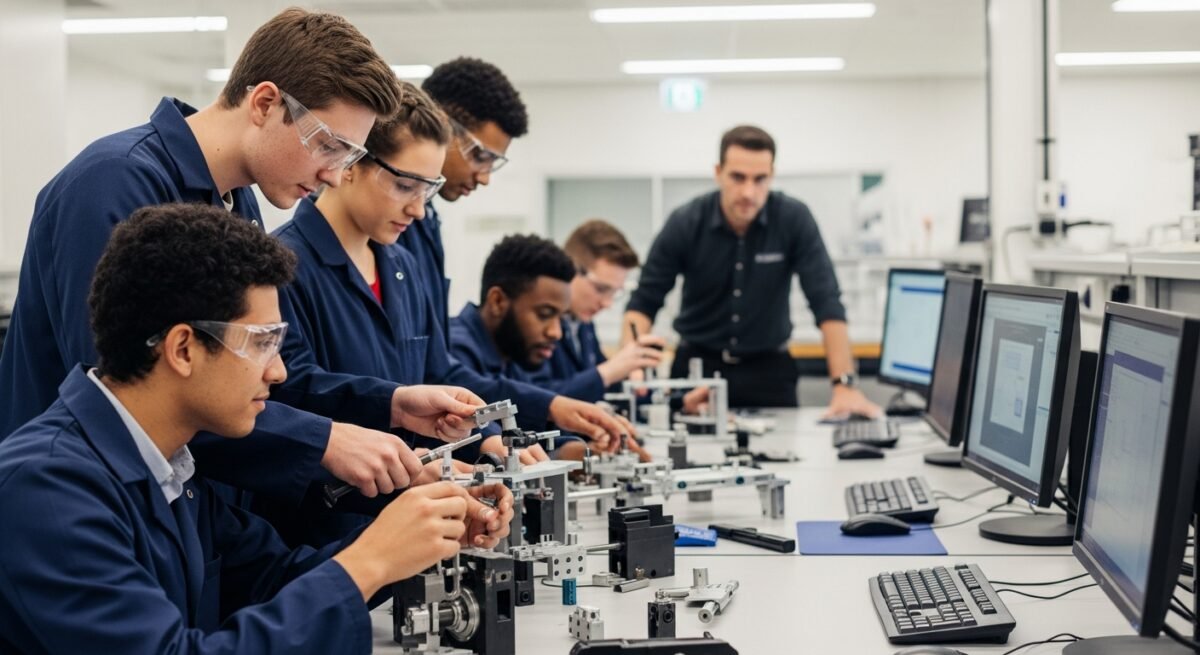
Degrees With Hands On Training: The Path to Career Readiness
Degrees with hands on training build job ready skills through practical experience, leading to higher employability and faster career launches.

By Emily Foster
In today’s competitive job market, a traditional degree is often just the starting line. Employers increasingly demand graduates who can hit the ground running, possessing not just theoretical knowledge but the practical skills to apply it immediately. This is where degrees with hands on training become a critical differentiator. These programs are designed to bridge the infamous gap between academia and industry, transforming students from passive learners into active practitioners. They move beyond textbooks and lectures, embedding real world experience directly into the curriculum. For students seeking a direct route to employment and career success, understanding and pursuing these applied educational pathways is one of the most strategic decisions they can make.
What Defines a Hands On Degree Program?
A degree with hands on training is characterized by its intentional integration of practical, experiential learning components as a core requirement for graduation. This is not an optional extracurricular activity, but a fundamental pillar of the educational experience. The defining principle is learning by doing, where students apply concepts from their coursework in controlled, supervised, yet authentic environments. This approach is rooted in pedagogical theories like constructivism, which posits that learners build knowledge most effectively through experience and reflection.
The structure of these programs varies but shares common threads. They often feature a significantly reduced gap between learning a concept and applying it. For instance, a student in a nursing program might learn about patient assessment in a morning lecture and practice those skills on medical manikins or standardized patients in a simulation lab that afternoon. This immediate application reinforces learning and builds muscle memory, both cognitive and physical. The goal is to develop not just knowledge, but also the judgment, technical proficiency, and problem solving abilities that employers value.
It is crucial to distinguish these programs from those that merely offer an optional internship or co op. While valuable, optional experiences do not guarantee that every graduate has undergone the same rigorous practical training. In a true hands on degree, the experiential component is mandatory, sequenced, and assessed, ensuring a consistent standard of practical competency across all graduates. This structured integration is what creates a reliable pipeline of job ready professionals.
The Core Benefits of Experiential Education
Choosing a degree with a strong practical component offers multifaceted advantages that extend far from the classroom. The most immediate benefit is enhanced employability. Graduates from these programs can present a portfolio of work, a list of completed projects, or documented clinical hours to prospective employers. They can speak confidently about real world challenges they have navigated during their studies, which often translates into shorter onboarding times and a perception of lower hiring risk for the company.
Beyond getting the job, this training builds profound skill development. Technical skills, such as operating specific machinery, coding in particular languages, or performing clinical procedures, are honed through repetition and feedback. Simultaneously, soft skills are rigorously tested and developed. Students learn teamwork in project based courses, communication through client presentations or patient interactions, time management while balancing lab work with theory, and critical thinking when experiments do not go as planned or clinical cases present unique complications. This combination creates adaptable, resilient professionals.
Another significant advantage is the opportunity for professional networking and mentorship. Hands on settings often involve working directly with industry professionals, adjunct faculty who are active in the field, or community partners. These connections can lead to mentorship, letters of recommendation, and even job offers upon graduation. Furthermore, this exposure allows students to validate their career choice early. There is no better test for one’s suitability to a profession than doing the actual work, which can either solidify passion or prompt a strategic pivot before significant time and financial investment is lost.
Financial and Academic Impacts
The benefits also have financial dimensions. The job readiness fostered by these degrees can lead to faster employment post graduation, reducing the period of potential underemployment. In fields with licensure or certification, hands on training is frequently a direct requirement. Completing these hours within the degree program streamlines the path to becoming a fully credentialed professional, avoiding delays that could impact earning potential. From an academic perspective, applied learning increases student engagement and retention. The tangible relevance of coursework motivates students, helping them understand the “why” behind the theory, which leads to deeper comprehension and higher academic achievement.
Identifying Programs With Strong Practical Components
Not all programs advertised as “hands on” deliver equally. Prospective students must become savvy evaluators to find the right fit. The first step is to scrutinize the curriculum. Look for specific, required courses with titles like “Practicum,” “Clinical Rotation,” “Studio,” “Lab,” “Capstone Project,” “Fieldwork,” or “Internship.” The course descriptions should detail the nature of the practical work. Be wary of programs where these elements are only electives or are vaguely described.
Investigate the facilities and resources available. A strong program invests in the tools of the trade. This could mean state of the art simulation hospitals for nursing, modern fabrication labs for engineering technology, professional grade software licenses for design, or partnerships with local businesses and organizations for field placements. A campus tour or virtual open house is invaluable for assessing these resources. Furthermore, research the faculty. Instructors should have relevant, current industry experience, not just academic credentials. Their professional networks often feed directly into student opportunities.
One of the most telling indicators is graduate outcome data. Reputable programs will track and publish metrics like job placement rates, licensure exam pass rates (for relevant fields), and employer satisfaction scores. Alumni testimonials and profiles can also provide qualitative evidence of the program’s effectiveness. Finally, accreditation can be a key signal, especially for professional fields. Specialized accrediting bodies (like ABET for engineering, AACSB for business, or CCNE for nursing) often have strict standards regarding experiential learning, ensuring a baseline of quality. When planning for such programs, it is wise to research all associated costs early; comprehensive college tuition information should include fees for lab supplies, clinical uniforms, software, and other experiential components beyond standard tuition.
Top Fields and Degree Types for Hands On Learning
While the philosophy can be applied broadly, certain fields are inherently built around practical application. These disciplines have traditionally embedded hands on training as a non negotiable core of professional preparation.
- Health Sciences and Nursing: This is the archetype of hands on education. Degrees like Bachelor of Science in Nursing (BSN), Occupational Therapy Assistant, or Surgical Technology are built on sequential clinical rotations in hospitals, clinics, and care facilities. Students perform supervised patient care, mastering procedures and bedside manner long before graduation.
- Engineering Technology and Skilled Trades: Programs in electrical, mechanical, civil, or automotive engineering technology focus on application over pure theory. Students spend extensive hours in labs and workshops, working with materials, circuitry, engines, and CAD/CAM systems. Similarly, associate degrees and certificates in welding, HVAC, or precision machining are almost entirely hands on.
- Computer Science and Information Technology: Modern programs have moved beyond just theory. They emphasize project based learning, where students build software applications, configure networks, perform cybersecurity audits, or manage databases in sandboxed environments that mimic real IT departments. Hackathons and collaborative coding projects are common.
- Culinary Arts and Hospitality Management: From day one, students are in commercial kitchens, bake shops, or front of house simulations. They learn by preparing food for actual customers, managing inventory, and executing service protocols, often in student run restaurants on campus.
- Education: Teacher preparation programs culminate in student teaching, a full semester or more of supervised classroom instruction. This practicum is where pedagogical theory meets the complex reality of managing a classroom and differentiating instruction.
- Graphic Design and Media Arts: These are studio intensive degrees. Learning happens through the iterative process of creating portfolios: designing logos, editing films, producing audio podcasts, or developing user interfaces, all while receiving critique from instructors and peers.
It is important to note that hands on learning is not exclusive to associate degrees or specific majors. Many traditional bachelor of arts or sciences programs are incorporating more applied elements. A biology degree might include intensive undergraduate research. A business administration degree might center on a live consulting project for a local company. The key is the intentional design of the experience.
The Rise of Applied Learning in Online Education
A common misconception is that online degrees cannot provide hands on training. This is rapidly changing. Innovative institutions are developing sophisticated methods to deliver practical experience at a distance. For technical fields, “hands on” may be facilitated through at home lab kits. Engineering or chemistry students might receive boxes of components or safe chemical sets to conduct experiments, with results submitted via video. Virtual simulation software has become incredibly advanced, allowing nursing students to assess virtual patients, aviation students to use flight simulators, and network administration students to configure virtual servers and routers in a risk free environment.
Furthermore, online programs often leverage the student’s local geography for experiential learning. Instead of a campus based internship, the program will guide the student in securing a qualified practicum, clinical placement, or capstone project site in their own community. This is often supervised by a local preceptor, with coordination and oversight from the online faculty. This model can be particularly powerful, as it allows students to build professional networks where they intend to work and live after graduation. The flexibility of online study, combined with locally sourced practical experience, creates a potent hybrid model for career changers and working adults.
Maximizing Your Experience in a Hands On Program
Enrolling in a hands on program is only the first step. To fully capitalize on the investment, students must adopt a proactive mindset. First, engage deeply with every practical opportunity. Treat lab sessions, studio time, or client projects with the same professionalism as a job. This is your chance to make mistakes and learn in a supportive environment, so ask questions, seek feedback, and volunteer for challenging tasks. The goal is to build a robust portfolio of work that demonstrates a progression of skill.
Second, actively build relationships with instructors, clinical supervisors, and industry guests. These individuals are your bridge to the professional world. Seek their advice, discuss industry trends, and express your career interests. A strong recommendation from a professional who has observed your practical abilities is invaluable. Third, document everything. Keep a digital portfolio of projects, write reflections on what you learned during clinicals or internships, and save examples of your work. This documentation will be crucial when crafting your resume and preparing for interviews, allowing you to tell specific, compelling stories about your capabilities.
Finally, use the practical components to explore specializations within your field. You may discover a passion for pediatric nursing over surgical, for front end web development over data science, or for sustainable construction over project management. Use these experiences to refine your career trajectory and target your final coursework or elective practicals toward your newfound interests.
The landscape of higher education is evolving to meet the demands of a dynamic economy. Degrees with hands on training represent a responsive and effective model, prioritizing competency and career readiness. They acknowledge that the most powerful learning often happens not in the lecture hall, but in the lab, the studio, the clinic, and the workshop. For the student focused on tangible outcomes, employability, and a smooth transition into their chosen profession, seeking out these applied programs is a strategic imperative. It is an investment in an education that does not just inform you about the world, but actively prepares you to work within it, contribute to it, and lead within your chosen field from day one.