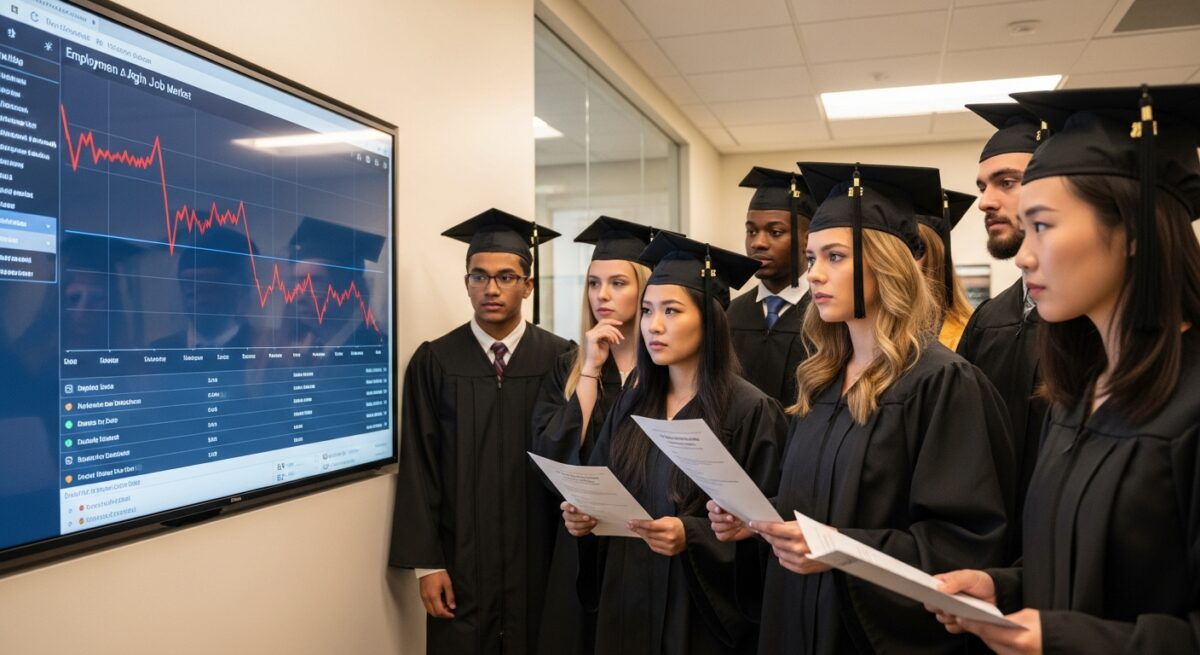
Choosing a college degree is one of the most consequential decisions a student can make, with long-term implications for career trajectory and financial stability. While many degrees lead to strong employment outcomes, others carry higher risks of underemployment or prolonged job searches. Understanding which degrees have the highest unemployment rates can help students and career changers make more informed choices about their education investments. This article examines the data behind degree job market trends, identifies the fields with the weakest employment prospects, and offers strategic advice for mitigating risk while pursuing a meaningful education.
Recent data from the Federal Reserve Bank of New York and other labor market analysts reveal persistent disparities in unemployment rates across academic disciplines. Graduates in certain fields face unemployment rates two to three times higher than the national average for college graduates. These patterns are not random; they reflect structural shifts in the economy, oversupply of graduates in specific fields, and mismatches between curriculum and employer needs. By examining these trends, prospective students can better evaluate the trade-offs between personal interest and practical career outcomes.
Understanding the Data Behind Degree Unemployment Rates
Labor market data on degree unemployment rates typically comes from sources like the U.S. Census Bureau’s American Community Survey, the Bureau of Labor Statistics, and longitudinal studies tracking graduate outcomes. These datasets measure the percentage of recent graduates (typically ages 22-27) who are actively seeking work but cannot find it. The data also captures underemployment rates, which include graduates working in jobs that do not require a college degree.
It is important to note that unemployment rates for specific degrees fluctuate with economic cycles. During recessions, fields like hospitality and arts face steeper job losses. During expansions, technical and healthcare fields tend to recover faster. However, certain degrees consistently show higher unemployment rates across multiple economic cycles, suggesting structural rather than cyclical challenges. For a broader perspective on degrees that lead to strong employment, readers can explore our guide on Best College Degrees for High Employment and Job Security.
Degrees With the Highest Unemployment Rates
Based on recent data from the New York Federal Reserve and the Census Bureau, the following degree categories consistently show the highest unemployment rates among recent graduates. These figures represent the percentage of graduates in each field who are unemployed and actively seeking work.
1. Liberal Arts and Humanities
Liberal arts degrees, including English, history, philosophy, and general humanities, often top the list for highest unemployment rates. Recent graduates in these fields face unemployment rates around 6-8%, compared to the overall college graduate average of approximately 3-4%. The challenge is not that these degrees lack value; rather, the skills they develop (critical thinking, writing, analysis) are often not directly linked to specific job titles. Graduates must navigate a less structured career path, which can lead to longer job searches.
2. Fine Arts and Performing Arts
Degrees in fine arts, theater, music, and studio arts carry unemployment rates of 7-10% for recent graduates. The arts sector is notoriously competitive, with many graduates pursuing freelance or project-based work that does not always register as full-time employment in government surveys. While successful artists and performers can earn substantial incomes, the path is unpredictable. Many graduates in these fields work multiple jobs or take positions outside their field of study to make ends meet.
3. Communications and Journalism
The media and communications industry has undergone massive disruption in the past two decades, with traditional journalism jobs declining sharply. Recent graduates in communications, journalism, and public relations face unemployment rates of 5-7%. The field has become increasingly competitive, with many graduates competing for a shrinking number of full-time roles. Digital media has created new opportunities, but these often require specialized technical skills that traditional communications programs may not fully address.
4. Anthropology and Sociology
Social science degrees like anthropology and sociology show unemployment rates around 6-8% for recent graduates. These fields produce graduates with strong analytical and research skills, but the direct career pathways are limited. Many graduates find work in research, non-profit organizations, or government, but these sectors can be difficult to enter without graduate degrees or extensive internship experience.
5. Psychology (Bachelor’s Level)
A bachelor’s degree in psychology is often seen as a stepping stone to graduate school, but for those who enter the job market immediately after graduation, unemployment rates hover around 5-7%. Clinical and counseling roles require master’s or doctoral degrees. Bachelor’s-level psychology graduates frequently work in human resources, social services, or administrative roles that do not directly use their academic training.
The following list summarizes key factors contributing to high unemployment rates for degrees with highest unemployment:
- Oversupply of graduates relative to available positions in the field
- Lack of direct career pathways without additional education or certification
- Disruption from technological change or industry restructuring
- Geographic concentration of jobs in expensive urban markets
- Weak alignment between curriculum content and employer skill demands
These factors compound each other. For example, an oversupply of liberal arts graduates in a market where employers seek specific technical skills can result in extended job searches and lower starting salaries. Understanding these dynamics can help students plan more strategically.
Why Some Degrees Lead to Higher Unemployment
The reasons behind high unemployment rates for certain degrees are multifaceted. First, supply and demand imbalances play a major role. When more students graduate in a field than there are entry-level positions, unemployment naturally rises. This is particularly true for fields like fine arts and journalism, where the number of graduates far exceeds the number of traditional job openings.

Second, the specificity of skills matters. Degrees that teach broad, transferable skills (like critical thinking and writing) can be valuable, but they require graduates to actively translate those skills into job applications. In contrast, degrees in nursing, engineering, or accounting provide clear occupational pipelines. Employers know exactly what these graduates can do, and hiring processes are more structured. Graduates from programs with less defined career paths must work harder to signal their value to employers.
Third, economic geography plays a role. Many high-unemployment degrees lead to careers concentrated in major metropolitan areas. A film studies graduate may need to live in Los Angeles or New York to find relevant work. A philosophy graduate may find more opportunities in Washington D.C. or Boston. Students who cannot relocate to these markets face even steeper employment challenges. For those seeking flexibility, exploring online degree options can provide geographic independence while pursuing fields with stronger job prospects.
Strategies for Minimizing Unemployment Risk
Students who are passionate about fields with higher unemployment rates do not have to abandon their interests. Instead, they can adopt strategies to improve their employment outcomes while still studying what they love.
One effective approach is combining a primary degree with a practical minor or certificate. An English major can add a minor in digital marketing or technical writing. A psychology major can pursue certification in data analysis or human resources management. These combinations create hybrid skill sets that appeal to employers while preserving the intellectual benefits of the primary field of study.
Another strategy is gaining substantial work experience during college. Internships, co-op programs, and part-time jobs in relevant fields significantly reduce unemployment risk after graduation. According to research from the National Association of Colleges and Employers, students who complete paid internships receive more job offers and higher starting salaries than those who do not. Even unpaid internships can provide valuable network connections and resume lines.
Students should also consider geographic flexibility. Relocating to regions with stronger job markets for their field can dramatically improve outcomes. For example, graduates in environmental studies may find more opportunities in the Pacific Northwest or Colorado. Graduates in political science may benefit from moving to Washington D.C. or state capitals.
Frequently Asked Questions
What degree has the highest unemployment rate?
Based on recent data, fine arts degrees consistently show the highest unemployment rates among recent graduates, often exceeding 8-10%. Liberal arts, anthropology, and communications degrees also rank among the top for unemployment. These rates vary by year and economic conditions.
Is it worth getting a degree in a high-unemployment field?
Yes, but with caveats. Students who pursue these fields should plan strategically by gaining relevant work experience, building technical skills, and being willing to relocate. Many graduates from high-unemployment fields ultimately find fulfilling careers, but the path may require more persistence and flexibility.
How can I improve my job prospects with a liberal arts degree?
Liberal arts graduates can improve their prospects by adding practical skills through minors, certificates, or self-study. Popular complementary skills include digital marketing, data analysis, project management, and technical writing. Networking and internships are also critical for building connections in target industries.
Do unemployment rates for degrees change over time?
Yes. Labor market conditions evolve, and degrees that have high unemployment today may improve as industries change. For example, some communications fields are growing as digital media expands. However, structural factors like oversupply of graduates can persist for decades. Students should monitor current trends rather than relying on outdated data.
Choosing a college degree involves balancing passion with practicality. While degrees with the highest unemployment rates carry real risks, they can still lead to successful careers when approached with strategic planning. Students should research labor market data, seek experiential learning opportunities, and develop transferable skills that make them competitive across multiple industries. The most important factor is not the degree itself, but how students leverage their education to build a career.