In today’s fast-paced economy, the traditional four-year degree isn’t the only path to a stable, high-paying career. Many individuals seek efficient educational routes that minimize time in the classroom while maximizing earning potential and job security. This demand has fueled the growth of targeted, short term degree programs designed to deliver specific, in-demand skills directly applicable to the workforce. Whether you’re a recent high school graduate, a career changer, or someone looking to upskill quickly, understanding the landscape of degrees for high paying careers with little schooling can unlock significant opportunities without the long-term commitment of a traditional bachelor’s program.
Defining “Little Schooling” and Understanding the Value Proposition
The phrase “little schooling” is relative, but in this context, it typically refers to educational pathways that require two years or less of formal post-secondary education. This most commonly includes associate degrees, diplomas from accredited technical or community colleges, and intensive certificate programs. The core value proposition of these fast track degrees is direct alignment with specific industry needs. Unlike broader academic degrees, these programs are often developed in partnership with employers and industry councils to ensure the curriculum teaches the exact skills required for entry-level positions in high-growth fields. This laser focus reduces general education requirements and accelerates time-to-competency, allowing graduates to enter the workforce, start earning, and gain practical experience much sooner.
It’s crucial to distinguish between simply having a short program and having one that leads to genuine career advancement. The most valuable short term degree careers are in fields with strong licensing or certification standards, where the educational credential is a non-negotiable gateway to practice. This creates a clear, regulated path to employment. Furthermore, many of these roles offer clear advancement ladders where experience, combined with additional specialized certifications earned on the job, can lead to substantial salary increases over time. The initial degree is the key that opens the door.
Top High Paying Fields Accessible With Short Term Degrees
Several sectors consistently offer strong wages for positions requiring an associate degree or comparable credential. These fields are often characterized by technical complexity, high responsibility, and persistent demand that outpaces the supply of qualified workers.
Healthcare and Allied Health
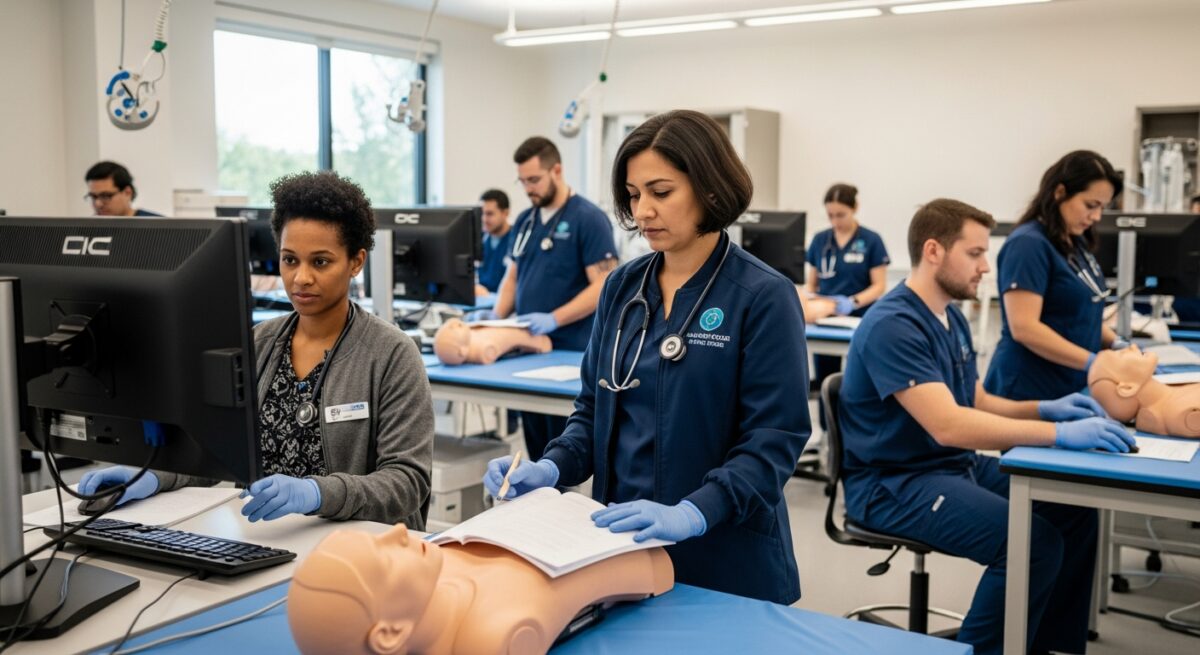
The healthcare sector is arguably the most robust for high paying careers with little schooling. An aging population and expanding access to care drive continuous demand. Roles like Radiologic Technologist, Respiratory Therapist, and Dental Hygienist typically require a two-year associate degree and national certification. These professionals work directly with patients, operate sophisticated equipment, and perform critical diagnostic or therapeutic procedures. Salaries often start in the $60,000 to $75,000 range and can grow significantly with experience and specialization. For those interested in the intersection of technology and patient care, our guide on the best psychology degrees for high paying careers explores adjacent fields that may require more advanced study but share a focus on human systems.
Technology and Information Systems
While some tech roles demand bachelor’s degrees, many high-value positions are accessible through focused associate degrees or intensive bootcamp-style certificates. Network Support Specialists, Cybersecurity Analysts, and Web Developers can often launch their careers with a two-year degree in Information Technology, Computer Networking, or Web Development. The key is building a portfolio of practical skills. These fast track degrees emphasize hands-on experience with software, hardware, and coding languages that employers need immediately. The earning potential is high, with many entry-level positions starting between $50,000 and $70,000, and rapid advancement possible for those who continue to learn and certify.
Skilled Trades and Technical Engineering
Industries like construction, manufacturing, and energy rely heavily on skilled technicians. Careers such as Electrical Lineman, HVAC (Heating, Ventilation, and Air Conditioning) Technician, and Industrial Engineering Technician often require a two-year associate of applied science degree or a formal apprenticeship program. These roles combine classroom theory with extensive hands-on training. The payoff is considerable: these trades are essential, resistant to outsourcing, and frequently offer union benefits, overtime opportunities, and clear paths to becoming a foreman or supervisor. Many professionals in these fields eventually run their own successful businesses.
Key Strategies for Success in a Fast-Track Degree Program
Choosing the right program is only the first step. To truly capitalize on the investment in a short term degree, a strategic approach is essential. Success in these accelerated programs requires focus and pragmatism.
First, prioritize accreditation above all else. For your credential to be recognized by employers and licensing bodies, the institution and the specific program must be properly accredited. Regional accreditation is the gold standard for academic institutions, while programmatic accreditation from a specialized body (like the Commission on Accreditation of Allied Health Education Programs for healthcare) is often mandatory for certification. Second, actively seek programs with strong career services and industry connections. Look for colleges that boast high job placement rates, host regular career fairs with local employers, and offer internship or clinical placement assistance. These resources are critical for transitioning from student to employee seamlessly.
Finally, adopt a mindset of continuous learning. Your fast track degree is the foundation, not the ceiling. The most successful professionals plan for ongoing education from day one. This might mean pursuing vendor-specific certifications (like Cisco or Microsoft in IT), advanced safety credentials in the trades, or specialized clinical competencies in healthcare. Many employers offer tuition reimbursement for further education, which can be used to eventually complete a bachelor’s degree part-time while working, often with your associate degree credits transferring to shorten the timeline. Exploring accredited online degrees can be an excellent way to pursue this continued education flexibly while maintaining your career.
Maximizing Earnings and Career Growth Post-Graduation
Graduating with your credential is the beginning. To achieve the high earning potential promised by short term degree careers, you must be proactive in your career management. The initial job search should focus on roles that offer not just a good starting wage, but also opportunities for on-the-job training and professional development. Employers who invest in further certifying their staff are often better long-term partners. Once employed, document your new skills and responsibilities meticulously. This record is vital for performance reviews and negotiations for raises or promotions.
Consider geographic mobility. Salaries for technical roles can vary dramatically by region. A Radiologic Technologist or Power Line Worker may command a significantly higher salary in a region with a higher cost of living or in a location where those skills are in particularly short supply. Researching state-specific licensing requirements and salary data before your job search can open doors to more lucrative opportunities. Furthermore, be willing to work non-standard hours. Many high-paying technical and healthcare roles offer shift differentials for evenings, nights, weekends, and holidays, which can substantially increase your annual income.
Frequently Asked Questions
Are salaries from careers with short term degrees competitive long-term? Yes, absolutely. While starting salaries are strong, the long-term trajectory is equally important. Many of these careers have well-defined advancement ladders based on experience, additional certifications, and specialization. A nurse with an associate degree (ADN) can start working and earning quickly, then use employer benefits to fund a Bachelor of Science in Nursing (BSN) online, eventually moving into management or specialized nursing roles with significantly higher pay.
Do employers value these degrees as much as bachelor’s degrees? In the specific fields they target, they are often valued more highly because they represent focused, practical skill training. Employers in healthcare, technology, and the skilled trades are primarily concerned with whether you can perform the job safely and effectively on day one. A candidate with a two-year degree in cybersecurity and a relevant certification is frequently more attractive for an analyst role than a candidate with a general four-year degree in computer science but no hands-on security training.
Can I transfer credits from a short-term degree to a bachelor’s program later? This is a common and smart strategy. Many community and technical colleges have articulation agreements with four-year universities. If you think you may want a bachelor’s degree in the future, plan your associate degree coursework with transfer in mind from the start. Choose a regionally accredited institution and select general education courses that are guaranteed to transfer to partner universities. This allows you to enter the workforce with a valuable credential, then complete a bachelor’s degree part-time with most of your core requirements already fulfilled.
What is the biggest mistake people make when pursuing a fast track degree? The biggest mistake is choosing a program based solely on speed or cost without verifying accreditation and employment outcomes. A cheap, quick diploma from an unaccredited institution is often worthless in the job market. Always research the program’s accreditation status, graduation rate, job placement rate, and whether it prepares you for any required state or national licensure exams. Your state’s higher education commission website is a reliable resource for this information.
The landscape of education and employment is evolving, creating unprecedented opportunities for those who seek efficient, direct pathways to financial stability and professional fulfillment. By strategically selecting an accredited program in a high-demand field, leveraging school resources for job placement, and committing to lifelong skill development, you can build a rewarding and high-paying career without dedicating years to traditional schooling. The investment in a short term degree is an investment in a faster return, both professionally and financially, setting a solid foundation for a prosperous future.