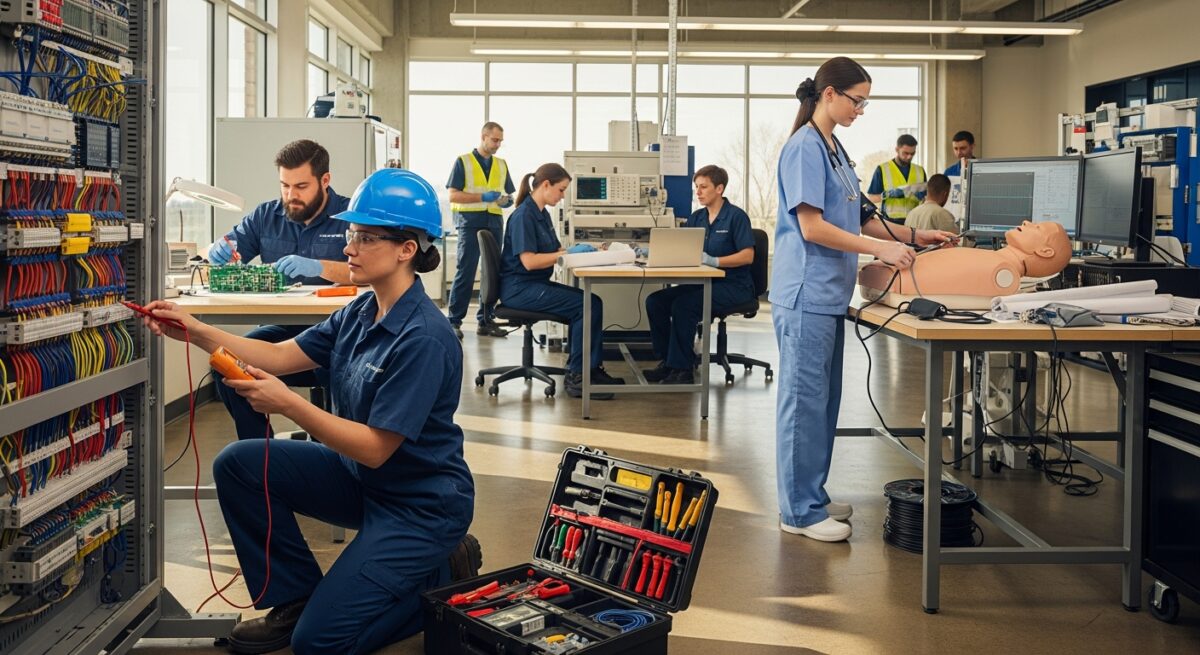
Many people believe a four-year degree is the only path to a high salary. This is simply not true. While a bachelor’s degree can open doors, numerous careers offer strong earning potential with just a high school diploma, a certificate, or an associate degree. These roles often value specialized skills, hands-on training, and industry certifications over formal academic credentials. If you want a rewarding career without spending years in a classroom, exploring these high paying jobs with low education requirements is a smart first step.
Why High Paying Low Education Jobs Exist
The job market is more fluid than ever. Employers in certain sectors face labor shortages that force them to prioritize practical ability over diplomas. Skilled trades, technology roles, and healthcare support positions often pay well because demand outpaces supply. These high paying low education jobs reward competence, reliability, and a willingness to learn on the job. Furthermore, many of these careers offer clear advancement paths where you can increase your salary through experience and additional certifications, without ever needing a traditional degree.
Another factor is the rise of alternative credentialing. Industry-recognized certifications, apprenticeships, and bootcamps provide focused training that is often more relevant than a general academic program. For example, a commercial driver’s license or a Project Management Professional (PMP) certification can be earned in months, not years, and can lead to six-figure incomes. These credentials are tangible proof of your ability to perform specific tasks, making them highly valuable to employers.
Top Careers: Minimal Schooling Jobs with Big Paychecks
Below are some of the most accessible careers that combine low educational barriers with high earning potential. These roles are grouped by industry to help you identify which sector aligns with your interests.
Skilled Trades and Transportation
The skilled trades are a classic example of minimal schooling jobs that pay exceptionally well. Apprenticeships and vocational training programs are the primary entry points. These fields often require physical stamina and precision, but they do not demand a college degree.
- Commercial Pilot (non-airline): Flying cargo, aerial photography, or agricultural aircraft can yield salaries above $100,000. The main requirement is a commercial pilot’s license, which takes about 6-12 months to earn.
- Elevator Installer and Repairer: This is one of the highest-paying trades without a degree. Apprenticeships last about four years, but after completion, median salaries exceed $90,000.
- Power Plant Operator: Operators monitor and control power generation equipment. A high school diploma and on-the-job training are typical, with salaries often reaching $80,000 or more.
These roles are in consistent demand because they involve critical infrastructure. As experienced workers retire, the need for new entrants grows. For those willing to work in physically demanding or irregular settings, these low education careers salary potentials are impressive.
Technology and IT
The tech industry has moved toward skills-based hiring. Certifications in specific technologies can outweigh the lack of a degree. This sector offers some of the most accessible high paying low education jobs for analytical thinkers.
- Web Developer: Many successful developers are self-taught or have completed a coding bootcamp. Median salaries hover around $80,000, with senior roles exceeding $120,000.
- IT Manager (with experience): While entry-level IT support may pay modestly, moving into management with certifications like CompTIA or Cisco can push salaries above $100,000 without a degree.
- Cybersecurity Analyst: Certifications such as Certified Information Systems Security Professional (CISSP) can lead to roles with median salaries over $100,000. The field values practical knowledge over formal education.
The key here is continuous learning. Technology evolves quickly, so the ability to update your skills through short courses and new certifications is more important than a degree. Many employers now explicitly state that equivalent experience or certifications are acceptable substitutes for a bachelor’s degree.
Healthcare and Medical Support
Healthcare is not limited to doctors and nurses. Numerous support roles offer strong pay with minimal schooling. These high paying low education jobs are growing rapidly due to an aging population.
- Radiation Therapist: This role requires an associate degree or certificate. Therapists administer radiation treatments for cancer patients. Median salaries exceed $80,000.
- Dental Hygienist: An associate degree in dental hygiene is the standard requirement. The median salary is around $80,000, with flexible schedules often available.
- Diagnostic Medical Sonographer: Also requiring an associate degree, this role uses imaging equipment to create ultrasounds. Median salaries are over $75,000.
These positions offer stability and the satisfaction of helping others. They also provide a stepping stone to more advanced healthcare roles if you choose to pursue further education later.
How to Land These Roles Without a Degree
Breaking into these fields requires a strategic approach. Your resume and interview skills must highlight your practical abilities. Here is a framework to follow.
- Identify the specific certification or license needed for your target role. For example, a Commercial Driver’s License (CDL) for trucking or a Certified Nursing Assistant (CNA) for healthcare.
- Enroll in a focused training program. Look for community colleges, trade schools, or online bootcamps that offer accelerated paths. Many programs can be completed in under a year.
- Gain hands-on experience through apprenticeships, internships, or entry-level positions. Real-world work often matters more than classroom theory.
- Network within the industry. Attend trade shows, join professional associations, and connect with people on LinkedIn who work in your desired field.
- Prepare to discuss your skills confidently in interviews. Emphasize your certifications, projects, and ability to learn quickly. For more strategies on getting started, check out our guide on best paying jobs for no experience with career growth.
Following these steps can dramatically shorten your timeline to a high salary. Many people transition from low-wage work to these careers in less than two years.
The Financial and Lifestyle Trade-Offs
While these careers offer high pay, they often come with trade-offs. Physical labor, irregular hours, or high-stress environments are common. For instance, commercial pilots may spend nights away from home, and power plant operators often work rotating shifts. It is important to weigh the salary against the lifestyle demands. However, for many people, the ability to earn a strong income without student debt is a worthwhile exchange.
Another advantage is the potential for entrepreneurship. Skilled tradespeople like electricians or plumbers can eventually start their own businesses, dramatically increasing their earning potential. Similarly, experienced web developers can freelance or build their own agencies. The lack of a degree does not limit your ceiling if you build a strong reputation and network.
For those interested in furthering their education while working, many employers offer tuition reimbursement programs. You could start in one of these high paying low education jobs and later earn a degree part-time. This allows you to earn a high salary immediately while building your academic credentials for future advancement. You can explore more options through resources like online degree programs that fit a busy schedule.
Frequently Asked Questions
What is the highest paying job with only a high school diploma?
Several roles pay over $100,000 with just a high school diploma. Commercial pilots, elevator installers, and power plant operators are among the top earners. The key is specialized training or licensing.
Can I get a high paying job without any college at all?
Yes. Many of the jobs listed require only a high school diploma plus on-the-job training or a short certification. Examples include truck drivers, construction managers, and certain IT support roles.
Do these jobs have good benefits and retirement plans?
Many unionized trades offer excellent benefits, including pensions and health insurance. Tech companies also often provide strong benefits packages. However, benefits vary by employer, so it is important to research each company.
How long does it take to qualify for these roles?
Training times vary. A commercial driver’s license can take a few months. An elevator mechanic apprenticeship lasts about four years. Most tech certifications can be earned in 6-12 months of part-time study.
Are these careers stable in a recession?
Some are more stable than others. Healthcare roles and essential trades (like electricians) tend to be recession-resistant. Tech roles can be more volatile, but demand for cybersecurity remains strong regardless of economic conditions.
Choosing a path that aligns with your natural strengths and interests is the best way to ensure long-term satisfaction. These high paying low education jobs provide a realistic alternative to the traditional college route. They offer financial independence, career growth, and the chance to build a life without the burden of student loans. The key is to take action: research a field that appeals to you, pursue the necessary training, and start building your career today.