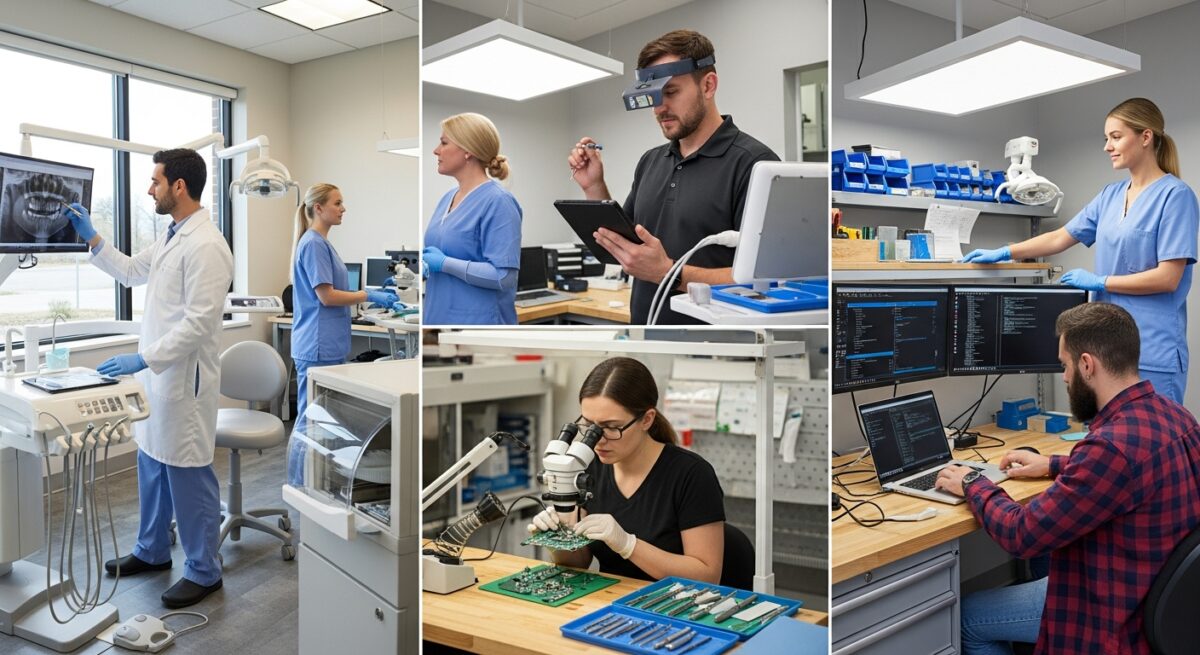
For students and career-changers seeking a meaningful and stable profession, Iowa offers a robust landscape of top-rated healthcare education programs designed to meet critical workforce needs. The state’s institutions are renowned for their rigorous academics, exceptional clinical training partnerships, and high licensure pass rates, producing graduates who are immediately ready to contribute to hospitals, clinics, and community health settings across the Midwest and beyond. Whether your goal is to become a registered nurse, a physician assistant, a radiologic technologist, or any number of vital allied health professionals, Iowa’s educational pathways provide a solid foundation for long-term career success in a growing industry.
Why Iowa Stands Out for Healthcare Training
Iowa’s commitment to healthcare education is deeply intertwined with its community values and economic development. The state faces a dual challenge: an aging population requiring more medical services and a corresponding need to replace retiring healthcare workers. This has created a powerful incentive for Iowa’s public universities, private colleges, and community colleges to develop programs that are not only academically excellent but also highly responsive to real-world needs. These programs often feature strong relationships with major health systems like the University of Iowa Hospitals & Clinics, MercyOne, and UnityPoint Health, ensuring that students gain hands-on experience in top-tier clinical environments.
Furthermore, Iowa’s educational institutions frequently rank highly for value, offering a lower cost of attendance compared to many coastal counterparts without sacrificing quality. This combination of affordability, access to clinical sites, and programmatic strength makes pursuing a healthcare degree in Iowa a strategically sound decision. Graduates from these programs are highly sought after, with many securing employment offers well before graduation, often within the state’s own extensive network of rural and urban healthcare facilities.
Key Institutions and Their Signature Programs
Several Iowa schools have established national reputations in specific healthcare disciplines. Prospective students should consider their career goals carefully when evaluating these top-rated options, as each institution has unique strengths.
The University of Iowa and Its Comprehensive Health Sciences Campus
The University of Iowa in Iowa City is the state’s flagship research institution and home to a vast health sciences enterprise. The Carver College of Medicine is consistently ranked among the nation’s best for primary care and research. For undergraduate and graduate students, the College of Nursing offers highly competitive BSN, MSN, and DNP programs known for their research integration and leadership training. The College of Public Health addresses population health on a broad scale, while the Roy J. and Lucille A. Carver College of Medicine also oversees renowned programs in physician assistant studies and physical therapy. The integrated campus, which includes the massive University of Iowa Hospitals & Clinics, provides an unparalleled environment for interdisciplinary learning and clinical exposure.
Private Colleges and Specialized Focus
Private institutions in Iowa contribute significantly to the healthcare workforce with often more focused, hands-on curricula. Allen College in Waterloo, affiliated with UnityPoint Health, is exclusively dedicated to nursing and health sciences, offering accelerated and traditional BSN tracks, as well as advanced practice nursing degrees. Mercy College of Health Sciences in Des Moines, affiliated with MercyOne, provides direct pathways into clinical roles in nursing, radiologic technology, and surgical technology. These schools excel by embedding students within their affiliated health systems from an early stage, creating a seamless transition from classroom to career.
Similarly, states across the country are developing robust pipelines for healthcare workers. For a look at how another region structures its educational offerings, consider exploring the top healthcare education programs in Arizona for aspiring professionals, which highlights different institutional models and specializations.
Navigating Program Selection: Critical Factors to Consider
Choosing the right program is more than just reviewing rankings. A thoughtful evaluation requires examining several concrete factors that will directly impact your education and future employability. Accreditation is the non-negotiable first step; ensure the program is accredited by the relevant specialized body (e.g., CCNE or ACEN for nursing, ARC-PA for physician assistant programs). This is essential for licensure and certification.
Next, scrutinize the program’s outcomes. Reputable programs transparently publish key metrics that you should compare:
- Licensure/Certification Pass Rates: The percentage of graduates who pass their required licensing exam (NCLEX-RN for nurses, PANCE for PAs, etc.) on the first attempt. Consistently high rates (often above 95% for top programs) indicate effective curriculum and preparation.
- Graduation Rates: The percentage of students who complete the program on time. This can reflect the program’s support structure and the manageability of its workload.
- Job Placement Rates: The percentage of graduates employed in their field within six months to a year of graduation. This is a strong indicator of the program’s reputation among employers.
- Clinical Placement Support: Understand how the program secures clinical rotations. Do they place you, or are you responsible for finding your own sites? A program with strong hospital partnerships removes a major point of stress and guarantees quality experience.
Finally, consider the learning format and schedule. Many Iowa schools now offer hybrid or online options for certain degrees, particularly at the graduate level, providing flexibility for working adults. However, ensure that any online program includes a robust, well-supported clinical component in your geographic area. The rise of digital learning has made academic program insights more accessible than ever, allowing for detailed comparisons of online and on-campus structures across institutions.
From Education to Career: Iowa’s Healthcare Employment Landscape
Completing a top-rated healthcare education program in Iowa opens doors to a vibrant and stable job market. The state’s healthcare sector is a leading employer, with consistent demand driven by demographic trends and medical advancements. Major health systems have a significant presence across Iowa, from the urban centers of Des Moines and Cedar Rapids to the regional hubs like Davenport, Sioux City, and Waterloo. This geographic distribution means graduates often have the choice between metropolitan tertiary care centers, which offer specialization and complex cases, and rural or community hospitals, which provide broader generalist experience and often offer significant financial incentives like loan repayment.
Career advancement pathways are clear and supported. A nurse with an ADN from a top community college like Des Moines Area Community College (DMACC) can begin working and then seamlessly transition into an RN-to-BSN online program offered by many Iowa universities. A radiologic technologist can pursue additional certifications in MRI or CT scanning. Physician assistants can specialize in surgery, emergency medicine, or orthopedics. The foundational education received in Iowa’s programs is designed to be a launchpad for lifelong career growth, with many institutions offering continuing education and advanced degrees to facilitate upward mobility.
Frequently Asked Questions
What is the fastest way to become a registered nurse (RN) in Iowa?
The fastest traditional path is through an Associate Degree in Nursing (ADN) program at a community college, which typically takes two years. However, some universities offer accelerated BSN programs for students who already hold a bachelor’s degree in another field; these can be completed in 12-18 months of intensive study.
Are online healthcare degrees from Iowa schools respected by employers?
Yes, provided they are from properly accredited institutions. Employers prioritize accreditation and clinical competency over the delivery format of the didactic coursework. Many respected Iowa schools, including the University of Iowa and Allen College, offer reputable online or hybrid options for RN-to-BSN, MSN, and certain allied health degrees.
How important is clinical experience during my program?
It is arguably the most critical component outside of passing your licensure exam. High-quality, diverse clinical rotations are where you apply theory, develop technical skills, and build professional judgment. Programs with strong hospital affiliations provide superior and guaranteed clinical placements, which significantly enhance your resume.
What financial aid options are specific to healthcare students in Iowa?
Beyond federal loans and grants, Iowa offers several state-specific programs. The Iowa Registered Nurse and Nurse Educator Loan Forgiveness Program forgives loans for nurses who work in critical shortage areas. Many Iowa hospitals also offer tuition reimbursement or scholarship-for-service agreements, where they pay for your education in exchange for a commitment to work for them for a specified period after graduation.
Can I work while completing a healthcare program in Iowa?
It depends on the program’s intensity. Practical nursing (LPN) or associate degree programs may allow for part-time work, especially in the first year. Accelerated or rigorous bachelor’s and graduate programs often discourage or prohibit employment due to the demanding schedule of classes, labs, and clinical rotations. Many students opt for per-diem or weekend roles, such as working as a certified nursing assistant (CNA), to gain relevant experience without conflicting with a full-time class schedule.
Investing in a healthcare education at one of Iowa’s top-rated institutions is an investment in a career defined by purpose, stability, and continuous growth. By carefully selecting a program with strong outcomes, solid clinical partnerships, and a format that fits your life, you can build a rewarding future serving the health needs of communities in Iowa and across the nation. The state’s educational infrastructure is designed to support you from the first day of class to a long and successful professional journey.