
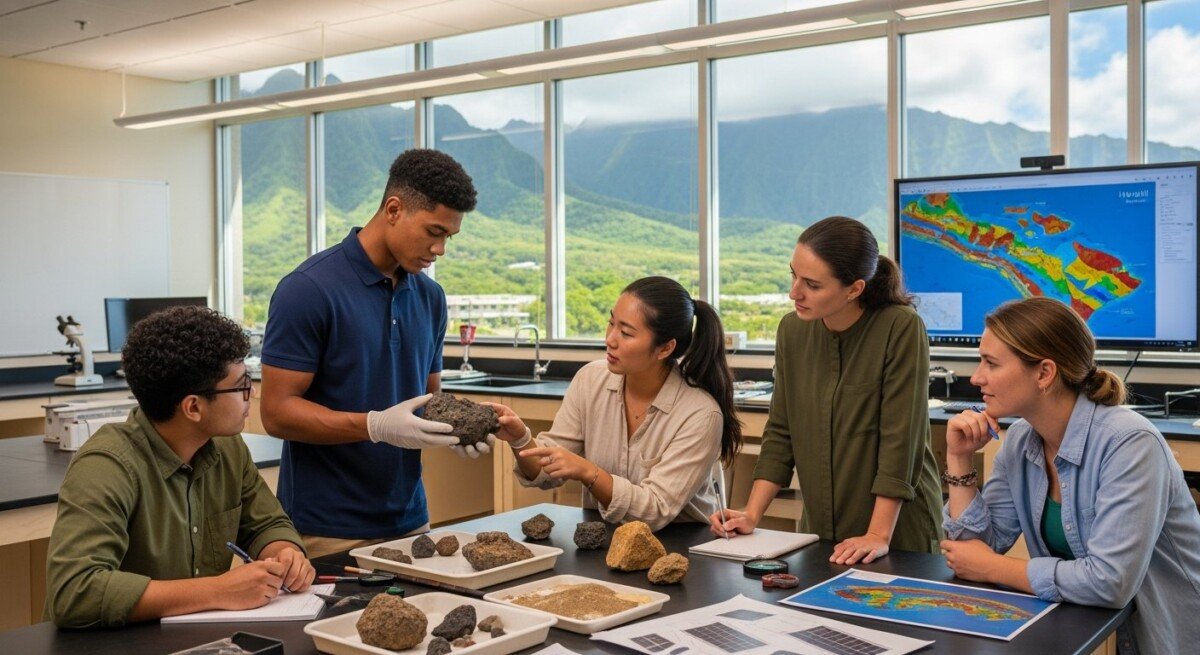
Top Hawaii University Programs for High-Demand Careers
Discover Hawaii university programs with strong job prospects in healthcare, renewable energy, and tech, designed for immediate local hiring and career growth.

By Henry Powell
Choosing a college degree is a significant investment in your future, and for students in Hawaii or those dreaming of studying in the islands, aligning that choice with strong career outcomes is paramount. Hawaii’s unique economy, shaped by tourism, defense, environmental science, and healthcare, creates specific high-demand career pathways. Fortunately, the state’s universities have developed robust, targeted programs designed to feed directly into these growing local and global industries. By focusing on Hawaii university programs with strong job prospects, students can secure not just an education, but a clear trajectory toward meaningful, stable employment in fields critical to the state’s future.
Understanding Hawaii’s Economic Landscape and Workforce Needs
To identify which academic programs offer the best career launchpad, one must first understand the driving forces of Hawaii’s economy. Unlike many mainland states, Hawaii’s isolated location and unique natural resources create a specialized job market. The tourism and hospitality sector is the most visible engine, but it is supported and balanced by substantial federal defense spending, a growing focus on renewable energy and environmental sustainability, and an ongoing need for healthcare professionals to serve both residents and visitors. Furthermore, Hawaii’s position as a gateway between the United States and Asia fosters opportunities in international business, logistics, and diplomacy. Successful Hawaii university programs with strong job prospects are those that intentionally design their curricula to meet the needs of these core sectors, often incorporating local case studies, internships with major island employers, and partnerships with industry leaders.
This strategic alignment means graduates are not just theoretically prepared but are practically equipped to step into roles that are actively being hired for. For instance, a nursing graduate from a University of Hawaii campus is trained within the state’s specific healthcare ecosystem, a business student might analyze real-world challenges facing local agricultural exporters, and an engineering student could work on solar energy integration projects relevant to Hawaii’s 100% renewable energy goals. This context-rich education is a significant differentiator. When exploring degree options, it’s also valuable to consider the flexibility of modern education; many foundational courses for these in-demand fields can now be started through fully online university programs, offering a pathway for adult learners or those balancing other commitments.
Leading Programs at the University of Hawaii System
The ten-campus University of Hawaii (UH) system is the primary driver of higher education and workforce development in the state. Several of its colleges and schools have earned national recognition for programs that directly correlate to high job placement rates. The key for prospective students is to look beyond the general major and into the specialized tracks and schools within the university that have deep industry ties.
Shidler College of Business (UH Manoa)
The Shidler College of Business at UH Manoa is consistently ranked among the top business schools in the nation for international business, a direct reflection of Hawaii’s geographic and economic position. Its strengths, however, extend into several high-demand areas. The School of Travel Industry Management (TIM School) is a crown jewel, producing graduates who move into management roles with global hotel chains, tourism authorities, and event planning companies. Similarly, programs in Supply Chain Management and Entrepreneurship are tailored to the logistical challenges and innovative opportunities present in an island state. Shidler’s extensive alumni network across the Pacific Rim provides unparalleled internship and job placement opportunities.
John A. Burns School of Medicine (JABSOM) and Nursing Programs
Healthcare remains a perennially high-demand field everywhere, and Hawaii is no exception. JABSOM at UH Manoa, along with the nursing programs across multiple UH campuses (particularly at Manoa and Hilo), produce a steady pipeline of critically needed professionals. JABSOM is noted for its focus on rural and community health, preparing doctors to serve in neighbor island communities that often face provider shortages. Nursing programs offer pathways from Associate to Doctoral levels, with specializations that align with local needs. Graduates from these programs typically secure positions quickly within the Hawaii Pacific Health, Kaiser Permanente Hawaii, or state hospital systems, often before graduation.
College of Engineering (UH Manoa) and Hawaii Natural Energy Institute
With ambitious state goals for renewable energy and sustainable infrastructure, engineers are in high demand. The College of Engineering at UH Manoa, particularly in civil, electrical, and mechanical engineering, provides the technical foundation. This work is amplified by the Hawaii Natural Energy Institute (HNEI), a research hub that offers students hands-on project experience in solar, wind, ocean thermal, and grid stability technologies. This combination of theoretical and applied learning creates graduates who are immediately valuable to local utility companies, construction firms working on resilient infrastructure, and clean tech startups.
High-Value Programs at Hawaii’s Private Universities
While the UH system is large, Hawaii’s private universities offer specialized, often career-focused programs that also boast excellent job prospects. These institutions frequently feature smaller class sizes, distinct educational philosophies, and strong partnerships with specific industry sectors.
Hawaii Pacific University (HPU), located in downtown Honolulu, emphasizes experiential learning and global citizenship. Its strengths in fields like Cybersecurity, Computer Science, and International Relations are directly tied to Honolulu’s status as a major military and Pacific Command hub, as well as a center for international finance. HPU’s marine biology program leverages its oceanfront location and has connections with research institutions and conservation NGOs throughout the islands. Chaminade University of Honolulu is renowned for its Forensic Sciences program, one of the best in the country, which feeds graduates into federal, state, and local law enforcement agencies. Its Nursing and Education programs also have strong reputations for producing practice-ready professionals who serve the local community. For students considering all modalities of learning to access these specialized fields, comprehensive research on digital education platforms can provide a useful comparison of online options that may complement on-island studies.
Key Factors That Boost Graduate Employability
Beyond the choice of major, certain embedded features of a program significantly enhance a graduate’s job prospects. When evaluating Hawaii university programs with strong job prospects, look for these critical components that bridge the gap between classroom and career.
First, and perhaps most important, is the presence of a robust, mandatory internship or co-operative education (co-op) requirement. Programs that build industry work experience into the curriculum give students a decisive edge. Second, seek out programs with active advisory boards composed of local industry leaders. These boards ensure the curriculum stays current and often facilitate hiring. Third, consider the strength and engagement of the program’s alumni network in your field of interest. An active network can be a source of mentors, internship hosts, and job referrals. Finally, look for capstone projects or senior design courses that tackle real-world problems presented by community or corporate partners. Successfully completing such a project is a powerful portfolio piece during job interviews.
To maximize your research into these factors across different institutions, seeking out independent academic program insights can offer valuable comparative perspectives.
Frequently Asked Questions
What is the single biggest factor in choosing a Hawaii university program for job success?
The single biggest factor is the program’s established, formal connections to local and regional industries through required internships, advisory boards, and project partnerships. A curriculum designed with direct employer input leads directly to hiring pipelines.
Are job prospects good only in tourism-related fields?
No. While tourism and hospitality are major employers, equally strong prospects exist in healthcare (nursing, medicine, public health), STEM fields (engineering, computer science, environmental science), education, and skilled trades. The state’s renewable energy goals and defense sector also create stable, high-paying career paths.
Is it necessary to leave Hawaii after graduation to find a good job in my field?
For many of the high-demand fields discussed, it is not necessary. Hawaii actively needs local talent in healthcare, teaching, engineering, and tech. Some specialized fields may have more opportunities on the mainland, but a degree from a respected Hawaii program, especially one with a strong professional network, is a competitive asset anywhere.
Do Hawaii universities help with job placement for graduates?
Yes, all major universities in Hawaii have career services centers that offer resume workshops, interview coaching, and job fairs. The most effective programs, however, integrate career development directly into the department, with faculty and industry partners actively assisting with placement.
How important is accreditation for job prospects?
Critically important. Always verify that the program and institution are properly accredited (e.g., ABET for engineering, AACSB for business, CCNE for nursing). Accreditation ensures the degree meets quality standards that employers trust and is often required for professional licensure.
Ultimately, pursuing higher education in Hawaii offers more than a world-class setting, it offers a strategic opportunity to build a career in sectors vital to the state’s prosperity. By carefully selecting from among the Hawaii university programs with strong job prospects, students invest in an education that is designed with their future employability as a core outcome. The combination of relevant curriculum, hands-on experience, and embedded professional networks positions graduates not just to enter the workforce, but to lead and innovate within Hawaii’s unique and evolving economy.