
Top Health Degree Programs in Kansas for Your Career
Discover Kansas’s top-ranked health degree programs that lead to high-demand careers in nursing, allied health, and administration. These excellent health degree programs in Kansas combine rigorous academics with vital clinical experience.

By Stacy Cignetti
Kansas stands as a pivotal hub for healthcare education, offering a diverse array of excellent health degree programs designed to meet the critical demands of the modern medical field. From the bustling urban centers of Wichita and Kansas City to the dedicated institutions across the state, students can find pathways into nursing, public health, allied health, and clinical sciences that are both rigorous and rewarding. These programs are often closely integrated with major hospital systems and community health networks, providing unparalleled hands-on experience. For anyone considering a future in healthcare, understanding the landscape of Kansas’s educational offerings is the first step toward a stable and impactful career. The state’s commitment to health education ensures graduates are not only well-prepared for licensure and certification but are also poised to address the unique health challenges of both rural and urban populations.
Exploring the Spectrum of Health Degrees in Kansas
The range of excellent health degree programs in Kansas caters to various interests and career stages. At the foundational level, associate degrees and certificates provide fast-track entry into high-demand fields like radiologic technology, dental hygiene, and medical assisting. These programs, often available at community colleges such as Johnson County Community College and Hutchinson Community College, emphasize practical skills and can be completed in two years or less. For those seeking broader clinical roles and leadership potential, bachelor’s degrees are the standard. Kansas universities offer robust Bachelor of Science in Nursing (BSN) programs, health sciences degrees, and specialized tracks in areas like respiratory therapy or health services administration.
Graduate education expands the possibilities further. Master’s programs prepare students for advanced practice nursing roles, healthcare administration, public health policy, and clinical research. Doctoral programs, including Ph.D. tracks and clinical doctorates like the Doctor of Nursing Practice (DNP), are available for those aiming for the highest levels of expertise, academia, or systemic leadership. The choice between these levels depends largely on career goals, time investment, and desired scope of practice. Many institutions also offer “bridge” programs, allowing licensed practical nurses (LPNs) or associate-degree RNs to seamlessly advance to a BSN or MSN, facilitating career progression without unnecessary duplication of training.
Key Institutions and Their Program Strengths
Several Kansas universities and colleges have established national reputations for their health sciences curricula. The University of Kansas Medical Center (KUMC) in Kansas City is the state’s flagship institution for health education and research. It houses the state’s only medical school and offers a comprehensive suite of programs, including highly ranked physical therapy, occupational therapy, and nurse anesthesia degrees. Its integrated health system provides students with clinical training in a top-tier academic medical center environment. Kansas State University excels in areas like nutritional sciences, kinesiology, and public health, often with a focus on community and rural health initiatives. Its interdisciplinary approach connects animal, human, and environmental health.
Wichita State University boasts strong partnerships with the city’s extensive medical and aviation industries, leading to unique strengths in biomedical engineering, nursing, and health administration. Its College of Health Professions is one of the largest in the region. Fort Hays State University is recognized for its accessible and high-quality online and on-campus programs in nursing, respiratory therapy, and medical diagnostic imaging, serving a largely rural student population. Private institutions like Newman University in Wichita and Baker University also provide excellent, values-based health education with smaller cohort sizes and personalized attention, particularly in nursing and allied health fields.
Critical Factors for Selecting the Right Program
Choosing among the many excellent health degree programs in Kansas requires careful evaluation beyond just the school’s name. Accreditation is the non-negotiable first criterion. Ensure the program is accredited by the relevant specialized body, such as the Commission on Collegiate Nursing Education (CCNE) for nursing, the Council on Education for Public Health (CEPH), or the Commission on Accreditation of Allied Health Education Programs (CAAHEP). This accreditation is essential for eligibility for licensure exams, federal financial aid, and professional credibility. Prospective students should also scrutinize licensure exam pass rates (NCLEX for nurses, for example), as these are a direct indicator of program quality and graduate preparedness.
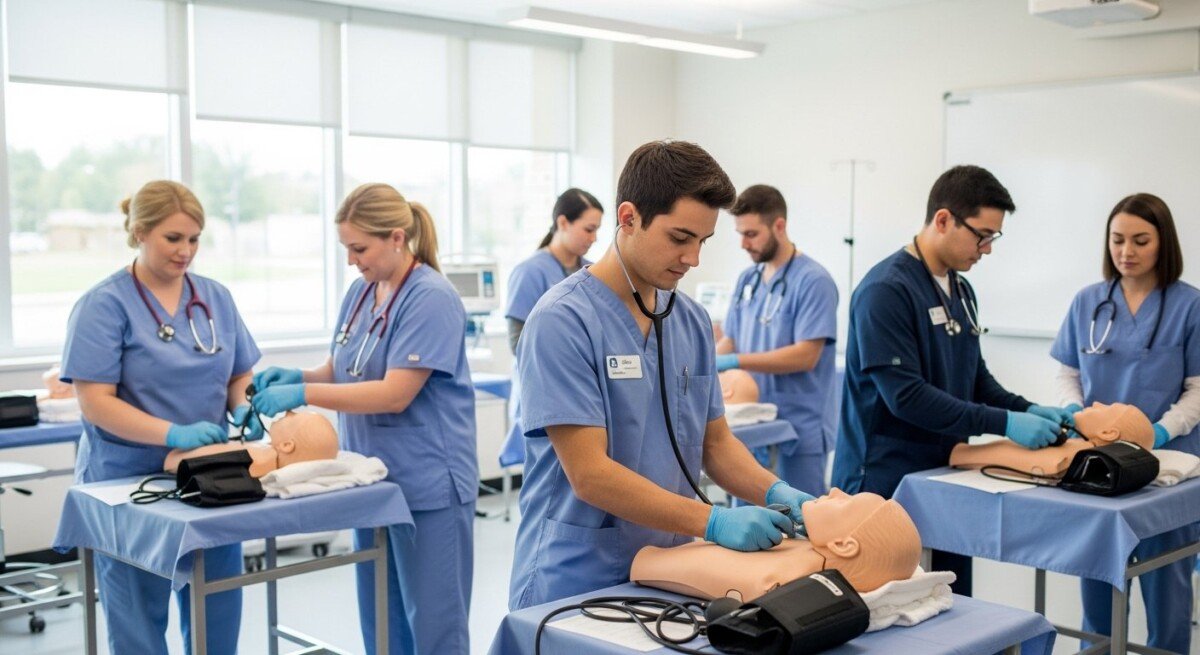
Clinical placement opportunities and partnerships are another vital consideration. Programs with strong ties to diverse clinical sites, including hospitals, clinics, public health departments, and long-term care facilities, provide richer, more varied hands-on learning. Investigate faculty credentials, student-to-faculty ratios in clinical settings, and the availability of simulation labs. For those balancing work or family, format flexibility is key. Many Kansas schools now offer hybrid or fully online options for certain degrees, such as RN-to-BSN programs, health informatics, or healthcare administration. However, even online programs will require in-person clinical or practicum components, so understanding the local requirements is crucial.
When evaluating potential return on investment, it is wise to research which degrees offer the strongest job prospects and salary potential. For detailed analysis on this subject, our guide on high-demand, high-salary degree paths provides valuable context for making an informed decision.
Career Pathways and Outcomes for Graduates
Graduates from Kansas health programs enter a state and national job market with persistent demand. The aging population and expanded access to healthcare services continue to drive need across all sectors. Registered nurses from Kansas BSN programs are employed in hospitals, specialty clinics, schools, and home health agencies, with many advancing into charge nurse or unit manager roles within a few years. Allied health professionals, such as physical therapist assistants, radiologic technologists, and surgical technologists, often receive job offers prior to graduation due to tight labor markets. Public health graduates find roles in government agencies, non-profit organizations, and corporate wellness, focusing on disease prevention, health education, and policy analysis.
Advanced practice roles, accessible through master’s and doctoral programs, command higher salaries and greater autonomy. Nurse practitioners, especially in family, psychiatric, and pediatric specialties, are increasingly vital in providing primary care, particularly in Kansas’s many underserved rural counties. Healthcare administrators and managers are needed to navigate the complex financial, regulatory, and technological landscapes of modern healthcare delivery. The career trajectory often includes a combination of direct patient care, leadership, and sometimes education, as experienced professionals return to academia as clinical instructors. For those interested in exploring the full range of accredited educational pathways, including online options, the team at academic program insights offers a comprehensive resource for planning your next step.
Frequently Asked Questions
What is the most direct path to becoming a nurse in Kansas?
The most common direct path is to complete an Associate Degree in Nursing (ADN) at a community college or a Bachelor of Science in Nursing (BSN) at a four-year university. Both pathways prepare you to take the NCLEX-RN exam for licensure. The BSN is increasingly preferred by employers and is required for many advanced roles and graduate study.
Are there strong online health degree options based in Kansas?
Yes. Many Kansas institutions offer reputable online programs, particularly for post-licensure nursing degrees (RN-to-BSN, MSN), health information management, and healthcare administration. These programs are designed for working professionals and often use a combination of online coursework and in-person clinical placements arranged in the student’s local community.
How important is clinical experience in these programs?
Clinical experience is absolutely critical. It is the component that transforms theoretical knowledge into practical skill. Quality programs integrate clinical rotations early and often, across a variety of settings. The depth and breadth of a program’s clinical partnerships are a key indicator of its ability to prepare you for real-world practice.
What financial aid options are available for Kansas health students?
Beyond federal grants and loans, Kansas students should explore state-specific programs like the Kansas Nursing Service Scholarship, which provides funding in exchange for service in underserved areas. Many hospitals and health systems also offer tuition reimbursement or loan forgiveness programs for employees pursuing relevant degrees.
Can I start a health degree at a community college and transfer?
Absolutely. This is a strategic and cost-effective path. Many Kansas community colleges have articulation agreements with four-year universities, ensuring that credits from an associate degree in a pre-health or allied health field transfer smoothly into a related bachelor’s program. Always consult with advisors at both institutions to plan your course sequence.
Ultimately, the pursuit of a health degree in Kansas is an investment in a career defined by growth, stability, and purpose. The state’s educational institutions provide the foundational knowledge, technical skills, and ethical grounding necessary to excel in this demanding field. By carefully aligning your personal goals with the strengths of specific programs, you can launch a rewarding journey that not only advances your own future but also contributes meaningfully to the well-being of communities across Kansas and beyond.