
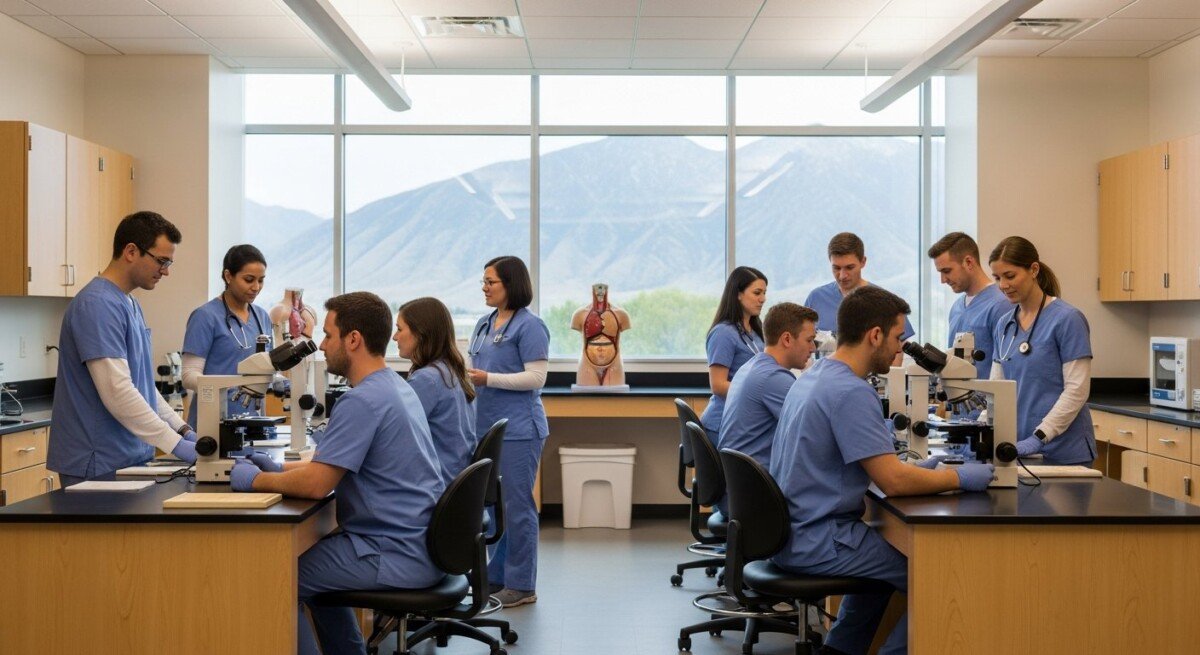
Top Health Degree Programs in Utah for Your Career
Explore top-ranked health degree programs in Utah, from nursing and allied health to public health administration, designed for high-demand careers.

By Emily Foster
Utah’s healthcare landscape is expanding rapidly, driven by a growing population and a renowned network of hospitals and research institutions. This creates exceptional demand for skilled professionals across numerous specialties. For students and career-changers seeking a meaningful and stable career path, Utah offers a wealth of outstanding health degree options, from renowned research universities to practical career and technical colleges. Whether your goal is direct patient care, public health, medical technology, or health administration, the state’s educational institutions provide rigorous, accredited pathways to success. This guide explores the top programs and strategic considerations for launching your healthcare career in the Beehive State.
Navigating Utah’s Premier Health Education Institutions
Utah’s higher education system is uniquely positioned to serve the health sector. The state boasts a concentration of high-quality programs that leverage local industry partnerships, particularly with major healthcare systems like Intermountain Health, University of Utah Health, and the Veterans Affairs network. These relationships often translate into unparalleled clinical placement opportunities for students. When evaluating programs, prospective students should consider several key factors: institutional accreditation (regional and program-specific), pass rates on licensure exams, the strength of career services, and the depth of clinical or internship networks. A degree from a well-connected Utah institution can be a significant advantage in the local job market, though many programs also carry national prestige.
The choice between a large research university and a smaller college often comes down to career goals and learning style. Larger universities typically offer more specialized tracks, extensive research opportunities, and the resources of an academic medical center. Smaller colleges and technical schools may provide more hands-on, direct training with shorter completion times and lower costs. For those balancing work and family, many Utah schools now offer hybrid or fully online formats for certain health degrees, such as health administration, public health, and nursing (RN-to-BSN). Exploring online degree pathways can reveal flexible options that maintain academic rigor, a concept applicable across many fields of study.
Leading Health Degree Pathways in Utah
Utah’s academic offerings cover the full spectrum of healthcare careers. Below are some of the most prominent and high-demand degree pathways available within the state.
Nursing: From Bedside to Leadership
Nursing remains one of the most critical and versatile health professions. Utah’s programs are designed to meet students at various entry points. For those beginning their journey, Associate Degree in Nursing (ADN) programs at institutions like Salt Lake Community College and Weber State University provide a direct route to becoming a Registered Nurse (RN). For students seeking a Bachelor of Science in Nursing (BSN), the University of Utah, Brigham Young University, and Utah Valley University offer comprehensive programs that include leadership and public health concepts, often preferred by employers. For advanced practice, the University of Utah’s College of Nursing is a national leader, offering Master of Science in Nursing (MSN) and Doctor of Nursing Practice (DNP) degrees for roles like Nurse Practitioner, Nurse Midwife, and Nurse Anesthetist.
Allied Health and Diagnostic Professions
This category encompasses the essential technical and therapeutic roles that support patient care. Utah State University and the University of Utah excel in programs for Communication Disorders and Audiology, preparing students for speech-language pathology and audiology careers. Radiologic Technology and Sonography programs at schools like Weber State and Mountainland Technical College train students to operate critical imaging equipment. Other vital allied health degrees include Respiratory Therapy, Surgical Technology, and Medical Laboratory Science. These programs are typically highly focused, combining classroom science with extensive clinical hours to ensure graduates are job-ready.
Public Health and Health Administration
For those interested in the macro-level workings of healthcare, degrees in Public Health and Health Administration are outstanding choices. The University of Utah’s Department of Public Health offers bachelor’s, master’s (MPH), and doctoral degrees, with research strengths in epidemiology, community health, and environmental health. These programs address population health challenges, policy, and health promotion. Health Services Administration and Healthcare MBA programs, such as those at Westminster College and the University of Utah’s David Eccles School of Business, prepare graduates to manage clinics, hospitals, and healthcare organizations. This path is ideal for individuals with leadership skills who want to impact healthcare delivery systems. For broader academic program insights into online and campus-based options in these fields, dedicated educational resource sites can be invaluable.
Specialized and Emerging Health Fields in Utah
Beyond traditional roles, Utah is a hub for innovation in health fields. The state’s strong tech sector, often called “Silicon Slopes,” fuels growth in health informatics and biomedical engineering. Degrees in Health Informatics, which blend healthcare, information technology, and data science, are offered at the University of Utah and Western Governors University. These programs train professionals to manage electronic health records, improve clinical decision support, and analyze health data. Biomedical Engineering programs, particularly at the University of Utah, are world-class, focusing on medical device innovation and biotechnology. Another growing area is Mental Health Counseling and Clinical Social Work, with strong graduate programs at Utah State University and the University of Utah addressing the critical need for behavioral health providers.
Pre-professional tracks for medicine, dentistry, pharmacy, and physical therapy are also robust at Utah’s undergraduate institutions. Schools like Brigham Young University and the University of Utah provide rigorous advising and curriculum designed to prepare students for competitive graduate and professional school applications. Many of these pre-health students benefit from Utah’s dense clinical and research ecosystem, gaining valuable experience before even entering professional school.
Financial and Practical Considerations for Your Degree
Investing in a health degree is a significant decision. Utah residents benefit from relatively lower tuition rates at public institutions compared to the national average. Key financial strategies include applying for federal aid via the FAFSA, researching program-specific scholarships from schools and professional associations, and exploring employer tuition reimbursement programs, which are common in the healthcare industry. Many Utah health programs, especially in nursing and allied health, may also have state-funded grants or loan forgiveness programs tied to working in underserved areas after graduation.
From a practical standpoint, accreditation is non-negotiable. Ensure your program is accredited by the relevant specialized accrediting body (e.g., CCNE or ACEN for nursing, CAHIIM for informatics). This is essential for licensure, certification, and employment. Additionally, consider the program’s schedule and format. Does it offer part-time options? Are clinical placements arranged by the school, or must you find your own? Answering these questions will help you find a program that fits your life. The following list outlines critical steps for selecting the right health degree program in Utah.
- Identify Your Career Goal and Required Credential: Research the specific license or certification needed for your desired job (e.g., RN, RD, CMA).
- Verify Program Accreditation: Confirm both institutional (regional) and specialized programmatic accreditation.
- Analyze Outcomes Data: Review the program’s graduation rates, licensure exam pass rates, and job placement statistics.
- Evaluate Cost and Financial Aid: Calculate total cost, including fees and materials, and explore all scholarship and grant options.
- Assess Logistics and Support: Consider location, schedule flexibility, clinical placement support, and academic advising services.
Taking these steps methodically will lead you to a program that not only provides an excellent education but also efficiently launches your career.
Frequently Asked Questions
What is the fastest way to start a healthcare career in Utah?
For many, accelerated certificate or associate degree programs in high-demand allied health fields like Medical Assisting, Phlebotomy, or Surgical Technology offer the quickest entry, often in less than two years. Paramedic and Licensed Practical Nurse (LPN) programs are also relatively fast tracks to licensed, patient-facing roles.
Are online health degrees from Utah schools respected?
Yes, provided they are from accredited institutions. Many reputable Utah colleges and universities offer online or hybrid formats for degrees like Health Information Management, Health Services Administration, Public Health, and RN-to-BSN completion. The key is to ensure the program holds the same accreditation as its on-campus counterpart.
Which Utah health degrees have the best job placement rates?
Degrees leading to licensed clinical roles typically have excellent placement. This includes Nursing (all levels), Radiologic Technology, Dental Hygiene, and Physical Therapist Assistant programs. Graduates from these programs often have job offers prior to or immediately following graduation and licensure.
Can I get a health degree in Utah as a non-resident?
Absolutely. While non-resident tuition is higher, many students from other states attend Utah’s health programs. Some online programs may offer flat-rate tuition regardless of residency. It’s advisable to contact the admissions office of your target program to discuss specific costs and requirements for out-of-state applicants.
How important is clinical experience during the degree program?
It is paramount. Clinical, practicum, or internship experience is the cornerstone of any clinical health degree. It provides hands-on skills, professional networking, and often leads directly to employment. When comparing programs, inquire about the breadth of clinical site partnerships and the level of support provided in securing placements.
Exploring the outstanding health degree options in Utah is the first step toward a rewarding career in a vital industry. By aligning your personal strengths and interests with the state’s educational strengths and market demands, you can build a future that is both professionally fulfilling and personally meaningful. The investment in a quality health education opens doors to a sector dedicated to improving lives, including your own.