
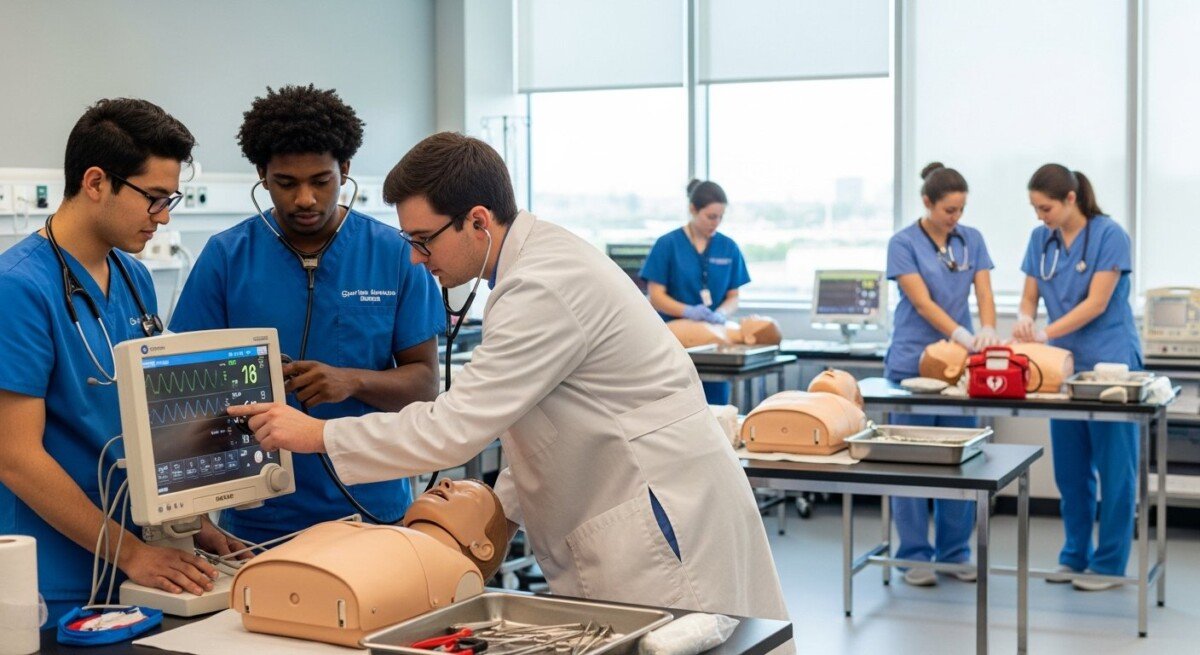
Top Health Profession Degree Programs in Washington State
Explore top-ranked health profession degree programs in Washington, from nursing to public health, and learn how to choose a path for a stable, high-demand career.

By Benjamin Clarke
Washington State stands as a national leader in healthcare education and innovation, fueled by a robust network of research institutions, major medical centers, and a growing, diverse population. For students aspiring to enter this vital field, the state offers an exceptional array of accredited health profession degree programs designed to meet the demands of modern healthcare. From nursing and physician assistant studies to public health and clinical laboratory science, the pathways are diverse and tailored to launch rewarding careers. Choosing the right program, however, requires careful consideration of factors like accreditation, clinical placement opportunities, and alignment with your long-term professional goals. This guide explores the landscape of the best health profession degree programs in Washington, providing the insights needed to make an informed decision for your future.
Understanding Washington’s Healthcare Education Landscape
Washington’s healthcare sector is characterized by its emphasis on integrated care, technological adoption, and addressing health disparities across urban and rural communities. This environment directly shapes its academic programs, which often incorporate interdisciplinary training, telehealth competencies, and community health projects. The state is home to several R1 research universities, comprehensive public institutions, and specialized health sciences colleges, each contributing to a rich educational ecosystem. Furthermore, strong partnerships with leading healthcare providers like Providence, Kaiser Permanente, and the University of Washington Medical Center ensure that students gain hands-on experience in top-tier clinical settings. This synergy between academia and industry is a key differentiator for Washington’s programs, offering graduates a significant advantage in the job market.
Key Factors for Evaluating Health Profession Programs
Before delving into specific schools and degrees, it’s crucial to establish the criteria that define a high-quality program. Accreditation is the non-negotiable foundation; it ensures the program meets rigorous national standards for curriculum, faculty, and student outcomes. For health professions, specialized accrediting bodies, such as the Commission on Collegiate Nursing Education (CCNE) for nursing or the Accreditation Review Commission on Education for the Physician Assistant (ARC-PA), are paramount. Beyond accreditation, prospective students should scrutinize clinical placement rates and partnerships. Programs with established relationships with a wide network of clinics and hospitals provide more secure and varied practical training opportunities.
Other vital factors include graduation rates, licensure exam pass rates (like the NCLEX for nurses), and graduate employment statistics. Faculty expertise, particularly whether instructors maintain active clinical practices, greatly enhances the learning experience. Finally, consider the program’s focus and values: does it emphasize primary care, rural health, research, or a specific patient population? Aligning the program’s mission with your career aspirations is essential for long-term satisfaction. For those considering digital learning options, exploring resources that offer academic program insights can be invaluable in comparing accredited online pathways alongside traditional ones.
Leading Universities and Their Signature Health Programs
Several Washington institutions are consistently recognized for their excellence in health professions education. Their offerings range from entry-level bachelor’s degrees to advanced clinical doctorates.
University of Washington (Seattle)
The University of Washington (UW) is consistently ranked among the top public universities for healthcare education in the nation. Its School of Medicine is renowned, and its health profession programs benefit from this deep expertise and research infrastructure. The School of Nursing offers highly competitive BSN, MN, and DNP programs known for their leadership in community health and systems innovation. The Department of Health Systems and Population Health provides cutting-edge Master of Public Health (MPH) degrees. Furthermore, UW’s MEDEX Northwest program is one of the oldest and most respected Physician Assistant training programs in the country, with a strong focus on placing graduates in underserved areas.
Washington State University (Multiple Campuses)
Washington State University (WSU) takes a comprehensive, multi-campus approach to health education. Its College of Nursing offers BSN programs in Spokane, Tri-Cities, Vancouver, and Yakima, emphasizing rural and community health. The Elson S. Floyd College of Medicine, established with a mission to serve Washington’s rural and underserved communities, provides a distinct MD program that integrates clinical experiences early and across the state. WSU also boasts strong programs in Nutrition and Exercise Physiology, Pharmacy, and Speech and Hearing Sciences, making it a hub for diverse health career paths.
Seattle University
Seattle University’s College of Nursing is distinguished by its Jesuit, values-based education that stresses ethical leadership, social justice, and care for the whole person. Its direct-entry Bachelor of Science in Nursing (BSN) and Master of Science in Nursing (MSN) programs are highly regarded, with a curriculum that integrates rigorous science with compassionate care principles. The university also offers excellent programs in Diagnostic Ultrasound and a unique Leadership in Healthcare MBA, catering to those who wish to blend clinical knowledge with administrative acumen.
High-Demand Health Degrees and Career Pathways
The demand for healthcare professionals in Washington continues to outpace supply, creating strong job prospects for graduates. Certain degrees offer particularly clear pathways to stable, well-compensated careers.
Nursing remains the backbone of the healthcare system. Washington offers multiple entry points: Associate Degree in Nursing (ADN) programs at community colleges, Bachelor of Science in Nursing (BSN) programs at four-year institutions, and accelerated BSN tracks for those with a prior bachelor’s degree. The state strongly encourages the BSN for its broader scope of practice and leadership preparation. Advanced practice roles, such as Nurse Practitioner (NP) or Nurse Midwife, require a Master of Science in Nursing (MSN) or Doctor of Nursing Practice (DNP) and command high salaries and autonomy.
Allied health professions are equally critical. Physician Assistant (PA) programs, like those at UW and the University of Washington, prepare graduates to diagnose, treat, and prescribe under physician supervision in about two to three years of intensive study. Other high-demand degrees include:
- Master of Public Health (MPH): For careers in epidemiology, health policy, and community health education.
- Doctor of Physical Therapy (DPT): A clinical doctorate required to practice as a physical therapist.
- Master of Social Work (MSW): With a clinical focus, essential for medical and mental health social workers.
- Clinical Laboratory Science: Bachelor’s and master’s programs that train professionals to perform diagnostic testing.
Exploring regional guides can provide useful comparisons; for instance, students might review our analysis of premier health profession degrees in Rhode Island to understand how program structures and specializations can vary by state and institution.
Navigating Admissions and Prerequisites
Admission to the best health profession degree programs in Washington is typically competitive. Preparation should begin early, often during undergraduate studies or even earlier. Common prerequisites across many programs include a strong foundation in the sciences: biology, chemistry (general and organic), anatomy, physiology, microbiology, and statistics. Most programs require a minimum GPA, often a 3.0 or higher, with competitive applicants far exceeding that. Standardized tests like the TEAS (for nursing), GRE, or MCAT may be required depending on the program level and focus.
Beyond academics, healthcare experience is a critical differentiator. Admissions committees look for candidates with demonstrated commitment to the field through roles such as certified nursing assistant (CNA), medical scribe, EMT, pharmacy technician, or volunteer work in clinical settings. Strong letters of recommendation from professors or healthcare supervisors, along with a compelling personal statement that articulates your motivation and understanding of the profession, are essential components of a successful application. It is advisable to research specific program requirements at least a year in advance to ensure all prerequisites and application materials are in order.
Frequently Asked Questions
What is the fastest way to become a nurse in Washington?
The fastest traditional path is an Accelerated Bachelor of Science in Nursing (ABSN) program, which can be completed in 12-18 months by individuals who already hold a bachelor’s degree in another field. Alternatively, an Associate Degree in Nursing (ADN) from a community college typically takes two years and allows you to sit for the NCLEX-RN to become a Registered Nurse, though many nurses later pursue an RN-to-BSN bridge program.
Are online health profession degrees from Washington schools respected?
Yes, many Washington institutions offer respected online or hybrid programs, particularly at the graduate level (e.g., MSN, DNP, MPH). The key is to verify that the online program holds the same specialized accreditation as the on-campus version. Employers generally value the degree and accreditation over the delivery method.
How important is it to attend a program with a specific focus, like rural health?
It is very important if your career goals align with that focus. Programs with a rural health emphasis, for example, will provide targeted clinical rotations, networking with rural providers, and coursework in rural health disparities. This specialized training can make you a highly competitive candidate for jobs in those settings.
What financial aid options are available for health profession students in Washington?
Beyond federal loans and grants, Washington offers state-specific programs like the Washington Health Professional Loan Repayment Program, which provides repayment assistance for those working in underserved areas. Many hospitals and health systems also offer tuition reimbursement or scholarship programs in exchange for a service commitment after graduation.
Can I work while completing a health profession degree program?
This depends heavily on the program’s intensity. While some students manage part-time work during a bachelor’s program, most graduate-level clinical programs (PA, DPT, accelerated nursing) are full-time, immersive commitments that strongly discourage or prohibit outside employment due to demanding coursework and clinical hours.
Choosing to pursue a health profession is a commitment to a career of service and continuous learning. Washington State’s educational institutions provide a formidable launchpad, combining academic rigor with practical, real-world experience. By carefully evaluating programs based on accreditation, clinical opportunities, and alignment with your personal vision, you can select a degree path that not only leads to licensure and employment but also fosters the skills and compassion needed to excel in the evolving world of healthcare. Your journey begins with thorough research and a clear understanding of the impactful role you wish to play in patient care and community well-being.