
Top Health Profession Degrees in Colorado: Accredited Programs
Explore accredited Colorado health programs that lead to in-demand careers. Discover top-rated degrees in nursing, therapy, and clinical fields.

By Stacy Cignetti
Colorado’s dynamic healthcare landscape, fueled by a growing population and renowned research institutions, creates exceptional opportunities for aspiring health professionals. The state boasts a network of public universities, private colleges, and specialized schools offering highly-rated health profession degrees in Colorado. These programs are distinguished by rigorous accreditation, strong clinical partnerships with leading hospitals and clinics, and curricula designed to meet the evolving needs of modern healthcare. Whether you aim to become a nurse, physician assistant, physical therapist, or public health expert, Colorado’s educational institutions provide pathways that combine academic excellence with practical, hands-on experience in some of the nation’s most innovative medical settings.
Why Colorado Stands Out for Health Professions Education
Choosing where to pursue a health profession degree is a critical decision that impacts your clinical training, networking opportunities, and career trajectory. Colorado offers a unique combination of advantages that make its programs particularly compelling. The state is home to several major health systems, including UCHealth, Centura Health, and the Veterans Affairs system, which serve as primary training grounds for students. These partnerships ensure that graduates are not only theoretically knowledgeable but also proficient in applied patient care and the latest medical technologies.
Furthermore, Colorado’s focus on integrative health, rural medicine, and public health initiatives provides students with a broader perspective on healthcare delivery. Programs often incorporate the state’s distinctive demographic and geographic challenges, such as serving mountain communities or addressing altitude-related health issues, into their coursework. This context-specific training produces adaptable, resourceful professionals. The strong job market in Colorado, with consistent demand across nursing, allied health, and clinical roles, means that many students secure employment within the state upon graduation, often with the very organizations where they completed their clinical rotations.
Leading Degree Pathways and Their Key Institutions
Prospective students will find a rich array of accredited health profession degrees in Colorado. The most sought-after and highly-rated programs typically fall into a few key categories, each with its own set of leading institutions known for educational quality and graduate success.
Nursing Programs: From ADN to DNP
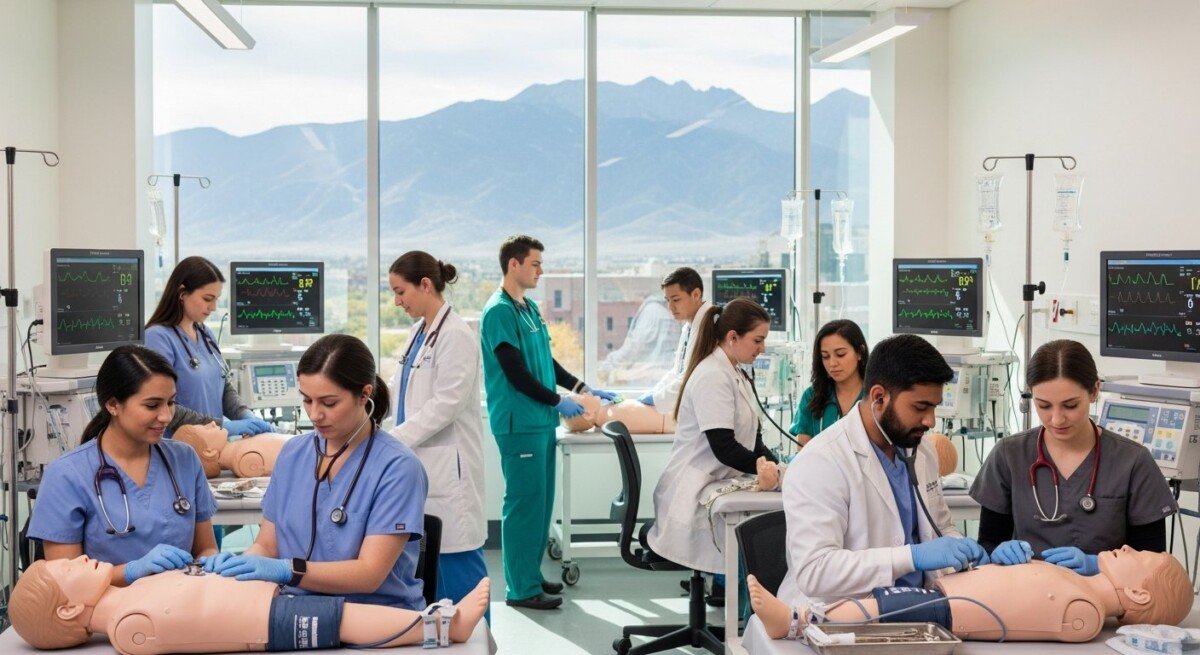
Nursing remains one of the most in-demand health professions, and Colorado’s nursing programs are consistently ranked among the best. The University of Colorado College of Nursing, part of the Anschutz Medical Campus, is a national leader, offering highly-rated Bachelor of Science in Nursing (BSN), Master of Science in Nursing (MSN), and Doctor of Nursing Practice (DNP) degrees. Their programs are known for advanced simulation labs and research integration. For those seeking a foundational degree, community colleges like Front Range Community College and Pueblo Community College offer well-regarded Associate Degree in Nursing (ADN) programs with strong NCLEX pass rates and articulation agreements with four-year universities for seamless BSN completion. For a deeper exploration of nursing pathways, our guide on navigating nursing degrees breaks down the academic choices in detail.
Allied Health and Clinical Doctorates
Beyond nursing, Colorado excels in training physician assistants, physical therapists, and occupational therapists. The University of Colorado’s Physician Assistant Program on the Anschutz Medical Campus is highly competitive and integrates medicine, surgery, and primary care. For physical therapy, the Doctor of Physical Therapy (DPT) programs at Regis University and the University of Colorado are renowned for their holistic approach and extensive clinical affiliations. Occupational therapy aspirants can look to Colorado State University’s highly-rated Master of Occupational Therapy (MOT) program, which emphasizes evidence-based practice and community engagement.
When evaluating these clinical doctorates and master’s degrees, accreditation is paramount. Always verify that the program holds accreditation from the relevant specialized body, such as the Commission on Accreditation in Physical Therapy Education (CAPTE) or the Accreditation Review Commission on Education for the Physician Assistant (ARC-PA). This ensures your degree will be recognized for licensure and by employers nationwide.
Critical Factors for Evaluating Program Quality
Selecting the right program involves more than just reviewing a ranking list. A truly highly-rated health profession degree meets several concrete benchmarks that directly affect your education and future career. Prospective students should conduct thorough research on the following key factors before applying.
First, investigate the program’s accreditation status. Regional accreditation of the institution is a baseline, but specialized programmatic accreditation is non-negotiable for clinical fields. This accreditation signifies that the curriculum, faculty, and resources meet national standards for the profession. Second, examine licensure exam pass rates and job placement statistics. Reputable programs transparently publish their graduates’ first-time pass rates on licensing exams (like the NCLEX for nurses or the PANCE for PAs) and often have placement rates well above 90%. These numbers are strong indicators of the program’s effectiveness.
Third, assess the depth and breadth of clinical placement opportunities. A program’s partnerships with hospitals, clinics, and community health centers determine the quality and variety of your hands-on training. Ask about the process for securing placements and whether the school has dedicated staff to coordinate them. Finally, consider faculty credentials and student support. Programs with faculty who are actively practicing in their field bring invaluable current knowledge. Robust student support, including tutoring, career counseling, and mental health services, is crucial for success in demanding health profession curricula. For those considering digital learning options, exploring academic program insights can provide valuable context on accredited online pathways that may complement or serve as an alternative to traditional programs.
Navigating Admissions and Prerequisites
Admission to top health profession programs in Colorado is competitive. Understanding and meticulously preparing for the requirements can significantly strengthen your application. While specifics vary by program and degree level, most share common foundational expectations.
Prerequisite coursework is the first major hurdle. Most programs require a strong foundation in the sciences, typically including:
- General Biology with lab
- General Chemistry with lab
- Human Anatomy and Physiology with lab
- Microbiology
- Statistics or Psychology
It is essential to check the specific course requirements for each program, as some may require organic chemistry, physics, or medical terminology. Aim for excellence in these courses, as your GPA in prerequisite science classes is often weighted heavily. Beyond academics, direct patient care or healthcare experience is a critical component of a strong application. Programs want to see that you understand the realities of the profession. This can be gained through work as a certified nursing assistant (CNA), emergency medical technician (EMT), medical scribe, or phlebotomist. Quality and duration of experience often matter more than sheer quantity.
Standardized tests may also be required. While some nursing programs are moving away from exams like the TEAS, many graduate-level programs (like PA, PT, and OT) require the GRE. Prepare thoroughly for any required exam. Finally, your personal statement and letters of recommendation are your opportunity to tell your story. Your statement should clearly articulate your motivation for entering the health profession, connect your experiences to your goals, and explain why you are a good fit for that specific Colorado program. Letters should come from professors who can speak to your academic abilities and supervisors from healthcare settings who can attest to your professionalism and patient care skills.
Frequently Asked Questions
What is the most affordable path to a health profession degree in Colorado?
For many, starting at one of Colorado’s community colleges is the most cost-effective strategy. You can complete prerequisite courses and earn an associate degree in fields like nursing, radiologic technology, or dental hygiene at a lower tuition rate, then enter the workforce or transfer to a four-year university to complete a bachelor’s degree.
Are there strong online options for health profession degrees in Colorado?
Yes, several Colorado institutions offer reputable online and hybrid programs, particularly for graduate degrees and career advancement. For example, registered nurses can often complete RN-to-BSN or MSN programs online through schools like the University of Colorado or Colorado Technical University. However, note that programs with clinical components will require in-person practicums arranged in your local area.
How important is the campus location within Colorado?
Location significantly impacts your clinical training and lifestyle. The Anschutz Medical Campus in Aurora is a massive healthcare hub, offering unparalleled access to specialty rotations. Programs in Denver, Colorado Springs, and Fort Collins offer urban hospital experience. Programs in Durango or Grand Junction, however, provide exceptional training in rural and frontier medicine, which is a major need in the state.
What health professions are in the highest demand in Colorado?
Consistent statewide demand exists for registered nurses, medical assistants, physical therapist assistants, and respiratory therapists. There is also a critical need for mental health professionals, including clinical social workers and psychiatric nurse practitioners, as well as for healthcare workers in rural and underserved communities.
Can I work while completing one of these degrees?
It is challenging but possible, depending on the program’s intensity. Many students in accelerated or full-time clinical programs find it difficult to maintain employment. However, students in part-time, online, or second-degree programs often balance work and school. Some healthcare employers even offer tuition assistance or flexible scheduling for employees pursuing advanced degrees.
Colorado’s commitment to health innovation and education creates a fertile ground for building a rewarding career in the medical field. By carefully researching accredited programs, understanding the admissions landscape, and aligning your goals with the right institution, you can invest in an education that prepares you not just for a job, but for leadership in the future of healthcare. The journey requires dedication, but the outcome, a highly-rated health profession degree from a Colorado institution, opens doors to a stable, impactful, and personally fulfilling career serving communities in need.