
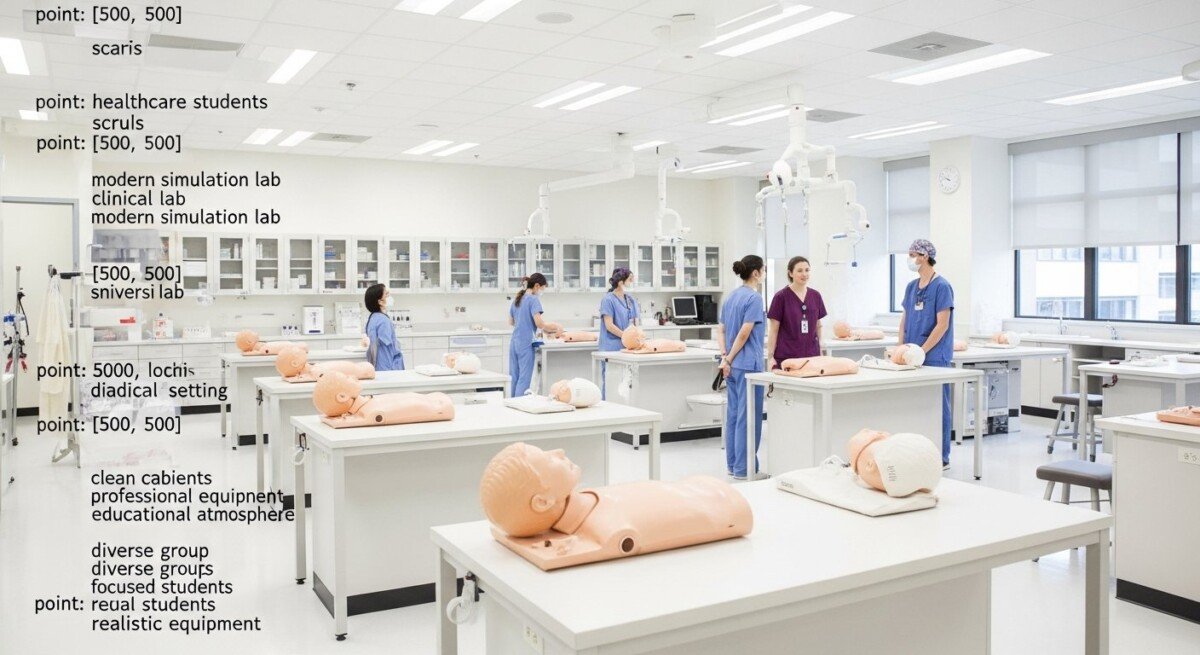
Top Health Profession Degrees in Louisiana: Accredited Programs
Explore accredited Louisiana health degrees in nursing, allied health, and public health that lead to high-demand, rewarding careers. These programs combine rigorous academics with essential clinical training.

By Jeffrey Hartford
Louisiana’s healthcare landscape is as vibrant and vital as its culture, fueled by a network of universities and colleges offering exceptional, accredited health profession degrees. For students and career-changers seeking a meaningful path in a high-demand field, the state presents a compelling array of options, from nursing and clinical lab science to public health and allied health specialties. These programs are designed not only to meet rigorous academic standards but also to address the specific health needs of Louisiana’s diverse population, creating graduates who are ready to make an immediate impact. Choosing the right program is a critical step toward a stable, rewarding career, and understanding the standout options available is the first move in that strategic planning process.
Why Pursue a Health Profession Degree in Louisiana?
The decision to enter the healthcare field in Louisiana is supported by powerful economic and societal trends. The state, like the nation, faces a growing demand for skilled healthcare professionals driven by an aging population, advances in medical technology, and an increased focus on preventative care. This demand translates into strong job security and competitive salaries for graduates. Furthermore, Louisiana’s unique public health challenges, from chronic disease management to rural healthcare access, provide a real-world laboratory for students to apply their learning and develop a deep sense of purpose. Many programs have strong partnerships with the state’s leading hospital systems, clinics, and public health organizations, including Ochsner Health, LCMC Health, and Our Lady of the Lake, ensuring that clinical training is both comprehensive and relevant.
Educational institutions across Louisiana have responded to this need by developing curricula that blend foundational science with hands-on, practical experience. Whether you aim to work directly with patients at the bedside, support diagnostic processes in a lab, or improve community health outcomes, there is a structured academic pathway available. The return on investment for these degrees is significant, often leading to careers that are both personally fulfilling and professionally resilient against economic shifts. For those considering online or hybrid formats to balance other commitments, several Louisiana schools offer flexible options for certain health professions, providing broader access to these quality programs. Exploring academic program insights can be a valuable part of your research phase when comparing delivery methods and accreditation.
Leading Universities and Their Signature Health Programs
Several Louisiana universities have established national reputations for excellence in health sciences education. Their programs are typically housed within dedicated schools or colleges, such as Schools of Nursing, Allied Health Professions, or Public Health, which concentrate resources and expertise.
Louisiana State University (LSU) Health Sciences Center in New Orleans is a powerhouse, exclusively focused on health education. It offers a wide spectrum of outstanding health profession degrees in Louisiana, including its highly regarded Doctor of Physical Therapy, Master of Physician Assistant Studies, and Bachelor of Science in Nursing programs. The School of Public Health at LSU also provides critical pathways in epidemiology, biostatistics, and health policy. Similarly, Tulane University’s School of Public Health and Tropical Medicine is internationally recognized, offering unique specializations in tropical medicine and disaster management that leverage its location and history.
The University of Louisiana at Lafayette’s College of Nursing & Health Sciences is a leader in nursing education, offering accelerated BSN tracks and a well-respected Master of Science in Nursing. For those interested in diagnostic fields, the university’s Medical Laboratory Science program is a standout. Northwestern State University of Louisiana is renowned for its robust and longstanding nursing program, which includes an innovative online RN to BSN pathway, making it a top choice for working professionals seeking advancement.
Key Health Degree Pathways and Career Outcomes
Prospective students should align their academic choices with their career interests and the specific licensing requirements of their desired profession. Some of the most prominent and impactful pathways include nursing, allied health, and public health.
Nursing remains the backbone of healthcare. Louisiana institutions offer a full ladder of nursing degrees: Associate Degree in Nursing (ADN) for quick entry, Bachelor of Science in Nursing (BSN) for broader preparation and leadership roles, and advanced practice degrees like Nurse Practitioner (NP) or Nurse Anesthetist (CRNA). A BSN, in particular, is increasingly the standard for hospital employment and is essential for those aiming for management or graduate study. The state’s nursing programs emphasize clinical reasoning and culturally competent care, preparing graduates for the realities of modern healthcare teams.
Allied health professions encompass a vast range of essential, non-physician roles. These are often excellent choices for students with strong science aptitudes who seek specialized, technical careers. Prime examples in Louisiana include:
- Radiologic Technology: Programs train students to operate imaging equipment like X-ray, CT, and MRI scanners. Graduates are in constant demand in hospitals and outpatient imaging centers.
- Clinical Laboratory Science (Medical Technology): These specialists perform the tests that diagnose disease and monitor treatment. Programs combine intensive lab coursework with clinical rotations.
- Respiratory Therapy: Therapists treat patients with breathing disorders, from asthma to COVID-19 complications. Louisiana programs include hands-on simulation and critical care training.
- Health Information Management: This field blends healthcare, IT, and business, focusing on managing patient data and medical records, a critical area in the digital age.
Public health degrees focus on population-level health, prevention, and policy. Graduates work for government agencies, non-profits, and healthcare organizations on issues like disease outbreak investigation, health education, and program management. These programs are ideal for systems-thinkers who want to impact community well-being on a large scale.
Accreditation and Licensure: Non-Negotiable Essentials
When evaluating any health profession degree, accreditation is the most critical factor. It is a seal of quality assurance that the program meets rigorous national standards for curriculum, faculty, and student outcomes. For health professions, specialized programmatic accreditation is often required for graduates to sit for their professional licensing exams. For example, nursing programs should be accredited by the Commission on Collegiate Nursing Education (CCNE) or the Accreditation Commission for Education in Nursing (ACEN). Physical Therapy programs require accreditation from the Commission on Accreditation in Physical Therapy Education (CAPTE).
Always verify a program’s accreditation status directly on the school’s website or the accrediting body’s official directory. Attending an unaccredited program can be a costly mistake, potentially rendering you ineligible for licensure and employment. Licensure is the legal requirement to practice in a specific health profession. Each state, including Louisiana, has its own licensing board (e.g., Louisiana State Board of Nursing, Louisiana State Board of Medical Examiners) that sets the criteria, which always includes graduation from an accredited program and passing a national certification exam. The connection is direct: no accredited degree, no license, no practice. This underscores why the quality of your academic program is the foundation of your entire career.
Financial Considerations and Support Resources
Investing in a health profession degree is a significant commitment, but numerous financial resources can help manage the cost. Beyond federal financial aid (FAFSA), Louisiana residents should explore state-specific programs. The Louisiana Board of Regents offers scholarships like the Taylor Opportunity Program for Students (TOPS) for eligible undergraduates. Many health programs, particularly in high-need areas like nursing and allied health, have dedicated scholarships funded by hospitals, foundations, and professional associations. For instance, the Louisiana Nurses Foundation and various hospital auxiliaries offer substantial awards.
Another strategic avenue is employer tuition assistance. Many major healthcare systems in Louisiana offer tuition reimbursement or forgivable loan programs for employees pursuing degrees in high-demand fields, often with a commitment to work for the organization for a specified period after graduation. This can be an excellent way to gain experience, fund education, and secure a job simultaneously. When researching programs, schedule an appointment with the university’s financial aid office and the specific department’s advisor to get a complete picture of the total cost and all available funding mechanisms. The long-term earning potential of most health professions often justifies the upfront investment, but prudent planning is essential.
Frequently Asked Questions
What is the fastest way to become a registered nurse (RN) in Louisiana?
The fastest traditional path is through an Associate Degree in Nursing (ADN), which typically takes two years. However, many hospitals now prefer or require a Bachelor of Science in Nursing (BSN). Accelerated BSN programs are available for students who already hold a bachelor’s degree in another field and can be completed in 12-18 months of intensive study.
Are there strong online options for health profession degrees in Louisiana?
Yes, many schools offer online or hybrid formats, particularly for degree completion (like RN to BSN), graduate nursing specialties, health administration, and public health. However, programs with extensive clinical or lab components, such as physical therapy or medical lab science, will always require significant in-person training. Always verify the on-campus requirements before enrolling.
How important is clinical placement, and how do schools handle it?
Clinical placement is paramount. Reputable programs have established relationships with clinical sites and coordinate placements for their students. When researching, ask about the variety of clinical sites (hospitals, clinics, community centers) and whether the school guarantees placement as part of the program. This is a crucial service that ensures you get the hands-on experience required for competence and licensure.
Which health professions are in the highest demand in Louisiana currently?
Consistent statewide demand exists for registered nurses (especially in critical care and emergency), nurse practitioners, physician assistants, medical laboratory scientists, respiratory therapists, and radiologic technologists. The need for mental health professionals, including counselors and social workers, is also growing significantly.
Can I start at a community college and transfer to a university for a health degree?
Absolutely. Many students begin with prerequisite science and general education courses at a Louisiana community college (like Delgado or Baton Rouge Community College) and then transfer to a four-year university for the professional phase of their program. This “2+2” pathway can be very cost-effective. It is vital to work closely with advisors at both institutions to ensure your courses will transfer and meet the specific requirements of your target health program.
Embarking on a health profession degree in Louisiana is a journey toward a career of service, stability, and scientific engagement. The state’s educational institutions provide the rigorous training and practical experience needed to excel in these vital roles. By carefully considering your interests, researching accredited programs, and leveraging available financial resources, you can position yourself for success in one of Louisiana’s most critical and rewarding sectors. The path requires dedication, but the outcome, a career dedicated to healing and helping, offers profound professional and personal rewards.