
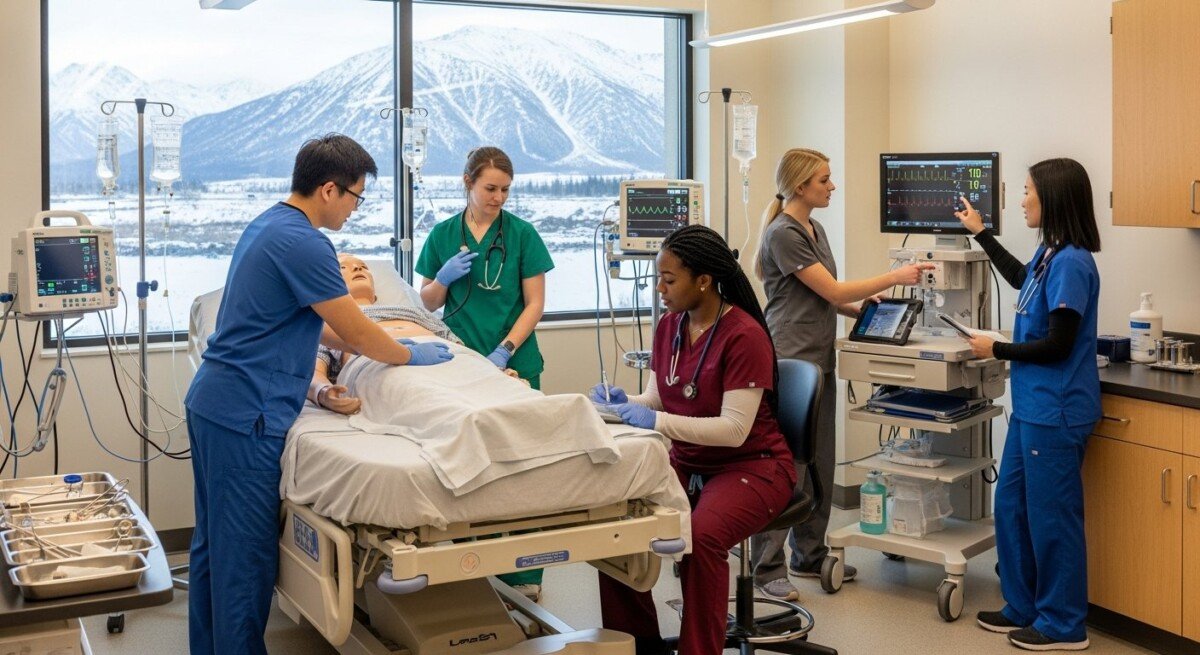
Top Health Sciences Degrees in Alaska: Programs and Careers
Explore accredited health sciences degrees in Alaska designed for local healthcare needs, leading to high-demand careers in nursing, allied health, and behavioral health.

By Jeffrey Hartford
Alaska’s unique and vast landscape presents distinct healthcare challenges and opportunities, creating a critical demand for skilled professionals across a wide spectrum of specialties. For those drawn to a career in healthcare within this remarkable state, pursuing one of the leading health sciences degrees available in Alaska is the foundational step. These programs are specifically designed to address local needs, from rural community health to the clinical demands of urban centers, while providing pathways to stable, rewarding careers. Whether you aim to work in a frontier clinic, a regional hospital, or in public health leadership, Alaska’s educational institutions offer robust, accredited programs to launch your journey. This guide explores the primary degree pathways, their career outcomes, and the strategic considerations for choosing the right program to meet both your professional ambitions and the needs of Alaska’s communities.
Understanding Alaska’s Healthcare Education Landscape
The structure of health sciences education in Alaska is shaped by the state’s geography and population distribution. Unlike more densely populated regions, programs often incorporate training for remote medicine, cultural competency with Alaska Native populations, and interdisciplinary practice. The University of Alaska system serves as the primary hub for higher education, with its main campuses in Anchorage (UAA), Fairbanks (UAF), and Juneau (UAS) each offering complementary strengths. Community campuses spread across the state provide essential access points for foundational coursework and certain certificate programs. This distributed model ensures that Alaskans can begin their education close to home, though advanced clinical degrees typically require study at a main campus or through carefully structured distance delivery with in-person intensives.
Accreditation is a non-negotiable factor when evaluating any health sciences program. It ensures the education meets rigorous national standards, which is essential for licensure, certification, and employment. Prospective students should verify that their chosen program holds specialized accreditation from the relevant professional body (e.g., the Commission on Collegiate Nursing Education for nursing, or the Commission on Accreditation of Allied Health Education Programs for various technologist roles). Many of Alaska’s flagship programs carry this specialized accreditation, a testament to their quality and alignment with professional requirements. The investment in an accredited program safeguards your educational investment and career mobility, potentially even allowing you to practice in other states through reciprocity agreements.
Key Health Sciences Degree Pathways in Alaska
Alaska’s institutions offer a tiered approach to health sciences education, from short-term certificates to doctoral degrees. The most prominent and in-demand pathways cluster around nursing, allied health, and behavioral health, reflecting persistent workforce needs.
Nursing: The Cornerstone of Alaskan Healthcare
Nursing programs represent the most comprehensive and varied health sciences pathway within the state. The University of Alaska Anchorage (UAA) College of Health is the epicenter for nursing education, offering a full continuum of degrees. At the undergraduate level, the Associate of Applied Science (AAS) in Nursing provides the fastest route to becoming a Registered Nurse (RN), while the Bachelor of Science in Nursing (BSN) is increasingly the preferred entry-level degree for its broader scope in public health, leadership, and theory. For RNs seeking to advance, UAA offers a streamlined RN-to-BSN program, often available online to accommodate working professionals. At the graduate level, the Master of Science in Nursing (MSN) prepares nurses for advanced practice roles, such as Family Nurse Practitioners (FNP), who are vital in providing primary care in underserved areas. Doctoral programs, including the Doctor of Nursing Practice (DNP), focus on the highest level of clinical practice and systemic leadership.
The curriculum in these programs is intentionally Alaskan-centric. Courses integrate topics like rural health delivery, telehealth applications for remote communities, and the health beliefs and practices of diverse cultural groups, particularly Alaska Natives. Clinical placements are arranged across the state, offering students unparalleled experience in settings ranging from large tertiary hospitals like Providence Alaska Medical Center to small village clinics. This direct exposure not only builds clinical skill but also helps graduates decide where they wish to build their careers. For a broader perspective on how nursing and health programs fit into regional educational ecosystems, our analysis of leading health degree programs in Minnesota highlights similar adaptations to local needs.
Allied Health and Clinical Support Degrees
Beyond nursing, a suite of allied health programs trains the essential technicians and therapists who support diagnostic, therapeutic, and rehabilitative care. These are typically two-year Associate of Applied Science degrees that combine classroom instruction with intensive hands-on labs and clinical internships. High-demand programs include the Occupational Therapy Assistant (OTA), Physical Therapist Assistant (PTA), and Dental Hygiene programs. For example, UAA’s Dental Hygiene program is renowned for its rigor and produces graduates who are immediately employable in dental practices across the Pacific Northwest and Alaska. Radiologic Technology is another critical program, training individuals to operate imaging equipment essential for diagnosis in every hospital.
These programs are characterized by competitive admission, often based on prerequisite GPA, interviews, and observation hours. Their strength lies in a direct career focus: graduates are prepared to sit for national certification exams and enter the workforce with a specific, licensed skill set. The job placement rates for these programs are consistently high, as Alaska’s healthcare employers actively recruit from these pipelines. The work is hands-on, technically demanding, and offers a direct, tangible impact on patient care, making it an excellent choice for individuals who enjoy applied science and patient interaction.
Selecting the Right Program for Your Goals
Choosing among the leading health sciences degrees available in Alaska requires careful self-assessment and research. The decision should balance personal career aspirations with practical realities like program duration, cost, delivery format, and licensure outcomes. A prospective student must ask foundational questions: Do you seek direct patient care or a role in health administration, laboratory science, or public health education? Are you prepared for the science-intensive prerequisites, such as anatomy, physiology, and microbiology, which are gateways to most clinical programs? What is your tolerance for relocating, as some programs may require moving to Anchorage, Fairbanks, or even out of state for specialized training not offered within Alaska?
Financial planning is a crucial component. While health sciences careers offer strong returns, the upfront cost of education can be significant. Students should exhaust all options for financial aid, scholarships specific to healthcare fields (such as those from the Alaska Native Tribal Health Consortium or the National Health Service Corps), and employer tuition assistance programs. Many Alaskan healthcare employers offer loan repayment or tuition support in exchange for a service commitment in a needed area, which can be a strategic way to fund education and secure employment simultaneously. Exploring academic program insights from reputable sources can provide valuable context on accreditation and online learning options that may complement local offerings.
To aid in the comparison process, here are key factors to investigate for any program:
- Accreditation Status: Confirm program-specific accreditation is current and from the recognized agency for that profession.
- Licensure Exam Pass Rates: Request data on the percentage of graduates who pass their required national certification or licensure exams on the first attempt.
- Graduation and Job Placement Rates: High rates indicate effective program support and strong employer connections.
- Clinical Placement Network: Understand where students complete their hands-on training and if the program secures these placements for you.
- Delivery Format: Determine if the program is fully on-campus, hybrid, or online, and how it accommodates students from remote areas.
Career Trajectories and Alaskan Opportunities
Graduates of Alaskan health sciences programs enter a job market with demonstrable needs. The Alaska Department of Labor and Workforce Development consistently projects healthcare occupations among the fastest-growing sectors in the state. This demand is driven by an aging population, high rates of certain chronic diseases, and the logistical challenges of providing care across immense distances. For clinical roles like Nurse Practitioners, Physician Assistants, and Radiologic Technologists, job opportunities exist in hospital systems (like Foundation Health Partners in Fairbanks or Bartlett Regional Hospital in Juneau), large multi-specialty clinics, tribal health organizations (like the Southcentral Foundation or Yukon-Kuskokwim Health Corporation), and in federal facilities such as VA clinics.
Salaries for health professionals in Alaska are generally competitive, often reflecting the cost of living and the need to attract talent. Many positions, especially in rural and remote areas, offer additional incentives such as signing bonuses, housing allowances, and generous paid leave. Beyond clinical roles, degree holders can branch into health administration, public health program management, health education, and health policy. These paths often require advanced degrees but allow professionals to impact population health on a broader scale, working for entities like the Alaska Department of Health and Social Services or non-profit health advocacy groups. The career trajectory is rarely static; a degree in health sciences provides a platform for lifelong learning, specialization, and leadership.
Frequently Asked Questions
Can I complete a health sciences degree entirely online while living in Alaska?
It depends on the program. While many prerequisites and some full degrees (like certain public health or health administration tracks) can be completed online, most clinical degrees (nursing, dental hygiene, therapy assisting) require significant in-person lab and clinical coursework. However, Alaskan institutions are leaders in distance delivery, often using a hybrid model where theory is online and clinical intensives are scheduled in blocks.
Are there specific scholarships for Alaska residents studying health sciences?
Yes. Numerous scholarships target Alaskan students in health fields. The Alaska Performance Scholarship (APS) is merit-based for recent high school graduates. The Alaska Health Education Program (AHEP) offers funding, particularly for students committed to working in underserved communities. Many of the state’s tribal health corporations also offer generous scholarships and stipends for members pursuing health careers.
What is the single most important factor for admission to competitive programs like nursing or dental hygiene?
A strong academic record in prerequisite science courses is paramount. Admissions committees heavily weigh grades in courses like human anatomy and physiology, chemistry, and microbiology. Beyond GPA, demonstrating relevant experience (such as work as a Certified Nursing Assistant) and a clear understanding of the profession through essays or interviews are critical differentiators.
How does licensure work for health professionals trained in Alaska if I move to another state?
Alaska’s accredited programs prepare you to sit for national exams. Licensure itself is state-based. Most states participate in the Nurse Licensure Compact (NLC) for RNs, but Alaska is not currently a member. For other professions, you would apply for licensure by endorsement in the new state, which typically requires verification of your Alaskan license and education. Graduating from a nationally accredited program streamlines this process significantly.
Are there accelerated or fast-track options for career changers?
Some options exist. UAA offers an Accelerated Associate of Applied Science in Nursing for individuals who already hold a bachelor’s degree in another field. Certain certificate programs, like Emergency Medical Technician (EMT) or Phlebotomy, can be completed in a single semester and provide a quick entry into the healthcare workforce while you pursue further education.
Embarking on a health sciences career in Alaska is a commitment to both personal professional growth and community service. The leading health sciences degrees available in Alaska are more than just academic programs, they are pipelines for the skilled, culturally responsive, and resilient workforce that the state’s healthcare system relies upon. By carefully selecting an accredited program that aligns with your goals and the state’s needs, you invest in a future where your skills will be valued, in demand, and deeply impactful. The journey requires dedication, but the reward is a stable, meaningful career at the forefront of caring for Alaska’s people.