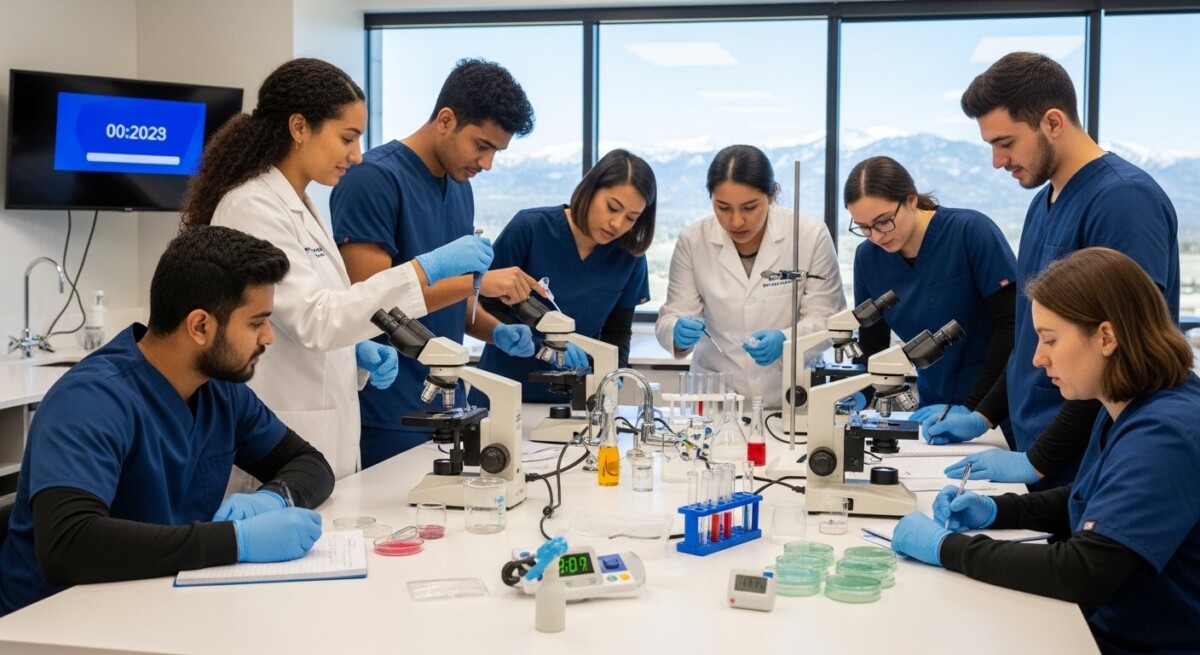
Wyoming, known for its vast landscapes and independent spirit, is also home to a robust and growing network of educational pathways designed to build the next generation of healthcare professionals. For students and career-changers looking to enter this vital, stable, and rewarding field, the state offers a surprisingly diverse array of excellent health sciences pathways in Wyoming. These programs, ranging from certificates to doctoral degrees, are strategically designed to meet urgent local and national workforce needs while providing graduates with the skills for immediate employment and long-term career advancement. Whether your goal is to work directly with patients in clinical care, support public health initiatives in rural communities, or contribute to medical research, Wyoming’s institutions provide accessible, high-quality education that serves as a powerful launchpad.
Understanding Wyoming’s Healthcare Landscape and Educational Response
Wyoming’s unique demographic and geographic characteristics create specific healthcare challenges and opportunities. As a largely rural state with an aging population, there is a persistent and critical demand for skilled health professionals across all disciplines. This demand is not just for doctors and nurses, but for a wide spectrum of roles including radiologic technologists, medical laboratory scientists, respiratory therapists, dental hygienists, and health information managers. State educational institutions, in close partnership with regional healthcare providers like Cheyenne Regional Medical Center, Wyoming Medical Center, and numerous critical access hospitals, have developed curricula that are directly responsive to these needs. This synergy ensures that graduates are not only academically prepared but are also trained on relevant technologies and protocols used in modern Wyoming healthcare settings, making their transition from classroom to career exceptionally smooth.
The economic case for pursuing a health sciences degree in Wyoming is compelling. Healthcare consistently ranks among the top employment sectors in the state, offering competitive salaries, strong job security, and opportunities for professional growth. Educational programs are often supported by state and federal grants aimed at bolstering the healthcare workforce, which can translate into scholarships, advanced training equipment, and lucrative clinical placement opportunities for students. Furthermore, many Wyoming pathways include built-in practical experience through clinical rotations, internships, and practicums across the state, allowing students to build a professional network before they even graduate. This practical focus is a hallmark of the state’s approach, ensuring that theoretical knowledge is consistently applied in real-world scenarios.
Key Institutions and Their Signature Health Sciences Programs
Wyoming’s higher education system, though concise, is mighty in its offerings. The University of Wyoming (UW) in Laramie serves as the state’s flagship public research university and the epicenter for advanced health sciences education. Meanwhile, the seven community colleges spread across the state form the backbone of accessible, career-focused training. Each institution has developed areas of particular strength, creating a cohesive educational ecosystem where students can start at a local college and seamlessly transfer to UW or enter the workforce at multiple exit points.
The University of Wyoming: A Hub for Advanced Study
The University of Wyoming’s College of Health Sciences is the central driver for baccalaureate and graduate-level health education. Its programs are comprehensive and research-informed. The Fay W. Whitney School of Nursing is renowned for its Bachelor of Science in Nursing (BSN), accelerated options for those with prior degrees, and family nurse practitioner graduate programs. The Division of Kinesiology and Health delivers strong programs in public health, promoting community wellness strategies crucial for rural populations. For those interested in the diagnostic side of medicine, UW offers rigorous tracks in Medical Laboratory Science and a highly competitive Doctor of Pharmacy program. These advanced degrees represent some of the most excellent health sciences pathways in Wyoming for students seeking leadership roles or specialized clinical practice.
Wyoming Community Colleges: The Foundation of Clinical Careers
Wyoming’s community colleges are where many of the state’s frontline healthcare workers begin their journeys. These colleges excel at providing associate degrees and certificates that lead directly to licensure and employment. Casper College, for instance, has distinguished programs in Radiography, Surgical Technology, and Dental Hygiene. Laramie County Community College in Cheyenne offers robust pathways in Nursing (ADN), Physical Therapist Assistant, and Health Information Technology. Western Wyoming Community College and others provide essential Certified Nursing Assistant (CNA), Emergency Medical Services (EMS), and Medical Assistant training. These programs are typically two years or less, are cost-effective, and have exceptional job placement rates, often exceeding 90% for graduates who pass their licensure exams. They are designed as both terminal degrees for immediate career entry and as transferable stepping stones to four-year institutions.
Strategic Academic Pathways from Entry to Advancement
The most successful students view their education as a strategic journey with multiple potential milestones. Wyoming’s system is built to support this phased approach. A common and highly effective pathway begins with completing prerequisite courses, such as anatomy, physiology, and microbiology, at one’s local community college. This saves significant cost while allowing the student to build a strong academic foundation. From there, the pathways diverge based on career goals.
For aspiring nurses, a classic route is to earn an Associate Degree in Nursing (ADN) at a community college, pass the NCLEX-RN to become a licensed Registered Nurse (RN), and begin working. While working, the RN can then enroll in an RN-to-BSN online completion program, many of which are offered by UW and are designed for working professionals. For aspiring therapists or technologists, completing an associate degree in fields like Physical Therapist Assistant or Radiography leads directly to a clinical career, with options later to bridge into a bachelor’s program for management or education roles. For those aiming for advanced practice, research, or leadership, the bachelor’s degree from UW is the essential undergraduate step before applying for competitive graduate programs in areas like medicine, pharmacy, or advanced public health. Understanding these structured progressions is key to efficient and successful academic planning.
Financial and Support Considerations for Health Sciences Students
Pursuing a health sciences degree is an investment, and Wyoming provides several tools to make it financially feasible. Beyond federal financial aid (FAFSA), students should actively seek out state-specific resources. The Wyoming Investment in Nursing (WYIN) program, for example, offers significant loan repayment for nurses who commit to working in the state. Many healthcare facilities offer tuition reimbursement or scholarship-for-service agreements, where they pay for education in exchange for a employment commitment after graduation. Wyoming’s community colleges have some of the lowest tuition rates in the region, making the initial stages of education highly affordable.
Academic and personal support is equally critical. Health sciences programs are rigorous. Utilizing campus resources like tutoring centers, writing labs, and academic advising from day one is non-negotiable for success. Many programs also have dedicated student success coordinators who understand the unique pressures of healthcare curricula. Furthermore, joining student organizations like the Student Nurses’ Association or a pre-health club provides networking, mentorship, and a vital support community. For those exploring the broader landscape of digital education options to complement their Wyoming-based training, valuable academic program insights can be found through dedicated online education resources. Prospective students should also thoroughly research program-specific accreditation (e.g., from the Accreditation Commission for Education in Nursing or the Commission on Accreditation of Allied Health Education Programs), as this is essential for licensure and professional mobility.
Future Trends and Emerging Opportunities in Wyoming Healthcare
The healthcare field is dynamic, and Wyoming’s educational pathways are evolving to prepare graduates for the future. Telehealth, which saw explosive growth out of necessity, is now a permanent and expanding component of rural healthcare delivery. Programs are increasingly incorporating telehealth competencies into their curricula. There is also a growing emphasis on interprofessional education, where nursing, pharmacy, therapy, and medical students train together to simulate real-world collaborative care teams. This approach improves patient outcomes and is highly valued by employers.
Another significant trend is the focus on behavioral and mental health. Wyoming, like much of the nation, faces a shortage of mental health professionals. In response, institutions are expanding programs and tracks in counseling, psychology, and psychiatric nursing. Public health education is also gaining prominence, with greater attention to epidemiology, health policy, and community health assessment, skills that were underscored by recent global health events. For students with an entrepreneurial spirit, these trends represent niches and specializations that can define a career. Staying informed about these shifts allows a student to choose electives, certifications, and clinical experiences that align with where the field is headed, ensuring their education remains relevant and their skills are in high demand for years to come.
Frequently Asked Questions
Can I complete any health sciences programs in Wyoming entirely online?
While many prerequisite and general education courses are available online, most clinical health programs (nursing, radiography, therapy assisting) require significant in-person laboratory work and mandatory clinical rotations at healthcare facilities. However, degree-completion programs, like the RN-to-BSN, and some public health or health administration tracks, can often be completed primarily or entirely online.
What is the job outlook for health sciences graduates in Wyoming?
The outlook is exceptionally strong. The Wyoming Department of Workforce Services consistently projects healthcare occupations among the fastest-growing and highest-demand fields. Aging demographics and rural healthcare needs ensure long-term stability for professions like nursing, medical imaging, and laboratory science.
How do I know which specific health career is right for me?
Start by researching job duties, work environments, and educational requirements. Many community colleges offer “exploratory” health courses or career counseling. Job shadowing is highly encouraged and often arranged through program advisors or local hospitals. Talking to current professionals is one of the best ways to gain realistic insight.
Are there accelerated programs for career-changers?
Yes. The University of Wyoming offers an Accelerated BSN option for individuals who already hold a bachelor’s degree in another field. Some community colleges also have fast-track options for certain certifications. These are intensive programs designed to leverage your previous academic experience.
What are the key steps for applying to competitive programs like nursing or radiography?
Competitive programs often have separate application processes beyond general college admission. Key steps include: 1) Completing all prerequisite courses with a high GPA (often a minimum of 3.0 or higher). 2) Taking a required entrance exam (like the TEAS for nursing). 3) Gaining relevant healthcare experience (e.g., as a CNA). 4) Securing strong letters of recommendation. 5) Submitting a thoughtful personal statement. Early and frequent communication with the program advisor is crucial.
Wyoming’s commitment to building a strong healthcare workforce is evident in the quality, accessibility, and strategic design of its educational offerings. The excellent health sciences pathways in Wyoming provide more than just a degree, they offer a clear route to a meaningful career that serves a critical need. By carefully selecting a program that aligns with personal goals and the state’s needs, leveraging financial and academic support, and engaging fully with the practical training components, students can position themselves for immediate success and a lifetime of professional growth. The journey begins with research and a commitment to joining one of the most respected and essential professions in the state and the nation.