
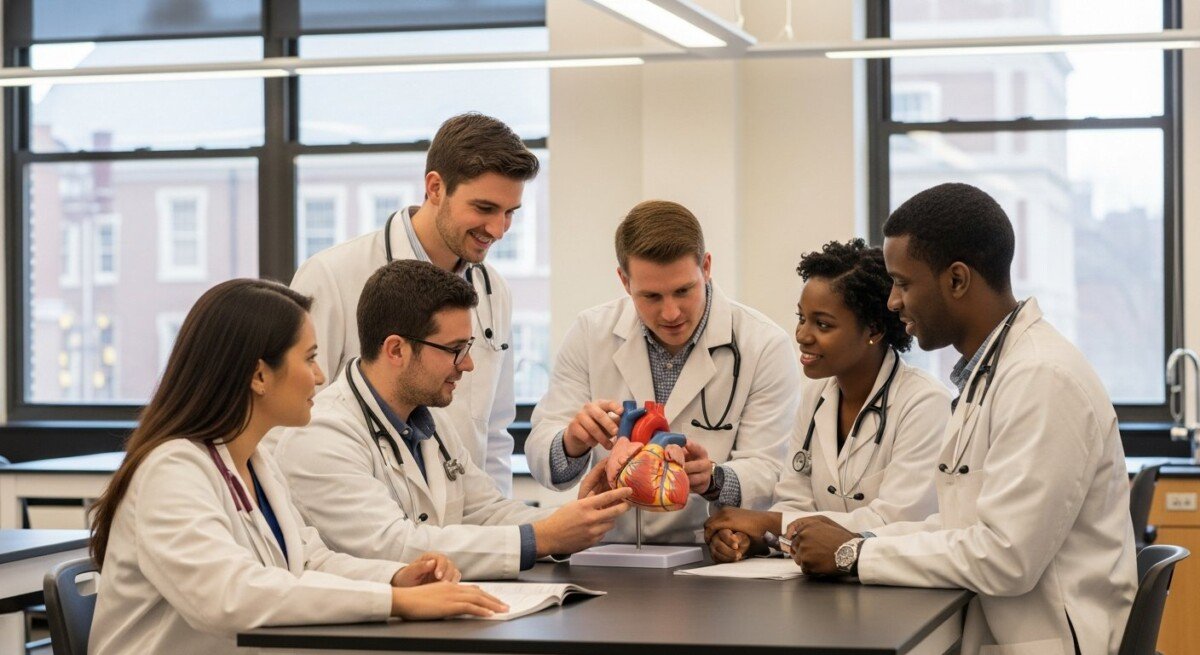
Top Health Sciences Programs in Massachusetts for Aspiring Professionals
Explore top-ranked health sciences programs in Massachusetts, known for elite clinical training and research access that launch successful healthcare careers.

By Natalie Simmons
Massachusetts stands as a global epicenter for healthcare innovation, education, and research, making it a premier destination for students pursuing careers in the health sciences. The state’s dense concentration of world-renowned universities, teaching hospitals, and biotech firms creates an unparalleled ecosystem for learning and professional development. For those aiming to enter fields like medicine, nursing, public health, biomedical research, or physical therapy, Massachusetts offers a breadth and depth of educational opportunities that are difficult to match. Choosing the right program, however, requires navigating a landscape of elite institutions, each with unique strengths, specializations, and pathways to success. This guide delves into the defining characteristics of the state’s top-tier health sciences education, providing a roadmap for prospective students to identify the program that best aligns with their career ambitions and academic goals.
The Massachusetts Advantage in Health Sciences Education
The commonwealth’s reputation in health sciences is built on a powerful trifecta: academic excellence, cutting-edge research, and direct access to a thriving healthcare industry. Institutions here are not isolated campuses but integral parts of a larger biomedical community. This integration means students often find opportunities for clinical rotations at top-ranked hospitals like Massachusetts General, Brigham and Women’s, and Boston Children’s Hospital, or research collaborations within the state’s famed Route 128 and Cambridge biotech corridors. This proximity to industry leaders provides practical, hands-on experience that is highly valued by employers. Furthermore, the collaborative spirit among Massachusetts institutions fosters interdisciplinary programs, allowing students in public health to work with medical students, or nursing students to engage with health policy researchers. This environment cultivates professionals who are not only technically skilled but also adept at working within the complex, team-based nature of modern healthcare.
When evaluating premier health sciences programs in Massachusetts, several key factors distinguish the best from the rest. Accreditation is paramount, ensuring the program meets rigorous national standards for curriculum and outcomes. The qualifications and research activity of the faculty are another critical indicator, as learning from leaders in their fields provides invaluable mentorship and networking. Prospective students should also closely examine clinical placement rates, research funding levels, and graduate outcomes, including licensure exam pass rates and employment statistics. The resources available, from simulation labs and cadaver facilities to partnerships with specialized clinics, directly impact the quality of training. Finally, the program’s philosophical approach, whether it emphasizes primary care, research translation, global health, or health equity, should resonate with the student’s personal career vision. A thoughtful assessment of these elements will lead to a more informed and successful application strategy.
Leading Institutions and Their Signature Programs
Massachusetts is home to a diverse array of institutions offering premier health sciences programs, each with a distinct profile. Harvard University, through its medical school, school of public health, and affiliated hospitals, sets a global standard for medical education and research. Its programs are characterized by immense research resources, a focus on translational medicine, and a commitment to tackling global health challenges. For students interested in the intersection of engineering and medicine, the Harvard-MIT Health Sciences and Technology program is a unique, collaborative endeavor that drives biomedical innovation.
Boston University houses a comprehensive medical campus that includes the School of Medicine, School of Public Health, and Henry M. Goldman School of Dental Medicine. BU is particularly noted for its emphasis on urban health and clinical care within diverse community settings. Its early medical school selection program and strong affiliations with Boston Medical Center, the city’s largest safety-net hospital, provide exceptional training in serving underserved populations.
The University of Massachusetts system is a powerhouse in its own right, offering accessible yet high-quality pathways. The UMass Chan Medical School in Worcester is a leader in primary care education and groundbreaking research in areas like gene therapy and RNA biology. UMass Amherst’s School of Public Health and Health Sciences and its Elaine Marieb College of Nursing are renowned for their research output and preparation of clinicians and public health practitioners. Similarly, the University of Massachusetts Lowell excels in allied health fields, offering strong programs in nursing, public health, and clinical laboratory sciences.
Northeastern University leverages its signature co-operative education model to provide health sciences students with up to 18 months of full-time, paid work experience integrated into their degree. This model is exceptionally valuable for fields like pharmacy, nursing, and health informatics, where practical experience is crucial. For those considering options in neighboring New England states, our guide on premier health profession degrees in Rhode Island offers a useful comparative perspective on regional programs.
Navigating Program Types and Specializations
The health sciences field encompasses a vast spectrum of careers, and Massachusetts institutions offer correspondingly specialized programs. Understanding the degree levels and focus areas is essential for targeted planning.
At the undergraduate level, Bachelor of Science degrees in fields like Nursing (BSN), Public Health, Biology with a pre-health track, and Medical Laboratory Science provide the foundational knowledge for direct entry into the workforce or for progression to graduate study. Many Massachusetts schools offer “direct-entry” or “accelerated” nursing programs for students holding a bachelor’s degree in another field, a popular option for career-changers.
Graduate and professional programs represent the pinnacle of training. These include:
- Medical Doctor (MD) and Doctor of Osteopathic Medicine (DO): The core degrees for physicians, requiring a rigorous four-year curriculum followed by residency.
- Doctor of Pharmacy (PharmD): Prepares students for licensure as pharmacists, with programs emphasizing patient care and pharmacology.
- Master of Public Health (MPH) and Doctor of Public Health (DrPH): Focus on population health, epidemiology, health policy, and environmental health.
- Doctor of Physical Therapy (DPT) and Doctor of Occupational Therapy (OTD): Clinical doctorates for rehabilitation professionals.
- PhD in Biomedical Sciences: Research-intensive degrees for those aiming for careers in academia, industry R&D, or government science agencies.
Specializations allow students to tailor their expertise. A nursing student might focus on becoming a Family Nurse Practitioner or a Nurse Anesthetist. A public health student could concentrate in Biostatistics, Global Health, or Health Policy Management. Many programs also offer dual-degree options, such as MD/MPH, MD/MBA, or DPT/PhD, which are highly attractive for students seeking to combine clinical practice with research, policy, or leadership skills. For broader academic program insights into online and hybrid learning models that complement traditional degrees, exploring dedicated educational resource sites is recommended.
The Admissions Landscape and Strategic Preparation
Gaining admission to a premier health sciences program in Massachusetts is highly competitive. Successful applicants typically present a strong academic record, with particular emphasis on performance in prerequisite science courses. Standardized test scores (MCAT, GRE, PCAT, etc., depending on the program) remain a significant component, though many schools are adopting more holistic review processes. Beyond numbers, admissions committees seek evidence of a genuine, sustained commitment to healthcare. This is demonstrated through meaningful clinical experience, such as working as an EMT, medical scribe, or hospital volunteer, as well as non-clinical community service and substantive research involvement. A compelling personal statement that articulates a clear motivation for the chosen field and connects the applicant’s experiences to their future goals is indispensable. Strong letters of recommendation from professors, clinical supervisors, or research mentors who can speak to the applicant’s capabilities and character round out a competitive application.
Prospective students should begin preparation early, ideally during their undergraduate years. This involves meticulously planning coursework to meet all prerequisites, seeking out relevant experiences that build a narrative of passion and skill, and cultivating relationships with potential recommenders. Visiting campuses, attending virtual information sessions, and, if possible, speaking with current students or alumni can provide crucial insights into program culture and fit. Financial planning is also a critical step, as health sciences education can be costly. Investigating scholarships, grants, loan repayment programs (especially for those committing to work in underserved areas), and assistantship opportunities is an essential part of the process. A strategic, well-organized approach to the entire admissions journey significantly increases the likelihood of acceptance into a top-tier program.
Frequently Asked Questions
What is the difference between a health sciences degree and a pre-med track?
A health sciences degree is a specific major, such as Public Health, Nursing, or Radiologic Sciences, that leads directly to a career in that field. A “pre-med” track is not a major itself but a set of prerequisite science and math courses required for medical school application. Students can major in any subject (Biology, History, Engineering) while completing the pre-med requirements.
Are online health sciences degrees from Massachusetts institutions respected?
Yes, many accredited Massachusetts universities offer respected online or hybrid programs, particularly at the graduate level (e.g., MPH, MSN, Health Administration). The key is to verify the program’s accreditation status, which ensures it meets the same standards as its on-campus counterpart. Employers generally value the institution’s reputation and the degree’s accreditation over the delivery format.
How important is the program’s affiliation with a teaching hospital?
Extremely important, especially for clinical programs like medicine, nursing, and physical therapy. Direct affiliation guarantees access to high-quality clinical rotation sites, exposure to a wide variety of patient cases, and opportunities to learn alongside practicing professionals. It often facilitates smoother transitions into residency programs or post-graduate employment.
What career support do these programs typically offer?
Top programs provide robust career services, including dedicated advisors for health professions, resume and interview workshops, networking events with alumni and employers, on-campus recruitment fairs, and assistance with licensing exam preparation and job placement. The strength of the alumni network is also a significant career support asset.
Is Massachusetts a good place to work after graduating from a health sciences program?
Massachusetts is one of the best places in the nation to launch a healthcare career. It has a high concentration of hospitals, research institutes, biotech and pharmaceutical companies, and public health organizations, leading to abundant job opportunities. The state also tends to offer competitive salaries for healthcare professionals, though the cost of living, particularly in the Boston area, is a factor to consider.
Choosing to pursue a health sciences education in Massachusetts is an investment in a future at the forefront of healthcare. The state’s rich academic ecosystem provides not just knowledge, but a transformative experience that connects classroom theory with real-world impact. By carefully researching programs, understanding admissions expectations, and aligning choices with personal passions, students can position themselves to thrive in this demanding and rewarding field. The journey through a premier program here is the first step toward a career dedicated to healing, discovery, and improving the health of communities locally and globally.