
Top Healthcare Degree Programs in Alabama for Aspiring Professionals
Explore the leading healthcare degree programs in Alabama, known for high licensure pass rates and strong clinical partnerships. Find the right fit to launch a stable, impactful career.

By Jeffrey Hartford
Alabama’s healthcare sector is a dynamic and growing field, offering stable careers with profound impact. For students and career-changers seeking to enter this vital industry, the state is home to several nationally recognized universities and colleges providing exceptional healthcare education. Choosing the right program is a critical decision that shapes your professional trajectory, clinical skills, and long-term opportunities. This guide explores the top-ranked healthcare degree programs in Alabama, examining what makes them stand out in terms of accreditation, clinical training, research, and graduate success to help you make an informed choice for your future.
Understanding Healthcare Education in Alabama
Alabama’s commitment to healthcare education is evident in its diverse array of programs, ranging from direct patient care roles like nursing and physical therapy to vital support fields such as health administration, public health, and biomedical sciences. The state’s institutions benefit from strong partnerships with major hospital systems, including the University of Alabama at Birmingham (UAB) Hospital, Children’s of Alabama, and the USA Health system in Mobile. These relationships provide students with unparalleled clinical experiences in diverse settings, from urban trauma centers to rural community clinics. When evaluating programs, prospective students should look beyond general rankings and consider factors specific to their desired career path, such as pass rates on licensure exams, the strength of alumni networks, and opportunities for hands-on learning from the earliest stages of the curriculum.
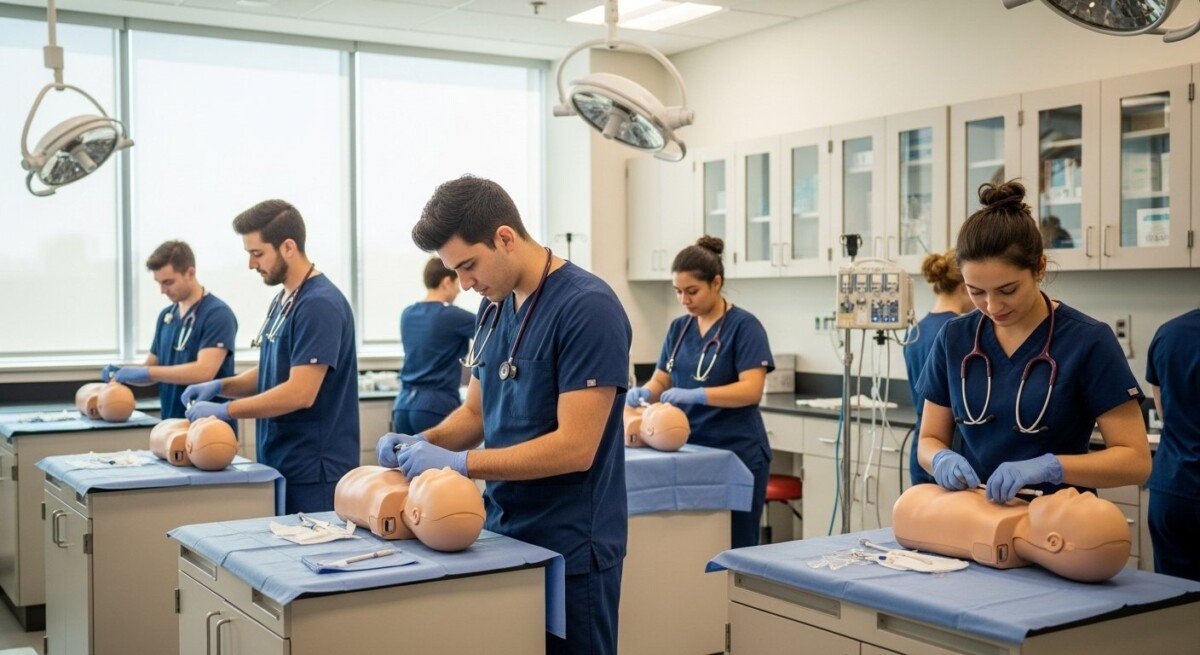
Accreditation is the non-negotiable foundation of any quality healthcare program. It ensures the curriculum meets rigorous national standards, that faculty are qualified, and that graduates are eligible for licensure and certification. In Alabama, you will find programs accredited by bodies like the Commission on Collegiate Nursing Education (CCNE), the Accreditation Council for Education in Nutrition and Dietetics (ACEND), and the Commission on Accreditation of Allied Health Education Programs (CAAHEP). Furthermore, the integration of technology and simulation labs has become a hallmark of top-tier programs, allowing students to hone skills in a risk-free environment before entering live clinical rotations. For those considering online or hybrid formats, especially in fields like health informatics or administration, verifying the program’s mode of delivery and support services is equally crucial.
Leading Institutions and Their Signature Programs
Several Alabama universities have established national reputations for excellence in healthcare education. Their programs are consistently highlighted for research output, student support, and graduate readiness.
The University of Alabama at Birmingham (UAB)
UAB is often considered the epicenter of healthcare education and research in the state. Its academic health center is a powerhouse, integrating the School of Medicine, School of Nursing, School of Health Professions, and School of Public Health. The School of Nursing offers highly ranked Bachelor of Science in Nursing (BSN), Master of Science in Nursing (MSN), and Doctor of Nursing Practice (DNP) programs, known for innovative simulation centers and strong outcomes. The School of Health Professions is one of the largest in the nation, offering unique programs such as a Doctor of Science in Occupational Therapy and advanced degrees in genetic counseling and biomedical sciences. UAB’s emphasis on interdisciplinary research means students often have opportunities to participate in groundbreaking studies.
The University of Alabama (Tuscaloosa)
The University of Alabama’s Capstone College of Nursing provides a robust BSN program with a high NCLEX-RN pass rate, a sign of excellent preparation for licensure. The college emphasizes leadership and community health. Furthermore, the University’s College of Human Environmental Sciences houses respected programs in athletic training and food and nutrition, which can serve as pathways to clinical careers. The collaborative environment and the resources of a major flagship university provide a comprehensive student experience. For those interested in the administrative side of healthcare, the Culverhouse College of Business offers relevant specializations that complement clinical degrees.
Auburn University
Auburn University’s College of Nursing delivers a traditional BSN program celebrated for its personalized attention and strong community partnerships across the state. The university also boasts a renowned Harrison School of Pharmacy, which offers a Doctor of Pharmacy (Pharm.D.) program with a focus on patient-centered care and rural health initiatives. Auburn’s programs are characterized by a tight-knit campus culture and a focus on applying knowledge through extensive clinical and experiential learning placements, preparing graduates to work effectively in team-based care environments.
Key Factors for Choosing Your Program
Selecting among the top-ranked healthcare degree programs in Alabama requires a personalized approach. Your decision should align with your career goals, learning style, and life circumstances. Here are the core factors to weigh during your research process.
First, investigate program outcomes. This data is often publicly available on program websites and is more telling than a general ranking. Look for first-time pass rates on required licensure or certification exams (like the NCLEX for nurses or board exams for therapists). High pass rates directly indicate effective curriculum and preparation. Also, examine job placement rates for graduates within six months to a year of completion. A strong program will have dedicated career support services and relationships with employers that facilitate these outcomes.
Second, assess the depth and quality of clinical experiences. Healthcare is a practice-based field. The best programs integrate clinical rotations early and often, exposing students to a variety of specialties and patient populations. Inquire about the network of clinical partners: are they limited to one city, or do they extend across the state into rural and urban settings? Does the program help secure placements, or is that responsibility left to the student? For insights into navigating program selection in other states, our guide on top health degree programs in Kansas outlines similar evaluation criteria that can be applied universally.
Third, consider format and flexibility. While many clinical degrees require significant on-campus or in-person training, an increasing number of programs offer hybrid or online options, particularly for graduate-level study in administration, informatics, or education. If you are an adult learner or balancing other responsibilities, this can be a decisive factor. Ensure any online program holds the same specialized accreditation as its on-campus counterpart. For broader academic program insights into accredited online pathways, dedicated educational resource sites can be invaluable.
To systematically compare your options, focus on these essential elements:
- Accreditation Status: Confirm specialized, programmatic accreditation is current and in good standing.
- Licensure Exam Pass Rates: Request data for the past 3-5 years to identify consistent performance.
- Clinical Placement Support: Determine the program’s role in securing and supervising practical experiences.
- Faculty Credentials: Look for instructors who maintain clinical practice or active research in their field.
- Total Cost and Financial Aid: Calculate tuition, fees, and associated costs, and explore scholarship and assistantship opportunities specific to the college.
Finally, if possible, visit the campus or attend a virtual information session. Speaking with current students and faculty can provide an unfiltered view of the program’s culture, workload, and support systems. This qualitative information, combined with the quantitative data, will give you the clearest picture of where you will thrive.
Frequently Asked Questions
What is the most in-demand healthcare degree in Alabama?
Nursing degrees, particularly the Bachelor of Science in Nursing (BSN), remain in extremely high demand across Alabama. The state, like the nation, faces a nursing shortage, and BSN-prepared nurses have the widest range of job opportunities and pathways for advancement. Other high-demand fields include physical therapy, occupational therapy, medical laboratory science, and health information management.
Are there strong online healthcare degree options based in Alabama?
Yes. Several Alabama universities offer reputable online healthcare degrees, especially at the graduate level. These include Master of Science in Nursing (MSN) specializations, Master of Health Administration (MHA), Master of Public Health (MPH), and Master of Science in Health Informatics. It is critical to verify that the online program holds the same specialized accreditation as the on-campus version.
How important is the program’s specific accreditation?
It is absolutely vital. Programmatic or specialized accreditation (different from general institutional accreditation) is required for graduates to sit for professional licensure or certification exams. Without a degree from an accredited program, you will not be eligible to practice in your chosen clinical field. Always confirm accreditation status directly on the accrediting body’s website.
What financial aid options are available for Alabama healthcare students?
Beyond federal loans and grants, Alabama students should explore state-specific programs like the Alabama Board of Nursing Scholarships and the Alabama GI and Dependents’ Educational Benefit Act. Many hospitals and healthcare systems also offer tuition reimbursement or loan forgiveness programs in exchange for a service commitment after graduation. Individual university departments often have scholarships for high-achieving or financially needy students in specific majors.
Can I start with an associate degree and advance later?
Absolutely. A common and cost-effective pathway is to earn an Associate Degree in Nursing (ADN) or a related field from a community college, begin working and gaining licensure, and then enroll in an RN-to-BSN or similar bridge program to complete a bachelor’s degree. Many Alabama universities have articulation agreements with community colleges to make this transition seamless.
Embarking on a healthcare career in Alabama means joining a community dedicated to improving lives. The state’s top-ranked programs provide the rigorous education, hands-on training, and professional networks needed to excel. By carefully evaluating your options based on accreditation, outcomes, clinical opportunities, and fit, you can select a program that not only launches your career but also fosters a lifetime of growth and service in this essential field. Your journey begins with thorough research and a clear vision of the impact you wish to make.