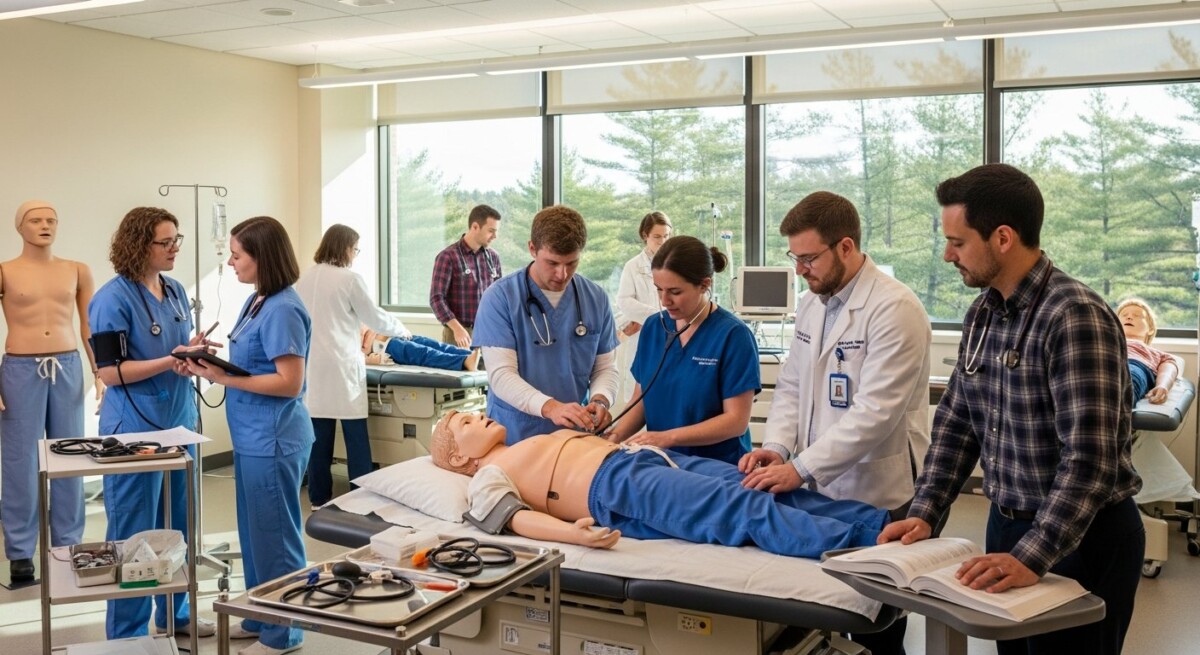
Maine’s healthcare sector is a cornerstone of its economy and community well-being, facing both unique challenges and opportunities that drive demand for highly skilled professionals. From the bustling medical centers in Portland to the rural clinics serving the state’s vast landscapes, a career in Maine healthcare offers meaningful impact and stability. For students and career-changers looking to enter this vital field, selecting the right educational pathway is the critical first step. This guide explores the top healthcare degree programs in Maine, providing a detailed overview of the institutions, specializations, and formats that can launch a successful career in nursing, allied health, public health, and clinical administration.
Understanding Maine’s Healthcare Education Landscape
Maine’s higher education system is tailored to address the state’s specific healthcare needs, including an aging population, rural access to care, and a growing focus on mental health services. Programs across the state are developed with direct input from regional employers like MaineHealth, Northern Light Health, and the VA Maine Healthcare System, ensuring curricula align with real-world demands. This close industry connection often translates into robust clinical placement opportunities and high post-graduation employment rates for students. When evaluating programs, prospective students should consider not just the degree title, but the program’s accreditation, partnership networks, and flexibility, especially for working adults. Many Maine institutions have pioneered hybrid and online formats to increase access without sacrificing the hands-on clinical experience essential for healthcare competence.
The state supports healthcare education through various initiatives and funding, recognizing it as a strategic priority. This creates an environment where programs are continually adapting, integrating new technologies like telehealth simulation and interprofessional education models. Whether your goal is to provide direct patient care, support clinical operations, or shape public health policy, Maine’s educational institutions offer pathways that are both rigorous and responsive to the evolving healthcare landscape. For a broader perspective on how regional needs shape education, our analysis of leading healthcare degree programs in Vermont highlights similar trends in New England.
Leading Institutions and Their Signature Programs
Several Maine universities and colleges have established national reputations for excellence in healthcare education. The University of New England (UNE), with campuses in Biddeford and Portland, is often at the forefront, particularly for its osteopathic medicine, nursing, and health professions programs. UNE’s College of Osteopathic Medicine is the only medical school in Maine and a primary supplier of physicians for the state and region. Their nursing programs, from BSN to Doctor of Nursing Practice (DNP), are known for simulation-based learning and community health focus. Another key player is the University of Southern Maine (USM), whose School of Nursing and Population Health offers strong bachelor’s and master’s programs with an emphasis on health equity and leadership, often featuring partnerships with Portland’s major medical centers.
Maine’s community college system, including Southern Maine Community College (SMCC) and Central Maine Community College (CMCC), provides critical entry-points through Associate Degree in Nursing (ADN), dental hygiene, medical assisting, and radiography programs. These two-year degrees are designed for swift entry into the workforce and often include seamless articulation agreements with four-year institutions for further education. For those interested in specialized allied health fields, Husson University in Bangor offers respected programs in nursing, occupational therapy, and healthcare administration, with a strong business-oriented approach. Saint Joseph’s College of Maine, renowned for its online reach, provides exceptional online RN-to-BSN, Master of Science in Nursing (MSN), and healthcare administration degrees, catering specifically to working professionals across the state and beyond.
Key Program Highlights and Specializations
Beyond the institutional overview, it’s valuable to examine specific program strengths. Maine’s top healthcare degree programs often excel in niche areas that match state needs. Psychiatric Mental Health Nurse Practitioner (PMHNP) programs, for instance, are in high demand, with several universities offering specialized tracks to address the mental health provider shortage. Public health and health sciences bachelor’s degrees provide a foundation for diverse careers in community health organizations, state agencies like the Maine Center for Disease Control and Prevention, and non-profits. Furthermore, programs in medical laboratory science, physical therapy assisting, and respiratory therapy offer high-demand, hands-on career paths with excellent job placement rates. Prospective students should look for programs with dedicated career support, licensure exam pass rates above the national average, and active alumni networks in their field of interest.
Choosing the Right Program Format: Online, Hybrid, and On-Campus
The delivery format of a healthcare degree is a crucial decision point, especially in a state like Maine where geography can be a barrier. Traditional on-campus programs offer immersive learning, direct access to faculty and campus resources, and structured clinical cohorts. This format is ideal for pre-licensure students in programs like nursing or radiologic technology, where hands-on labs and scheduled clinical rotations are integral. However, for registered nurses seeking a BSN or MSN, or professionals pursuing healthcare administration degrees, online and hybrid formats provide essential flexibility. Many of Maine’s top healthcare degree programs are available online, allowing students to balance work, family, and studies without relocating.
When considering an online program, accreditation is paramount. Ensure the program holds the same specialized accreditation as its on-campus counterpart. Also, investigate how clinical or practicum requirements are handled. Reputable online programs will have dedicated staff to help students secure placements in their local communities. Hybrid programs, which blend online coursework with occasional on-campus intensives or local clinicals, offer a middle ground, providing both flexibility and personal connection. This is a common model for graduate-level clinical specialties. Regardless of format, verifying that the program meets Maine’s specific licensure or certification requirements is a non-negotiable step. For those exploring digital learning pathways more broadly, academic program insights from trusted resources can help in evaluating accredited online options.
Career Pathways and Outcomes for Maine Graduates
Graduates from Maine’s healthcare programs enter a job market with strong demand. The Maine Department of Labor consistently projects healthcare occupations among the fastest-growing sectors. Career pathways vary significantly by degree level and specialization. Associate degree holders typically move directly into roles such as Registered Nurse (upon passing the NCLEX), radiologic technologist, or dental hygienist, often in hospital, clinic, or private practice settings. Bachelor’s degree graduates have wider options, including public health education, healthcare management entry-level positions, and nursing roles with greater leadership potential. Advanced practice roles, such as Nurse Practitioner, Clinical Nurse Specialist, or healthcare administrator, require a master’s or doctoral degree and offer higher compensation and autonomy.
Networking during your program is key to unlocking these opportunities. Maine’s healthcare community is interconnected, and clinical rotations often serve as extended job interviews. Many programs boast high job placement rates within six months of graduation, particularly for licensed clinical roles. Furthermore, Maine offers loan repayment programs and incentives for healthcare professionals who commit to working in underserved areas, which can be a significant financial benefit for graduates. The long-term career trajectory can include specialization through post-graduate certificates, moving into education to train the next generation, or assuming executive leadership within Maine’s healthcare systems.
Frequently Asked Questions
What is the most in-demand healthcare degree in Maine right now?
Nursing degrees, particularly the Bachelor of Science in Nursing (BSN) and advanced practice programs like Family Nurse Practitioner (FNP) and Psychiatric Mental Health Nurse Practitioner (PMHNP), are among the most in-demand. Allied health degrees, such as Medical Laboratory Science and Radiologic Technology, also show very high placement rates due to ongoing workforce shortages.
Can I complete a healthcare degree entirely online in Maine?
Yes, but with important distinctions. Fully online programs are common for post-licensure nursing degrees (RN-to-BSN, MSN), healthcare administration, and public health. However, programs that lead to initial clinical licensure (like a pre-licensure BSN or an Associate in Radiography) require significant in-person clinical or lab components, though the coursework may be offered in a hybrid or online format.
How important is program accreditation for healthcare degrees in Maine?
It is critical. Accreditation ensures the program meets quality standards and is required for graduates to sit for professional licensure exams (like the NCLEX for nurses). Look for specialized accreditation from bodies like the Commission on Collegiate Nursing Education (CCNE) for nursing, or the Commission on Accreditation of Allied Health Education Programs (CAAHEP) for allied health fields.
Are there financial incentives for healthcare students in Maine?
Yes. Maine offers several programs, including the Maine Health Care Provider Loan Repayment Program, which repays educational debt for professionals working in designated shortage areas. Many hospitals and health systems also offer tuition reimbursement or scholarship-for-service agreements for employees pursuing further education.
What should I look for in a program’s clinical placement support?
A strong program will have a dedicated clinical placement coordinator or office. Ask about their process for securing sites, whether they place students or require students to find their own placements, and the geographic range of their partner sites. This support is vital for completing degree requirements on time.
Embarking on a healthcare career in Maine begins with a strategic educational choice. The state’s top healthcare degree programs combine academic rigor with practical, community-focused training, creating professionals ready to meet local needs. By carefully considering your career goals, learning preferences, and the specific strengths of each institution, you can select a program that not only provides a credential but also serves as a true launchpad for a fulfilling and impactful career in one of Maine’s most essential fields.