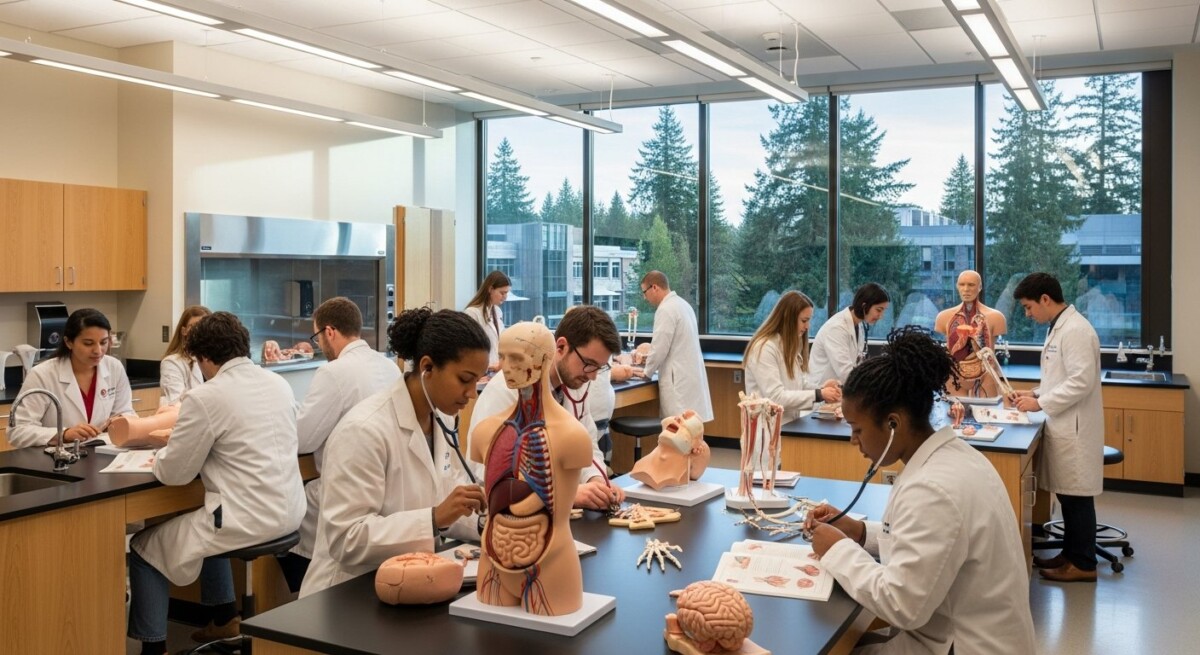
Oregon stands as a significant hub for healthcare education, offering a diverse and robust array of degree programs designed to meet the growing demands of the medical field. From the bustling urban centers of Portland and Eugene to the campuses in Corvallis and beyond, the state’s universities and colleges provide pathways for aspiring nurses, physicians, therapists, public health experts, and medical researchers. These leading medical and health degrees in Oregon are characterized by rigorous academics, hands-on clinical training, and strong connections to the state’s renowned healthcare institutions, preparing graduates for impactful and in-demand careers. Whether you are a high school graduate, a career changer, or a professional seeking advancement, understanding the landscape of Oregon’s health education offerings is the first critical step toward a fulfilling future in healthcare.
Oregon’s Premier Institutions for Health Sciences
Several Oregon universities have established national reputations for excellence in health education and research. Oregon Health & Science University (OHSU) is unequivocally the state’s flagship institution for medical training. Located in Portland, OHSU is a comprehensive academic health center that houses the state’s only medical school, dental school, and numerous top-tier graduate programs in nursing, pharmacy, and public health. Its integration with OHSU Hospital and a vast network of clinics provides students with unparalleled clinical exposure from day one. Beyond OHSU, Oregon State University (OSU) boasts a highly respected College of Public Health and Human Sciences, with strong programs in nutrition, exercise science, and health management. Its research in areas like environmental health and disease prevention is globally recognized.
Portland State University (PSU) complements this ecosystem with its School of Public Health and collaborative programs with OHSU, emphasizing urban health and community-based solutions. The University of Oregon, while not hosting a medical school, is a powerhouse in foundational sciences, human physiology, and communication disorders and sciences, feeding talented graduates into professional programs across the state and nation. Together, these institutions create a synergistic environment for health education, fostering innovation and collaboration across disciplines. For students, this means access to a wide network of expertise, research opportunities, and clinical placements that are critical for professional development.
Key Undergraduate Health Degree Pathways
For students beginning their academic journey, Oregon offers several foundational bachelor’s degrees that serve as springboards to advanced practice or direct-entry careers. A Bachelor of Science in Nursing (BSN) is one of the most sought-after and practical degrees, offered at institutions like OHSU, OSU, and the University of Portland. These programs combine rigorous science coursework with extensive clinical rotations, preparing graduates to sit for the NCLEX-RN licensure exam and enter the workforce as registered nurses. Another popular route is a Bachelor of Science in Human Physiology or Biology, commonly pursued at the University of Oregon or OSU. This degree provides the essential pre-medical or pre-health coursework required for application to medical, dental, or physical therapy school.
Other valuable undergraduate options include Public Health, which equips students to work on population-level health initiatives, and degrees in Radiation Therapy or Medical Laboratory Science, which lead directly to specialized technical roles. When selecting an undergraduate program, students should consider factors like the program’s accreditation, its direct admission policies for competitive majors, the strength of its pre-health advising, and its historic success rates for placing graduates into professional schools or jobs. A strategic approach to undergraduate education, as detailed in our guide on Academic Program Degrees: A Strategic Guide to Higher Education, is essential for building a competitive application for the next stage of training.
Graduate and Professional Programs for Advanced Careers
The depth of Oregon’s health education is most evident in its graduate and professional offerings. OHSU’s School of Medicine leads the state in training physicians through its MD program, known for its emphasis on patient-centered care, rural health, and early clinical immersion. Similarly, OHSU’s School of Dentistry offers the state’s only Doctor of Dental Medicine (DMD) program. For advanced nursing roles, OHSU and several other universities provide Master of Science in Nursing (MSN) and Doctor of Nursing Practice (DNP) degrees, enabling RNs to become Family Nurse Practitioners, Nurse Anesthetists, or Clinical Nurse Specialists. These advanced practice roles are in critical demand, especially in Oregon’s rural communities.
Other essential graduate programs include:
- Physician Assistant (PA) Programs: OHSU and Pacific University offer highly competitive master’s-level PA programs that train generalist medical providers in a shorter timeframe than medical school.
- Pharmacy (PharmD): OHSU’s College of Pharmacy prepares students for all aspects of medication therapy management and patient care.
- Physical Therapy (DPT) and Occupational Therapy (OTD): Pacific University and the University of Puget Sound (with a campus in Portland) offer renowned doctoral programs in these rehabilitative sciences.
- Master of Public Health (MPH): Offered at OHSU, PSU, and OSU, these programs specialize in epidemiology, health policy, and health promotion.
Admission to these programs is intensely competitive, emphasizing not only high GPAs and test scores but also substantial healthcare experience, compelling personal statements, and strong letters of recommendation. Prospective students should begin preparing years in advance, seeking relevant volunteer, shadowing, or work experience in Oregon’s diverse healthcare settings.
Online and Hybrid Learning Options in Health Fields
Recognizing the need for flexibility, especially for working professionals, many Oregon institutions have developed robust online and hybrid programs. These formats are particularly prevalent in fields like nursing, healthcare administration, and public health. For instance, RN-to-BSN completion programs are widely available online, allowing associate-degree nurses to earn their bachelor’s degree while continuing to work. Similarly, many MSN and DNP programs for nurse practitioners offer hybrid models, combining online coursework with in-person clinical intensives arranged in the student’s home community. OSU’s online MPH program is another standout, providing the same curriculum as its on-campus counterpart to students across the country.
These digital pathways are crucial for expanding access to education, addressing statewide workforce shortages, and allowing career advancement without relocation. When evaluating online programs, accreditation is paramount. Look for regional accreditation of the institution and program-specific accreditation from bodies like the Commission on Collegiate Nursing Education (CCNE) or the Council on Education for Public Health (CEPH). Additionally, verify how the program facilitates clinical placements, as securing these experiences is a vital component of any clinical degree. For those exploring digital education pathways more broadly, valuable academic program insights can be found through dedicated online education resources.
Career Outcomes and Oregon’s Healthcare Landscape
Graduates of Oregon’s medical and health programs enter a dynamic and needful job market. The state faces specific healthcare challenges, including an aging population, mental health crises, and healthcare access disparities in rural and underserved urban areas. This translates into strong demand for primary care providers, mental health professionals (psychiatric nurse practitioners, clinical social workers), medical technologists, and public health workers. Major employers include integrated health systems like Providence Health & Services, Kaiser Permanente Northwest, Legacy Health, and the VA Portland Health Care System, all of which have deep partnerships with the state’s educational institutions.
Salaries and career trajectories vary by role and specialization. Advanced practice providers like nurse practitioners and physician assistants often command strong starting salaries with significant growth potential. Clinical roles tied to specific technical skills, such as sonography or surgical technology, also offer stable, well-compensated career paths. Furthermore, Oregon’s focus on innovative care models, such as patient-centered medical homes and value-based care, is creating new roles in healthcare administration, data analytics, and population health management. A degree from an Oregon institution provides a network and a reputation that is highly valued within the state’s close-knit healthcare community, offering a significant advantage in the job market.
Frequently Asked Questions
What is the best pre-med major in Oregon?
There is no single “best” major. Medical schools accept students from any major, provided they complete the required science prerequisites (biology, chemistry, physics, math). Popular and effective choices at Oregon schools include Human Physiology, Biology, Biochemistry, and even non-science majors paired with a strong science foundation. Success depends more on academic excellence, MCAT scores, and relevant experiences than on the specific degree title.
How competitive are nursing programs in Oregon?
Direct-entry BSN programs at public universities like OHSU and OSU are extremely competitive, with acceptance rates often below 10%. Applicants need strong high school GPAs (or college GPAs for transfer students), prerequisite grades, and frequently, direct healthcare experience. Many students begin in a general science track or at a community college with an associate degree in nursing (ADN) before transferring or completing an RN-to-BSN program.
Are there specific scholarships for health students in Oregon?
Yes. Many institutions offer program-specific scholarships. Additionally, the Oregon Office of Student Access and Completion administers state-based grants. A significant opportunity is the Oregon Partnership State Loan Repayment Program, which offers loan forgiveness for healthcare providers who commit to working in federally designated Health Professional Shortage Areas within the state.
Can I become a doctor without attending OHSU?
While OHSU is Oregon’s only medical school, many Oregon residents successfully attend medical schools in other states. However, OHSU gives strong preference to Oregon residents, making it a primary target for in-state applicants. Building a competitive application for out-of-state schools requires exceptional academics and experiences, as those schools accept few non-residents.
What health degrees offer the quickest path to employment?
Associate degrees in nursing (ADN), radiologic technology, dental hygiene, and surgical technology typically take two years and lead directly to licensure and employment. Bachelor’s degrees in fields like Medical Laboratory Science or Respiratory Therapy also offer clear, direct pathways to in-demand jobs within four years.
Pursuing one of the leading medical and health degrees in Oregon is an investment in a stable and rewarding future. The state’s educational infrastructure, combined with its clear healthcare needs, creates a favorable environment for students to learn, train, and ultimately build their careers. By carefully researching programs, understanding admission requirements, and aligning your educational path with your long-term professional goals, you can effectively navigate Oregon’s rich landscape of health education. The journey demands dedication, but the outcome, a career dedicated to healing and improving community health, is a profoundly impactful one.