
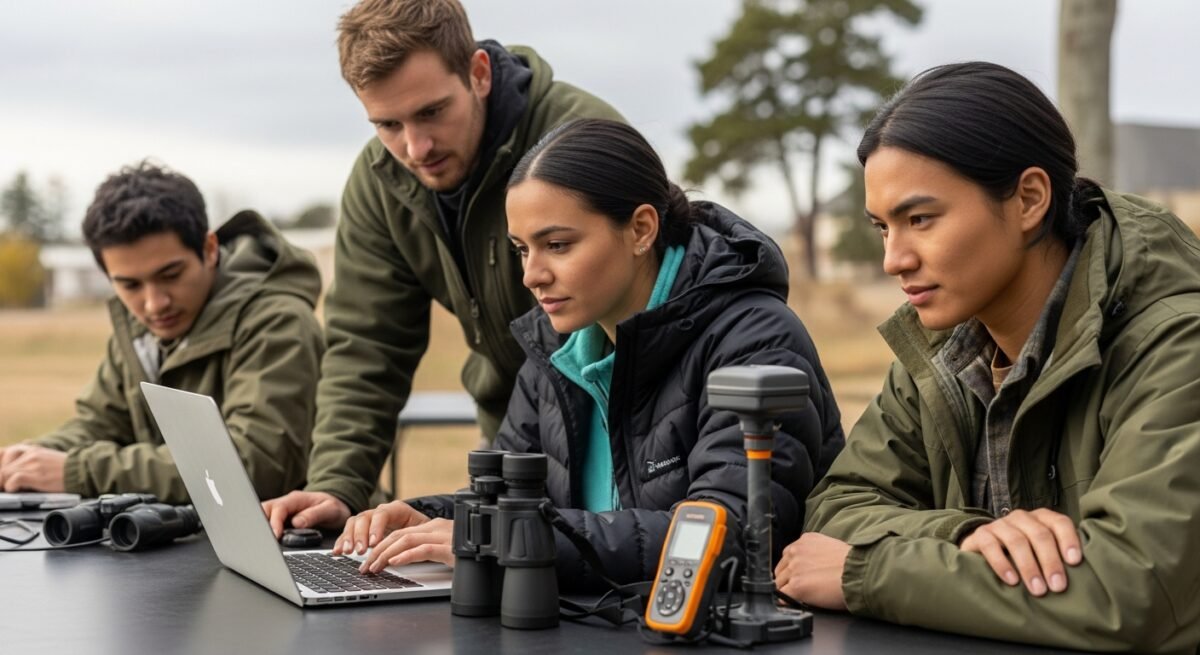
Top Wildlife Biology Colleges: Degree Programs and Career Paths
Discover the key factors that define top wildlife biology colleges, from field research access to career outcomes, to find the best program for your conservation goals.

By Stella Ward
Choosing the right college for a wildlife biology degree is a critical first step toward a career dedicated to studying and conserving the natural world. This decision goes beyond rankings, it involves finding a program whose location, research focus, faculty expertise, and hands-on opportunities align with your specific passions, whether that’s large mammal ecology, avian conservation, herpetology, or ecosystem management. The best colleges for wildlife biology degrees provide a rigorous scientific foundation in biology, chemistry, and statistics, coupled with unparalleled access to field sites and wildlife populations. This guide will help you navigate the key factors to consider and highlight exemplary programs that can launch your career in this vital and rewarding field.
What Defines a Top-Tier Wildlife Biology Program?
Not all biology programs are created equal when it comes to preparing students for careers in wildlife. A standout wildlife biology program is distinguished by several core components. First is a curriculum that balances deep theoretical knowledge with extensive practical application. Courses should cover essential topics like population ecology, wildlife management techniques, conservation biology, genetics, and habitat assessment. Secondly, the program must be housed within an institution that prioritizes and invests in environmental and life sciences, often indicated by dedicated research centers, modern laboratories, and managed natural areas.
Perhaps the most critical element is opportunity for experiential learning. The best wildlife biology colleges are often located in or near diverse ecosystems, providing a living laboratory for students. This could mean proximity to national parks, forests, coastal zones, deserts, or wetlands. Furthermore, strong programs have faculty who are actively engaged in research and often involve undergraduate students in their projects, from data collection in the field to analysis and publication. This hands-on experience is invaluable, transforming classroom concepts into tangible skills and making graduates highly competitive for jobs or advanced degree programs. For students considering foundational studies before a bachelor’s, exploring accredited online colleges for an associate’s degree in related sciences can be a strategic first step.
Key Factors to Evaluate When Choosing a School
Selecting the right wildlife biology program requires careful consideration of your personal career goals and learning style. You must look beyond a school’s general reputation to assess how its specific offerings match your aspirations.
One of the most important factors is specialization. Some programs have renowned strengths in specific areas, such as fisheries science, endangered species management, wildlife disease, or urban wildlife ecology. Review the research interests of the faculty to see if they align with your passions. Another crucial consideration is the program’s structure and requirements. Does it require a thesis or a senior capstone project? What are the mandatory field courses or internships? These requirements directly impact the depth of your experience.
Location is equally paramount. A program in the Rocky Mountains will offer different field opportunities than one on the Gulf Coast or in the Midwest prairie. Consider the biomes and species you are most interested in studying. Finally, assess post-graduate support. Look at the career placement services, the strength of the alumni network in conservation agencies (like the U.S. Fish and Wildlife Service, state DNRs, or NGOs), and the program’s track record for placing students into graduate schools. A strong program actively helps students bridge the gap between academia and professional employment.
Leading Undergraduate Programs for Wildlife Biology
Several institutions across the United States are consistently recognized for their exceptional undergraduate wildlife biology and fisheries & wildlife programs. These schools combine academic rigor with exceptional field resources and professional preparation.
The University of Montana, Missoula, houses the W.A. Franke College of Forestry & Conservation and offers a renowned Wildlife Biology degree. Its location at the gateway to vast wilderness areas provides unmatched field access. Colorado State University’s Warner College of Natural Resources is another powerhouse, offering a B.S. in Fish, Wildlife, and Conservation Biology with numerous concentration options. Its partnerships with federal agencies located in Fort Collins provide unique internship and career pathways.
On the East Coast, the University of New Hampshire’s B.S. in Wildlife & Conservation Biology leverages its diverse habitats from coast to mountains. The University of Florida’s Wildlife Ecology and Conservation program benefits from the state’s immense biodiversity and strong research infrastructure. For a broader perspective on academic planning across disciplines, many students find value in consulting independent education and degree resources to compare program structures and outcomes.
When evaluating these and other top programs, prospective students should look for the following key attributes that signal a quality education:
- Accreditation by relevant bodies like the American Fisheries Society or The Wildlife Society.
- Dedicated on-campus facilities, such as wildlife research centers, arboretums, or hatcheries.
- A clear pathway to completing the required coursework for becoming a Certified Wildlife Biologist.
- High rates of undergraduate participation in faculty-led research projects.
- Strong historical connections with state and federal wildlife agencies for internships.
These elements ensure that the degree is not just a piece of paper, but a comprehensive preparation for the challenges and rewards of a wildlife biology career.
Career Trajectories with a Wildlife Biology Degree
A degree in wildlife biology opens doors to a diverse array of careers focused on research, management, policy, and education. The path you choose often depends on the level of degree you attain and the specialized experience you gain during your studies.
With a bachelor’s degree, common entry-level positions include wildlife technician or biological science aide. These roles often involve hands-on work such as conducting animal surveys, tracking populations via radio telemetry, collecting habitat data, and assisting with research projects. Employers are typically state or federal resource agencies (e.g., U.S. Forest Service, Bureau of Land Management), consulting firms, non-profit conservation organizations, and zoos or wildlife rehabilitation centers. These positions are competitive, which is why the field experience from a top undergraduate program is so critical.
A master’s degree significantly expands opportunities, allowing for roles as a project leader, wildlife biologist, or conservation scientist. These professionals design studies, analyze complex data, write management plans, and often oversee field crews. A Ph.D. is typically required for high-level research positions at universities, federal research branches (like the U.S. Geological Survey), or for directing conservation science programs at major NGOs. Regardless of the level, successful wildlife biologists share a passion for the natural world, resilience for working in challenging outdoor conditions, and strong analytical and communication skills to translate science into actionable conservation strategies.
Frequently Asked Questions
What is the difference between a Wildlife Biology degree and a general Biology degree?
A general Biology degree provides a broad foundation in the life sciences. A Wildlife Biology degree is an applied specialization that focuses specifically on wild animal populations, their habitats, and the human dimensions of their management. The curriculum includes targeted courses in wildlife techniques, conservation policy, population dynamics, and habitat management that are not typically part of a general biology program.
Is a graduate degree necessary to get a good job in wildlife biology?
While many fulfilling technician jobs are available with a bachelor’s degree, a master’s degree has become the standard credential for most permanent, higher-responsibility positions as a wildlife biologist with agencies or NGOs. It allows for specialization and demonstrates advanced research and analytical capabilities. A graduate degree is highly recommended for long-term career advancement.
What can I do as a student to make myself more competitive for jobs or graduate school?
Gain as much hands-on experience as possible. Seek out summer internships, volunteer with faculty on research, work part-time with local conservation groups, and complete an independent senior thesis or capstone project. Developing strong skills in statistics, geographic information systems (GIS), and technical writing will also significantly boost your resume.
Are there strong online degrees in wildlife biology?
Due to the heavily field-based and hands-on nature of the discipline, quality fully online bachelor’s degrees in wildlife biology are rare. However, some universities offer online master’s degrees in conservation or wildlife management designed for working professionals. These often include short, intensive field sessions. For foundational science courses, online options exist, but the core of a reputable wildlife biology education requires in-person field and lab work.
Pursuing a degree in wildlife biology is a commitment to becoming a steward of our planet’s biodiversity. The journey begins with selecting an academic program that will not only teach you the science but also immerse you in the environment you wish to protect. By prioritizing schools with strong faculty mentors, robust field opportunities, and a proven track record of student success, you can build a solid foundation for a meaningful career. The best colleges for wildlife biology degrees are those that equip you with the knowledge, skills, and professional network to turn your passion for wildlife into impactful conservation action.