
Transforming Nursing Education: Keys to Outstanding Student Learning
Discover how modern nursing education moves beyond lectures to create immersive, adaptive learning. This approach develops clinical judgment and resilience for outstanding student outcomes.

By Emily Foster
The journey from nursing student to competent, compassionate registered nurse is one of the most demanding educational paths. It requires not just the memorization of facts, but the synthesis of complex knowledge, the mastery of nuanced clinical skills, and the cultivation of profound emotional intelligence. Achieving outstanding learning for nursing students, therefore, demands a pedagogical approach that moves far beyond traditional lectures. It requires an immersive, adaptive, and deeply supportive ecosystem that bridges the gap between theory and the unpredictable reality of patient care. This transformation is essential for preparing a resilient workforce capable of meeting modern healthcare’s immense challenges.
Building a Foundation of Active and Applied Learning
Passive learning models are insufficient for nursing. Outstanding education is inherently active, placing the student at the center of the experience where they must engage, analyze, and apply. This shift from “knowing what” to “knowing how” is fundamental. It begins in the classroom but must seamlessly extend into clinical and simulation environments. The goal is to develop clinical reasoning: the ability to gather cues, process information, understand a patient’s situation, plan and intervene, evaluate outcomes, and reflect on the process. This cognitive skill is the engine of safe and effective nursing practice.
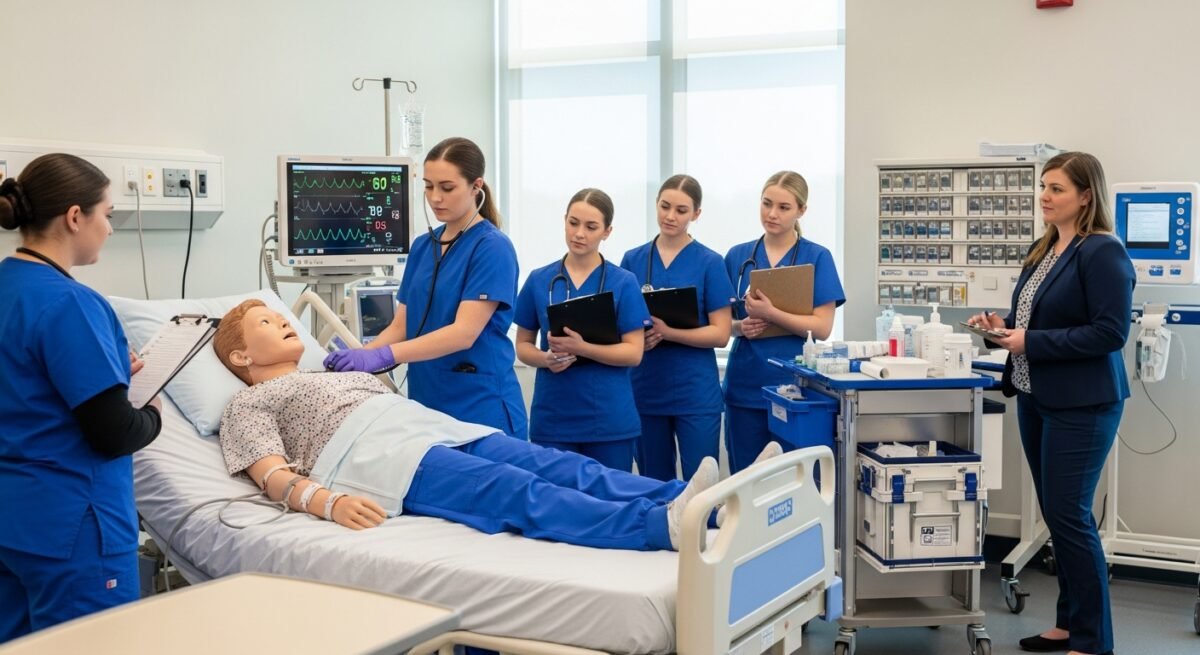
Strategies for active learning are diverse. Case-based learning presents students with real-world patient scenarios, requiring them to research conditions, debate interventions, and anticipate complications. Problem-based learning (PBL) takes this further, often presenting an ill-structured problem as the starting point for all learning, driving students to identify their own knowledge gaps and seek out information collaboratively. High-fidelity simulation is a cornerstone of applied learning. Modern manikins that breathe, bleed, and respond to medications allow students to practice critical skills, from managing a crashing patient to having difficult family conversations, in a psychologically safe space where mistakes are learning opportunities, not catastrophes.
Integrating Technology as a Cognitive Partner
Technology, when used purposefully, is a powerful catalyst for outstanding learning. It is not about flashy gadgets, but about tools that extend cognitive capacity, provide personalized feedback, and create accessible learning opportunities. For instance, augmented reality (AR) is changing the way students learn anatomy and procedures by overlaying digital information onto physical models or even a student’s own body, providing an intuitive, 3D understanding of physiological structures. Similarly, virtual reality (VR) can transport students into high-risk, low-frequency clinical environments, like a busy emergency department during a mass casualty event, to build situational awareness and decision-making under pressure.
Adaptive learning platforms use algorithms to tailor content to a student’s demonstrated proficiency, providing extra practice on weak areas and accelerating through mastered concepts. This personalization ensures that no student is left behind and that each is challenged appropriately. Furthermore, online learning modules and digital libraries provide the flexibility for students to review complex topics like pharmacology or pathophysiology at their own pace, freeing valuable classroom and lab time for higher-order application and discussion. The strategic use of these tools creates a blended learning environment that caters to diverse learning styles and schedules.
Cultivating Clinical Judgment Through Reflective Practice
The clinical setting is the ultimate crucible for nursing education. However, simply being present on a unit does not guarantee learning. Outstanding clinical education is structured, supervised, and deeply reflective. It requires prepared preceptors who understand their dual role as clinicians and educators, capable of moving beyond task delegation to fostering thinking. The use of structured frameworks, such as the Clinical Judgment Measurement Model (CJMM) or Tanner’s Clinical Judgment Model, gives students and preceptors a common language to deconstruct and discuss patient care decisions. These models emphasize noticing, interpreting, responding, and reflecting.
Reflection is the keystone habit for professional growth. Guided reflection exercises, whether through post-clinical conferences, journaling, or digital portfolios, force students to examine their actions, emotional responses, and decision-making processes. Questions like “What went well?”, “What would I do differently?”, and “How did the patient’s context influence my care?” transform experiences into lasting wisdom. This reflective practice builds the metacognitive skills necessary for lifelong learning and adaptation in a field where protocols and evidence are constantly evolving. It is the mechanism that turns a novice who follows rules into an expert who navigates nuance.
Fostering Resilience and Professional Identity Formation
Outstanding learning addresses the whole person. Nursing school is notoriously stressful, with high academic loads, emotional demands, and often significant personal sacrifice. A curriculum that ignores student well-being is setting both students and future patients up for difficulty. Intentional resilience training must be woven into the fabric of nursing education. This includes teaching practical stress-management techniques, mindfulness, and healthy coping mechanisms. It also involves creating a culture of peer support, where collaboration is valued over competition, and struggle is normalized as part of the learning process.
Equally important is the deliberate fostering of professional identity. Students need to internalize the values, ethics, and social contract of the nursing profession. This is achieved through exposure to nurse leaders, discussions of nursing history and advocacy, and service-learning projects that connect care to community needs. When students begin to see themselves not just as students passing tests, but as future stewards of a proud profession, their motivation and engagement deepen. They learn to navigate the ethical dilemmas and systemic challenges of healthcare with a strong moral compass and a sense of purpose that transcends the daily tasks.
To synthesize these elements, nursing programs committed to outstanding learning often implement a core set of pedagogical pillars. These pillars work in concert to create the robust educational experience modern nursing demands.
- Simulation-Enhanced Education: Utilizing low to high-fidelity simulators for repetitive skill practice, emergency response drills, and interprofessional team training in risk-free environments.
- Concept-Based Curriculum: Moving away from memorizing diseases to understanding overarching concepts (like fluid balance, inflammation, or cellular regulation) that can be applied across patient populations and lifespans.
- Clinical Immersion with Dedicated Preceptors: Partnering with healthcare agencies to provide consistent, high-quality clinical placements with nurses trained in educational coaching.
- Integration of Health Informatics and Data Literacy: Teaching students to use electronic health records effectively, interpret quality metrics, and understand how data drives evidence-based practice and patient safety initiatives.
- Intentional Academic-Practice Partnerships: Formal collaborations between schools and hospital systems to align curriculum with real-world needs, share resources, and smooth the transition from student to new graduate nurse.
The implementation of these pillars requires committed faculty who are themselves engaged in continuous development. Educators must be proficient in the latest clinical knowledge, but also in contemporary teaching methodologies and the educational technologies that support them. Investment in faculty development is a non-negotiable component of providing outstanding learning for nursing students.
Measuring Outcomes Beyond the NCLEX
While first-time NCLEX-RN pass rates are a crucial programmatic benchmark, outstanding learning is measured by a broader set of outcomes. True success is seen in the graduate who enters practice with confidence, clinical competence, and strong reasoning skills. Programs should track metrics such as employer satisfaction surveys, new graduate nurse retention rates at one year, and the graduates’ own self-assessments of preparedness. Additionally, assessing softer skills like communication, teamwork, and leadership potential provides a more holistic picture. The ultimate goal is to produce nurses who are not only safe practitioners but also adaptable, compassionate professionals ready to contribute to and lead the future of healthcare. This comprehensive approach ensures that the investment in education yields a tangible return in the quality of patient care and the strength of the nursing workforce.
The pursuit of outstanding learning in nursing education is a dynamic and essential endeavor. By embracing active learning, leveraging technology as a partner, deepening clinical judgment through reflection, and supporting the holistic development of the student, educators can transform the rigorous path to nursing. This creates a generation of nurses who are not merely trained, but truly educated, equipped with the knowledge, skills, and resilience to provide exceptional care and drive the profession forward. The future of healthcare depends on this commitment to educational excellence.