
What Are Professional Institute of Health Sciences Degrees?
Professional institute of health sciences degrees offer a direct, career-focused path to in-demand healthcare roles with hands-on training and strong industry connections.

By Jeffrey Hartford
Navigating the landscape of higher education in healthcare can be overwhelming, with countless degree types and institutional models. Among the most direct and career-focused pathways are degrees offered by professional institutes of health sciences. These specialized institutions are distinct from traditional four-year liberal arts colleges, designed with a singular mission: to efficiently prepare students for specific, in-demand roles within the vast healthcare sector. If your primary goal is to enter the workforce quickly with practical, accredited skills, understanding the value and structure of a professional institute of health sciences degree is a critical first step. These programs represent a pragmatic approach to education, where curriculum is tightly aligned with industry standards and clinical competencies, often leading to licensure or certification.
Defining the Professional Institute Model in Healthcare Education
A professional institute of health sciences is a post-secondary institution dedicated to training for healthcare professions. Its defining characteristic is a focused, applied curriculum that minimizes general education requirements in favor of intensive, hands-on training in a specific field. Unlike a university biology department that explores broad scientific principles, a professional institute for radiologic technology will concentrate exclusively on the physics of imaging, patient positioning, radiation safety, and clinical operation of equipment. This model prioritizes competency and employability, making it an attractive option for career-changers, adult learners, and those who have a clear vocational target.
The academic offerings at these institutes typically range from certificate and diploma programs to associate and bachelor’s degrees. Some may even offer master’s degrees in advanced clinical specialties. Common fields of study include nursing (RN and BSN), surgical technology, dental hygiene, diagnostic medical sonography, respiratory therapy, physical therapist assisting, medical laboratory technology, and health information management. The “professional institute” designation often implies a close relationship with the healthcare industry, including advisory boards staffed by practicing professionals, internships or clinical placements as a core component, and instructors who are often current practitioners themselves. This creates an educational environment that closely mirrors real-world clinical settings.
Key Benefits and Potential Considerations
Choosing a professional institute for your health sciences degree comes with a distinct set of advantages tailored to a specific type of learner and career objective. The primary benefit is speed to employment. Programs are often structured sequentially, with courses offered year-round, allowing students to complete degrees like an Associate of Applied Science in a condensed timeframe compared to a traditional college schedule. This accelerated path is a significant financial and temporal advantage for students eager to start their careers.
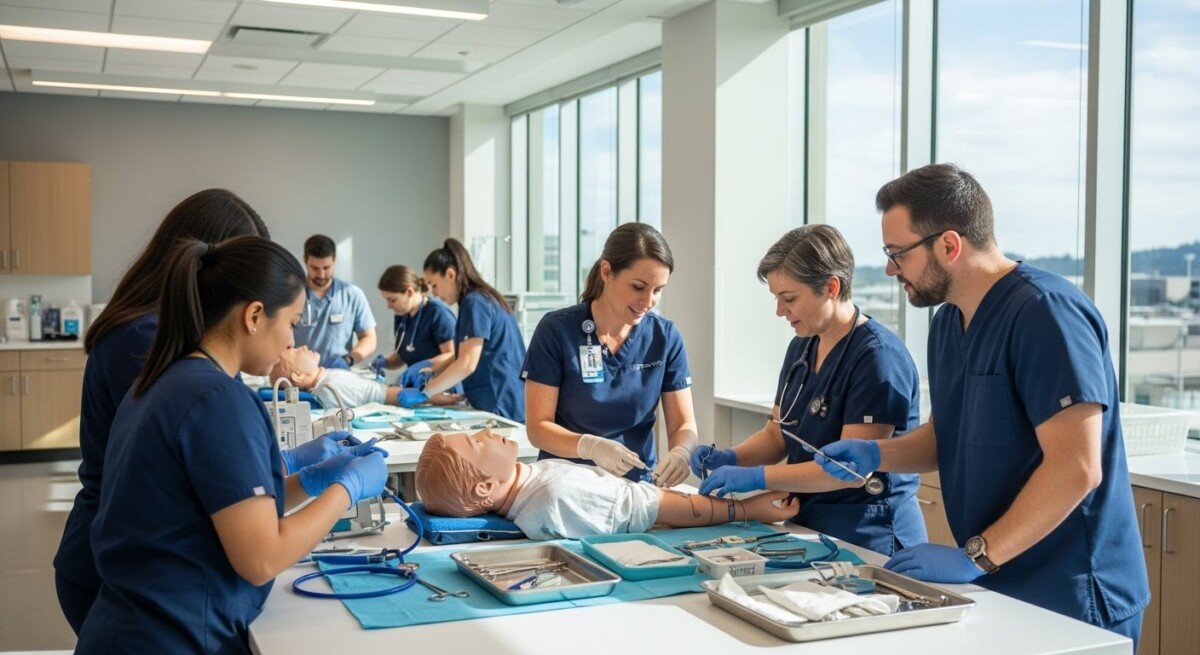
The curriculum is inherently career-focused. Every course is designed with direct professional application in mind. There is little to no ambiguity about how a class relates to your future job, which can be highly motivating. Furthermore, these institutes excel at providing hands-on experience. They frequently operate simulation labs with industry-standard equipment and secure extensive clinical rotation partnerships with local hospitals, clinics, and labs. This ensures graduates are not just theoretically knowledgeable but are also procedurally competent and familiar with workplace protocols from day one. Finally, student services at such institutes often emphasize career support, with dedicated staff assisting with resume writing, interview preparation, and job placement, leveraging their industry connections.
However, this focused model also presents considerations. The narrow curriculum means less exposure to a broad liberal arts education, which some employers and graduate schools may value for advanced roles. Transferability of credits can sometimes be a challenge if a student later decides to pursue a broader bachelor’s degree at a traditional university, though many institutes have articulation agreements to mitigate this. It is also paramount to verify accreditation, a non-negotiable step for any healthcare program. Prospective students must ensure the institute holds institutional accreditation from a recognized agency and, crucially, that the specific program holds programmatic accreditation from the relevant professional accrediting body (e.g., ACCSC, CAAHEP, ABHES). This is essential for eligibility for licensure exams and employment.
Before enrolling, a diligent prospective student should investigate several key aspects:
- Accreditation Status: Confirm both institutional and program-specific accreditation with the appropriate agencies.
- Licensure Exam Pass Rates: Request data on the program’s graduate success rates on required licensing or certification exams.
- Job Placement Rates: Ask for verified statistics on graduates employed in their field within a certain timeframe after completion.
- Clinical Partnership Quality: Inquire about the sites used for clinical rotations and the process for securing placements.
- Total Cost Analysis: Understand all tuition, fees, and equipment costs, and compare financial aid options.
Comparing Degree Levels and Outcomes
Professional institutes of health sciences offer a laddered approach to education, allowing individuals to enter the field at various levels and advance their credentials over time. Understanding the scope and outcome of each degree level is vital for effective academic planning.
At the foundation are certificate and diploma programs, which can often be completed in under a year. These are designed for specific technical roles, such as Phlebotomy Technician, EKG Technician, or Medical Assistant. They provide core skill training and lead directly to entry-level positions or can serve as a stepping stone into a longer degree program. The associate degree, typically an Associate of Applied Science (AAS), is the workhorse credential for many allied health professions. Programs like Radiologic Technology, Occupational Therapy Assistant, and Dental Hygiene usually require this two-year degree. It combines technical coursework with necessary science prerequisites and general education, culminating in eligibility for licensure.
For those seeking leadership, advanced practice, or specialization, bachelor’s and master’s degrees are available. An RN-to-BSN completion program is a common bachelor’s pathway at professional institutes, designed for licensed registered nurses aiming to advance. A Bachelor of Science in Health Information Management or Healthcare Administration is another example, opening doors to managerial roles. At the master’s level, institutes may offer degrees like a Master of Science in Nursing (MSN) for roles such as Nurse Practitioner, Clinical Nurse Specialist, or Nurse Educator. These advanced programs build deeply on clinical experience and prepare graduates for the highest levels of patient care autonomy or healthcare system leadership.
Integrating with Career Advancement and Continuing Education
The journey does not end at graduation for a healthcare professional. A hallmark of a quality professional institute of health sciences is its integration with lifelong learning and career advancement. The best institutes view their relationship with alumni as a long-term partnership. They often provide continuing education units (CEUs) required for license renewal, offering workshops, seminars, and online courses to help graduates stay current with medical advancements, technology, and changing protocols. This service is invaluable in a field where knowledge evolves rapidly.
Furthermore, the institute’s career services and alumni network become a permanent resource. As graduates move into supervisory roles, they frequently return to their alma mater to recruit new talent, creating a virtuous cycle of employment. For the individual professional, this network can be leveraged for job changes, mentorship, and professional collaboration. The institute’s focused reputation within the regional healthcare community can also serve as a persistent credential, signaling to employers a standardized level of training and competence. This ongoing support system transforms the degree from a one-time transaction into a foundational element of a sustained career trajectory, providing a clear path for returning to school for an advanced credential when the time is right.
Frequently Asked Questions
Are degrees from a professional institute of health sciences respected by employers?
Yes, they are highly respected, particularly within clinical and technical roles. Employers in hospitals, clinics, and labs actively seek graduates from these programs because they are trained on current equipment and understand workplace protocols. The key factor is accreditation: a degree from a properly accredited institute is valued equally to one from a traditional college program for entry into the profession.
Can I transfer credits from a professional institute to a traditional university?
This depends entirely on the receiving university’s policies and the accreditation of the institute. Credits from a nationally or regionally accredited institute are more likely to transfer, especially for general education and science courses. However, highly specialized technical courses may not fulfill requirements for a different major. It is essential to plan ahead and consult with advisors at both institutions if you anticipate transferring.
What is the difference between a “professional institute” and a “community college” health sciences program?
Both can offer excellent training. Community college programs are typically part of a public, broader educational system and may have lower tuition. They also emphasize credit transfer. Professional institutes are often private and singularly focused on career training, which can mean more intensive schedules, newer specialized equipment, and potentially more extensive industry connections for placements. The choice often comes down to cost, schedule flexibility, and specific program offerings.
How do I verify the accreditation of a professional institute?
First, check the institute’s website for accreditation information, but do not stop there. Verify the claims directly with the accrediting agency. For institutional accreditation, search the database of the U.S. Department of Education or the Council for Higher Education Accreditation (CHEA). For programmatic accreditation, identify the correct accreditor for your field (e.g., the Joint Review Committee on Education in Radiologic Technology for radiology programs) and check their official directory.
Are online degrees available from professional institutes of health sciences?
Yes, many institutes offer hybrid or fully online options, particularly for theory-based coursework in degrees like Health Administration, Health Information Management, or Nursing (RN-to-BSN). However, due to the hands-on nature of clinical skills, most programs with a patient-care component will require in-person lab sessions and supervised clinical rotations at an approved local facility, even if the didactic portion is online.
Ultimately, a professional institute of health sciences degree represents a strategic investment in a healthcare career. It provides a streamlined, practical, and efficient route to gaining the competencies that employers need. By prioritizing accredited programs, hands-on experience, and strong industry links, these institutions fulfill a vital role in training the skilled workforce that keeps our healthcare system functioning. For the student with a clear vision of their professional destination, this path offers a direct and powerful means to achieve it, combining academic knowledge with the immediate applicability required in today’s dynamic medical environments.