
What Defines a Leading University Nursing Department?
Leading university nursing departments are defined by exceptional clinical partnerships, research impact, and proven graduate outcomes. Discover the key attributes that set top-tier programs apart.

By Stacy Cignetti
Choosing where to pursue a nursing degree is one of the most consequential decisions for aspiring healthcare professionals. The reputation and quality of the nursing department you attend can profoundly impact your clinical skills, career trajectory, and ability to secure competitive positions. While rankings and name recognition often grab headlines, the hallmarks of truly leading university nursing departments run much deeper, encompassing a blend of academic rigor, clinical excellence, research innovation, and student support. Understanding these core attributes is essential for any student navigating the complex landscape of higher education in healthcare.
The Pillars of Excellence in Nursing Education
Leading university nursing departments are not defined by a single factor but by a synergistic combination of several foundational pillars. These pillars create an environment where students are transformed from learners into competent, compassionate, and critical-thinking nurses. First and foremost is an unwavering commitment to educational excellence. This is demonstrated through a curriculum that is both evidence-based and forward-looking, integrating the latest medical research, technological advancements in healthcare delivery, and evolving public health needs. The best programs constantly revise their coursework to address contemporary challenges, such as health equity, telehealth, and complex chronic disease management.
Another critical pillar is the quality and engagement of the faculty. Distinguished nursing departments are populated by educators who are not only expert teachers but also active contributors to their field. Many hold advanced practice certifications, conduct groundbreaking research published in top journals, and hold leadership roles in professional organizations. This means students are learning from individuals who are shaping the future of nursing practice at the bedside and in the policy arena. Furthermore, a low student-to-faculty ratio, particularly in clinical and lab settings, is a key indicator of a program’s commitment to personalized instruction and mentorship. This close guidance is invaluable for mastering complex hands-on skills.
Clinical Partnerships and Real-World Training
Theoretical knowledge is vital, but nursing is an inherently practical profession. Therefore, the breadth and quality of a department’s clinical partnerships are non-negotiable markers of leadership. Top-tier programs have established, long-term relationships with a diverse array of healthcare institutions. These include prestigious academic medical centers, specialized pediatric hospitals, community health clinics, veterans affairs facilities, and public health agencies. This variety ensures that students gain experience across the spectrum of care, from acute trauma and intensive care to long-term wellness and population health management.
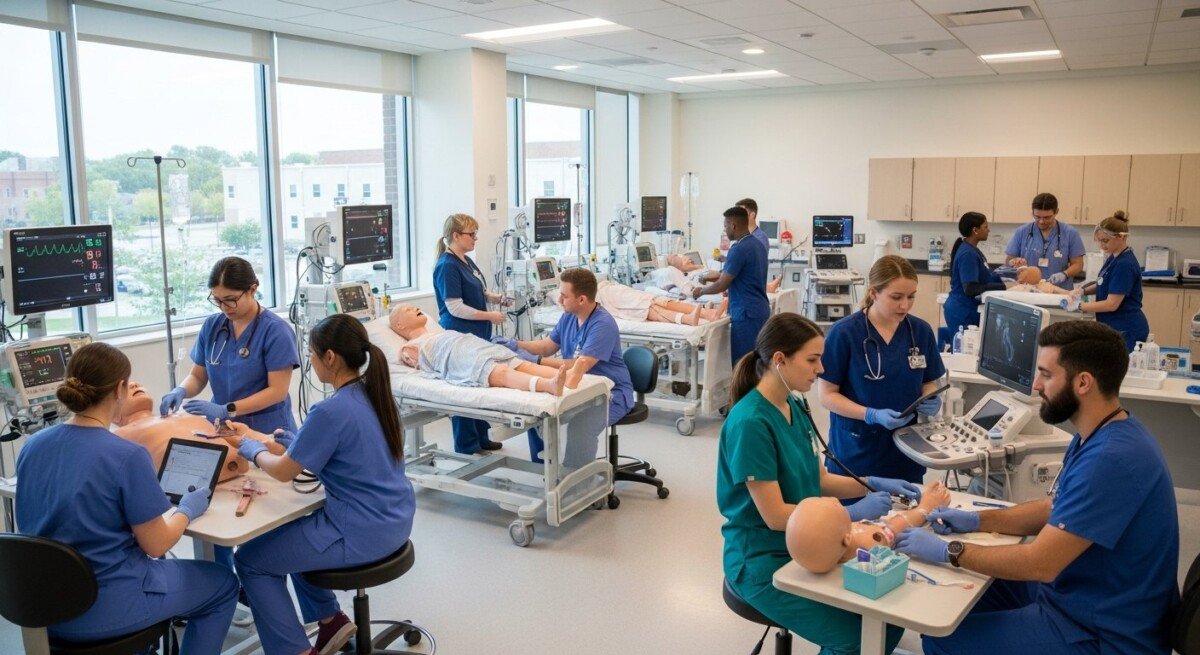
Access to these high-caliber clinical sites does more than provide training grounds, it opens doors for future employment. Preceptors at these sites are often leaders in their specialties, offering students unparalleled networking opportunities and insights into specialized career paths. The integration between classroom learning and clinical application is seamless in leading departments. Simulation labs play a crucial complementary role here, equipped with high-fidelity manikins and virtual reality systems that allow students to safely practice rare, high-risk procedures and develop clinical judgment before ever touching a patient. When evaluating programs, prospective students should closely examine the list of affiliated clinical sites and the structure of the clinical placement process.
Research Output and Scholarly Impact
For a university nursing department, a robust research enterprise is a powerful engine of innovation and prestige. Research-active departments contribute to the scientific foundation of nursing practice, improving patient outcomes and shaping healthcare policy. This activity directly benefits students, especially at the graduate level. Undergraduate students in these environments are often exposed to research principles and may have opportunities to assist with studies, while doctoral students are immersed in creating new knowledge. Key indicators of research strength include significant federal grant funding from sources like the National Institutes of Health (NIH), a high volume of publications in influential journals, and faculty who are fellows in the American Academy of Nursing.
The focus areas of a department’s research can also signal its leadership in specific niches. A department might be nationally recognized for its work in oncology nursing, health disparities research, gerontology, or nurse informatics. For students with a strong interest in a particular field, aligning with a department that is a research leader in that area can be transformative. It provides access to experts, specialized coursework, and thesis or dissertation projects that are at the cutting edge. This scholarly environment fosters a culture of inquiry where students are taught not just to follow protocols, but to question and improve them.
Student Support and Career Outcomes
A leading department distinguishes itself not only by how it teaches students but also by how it supports them throughout their educational journey and beyond. Comprehensive student support systems are a hallmark of quality. This includes dedicated academic advisors who provide proactive guidance, tutoring centers for challenging subjects like pharmacology or pathophysiology, and wellness resources that address the significant stress associated with nursing programs. Financial support in the form of scholarships, fellowships, and graduate assistantships is another critical component, making advanced education accessible and reducing student debt burden.
The ultimate measure of a program’s success, however, is the performance of its graduates. Exceptional nursing departments boast outstanding outcomes data that they transparently share. Prospective students should look for:
- First-time NCLEX-RN pass rates consistently well above the national average for pre-licensure programs.
- High job placement rates within six months of graduation, often with premier healthcare employers.
- Strong alumni networks that provide mentoring, job referrals, and continuing education opportunities.
- Career support services including resume workshops, interview coaching, and dedicated job fairs with major hospital systems.
These outcomes are the result of the entire educational ecosystem working effectively. A strong career services office actively cultivates relationships with employers, while the program’s reputation ensures its graduates are highly sought after. Alumni success, in turn, reinforces the program’s prestige and creates a virtuous cycle of excellence.
Considering Accreditation and Program Format
No evaluation of a nursing department is complete without verifying its accreditation. Regional institutional accreditation is a baseline, but specialized programmatic accreditation from the Commission on Collegiate Nursing Education (CCNE) or the Accreditation Commission for Education in Nursing (ACEN) is essential. This accreditation signifies that the program meets rigorous national standards for curriculum, faculty, and student resources. It is also often a prerequisite for federal financial aid, state licensure, and further graduate study.
In today’s educational landscape, leading departments also excel in offering flexible program formats to meet diverse student needs. This includes well-developed online RN-to-BSN programs for working nurses, accelerated BSN tracks for career-changers with existing bachelor’s degrees, and hybrid graduate programs that blend online coursework with limited on-campus intensifications. The best of these programs ensure that online students receive the same quality of instruction, access to faculty, and support services as their on-campus peers. The ability to deliver high-quality education across multiple modalities is a key differentiator for modern, leading university nursing departments.
Frequently Asked Questions
How important are national rankings when choosing a nursing program?
Rankings can be a useful starting point for identifying well-regarded programs, but they should not be the sole deciding factor. They often heavily weight research expenditures and reputation surveys. A better approach is to use rankings to generate a list, then deeply investigate each program’s specific strengths, such as clinical partnerships in your area of interest, faculty expertise, student support, and outcomes data, to see if they align with your personal and professional goals.
What is the difference between CCNE and ACEN accreditation?
Both are respected national accreditors for nursing education. CCNE typically accredits bachelor’s, graduate, and residency programs, often at universities. ACEN accredits a wider range of programs, including practical nurse diplomas and associate degrees. For a university nursing department, CCNE accreditation is most common. The critical point is that the program holds one of these specialized accreditations, ensuring it meets professional standards.
Should I prioritize a BSN from a leading department over a more local ADN program?
This depends on your career goals and circumstances. A BSN from a leading department provides a strong foundation for a long-term career, immediate eligibility for magnet hospital jobs, and a streamlined path to graduate study. However, an Associate Degree in Nursing (ADN) from a quality community college can be a faster, more affordable route to RN licensure, after which you can pursue an RN-to-BSN online, potentially from a leading department. Many top-tier university nursing departments have articulation agreements with community colleges for this very pathway.
What questions should I ask on a campus tour of a nursing department?
Ask about student-to-faculty ratios in clinical settings. Inquire about how clinical placements are assigned and the variety of sites available. Request to speak with current students about their experiences with faculty accessibility and support services. Ask for detailed outcomes data (NCLEX pass rates, job placement rates). Finally, ask about opportunities for undergraduate research or specialization within the program.
How can I assess the strength of a department’s alumni network?
During your research, check if the department or university hosts alumni events or networking mixers specifically for nursing graduates. Look at where recent graduates are employed (often posted on program websites). See if the career services office facilitates connections between current students and alumni mentors. A strong, active network is a significant asset for job searches and career advancement long after graduation.
Identifying a leading university nursing department requires looking beyond surface-level prestige. It involves a careful analysis of how the program integrates curriculum, clinical experience, research, and student support to produce exceptional nurses. By focusing on the pillars of excellence, the quality of clinical training, research activity, and tangible graduate outcomes, you can make an informed choice that aligns with your aspirations. The right department will not just educate you, it will empower you to launch a meaningful and impactful career at the forefront of healthcare.