
What Defines a Superior Healthcare Education Degree?
Superior healthcare education degrees prepare graduates for leadership and complex clinical roles through rigorous curriculum and exceptional hands-on training.

By Benjamin Clarke
The healthcare landscape is evolving at a breathtaking pace, driven by technological innovation, demographic shifts, and a growing emphasis on patient-centered care. In this dynamic environment, the value of a healthcare degree is no longer measured solely by the credential it confers, but by the depth of competency, adaptability, and leadership it instills in graduates. Pursuing a superior healthcare education degree is therefore a strategic investment, one that transcends basic qualification to prepare professionals for the complexities and opportunities of modern medicine, nursing, administration, and allied health. These programs distinguish themselves through a rigorous, forward-looking curriculum, exceptional clinical training, and a steadfast commitment to developing practitioners who are not just skilled, but transformative.
The Hallmarks of an Exceptional Healthcare Program
Identifying a truly superior program requires looking beyond rankings and brochures to evaluate core educational components. The foundation of any top-tier healthcare degree is a curriculum that is both scientifically rigorous and dynamically responsive to industry trends. This means moving past rote memorization to foster critical thinking, clinical reasoning, and ethical decision-making. Courses should integrate the latest evidence-based practices, health informatics, and interdisciplinary perspectives. For instance, a modern nursing program will deeply incorporate telehealth competencies, while a health administration degree must address data analytics and value-based care models. The curriculum should feel challenging yet relevant, clearly connecting theoretical knowledge to real-world application from the very first semester.
Furthermore, the quality of faculty is paramount. Instructors should be active contributors to their fields, whether through clinical practice, published research, or health policy work. Their expertise brings invaluable current context to the classroom. Similarly, accreditation is a non-negotiable baseline. Regional accreditation for the institution and program-specific accreditation from bodies like the Commission on Collegiate Nursing Education (CCNE) or the Commission on Accreditation of Healthcare Management Education (CAHME) provide essential assurance of educational standards and are often required for licensure and certification. A superior program transparently showcases these credentials.
Clinical and Experiential Learning: The Bridge to Competence
Healthcare is a practice-based field, and no amount of classroom instruction can replace hands-on, supervised experience. Superior healthcare education degrees are characterized by robust, high-quality clinical placements and experiential learning opportunities. These are not merely check-box rotations but are carefully designed, sequential experiences that build a student’s confidence and skill set. Key differentiators include partnerships with leading hospitals, specialty clinics, public health organizations, and outpatient centers. These partnerships provide students with exposure to diverse patient populations, cutting-edge medical technology, and complex healthcare systems.
The structure of this training is critical. Effective programs provide:
- Early and Sustained Exposure: Integrating clinical hours early in the program, rather than relegating them to the final year.
- Dedicated Preceptorships: Pairing students with experienced mentors for one-on-one guidance in real clinical settings.
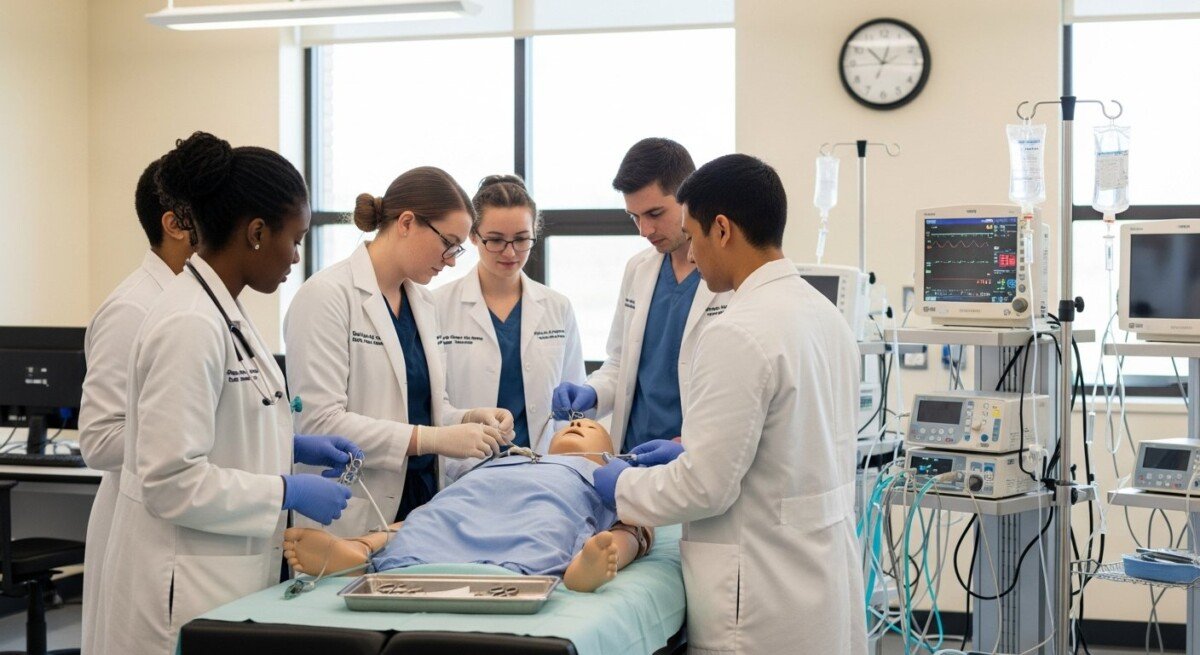
- Simulation-Based Training: Utilizing high-fidelity manikins and virtual reality to safely practice high-risk, low-frequency procedures and develop soft skills like teamwork and communication.
- Interprofessional Education (IPE): Creating learning experiences where nursing, medical, pharmacy, and social work students collaborate, mirroring the team-based care model of modern healthcare.
This immersive approach ensures that graduates are not just theoretically prepared but are practice-ready, able to navigate the realities of patient care with professionalism and poise from day one.
Specializations and Pathways for Career Advancement
A one-size-fits-all approach is inadequate for today’s specialized healthcare industry. Superior programs offer clear pathways for specialization, allowing students to tailor their education to specific career goals. This is evident across all degree levels. At the graduate level, this might mean a Master of Science in Nursing (MSN) with tracks to become a Family Nurse Practitioner, Nurse Anesthetist, or Clinical Nurse Leader. In health administration, an MHA or MBA may offer concentrations in healthcare analytics, policy, or operations management.
For those seeking the pinnacle of clinical or academic expertise, doctoral programs like the Doctor of Nursing Practice (DNP) or PhD in a health science represent the apex of superior healthcare education. These degrees focus on translating research into practice, leading quality improvement initiatives, and shaping health policy. The flexibility of program delivery is also a marker of quality. While on-campus programs offer rich networking and immersion, many superior degrees are now available in hybrid or fully online formats designed for working professionals. These programs maintain rigor through synchronous sessions, intensive on-campus residencies for skills labs, and carefully coordinated local clinical placements, proving that format does not dictate quality.
Evaluating Outcomes and Return on Investment
The ultimate test of any educational program is the success of its graduates. Prospective students should scrutinize outcome data as a key indicator of program quality. Superior programs proudly and transparently publish metrics that speak to their effectiveness. These include first-time pass rates on licensing and certification exams (NCLEX-RN for nurses, PANCE for physician assistants, etc.), which are direct measures of how well the curriculum prepares students for professional standards. Job placement rates within six months to a year of graduation are equally telling, indicating strong industry relationships and a respected reputation.
Beyond initial employment, consider the long-term career trajectory of alumni. Do they advance into leadership roles, secure competitive residencies, or contribute to their fields through research? Many programs facilitate this through active career services departments and powerful alumni networks. These networks provide mentorship, job leads, and professional community, extending the value of the degree far beyond graduation. When evaluating cost, view tuition through the lens of this return on investment: a slightly higher tuition at a program with a 98% NCLEX pass rate and 95% job placement may offer far greater value than a cheaper alternative with weaker outcomes. Understanding the full spectrum of degree options is crucial for this evaluation. Our resource on higher education degrees explained provides a foundational guide to navigating credential pathways.
Frequently Asked Questions
Q: Are online healthcare degrees considered as good as traditional on-campus degrees?
A>Yes, when offered by properly accredited institutions. Many top universities now offer online or hybrid healthcare degrees that are identical in curriculum and credential to their on-campus counterparts. The key is ensuring the program has structured, supervised clinical placements and any required on-campus intensives for hands-on training.
Q: How important is program-specific accreditation for healthcare degrees?
A>It is critically important. For clinical degrees leading to licensure (nursing, occupational therapy, physician assistant, etc.), programmatic accreditation is often mandatory to sit for the licensing exam. For non-clinical degrees (health administration, public health), it signals that the program meets rigorous national standards for quality and relevance, which is highly valued by employers.
Q: What should I look for in a program’s clinical placement support?
A>Look for programs that have a dedicated clinical placement office and a history of securing placements for their students. You should ask if they place students in a variety of settings (hospitals, community clinics, specialty centers), if placements are guaranteed as part of the program, and what support is provided if a student needs a placement in a different geographic area.
Q: Can I work full-time while pursuing a superior healthcare education degree?
A>Many programs, especially at the graduate level, are designed for working professionals. Accelerated, part-time, and online formats can provide flexibility. However, the time commitment for clinical hours, labs, and study is significant. It requires careful planning and, often, a reduction in work hours, particularly during intensive clinical rotations.
Q: What is the difference between a research-focused PhD and a practice-focused doctorate like the DNP in nursing?
A>A PhD in a health field is a research doctorate designed to prepare scholars who will conduct original research, secure grant funding, and teach at the university level. A practice doctorate like the DNP is a clinical doctorate focused on translating existing research into evidence-based practice, leading quality improvement projects, and assuming advanced clinical or systems leadership roles. Both are terminal degrees but serve different career paths.
Choosing the right healthcare education is a decision that shapes not only your career but also your capacity to impact patient lives and health systems. A superior healthcare education degree provides more than a diploma, it forges a professional identity built on expertise, ethical grounding, and a commitment to lifelong learning. By prioritizing programs with rigorous curricula, exceptional clinical training, strong outcomes, and a culture of excellence, you invest in a foundation that will support and elevate your work for decades to come, positioning you at the forefront of healthcare’s future.