
What Defines Quality Nursing Higher Education Programs?
A quality nursing higher education program builds clinical competence and critical thinking through rigorous accreditation, expert faculty, and diverse clinical experiences.

By Jeffrey Hartford
The demand for skilled nurses has never been higher, but not all nursing degrees are created equal. In a field where clinical competence, critical thinking, and compassionate care directly impact patient outcomes, the caliber of one’s education is paramount. Quality nursing higher education serves as the critical foundation for a safe, effective, and resilient healthcare workforce. It transcends basic licensure preparation, embedding the advanced knowledge, ethical reasoning, and leadership capabilities needed to navigate modern healthcare’s complexities. For prospective students and career-advancing nurses, discerning the hallmarks of a superior program is the first and most significant step toward a fulfilling and impactful career.
The Core Pillars of an Exceptional Nursing Program
Quality in nursing education is not a single attribute but a synergistic combination of several key elements. These pillars work together to ensure graduates are not only technically proficient but also adaptable, ethical, and prepared for lifelong learning. The first and non-negotiable pillar is rigorous accreditation. Regional accreditation of the institution provides a baseline of academic quality, while specialized programmatic accreditation from bodies like the Commission on Collegiate Nursing Education (CCNE) or the Accreditation Commission for Education in Nursing (ACEN) offers a targeted seal of approval. These accreditors evaluate curriculum, faculty credentials, student outcomes, and resources against national standards, ensuring the program meets the profession’s current demands.
Secondly, a robust and contemporary curriculum forms the program’s backbone. A quality curriculum seamlessly integrates cutting-edge scientific knowledge with extensive hands-on clinical practice. It moves beyond memorization to foster clinical judgment, evidence-based practice, and systems thinking. Courses should address population health, healthcare informatics, ethics, and policy, reflecting the expanding role of nurses. Furthermore, the curriculum must be dynamic, evolving in response to new research, technological advancements, and shifts in public health needs. This ensures that what students learn in the classroom is directly applicable and relevant to the realities of modern patient care settings.
Faculty Expertise and Student Support Structures
The quality of instruction is perhaps the most direct influencer of the educational experience. Exceptional nursing programs are characterized by faculty who are both scholars and seasoned practitioners. These educators hold advanced degrees, often doctorates, and maintain active clinical practice or research agendas. This dual expertise allows them to bridge theory and practice effectively, bringing real-world scenarios and current evidence into the classroom. Their mentorship guides students through complex clinical decisions and professional development. Furthermore, low student-to-faculty ratios, particularly in clinical and lab settings, are a strong indicator of a program’s commitment to personalized instruction and safe, supervised learning.
Comprehensive student support services are the scaffolding that enables success. Nursing programs are academically demanding, and quality institutions invest in structures to help students thrive. This includes dedicated academic advisors who understand the nursing pathway, tutoring centers for challenging sciences, and robust mental health and wellness resources. Crucially, support extends to clinical placement coordination. A strong program has established partnerships with a variety of healthcare facilities, ensuring students gain diverse experiences in acute care, community health, pediatrics, and mental health settings. This logistical support is invaluable, allowing students to focus on learning rather than securing their own placements.
The Critical Role of Clinical Experiences
Clinical rotations are where theoretical knowledge is tested and refined. The depth, diversity, and quality of these experiences are a definitive marker of a program’s caliber. A superior program offers rotations in high-acuity hospitals, community clinics, public health departments, and specialized units, providing a well-rounded perspective on the healthcare continuum. These are not merely observational; students should be progressively integrated into the care team, managing patient assignments, performing skills under supervision, and participating in interprofessional collaboration. The guidance of skilled clinical instructors during these rotations is essential for translating classroom lessons into competent, confident practice.
Outcomes and Career Advancement Pathways
The ultimate test of any educational program is the success of its graduates. Prospective students should scrutinize key outcome data. This includes first-time pass rates for the NCLEX-RN licensure exam, which is a fundamental benchmark for pre-licensure programs. For graduate programs, certification exam pass rates in specialties like nurse practitioner or nurse anesthesia are equally critical. Additionally, job placement rates within six months to a year of graduation offer insight into the program’s reputation among employers and the effectiveness of its career services. Alumni networks also play a vital role in ongoing career development, offering mentorship, networking opportunities, and professional connections that can open doors for years to come.
Quality nursing higher education also provides clear pathways for advancement. This means offering a ladder from Associate Degree in Nursing (ADN) to Bachelor of Science in Nursing (BSN) through streamlined RN-to-BSN programs, and onward to Master of Science in Nursing (MSN), Doctor of Nursing Practice (DNP), and PhD options. These pathways should be designed for working professionals, with flexible online or hybrid formats and generous transfer credit policies. For those looking beyond the bedside, exploring the diverse career trajectories available with an advanced degree is essential. For instance, a master’s degree can lead to roles in nursing education, healthcare administration, or informatics, as detailed in resources that explore the careers you can pursue with a master’s in higher education and related fields.
When evaluating programs, consider the following tangible markers of quality:
- Strong Accreditation: Holds both institutional and specialized nursing accreditation (CCNE or ACEN).
- High NCLEX Pass Rates: Consistently exceeds state and national average first-time pass rates.
- Expert Faculty: Instructors hold terminal degrees and maintain clinical or research activity.
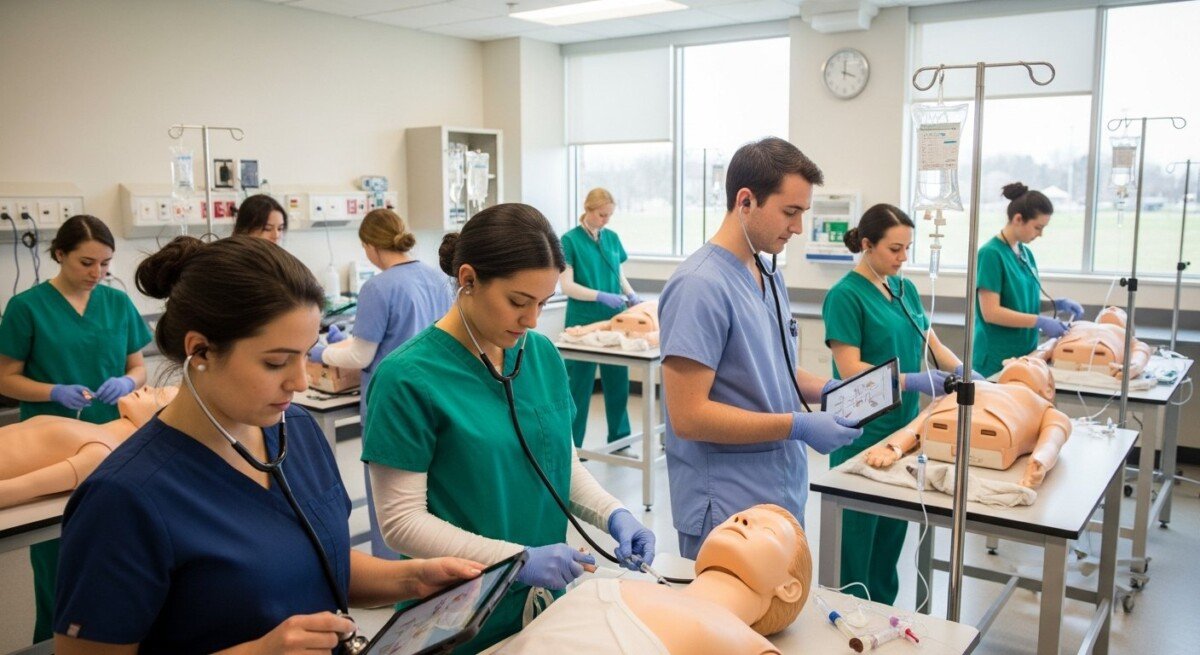
- Modern Facilities: Features advanced simulation labs with high-fidelity manikins and electronic health record systems.
- Comprehensive Support: Offers dedicated nursing advising, tutoring, counseling, and clinical placement services.
Investing time in researching these factors pays dividends throughout one’s career. A degree from a respected, high-quality program not only equips you with superior skills but also enhances your resume, earning potential, and professional mobility. It builds a foundation of confidence and competence that supports you through every stage of your nursing journey.
Frequently Asked Questions
How can I verify a nursing program’s accreditation status?
You should always verify accreditation directly with the accrediting bodies. Visit the websites of the Commission on Collegiate Nursing Education (CCNE) or the Accreditation Commission for Education in Nursing (ACEN) to search for currently accredited programs. Do not rely solely on the program’s own marketing materials.
Is an online nursing degree considered quality education?
Yes, many reputable institutions offer high-quality online nursing degrees, especially for RN-to-BSN, MSN, and DNP programs. The key is to ensure the program holds proper accreditation. Quality online programs use engaging digital platforms, require in-person clinical placements arranged in your local area, and provide robust online student support services.
What is more important, program ranking or accreditation?
Accreditation is non-negotiable and more fundamentally important. Without it, you may not be eligible for licensure, certification, or federal financial aid. Rankings can provide additional insight into reputation and selectivity, but they should never be a substitute for the baseline quality assurance that accreditation provides.
How do clinical hours differ between program types?
Clinical hour requirements vary. Associate degree programs focus on technical skills and may have around 600-700 clinical hours. Bachelor’s programs integrate more theory and leadership, typically requiring 800-1000+ hours. Graduate programs for advanced practice roles require significantly more, often 500-1000+ hours specific to the specialty, on top of previous experience.
Can I work while completing a quality nursing program?
Many students work, but it requires careful planning. Quality accelerated or full-time programs are extremely demanding and often discourage extensive employment. However, many quality RN-to-BSN, part-time, or online graduate programs are specifically designed for working nurses, offering asynchronous coursework and flexible scheduling.
Choosing the right nursing program is a decision that shapes your professional identity and capacity to provide care. By prioritizing accredited institutions with proven outcomes, expert faculty, and comprehensive support, you invest in an education that will empower you to meet healthcare’s challenges with skill and compassion. This foundation enables not just a job, but a sustainable and impactful career dedicated to improving patient lives and advancing the nursing profession.