
What Distinguishes a Premier Collegiate Nurse Training Program?
Premier collegiate nurse training programs develop exceptional clinicians through rigorous academics, immersive clinical rotations, and a culture of inquiry that prepares graduates for leadership and advanced practice roles from day one.

By Benjamin Clarke
Choosing to become a nurse is a profound commitment to care, science, and human dignity. Yet, the path to professional practice is paved with a critical first decision: where to receive your education. The landscape is vast, from community colleges to large universities, each offering pathways to licensure. However, for aspiring nurses seeking not just to pass the NCLEX but to excel as clinical leaders, critical thinkers, and compassionate care providers from day one, the distinction of a premier collegiate nurse training program becomes paramount. This caliber of education transcends basic curriculum; it is an immersive ecosystem designed to forge exceptional clinicians through rigorous academics, advanced clinical immersion, and a culture of professional excellence that sets graduates apart in a dynamic and demanding healthcare environment.
The Hallmarks of an Elite Nursing Curriculum
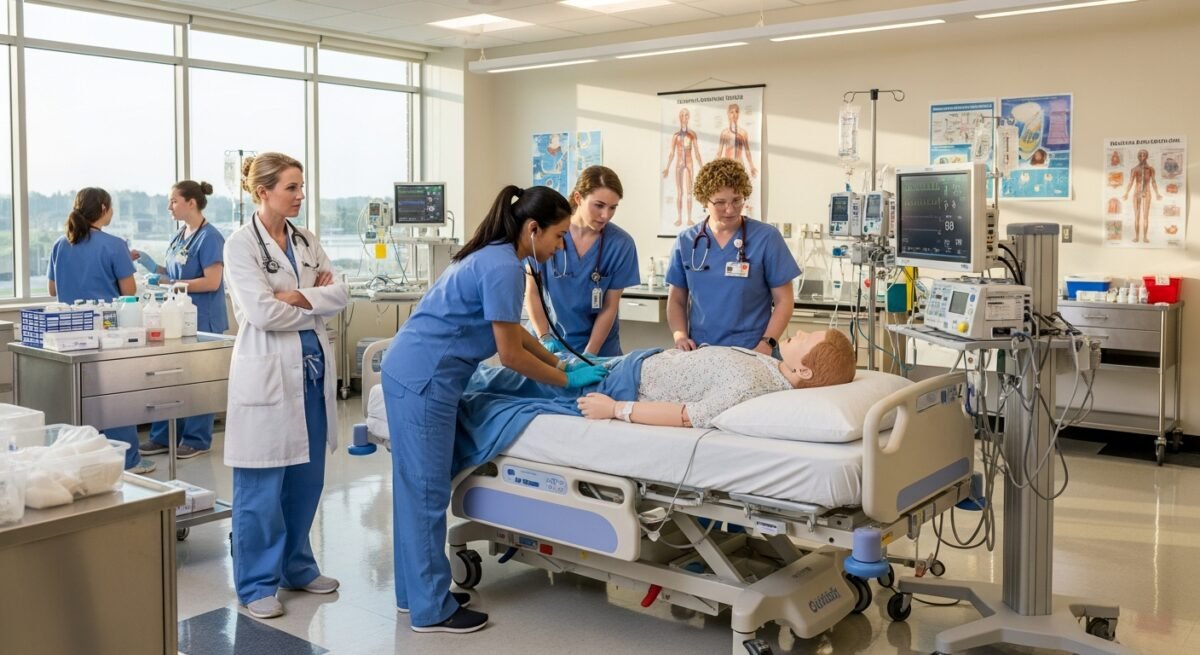
A premier program distinguishes itself from the outset through a curriculum that is both deeply rooted in evidence-based science and agile enough to adapt to healthcare’s rapid evolution. Foundational courses in anatomy, physiology, pharmacology, and pathophysiology are taught not as isolated subjects but as interconnected components of human health. The integration of humanities, ethics, and health policy is deliberate, fostering the development of a holistic practitioner who understands the socio-economic determinants of health. This academic rigor is the bedrock upon which clinical judgment is built. Furthermore, elite programs often embed high-fidelity simulation from the very beginning, allowing students to apply theoretical knowledge in risk-free, complex scenarios before ever touching a patient. This simulation-based learning is not an add-on but a core pedagogical strategy, bridging the gap between classroom and clinic.
The structure of a top-tier program is intentionally scaffolded to build competency progressively. Early exposure to clinical settings, even in observational roles, acclimates students to the healthcare environment and reinforces classroom learning. As students advance, clinical rotations are carefully sequenced to increase in complexity and responsibility. Crucially, these rotations occur in diverse, high-acuity settings—major medical centers, specialized pediatric hospitals, community health clinics, and mental health facilities—providing a comprehensive view of patient care across the lifespan and continuum of health. This diversity ensures graduates are not merely trained for one setting but are adaptable professionals ready for the realities of modern nursing.
Beyond the Classroom: The Immersive Clinical Advantage
While all nursing programs require clinical hours, premier collegiate nurse training is defined by the quality, depth, and mentorship within those experiences. It is the difference between fulfilling a requirement and engaging in a transformative apprenticeship. Leading programs establish strong, long-term partnerships with flagship hospitals and healthcare networks. These partnerships are not merely contracts for student placement; they are collaborative relationships where academic faculty and clinical preceptors work in tandem. Students are often paired with dedicated nurse preceptors—experienced clinicians who model expert practice, provide one-on-one feedback, and gradually delegate increasing responsibility. This mentorship model is invaluable for developing clinical reasoning, technical skills, and professional identity.
The clinical advantage also manifests in access to cutting-edge technology and specialized patient populations. Students in elite programs frequently train alongside other healthcare professionals, participating in interprofessional education (IPE) initiatives that mirror real-world team-based care. They may engage in complex patient simulations with medical, pharmacy, and social work students, learning communication, collaboration, and leadership skills essential for patient safety. This immersive environment accelerates competency and confidence, ensuring that upon graduation, new nurses are not overwhelmed by the transition to practice but are prepared to contribute meaningfully from their first shift. For those considering pathways beyond the bedside, exploring advanced roles early is facilitated by exposure to nurse practitioners, clinical nurse leaders, and other advanced practice nurses, as detailed in resources on clinical nurse leader tracks and advanced practice pathways.
Faculty Expertise and a Culture of Inquiry
The architects of this transformative education are the faculty. In a premier program, instructors are not only expert educators but are often active contributors to the nursing field. Many hold terminal degrees (Ph.D. or DNP) and maintain clinical practice, conduct research, or contribute to health policy. This dual engagement means classroom instruction is infused with real-time insights from the front lines of healthcare and the frontiers of nursing science. Students learn from professors who are authoring textbooks, leading quality improvement projects, and presenting at national conferences. This access to thought leadership inspires students to view nursing not just as a job, but as a scholarly profession with room for lifelong growth and contribution.
This culture of inquiry is actively cultivated. Students are encouraged to question, research, and innovate. Undergraduate research opportunities, evidence-based practice projects, and capstone experiences are standard components of the curriculum. This emphasis on inquiry develops the critical thinking muscle necessary for diagnosing subtle changes in patient condition, evaluating new research to guide practice, and advocating for system-level improvements. It fosters a mindset of continuous learning, which is the single most important trait for a nurse navigating a profession where knowledge and technology are constantly advancing.
Evaluating Programs and Investing in Your Future
Identifying a program that offers this level of premier collegiate nurse training requires diligent research. Aspiring students must look beyond rankings and consider specific indicators of quality and investment. The most critical factor is accreditation. Ensure the program is accredited by the Commission on Collegiate Nursing Education (CCNE) or the Accreditation Commission for Education in Nursing (ACEN). This is a non-negotiable baseline for quality assurance and eligibility for federal financial aid and further education.
Other key factors to investigate include:
- NCLEX-RN Pass Rates: Consistently high first-time pass rates (well above state and national averages) are a strong, objective indicator of a program’s effectiveness in preparing students for licensure.
- Clinical Partnership Network: Research where students complete rotations. Are they at respected, teaching-based hospitals? Is there variety in the settings?
- Student Support Resources: Look for robust academic support centers, dedicated simulation labs with full-time staff, career service offices with strong nurse placement records, and mentorship programs.
- Graduation and Job Placement Rates: High graduation rates suggest good student support, and strong job placement rates (often near 100% at top programs) indicate employer recognition of the program’s quality.
- Faculty Credentials: Review faculty bios on the program’s website. What are their degrees, clinical specialties, and research interests?
It is also vital to consider the format that aligns with your life. Many premier programs now offer sophisticated hybrid or online degrees in nursing, particularly for RN-to-BSN or advanced practice tracks, which leverage technology to provide flexible yet rigorous education. The investment in a top program is significant, but it is an investment in career trajectory, earning potential, and, most importantly, in the depth of competency you bring to your future patients. The right program functions as a launchpad, providing a network, a reputation, and a skill set that opens doors to competitive residencies, specialty units, and graduate programs.
The Long-Term Return on an Exceptional Education
The impact of a premier education extends far beyond the first job. Graduates from these programs often report feeling more confident, clinically prepared, and better able to navigate the complexities of the healthcare system. They are frequently sought after by major hospital systems for nurse residency programs, which are crucial for retention and success in the first year of practice. The strong alumni network and institutional reputation can facilitate career advancement, whether into leadership roles, specialized fields like critical care or oncology, or into advanced practice nursing programs. The foundational emphasis on evidence-based practice and critical thinking becomes a career-long advantage, enabling nurses to adapt to new specialties, technologies, and roles with agility.
Ultimately, premier collegiate nurse training is about more than creating proficient technicians; it is about developing professional nurses who are leaders, advocates, and lifelong learners. It prepares individuals to not only deliver exemplary patient care but also to question the status quo, improve processes, educate the next generation, and shape the future of healthcare. In a field where decisions carry profound human consequences, the quality of one’s education is the cornerstone of one’s practice. Choosing a program that embodies these principles is the first, and perhaps most significant, step in a rewarding and impactful career dedicated to healing, innovation, and service.