
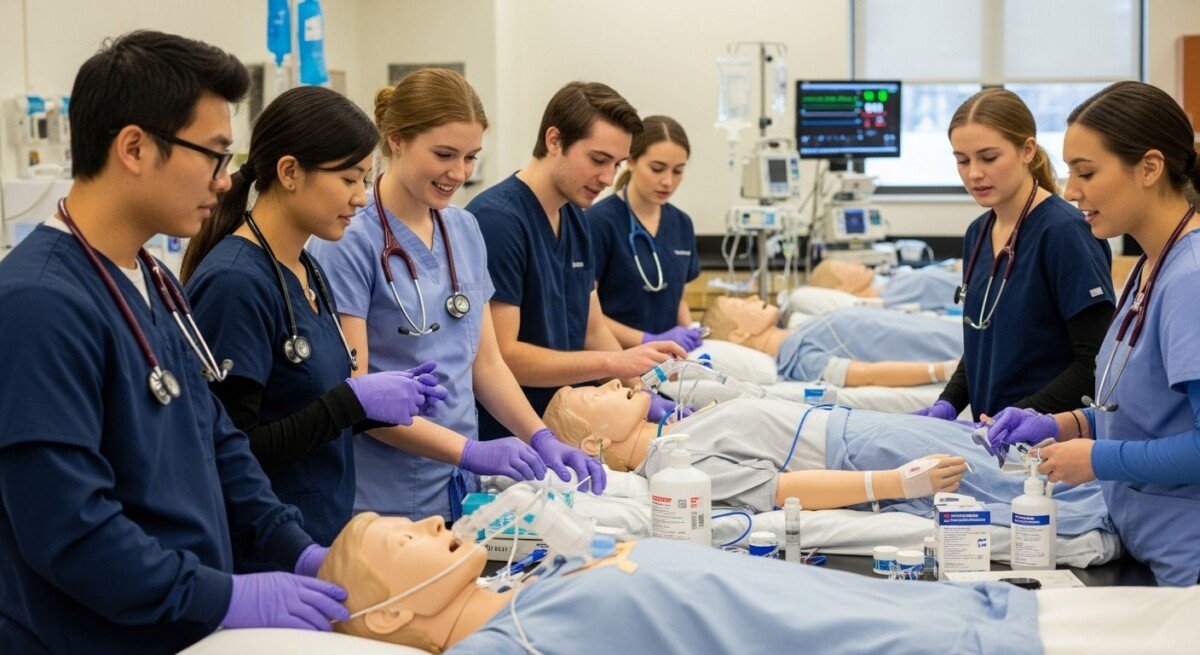
Which Degree Is Best to Become a Nurse? A Detailed Guide
Choosing the best degree to become a nurse depends on your career goals and timeline. This guide compares ADN, BSN, and accelerated paths to help you launch a successful nursing career.

By Emily Foster
Choosing the right educational path to become a nurse is one of the most critical decisions you will make in your career. The “best” degree to become a nurse is not a one-size-fits-all answer, it depends heavily on your career goals, timeline, financial resources, and prior education. Nursing offers a unique profession with multiple entry points, each leading to the same essential credential, the Registered Nurse (RN) license, but opening different doors for advancement and specialization. Understanding the nuances between an Associate Degree in Nursing (ADN), a Bachelor of Science in Nursing (BSN), and accelerated pathways is key to selecting the program that aligns with your personal and professional vision.
Understanding the Core Nursing Degree Pathways
There are two primary academic routes that lead directly to eligibility for the RN licensure exam (the NCLEX-RN): the Associate Degree in Nursing (ADN) and the Bachelor of Science in Nursing (BSN). A third common option, for those who already hold a bachelor’s degree in another field, is the Accelerated BSN (ABSN). Each path has distinct characteristics, advantages, and considerations that shape a nurse’s early career.
The Associate Degree in Nursing is typically a two-year program offered at community and junior colleges. It is designed to provide the essential clinical and theoretical knowledge needed to pass the NCLEX-RN and begin practicing as a registered nurse. This route is often celebrated for its affordability and speed, allowing students to enter the workforce quickly. However, the healthcare landscape is increasingly favoring nurses with a broader educational foundation.
The Bachelor of Science in Nursing is a four-year degree offered at universities and colleges. While it covers all the clinical competencies of an ADN program, it delves much deeper into areas critical for modern nursing practice. A BSN curriculum includes extensive coursework in nursing research, public and community health, leadership and management, and evidence-based practice. This broader scope prepares nurses not just for bedside care, but for roles in care coordination, patient education, and systems-level thinking. For many aspiring nurses, the BSN represents the best degree to become a nurse for long-term career flexibility.
The BSN as the Industry Standard and Career Catalyst
Over the past two decades, a powerful movement known as the “BSN in 10” initiative has gained significant traction, advocating for a bachelor’s degree to become the standard entry-level requirement for nursing practice. While not yet law in most states, this push has dramatically influenced employer preferences. Major hospital systems, especially those pursuing or holding Magnet Recognition for nursing excellence, strongly prefer and increasingly require newly hired RNs to hold a BSN. This makes the BSN a strategic investment for those seeking maximum employability and job security in competitive markets.
Beyond initial hiring, a BSN degree is frequently a non-negotiable prerequisite for career advancement within nursing. Nurses aiming to move into charge nurse, nurse manager, or unit coordinator positions will find these doors are much more readily opened with a bachelor’s degree. Furthermore, a BSN is the absolute baseline requirement for admission into any graduate-level nursing program. Whether your dream is to become a Nurse Practitioner (NP), a Clinical Nurse Specialist (CNS), a Certified Registered Nurse Anesthetist (CRNA), or a Nurse Midwife, you must first possess a BSN. Therefore, for nurses with ambitions of advanced practice, leadership, or specialization, the BSN is not just the best degree to start with, it is the essential foundation.
Consider the following key advantages that make the BSN a compelling choice for many:
- Enhanced Employability: Preferred by major hospitals and health systems, especially Magnet-designated facilities.
- Career Advancement: Required for most supervisory, managerial, and specialized staff nurse positions.
- Graduate School Gateway: Mandatory for entry into Master of Science in Nursing (MSN) and Doctor of Nursing Practice (DNP) programs.
- Broader Knowledge Base: Education in public health, leadership, research, and informatics prepares nurses for complex healthcare environments.
- Higher Earning Potential: BSN-prepared nurses often command higher starting salaries and have access to roles with greater compensation.
Accelerated and Second-Degree BSN Programs
For individuals who already hold a bachelor’s degree in a non-nursing discipline, the Accelerated BSN (ABSN) represents one of the most efficient and popular pathways into nursing. These intensive programs are designed to leverage a student’s previous college experience, condensing the nursing curriculum typically into 11 to 18 months of full-time study. ABSN programs are rigorous, with no breaks between terms, and require a full-time commitment, but they offer a fast track to a second career in nursing.
The admission criteria for ABSN programs are usually stringent, requiring a strong undergraduate GPA, completion of specific science prerequisites (like anatomy, physiology, and microbiology), and sometimes healthcare experience. The payoff, however, is significant: in just over a year, a career-changer can earn a BSN, sit for the NCLEX-RN, and enter the nursing profession with the degree that offers the greatest long-term flexibility. For this demographic, the ABSN is often the undisputed best degree to become a nurse, as it avoids the redundancy of a second four-year degree.
Bridge Programs: The Path from ADN to BSN (RN to BSN)
The nursing profession is structured to support lifelong learning and upward mobility. Recognizing that many excellent nurses begin their careers with an ADN, a robust system of “bridge” or “RN to BSN” programs exists. These programs are tailored for the working registered nurse. They build upon the ADN foundation, granting credit for prior nursing knowledge and licensure, and allow nurses to complete their bachelor’s degree often entirely online and on a part-time basis.
An RN to BSN program is the strategic answer for nurses who started with an ADN and now seek to fulfill the BSN requirement for career advancement, meet hospital mandates, or prepare for graduate school. These programs are a testament to the idea that the journey to the best degree for your nursing career can be sequential. Starting with an ADN to enter the field quickly and affordably, then bridging to a BSN while gaining experience and earning a salary, is a perfectly valid and common career trajectory. It combines immediate entry into the profession with the long-term benefits of a bachelor’s education.
Evaluating Your Personal Factors for the Right Choice
Determining the best nursing degree for you requires honest self-assessment. You must weigh several personal factors against the professional landscape. Time is a major consideration: an ADN can have you working as an RN in two years, while a traditional BSN takes four. An ABSN is the fastest for degree-holders, but requires an intense, short-term commitment. Finances are equally crucial. ADN programs at community colleges are generally the most affordable upfront, but potential tuition reimbursement from an employer can make an RN to BSN program nearly free later on.
Your ultimate career aspirations are the most important guide. If your goal is to work at a bedside in a hospital and you are in a region where ADN-prepared nurses are widely hired, that path may suffice. If you envision yourself in a teaching hospital, in a leadership role, or eventually becoming an advanced practice nurse, then a BSN (or a direct path to it) is necessary. There is no single correct answer, but there is a best answer for your specific situation, goals, and constraints.
Frequently Asked Questions
Can I become an RN with just an associate degree?
Yes. An Associate Degree in Nursing (ADN) makes you eligible to take the NCLEX-RN exam and become a licensed Registered Nurse. This is a fully valid and legal pathway to RN licensure.
Do BSN nurses get paid more than ADN nurses?
Often, yes. Many healthcare employers have differential pay scales that offer a higher hourly rate or salary to BSN-prepared nurses. The gap can vary by institution and region, but the BSN generally leads to greater earning potential over a career.
Is it harder to get a job with an ADN?
It can be, depending on the job market and employer. Large urban hospital systems and Magnet hospitals heavily prefer or require BSNs. ADN-prepared nurses may find more opportunities in rural hospitals, long-term care facilities, clinics, and doctors’ offices. However, many ADN nurses secure hospital jobs and then complete an RN to BSN program.
What is the fastest way to become an RN if I already have a bachelor’s degree?
The fastest track is an Accelerated BSN (ABSN) program. These rigorous, full-time programs allow you to earn a BSN in as little as 11-18 months, after which you can take the NCLEX-RN.
Can I skip a BSN and go straight to a Master’s in Nursing?
Typically, no. Direct-entry MSN programs exist, but they are designed for individuals with a non-nursing bachelor’s degree. These programs still encompass BSN-level content before progressing to master’s-level coursework. There is no direct path from an ADN to an MSN without first obtaining BSN-level competencies, either through a separate degree or within a bridge program structure.
The journey to becoming a nurse is a commitment to both education and service. While the Associate Degree in Nursing offers a swift and accessible entry point, the Bachelor of Science in Nursing stands as the comprehensive foundation for a resilient and advancing career in the modern healthcare system. By carefully considering your personal circumstances against the professional requirements and opportunities each degree affords, you can confidently select the educational path that is not just a step toward a license, but a launchpad for the nursing career you envision. The best degree to become a nurse is ultimately the one that aligns with your timeline, goals, and passion for the profession.